Latest News
Stay updated with the latest news and articles
Top Stories
AI Hallucinations Spark Global Crackdown as India Enforces 3-Hour Takedown Rule
AI Hallucinations Spark Global Crackdown as India Enforces 3-Hour Takedown Rule Governments and health organizations are scrambling to contain the dangers of artificial intelligence "hallucinations," as the technology's tendency to generate false information triggers new regulations and emergency inquiries [27480][81632]. India has enacted one of the world's strictest rules, mandating that social media platforms remove any content identified as AI-generated within three hours of being flagged [78935]. The regulation, which took effect in February, specifically targets deepfakes—highly realistic fake videos, audio, or images—and other synthetic media that can spread misinformation [12872]. The move places a significant compliance burden on tech giants operating in one of the planet's largest internet markets [78935]. The urgency of such measures was underscored when a major mental health charity launched an emergency investigation. Mind, which operates in England and Wales, began a year-long commission after a newspaper investigation found Google's AI Overviews had provided "very dangerous" medical advice [81632]. The charity warned that millions of people with mental health conditions could be at risk from harmful AI-generated guidance [81632]. The public's growing awareness of the problem was reflected in language itself. In the Netherlands, the word "hallucineren" (to hallucinate) was named 2023's Word of the Year for its new meaning: describing an AI system that invents convincing but false information [27480]. Language experts say the selection captures widespread concern over receiving authoritative-sounding answers from machines that are simply making things up [27480]. Critics of rapid regulatory responses, like India's earlier proposed rules, argue that the technical challenges of identifying all deepfakes are immense and that the social complexities are not fully considered [12872]. The effectiveness of these global efforts to control AI-generated misinformation will depend heavily on their practical application and enforcement [12872][78935]. AI "Hallucinates" Its Way to Dutch Word of the Year India's 3-Hour AI Takedown Rule Begins India Proposes New Rules to Combat Deepfake Threat Mind Launches Emergency Inquiry After AI Gives "Very Dangerous" Mental Health Advice


Turkey Launches First Overseas Deep-Sea Drilling in Somalia, Takes Command of Major NATO Naval Force
Turkey Launches First Overseas Deep-Sea Drilling in Somalia, Takes Command of Major NATO Naval Force Turkey is simultaneously expanding its strategic reach on the high seas, launching its first-ever overseas deep-sea drilling operation in Somalia while assuming command of a key NATO naval strike force. The drillship *Cagri Bey* has arrived in Somali waters to begin the historic offshore exploration, marking a major expansion of Turkey's energy and geopolitical ambitions [125884][124778]. The mission, stemming from a 2024 bilateral energy and maritime deal, aims to explore for oil and gas reserves in Somalia's coastal waters [125884]. Turkish Energy Minister Alparslan Bayraktar declared the operation a "new chapter" in energy cooperation, which could reduce Turkey's reliance on foreign energy imports if successful [124778]. Concurrently, the Turkish Naval Forces formally took command of NATO's Amphibious Task Force and its Landing Force Command on July 1 [54453]. In this role, which will last for one year, Turkey will be responsible for planning and leading NATO exercises and potential missions involving complex assaults from sea to land [54453]. The dual maritime moves highlight Ankara's growing profile as a regional power with both economic and military capabilities. The Somali drilling project strengthens Turkey's already substantial economic and political investments in the Horn of Africa nation, where it is a key investor in military, education, and infrastructure projects [125884]. Meanwhile, Turkish forces are actively participating in major NATO readiness exercises, showcasing domestically produced defense technology. Approximately 2,000 Turkish troops deployed to Germany for the Steadfast Defender 24 drills, NATO's largest exercise this year [70222]. In a separate drill, Turkish naval and army units conducted joint amphibious operations in Germany as part of exercise Steadfast Dart 2026, operating alongside other allied nations [80228]. Turkey Begins Somalia's First Offshore Oil Drilling Turkey's Deep-Sea Drillship Heads to Somalia in Strategic Energy Push Turkey Assumes Command of Key NATO Naval Strike Force NATO's Biggest 2024 Drill Begins with Turkish Troops Landing in Germany Turkish Forces Deploy Homegrown Tech in Major NATO Drill

Ukraine Unleashes Drone Blitz, Crippling 40% of Russia's Oil Exports
Ukraine Unleashes Drone Blitz, Crippling 40% of Russia's Oil Exports Ukraine is systematically dismantling Russia's energy export network with a relentless campaign of long-range drone strikes, targeting refineries, terminals, and even offshore platforms to cut off a key source of military funding [125638]. The attacks have disabled multiple berths at Russia's largest Black Sea oil terminal, leaving it operating with just a single loading point [125609], and have struck facilities as far as 1,000 kilometers behind the front lines in the Caspian Sea [125610]. The strategy marks a significant shift in the air war, with Ukrainian forces launching a record number of deep strikes in March [125638]. A Ukrainian defense official confirmed that recent operations have targeted Russian oil platforms used to supply fuel to military forces, classifying them as legitimate military targets [125610]. The cumulative damage is now having a tangible impact on global markets, causing volatility and rising energy prices [125638]. Ukrainian officials claim these precision strikes have knocked out more than 40% of Russia's seaborne oil export capacity [122398]. In response to the escalating tit-for-tat attacks on energy infrastructure, Kyiv has proposed an "energy ceasefire," calling for a temporary halt to strikes on each other's oil and power facilities [122398]. Despite the success of the drone campaign, President Volodymyr Zelenskyy warned that the situation on the ground remains precarious. He stated that a retreat from current defensive positions in the Donbas region would open a direct path for Russian forces to advance toward major Ukrainian cities, as building new fortifications could take up to 18 months [125606]. Ukraine's Drone Surge Hits Russian Energy, Shakes Global Markets Russia's Key Oil Hub Operates Single Berth After Drone Strikes Ukraine Strikes Russian Oil Platforms 1,000 Km Behind Front Lines Ukraine Proposes "Energy Ceasefire" After Hitting Russian Oil Zelenskyy: Retreat from Donbas Would Open Path to Ukraine's Heartland
New Scramble for Africa: US and China Race to Lock Down $1 Trillion in Critical Minerals
New Scramble for Africa: US and China Race to Lock Down $1 Trillion in Critical Minerals A high-stakes global competition is intensifying across Africa as the United States and China vie for control of the continent’s vast reserves of critical minerals, essential for electric vehicles, smartphones, and renewable energy technology. This new “scramble” is forcing African governments to navigate between rival investment models while seeking to secure greater economic benefits for themselves. The race centers on minerals like lithium, cobalt, and rare earth elements, with global demand soaring due to the green energy transition. Both superpowers are aggressively pushing their strategies. The U.S., through initiatives like the Minerals Security Partnership, is promoting high-standard investments, transparency, and Western-led supply chains [68293]. China, with a long-established presence, continues to offer a model combining infrastructure loans with direct mining access [68293][44946]. This geopolitical contest was a dominant, if unofficial, theme at recent international summits. While European and African leaders met to discuss trade and minerals, the backdrop was heightened competition for Africa’s alliances and resources from Russia, China, and the United States [11355]. Similarly, an African Union summit focused on water security was overshadowed by major powers expanding their military and economic presence in strategic coastal regions, seeking naval bases and trade partnerships [87433]. African nations are increasingly pivoting their economic partnerships away from traditional Western ties toward bilateral deals with Russia, China, and other Global South nations, driven by a desire to reduce external dependency [44946]. The central question now is which competing model will deliver more for Africa’s own development goals. Leaders and experts are pressing for deals that include local mineral processing to create jobs, a larger share of the final product value, and investments that fund sustainable development [68293][83553]. Analysts warn that without strong, coordinated action by African regional blocs, individual countries risk being pressured into unfair deals. The continent’s ability to negotiate better terms, build local processing plants, and protect the environment will determine whether this mineral wealth becomes a long-term engine for growth or another episode of extraction [83553]. The outcome of this quiet industrial race will significantly shape the continent’s economic future and its role in the global economy. China, US Race for Africa's Minerals. Who Wins in Africa? The New Scramble: Africa's Minerals and the Silent Race EU-Africa Summit Focuses on Trade and Minerals Amid Global Tensions Global Powers Rush for Africa's Coast as Ethiopia Seeks a Port African Nations Pivot from West to Russia and China Amid Economic Strain

Governments Target Human Rights Groups and Dissent in Widespread Crackdown
Governments Target Human Rights Groups and Dissent in Widespread Crackdown Governments across multiple continents are escalating crackdowns on human rights organizations, political dissent, and vulnerable populations, with actions ranging from outright bans to mass detentions under questionable legal grounds. In Russia, the Supreme Court has ordered the closure of the Memorial human rights group, labeling it an "extremist organization" [126183]. Founded in the 1980s, Memorial is one of Russia's oldest groups dedicated to documenting Soviet-era repression and monitoring current rights abuses. The ruling, which forces an immediate end to its operations, has been condemned by independent experts as a major escalation in the repression of civil society [126183]. Separately, thousands of Ukrainian civilians are being illegally held in Russian prisons, a practice families and legal experts say violates international humanitarian law forbidding the arbitrary detention of civilians [126185]. In a separate operation, rights groups are demanding the urgent release of 84 people detained for alleged links to the Socialist Party of the Oppressed (ESP) [125684]. Advocates state the detainees are being denied access to lawyers and case files, while female detainees report being subjected to invasive strip searches by male officers, which defenders call a severe violation of dignity [125684]. United Nations experts have formally accused Indian authorities of human rights violations during counter-terrorism operations in Jammu and Kashmir [12511]. The experts cited arbitrary arrests, property demolitions, communication blackouts, and forced expulsions, arguing these measures amount to collective punishment that breaches international standards [12511]. In the UK and France, a group of nine UN experts has demanded the two countries stop a controversial "one in, one out" asylum agreement, warning it could lead to serious breaches of international human rights law [69103]. The deal, which allows for the reciprocal transfer of asylum seekers, was criticized in a detailed letter to both governments, which the UN made public after receiving no satisfactory reply [69103]. Meanwhile, in Turkey, the Human Rights Association (İHD) has warned that the continued detention of a critically ill prisoner, Mehmet Emin Çam, violates his fundamental right to life [107236]. The group advocates for the release of severely ill inmates on medical grounds [107236]. Russia's Supreme Court Bans Memorial as "Extremist" **Title:** "No Lawyer, No Privacy: Rights Groups Demand Immediate Release of 84 Detainees" Thousands of Ukrainian Civilians Held in Russian Prisons, Families Say UN Experts Allege Human Rights Violations in Indian Counter-Terrorism Operations UN Experts: UK-France Asylum Deal May Break Human Rights Law Critically Ill Prisoner's Detention Violates Right to Life, Says Rights Group
Pentagon Defends Back-to-Back Strikes and Caribbean Ops, Citing "Fog of War" and Legal Authority
Pentagon Defends Back-to-Back Strikes and Caribbean Ops, Citing "Fog of War" and Legal Authority The U.S. Department of Defense is mounting a public defense of recent military actions, justifying a controversial double-strike in combat and affirming the legality of operations in the Caribbean. In one incident, U.S. Secretary of Defense John Hegseth defended naval forces for striking the same boat twice, attributing the decision to the inherent confusion of combat. He stated the action took place in the "fog of war" and that he supported the admiral's choice to fire a second time to "eliminate the threat" after seeing no survivors from the initial attack [17273]. Separately, the Pentagon has publicly supported a senior commander's decision to authorize recent military strikes in Venezuela. A spokesperson stated that the actions taken by Admiral Bradley followed proper legal procedures, having been "approved by the best military and civilian lawyers throughout the chain of command" [17258]. Echoing this legal defense, senior Defense official Pete Hegseth asserted that ongoing American military actions in the Caribbean are lawful. "Our current operations in the Caribbean are lawful under both U.S. and international law," Hegseth said, addressing questions about the mission's legal basis [15064]. The Pentagon is also engaged in a legal battle over national security and information control. Officials are defending new rules that restrict some media outlets, stating they are needed to "stop activity that could compromise national security." This defense is part of the Department's response to a lawsuit filed by The New York Times challenging the policy [64596]. In a related political move, Senate Republicans are taking steps to shield the legal authority used for a recent Venezuela operation. They aim to block a Democratic effort to repeal the 2001 Authorization for Use of Military Force (AUMF) that justified the mission, arguing such a repeal would weaken presidential authority during ongoing threats [50051]. Pentagon Defends Second Strike in "Fog of War" Incident Pentagon Defends Commander's Decision in Venezuela Strikes Pentagon Official Defends Legality of Caribbean Operations Pentagon Cites National Security in Media Lawsuit Defense Senate Republicans Move to Shield Trump's War Powers

Djibouti's President Secures Sixth Term With 98% of Vote, Extending 27-Year Rule
Djibouti's President Secures Sixth Term With 98% of Vote, Extending 27-Year Rule President Ismail Omar Guelleh has won a sixth term in office, extending his 27-year rule over the strategic Horn of Africa nation of Djibouti. Official results from Friday's election show Guelleh received 97.8 percent of the vote [125949]. The 78-year-old leader faced only a single, little-known opponent in the poll [125889]. Just over 256,000 people were registered to vote [125895], and observers reported low turnout at polling stations throughout the capital on election day [125908]. Djibouti's location is of major global importance, sitting by vital shipping lanes at the entrance to the Red Sea. The country hosts military bases for world powers including the United States, China, and France [125908][125889]. This election was the first since a 2010 constitutional change removed presidential term limits [125908]. The country's main opposition candidates boycotted the election [125949]. President Guelleh, who has led Djibouti since 1999, is now set to solidify his position as one of Africa's longest-serving leaders with another five-year term [125878]. Djibouti Votes, But Few Show Up to Extend President's 22-Year Rule Djibouti Election Sees Low Turnout as Leader Eyes Sixth Term Djibouti Votes: One Man's March to a Sixth Term Djibouti's Guelleh Extends 25-Year Rule With 98% Election Win Djibouti's President Extends 27-Year Rule, Winning Sixth Term With 97.8% of Vote

U.S. and Iran Hold High-Stakes Talks in Pakistan as Lebanon Border Erupts
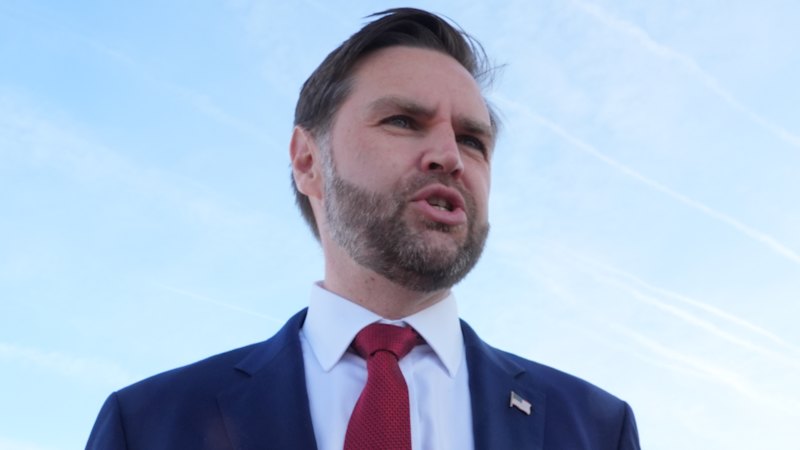
U.S. and Iran Hold High-Stakes Talks in Pakistan as Lebanon Border Erupts In a rare diplomatic move, senior United States and Iranian officials met face-to-face in Islamabad this weekend in an urgent bid to halt a spreading Middle East war, even as fierce clashes between Israel and Hezbollah militants in Lebanon threatened to derail the negotiations [125866][125940]. The talks, hosted by Pakistan, represent the highest-level direct meeting between the two rival nations in decades [125785]. The U.S. delegation is led by Vice President JD Vance, while Iran’s team is headed by Parliament Speaker Mohammad Bagher Ghalibaf [125686]. Their primary objective is to secure a sustainable ceasefire to a conflict that has killed thousands and now risks triggering a full-scale regional war [125874][125940]. A last-minute complication emerged as the talks began, with Iran demanding that any ceasefire agreement explicitly include a halt to fighting along the Israel-Lebanon border [125874]. Near-daily exchanges of fire between the Iranian-backed Hezbollah and Israeli forces have become a central flashpoint, with both sides launching new strikes during the diplomatic mission [125483][125524]. Israeli Prime Minister Benjamin Netanyahu has stated unequivocally that no ceasefire currently exists in Lebanon [125483]. The situation on the ground creates a tense limbo for Lebanon, which the United Nations says is facing a "perfect storm" of crises [125652]. Analysts note that any broader U.S.-Iran deal could pave the way for the first direct talks between Lebanese and Israeli officials in years, focused solely on averting a wider war and addressing a mounting humanitarian emergency [125652]. As the diplomats convened, U.S. Vice President Vance issued a stark warning to Iran, stating, "Now is not the time for Iran to play games with the United States" [126108]. The U.S. is seeking to prevent the war in Gaza from spiraling into a broader regional conflict, with Vance’s mission also including stops in Egypt, Jordan, Qatar, and Israel [126108]. The outcome of the Islamabad talks remains deeply uncertain, with the shadow of ongoing violence in Lebanon casting a long pall over the negotiating table [125686][125524]. US and Iran Meet for Talks as Middle East War Expands Iran Demands Lebanon Ceasefire in Last-Minute Peace Talk Hurdle Iran and US to Meet in Pakistan as Israel-Lebanon Tensions Rise US and Iran Hold Rare Direct Talks in Pakistan to End Middle East War U.S.-Iran Ceasefire Talks Leave Lebanon in Tense Limbo Vance to Iran: "Do Not Test Us" as Mideast Mission Begins Trump Questions Iran Ceasefire as Critical Peace Talks Begin Vance Flies to Pakistan for Iran Talks as Israel Strikes Lebanon
Oil Shock Fears Rise as Fragile Mideast Truce Threatens $5 Trillion in Asian Growth
Oil Shock Fears Rise as Fragile Mideast Truce Threatens $5 Trillion in Asian Growth A fragile ceasefire between the U.S. and Iran is failing to halt the severe economic fallout spreading from the Middle East, with Asia's emerging economies now at the center of a accelerating financial crisis marked by massive capital flight and slashed growth forecasts. Even with a temporary truce in place, the head of the International Monetary Fund (IMF) warned the conflict is actively damaging the global economic outlook, creating uncertainty that slows growth worldwide [125359]. The Asian Development Bank (ADB) stated the war presents a "formidable test" for the continent, cutting its 2025 growth forecast for developing Asia to 5.1%, down from a previous estimate of 5.4% [125429]. The most immediate symptom is a rapid exodus of foreign investment. In March alone, overseas investors pulled billions of dollars from regional stocks and bonds, putting immense pressure on local currencies and central banks [126095]. Analysts say the uncertainty has permanently altered investor behavior, and regaining trust will require prolonged stability, not just a ceasefire [126095]. Simultaneously, the conflict threatens to trigger a full-scale oil shock. Prices surged again as the U.S.-Iran ceasefire showed signs of weakness [125055]. Economist Ilian Mihov warns that a true "oil shock"—a severe physical shortage of supply—is more dangerous than just high prices, as it can force factory shutdowns and cripple transportation networks [125055]. This leaves central banks in a dire bind, forced to choose between fighting inflation and avoiding a collapse in economic growth [125055]. New analysis suggests the economic damage will be long-lasting, potentially persisting for decades through fractured trade alliances, sustained high prices, and redirected global investment [124481]. The ADB projects the campaign against Iran will halt Asia's recent economic upswing, with ripple effects impacting business and trade far beyond the war zone [125429]. Iran Ceasefire? Asia's Economies Still Bleed Cash Middle East Conflict Slams Asia's Economic Growth IMF Chief: Iran War Already Hurting Global Economy Oil Shock: Could Fragile Mideast Truce Tip Global Economy Into Recession? Beyond the Battlefield: A War's Economic Shock Could Last for Years

Ukraine Trades Battlefield Drone-Knowledge for Gulf Fuel and Weapons
Ukraine Trades Battlefield Drone-Knowledge for Gulf Fuel and Weapons Ukraine is leveraging its hard-won military expertise to secure critical supplies, sending specialists to Gulf states to teach them how to shoot down Iranian-designed drones in exchange for fuel and air defense weapons [125620][112369]. President Volodymyr Zelenskyy has confirmed the high-stakes barter deal, revealing that Ukrainian teams specializing in counter-drone warfare are now active in several Middle Eastern nations [125620][112369]. The arrangement focuses on a direct exchange: Ukraine provides advanced training in drone warfare and electronic jamming, and in return, it seeks shipments of diesel fuel and air defense interceptors, such as Patriot missile batteries [125620][112369]. This move capitalizes on Ukraine's status as a world leader in defeating unmanned aerial vehicles (UAVs), having defended against thousands of Iranian-made "Shahed" drones used by Russian forces [125620]. The same drone models also pose a significant threat to security and infrastructure in the Middle East, making Ukraine's battlefield-tested tactics highly valuable to Gulf allies [100935]. The initiative marks a strategic shift for Kyiv, turning its defensive experience into a diplomatic and military asset. By sharing this unique knowledge, Ukraine aims to build new alliances and secure the weapons and resources it desperately needs to sustain its war effort against Russia [125620][112369]. The ongoing security talks and deployments underscore a pragmatic effort to address urgent battlefield shortages through direct, mutually beneficial exchanges [91239]. Ukraine Sells Drone-Know-How to Gulf States for Fuel and Weapons Ukraine Trades Air Defense Secrets for Gulf's Drone-Killers Kyraine Sells Drone-Knowledge for Weapons Ukraine Offers Gulf States a Deal: Our Drone Hunters for Your Leverage on Russia

Latest Articles

Fujimori Vows Mass Expulsions as Peru Votes Amid Crisis
Peruvians vote for a new president this weekend, with security dominating the final campaign day. The country faces rising violence and political ins...

Mexico Turns to Fracking to Cut U.S. Gas Dependence
Mexican President Claudia Sheinbaum has announced a plan to boost domestic natural gas production using fracking. The goal is to reduce Mexico's heav...

Paris at 50: Your Sneakers Are Now Smart
The Paris Marathon celebrates its 50th race this Sunday, but the runners will look very different from those in 1976. Today, technology is the invisi...

U.S. and Iran Officials Meet as Fragile Ceasefire Holds
Top officials from the United States and Iran held direct talks on Saturday. The meeting took place in Pakistan. It comes just days after the two si...

Israel Strikes 200+ Hezbollah Targets Amid U.S.-Iran Talks
Israeli forces struck more than 200 Hezbollah targets in southern Lebanon over the past 24 hours, the military says. The attacks sent clouds of smoke...

Orthodox Easter Truce Begins After Intense Pre-Ceasefire Strikes
A temporary ceasefire for Orthodox Easter began in Ukraine on Saturday, following a wave of mutual strikes. The Kremlin stated it ordered the 32-hou...

Playwright Asks: Can War Ever Have a Happy Ending?
Award-winning playwright Aïda Asgharzadeh turns from exile to the enduring scars of war in her latest work. Her new play, "The Last Cedar of Lebanon...

Race to the Moon Reignites After 50 Years
The United States is preparing to send a crew closer to the Moon than any human has been in over half a century. This move is intensifying a new spac...

‘Sharkman’ Dives With Great Whites, Says Fear is the Real Danger
Mike Rutzen free dives with great white sharks without a protective cage. He uses only his camera. Known as "The Sharkman," Rutzen believes projecti...

Tesla's "Full Self-Driving" Clears First Hurdle in Europe
Tesla has received Dutch approval to use its advanced driver-assistance features in Europe. This is a major first step for the company. The system,...

From Paris to Texas: A Frenchman's Country Music Dream Takes Flight
Theo Lawrence did not grow up with American country music. He discovered it in a library near Paris. Now, the French-born singer calls Texas home. H...

From Paris to Texas: A Frenchman's Country Music Dream
Theo Lawrence did not grow up with American country music. He discovered it in a library near Paris. Now, he lives in Texas. Lawrence moved there in...

From Paris to Texas: A Frenchman's Country Music Dream Takes the Stage
Theo Lawrence did not grow up with American country music. He discovered it in a library near Paris. Now, he lives in Texas. His journey from France...

CBS Mornings Deals: Your Exclusive Discount Link
CBS Mornings Deals features products that could become daily essentials. The segment offers exclusive discounts available only through a special webs...

U.S. News Reveals Top Grad Schools for 2026
U.S. News & World Report has released its latest rankings of the best American graduate schools. The list for 2026 covers programs in business, law,...

Chess for Babies? How a Streamer is Changing the Game.
Chess master Levy Rozman is bringing his favorite game to a new generation—starting with infants. He joined "CBS Saturday Morning" to discuss his unc...

The Man Who Shot Pinball to Victory: How a Writer Ended NYC's 35-Year Ban
A journalist is celebrated as the man who saved pinball in New York City. His testimony ended the city's 35-year ban on the game. Roger Sharpe, know...

U.S. Detains, Will Deport Family of Iran's "Screaming Mary"
The U.S. government has taken action against the family of a prominent Iranian propagandist. On Saturday, the State Department announced it revoked...

Money Is Everything: "Sunday Morning" Hosts Its Annual Financial Special
This Sunday, the CBS program "Sunday Morning" will focus entirely on money. Host Jane Pauley will present the show's yearly "Money Issue." The speci...

UK Seizes 5 Tons of Cocaine Hidden in Banana Shipment
British authorities have intercepted one of the country's largest-ever drug shipments. The cocaine, weighing five metric tons, was discovered hidden...