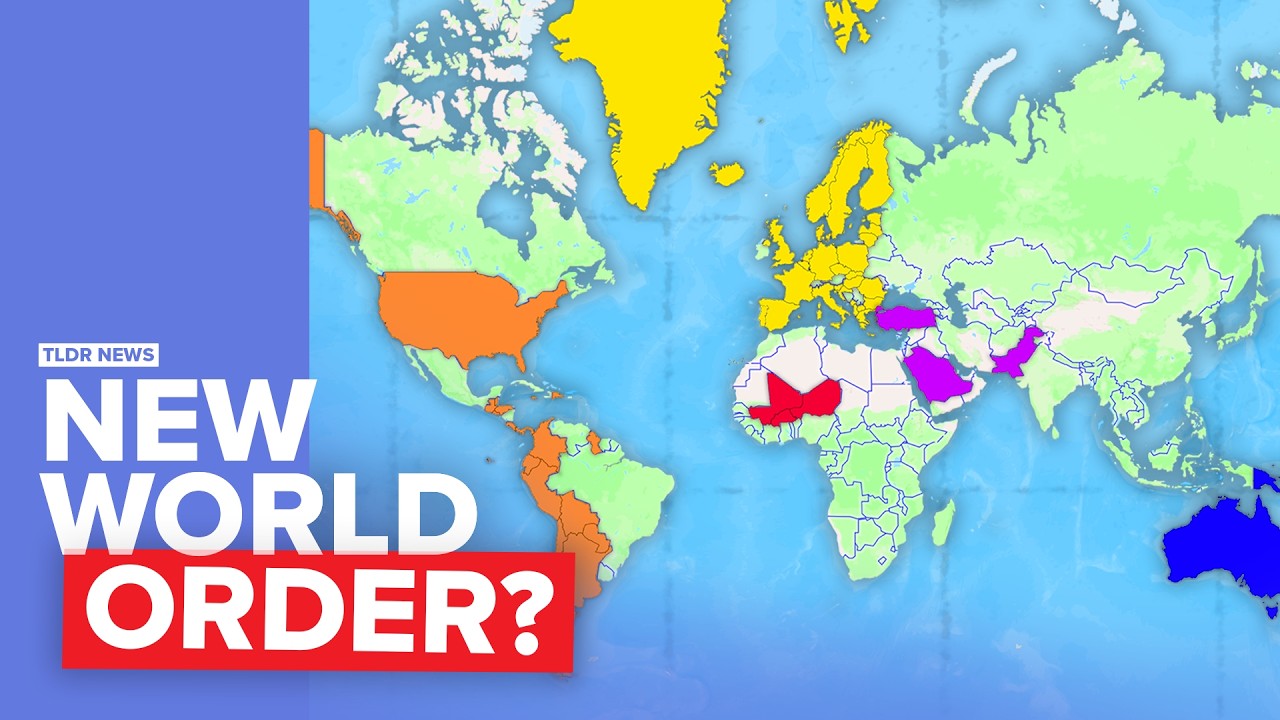
The New Geometry of Global Security: Why Regional Defense Pacts Are on the Rise
In an era defined by shifting geopolitical alliances and eroding trust in traditional global institutions, nations are increasingly turning to regional defense pacts as their primary security guarantee. The video "Why Regional Defence Pacts Are on the Rise" explores this trend, highlighting how cou
In an era defined by shifting geopolitical alliances and eroding trust in traditional global institutions, nations are increasingly turning to regional defense pacts as their primary security guarantee. The video "Why Regional Defence Pacts Are on the Rise" explores this trend, highlighting how countries are seeking shelter in localized coalitions rather than relying on broad, often unwieldy, international frameworks. This article distills the key arguments and insights from that analysis.
The Shift Away from Globalism
The post-Cold War era was characterized by a belief in collective security through global bodies like the United Nations and expansive alliances like NATO. However, recent years have exposed the limitations of these structures. Gridlock in the UN Security Council, divergent interests among NATO members, and the unpredictable foreign policy of major powers have left many nations feeling exposed. As a result, they are pivoting toward regional pacts—agreements with neighbors who share immediate threats and strategic interests.
What Drives the Rise?
Several factors explain this proliferation of regional defense agreements:
- Distrust in Global Powers: Smaller nations increasingly doubt that distant superpowers will honor their commitments during a crisis. A pact with a nearby ally is seen as more credible and actionable.
- Shared Regional Threats: Whether it is territorial disputes, terrorism, or maritime security, threats are often localized. Regional pacts allow for tailored responses to specific challenges.
- Flexibility and Speed: Unlike cumbersome global alliances, regional pacts can be formed quickly, with fewer members, enabling faster decision-making and joint operations.
- Deterrence Through Proximity: A neighbor with a vested interest in stability is a more reliable deterrent than a far-off guarantor.
Examples in Practice
The video cites several examples. In the Indo-Pacific, the Quad—comprising the United States, Japan, India, and Australia—has evolved from a dialogue forum into a practical security grouping. In the Middle East, the Abraham Accords normalized relations between Israel and several Arab states, creating a new regional security dynamic. In Africa, organizations like ECOWAS have taken on greater military roles in responding to coups and insurgencies. Europe has seen the revitalization of the Visegrád Group and new trilateral pacts like the AUKUS agreement between Australia, the UK, and the US.
Implications and Risks
While regional pacts offer advantages, they are not without pitfalls. They can exacerbate regional rivalries, create overlapping and conflicting commitments, and leave out nations that are not part of any bloc. There is also the risk of entrapment—being drawn into a neighbor's conflict. Moreover, regional pacts may lack the resources and reach of global alliances, limiting their effectiveness in large-scale crises.
The Future of Security
The rise of regional defense pacts signals a broader transformation in international relations. Nations are hedging their bets, diversifying their security partnerships, and prioritizing immediate, tangible cooperation over abstract global ideals. This does not mean the end of global institutions, but it does suggest a future where security is built from the ground up—region by region, neighbor by neighbor.
As the world becomes more fragmented and unpredictable, the allure of regional defense pacts is likely to grow. For policymakers, the challenge will be to manage these new arrangements without undermining the global order they were meant to supplement. For observers, the trend offers a clear lesson: in a dangerous world, proximity matters.
Related Coverage
New Saudi-Turkey-Pakistan Defense Pact Shakes Up Middle East, But Can It Survive First Test?
A new trilateral defense agreement between Saudi Arabia, Turkey, and Pakistan is reshaping regional security, but experts question whether the alliance can hold together under pressure.
Pacific Islands Ditch Solo Moves — Micronesia Unites as Superpowers Circle
Amid intensifying China-U.S. rivalry, Pacific island nations are shifting from individual approaches to a coordinated strategy to protect their interests and strengthen their regional identity.
Ceasefires Crumbling, Wars Escalating: How a Militarized World Is Sacrificing Human Life for Profit
A fragile global order is fracturing as a cascade of collapsed peace deals, escalating wars, and a deepening climate emergency converge, pushing energy markets into chaos while trillions of dollars are diverted from healthcare, housing, and climate resilience toward endless conflict and corporate profit.
Power, Profit, and a Planet in Peril: How Conflict and Financial Warfare Are Reshaping Global Politics
The global order is buckling under the weight of converging crises, where the pursuit of geopolitical power and corporate profit is colliding with fundamental human needs. From the closed oil routes of the Strait of Hormuz and the escalating aerial war in Ukraine to drought-parched rivers across Europe and famine-stricken regions of Africa, a cascade of interconnected emergencies is diverting public resources away from social welfare and toward conflict, leaving the world's most vulnerable populations to bear the heaviest burden of inflation, displacement, and violence [1][2]. This systemic shift, driven by financial warfare, a militarization boom, and an overheating artificial intelligence (AI) debt bubble, is redrawing the map of global politics, forcing nations to choose sides and citizens to fight for survival [1][2].
Ceasefires Crumble, Wars Escalate: A World Held Hostage by Profit and Power
The fragile peace agreements that once offered a glimmer of hope for a war-weary world have collapsed, plunging the globe into a new era of intensified conflict, economic chaos, and climate catastrophe. From the Middle East to Eastern Europe, and from Africa to the halls of Western power, a cascade of interconnected crises is reshaping global politics, driven by a system that prioritizes military spending and corporate profit over human life.
When Power Trumps People: How War, Debt, and Climate Chaos Are Reshaping Global Politics
The global order is buckling under the weight of converging crises, where the pursuit of geopolitical power and corporate profit is colliding with fundamental human needs, leaving the world's most vulnerable populations to bear the heaviest burden of inflation, displacement, and violence [1]. From the closed oil routes of the Strait of Hormuz and the escalating aerial war in Ukraine to drought-parched rivers across Europe and famine-stricken regions of Africa, a cascade of emergencies is diverting public resources away from social welfare and toward conflict [2]. This systemic shift, driven by financial warfare, a militarization boom, and an overheating artificial intelligence (AI) debt bubble, is redrawing the map of global politics, forcing nations to choose sides and citizens to fight for survival.
Related Editorials
Title: The Emerging Axis: Inside the Turkey-Pakistan-Saudi Arabia Defense Compact
Introduction In the shifting sands of global geopolitics, a new triangle of military cooperation is taking shape. Stretching from the Bosporus to the Arabian Sea, Turkey, Pakistan, and Saudi Arabia are forging a defense pact that could redraw the strategic map of the Middle East and South Asia.
Title: Is Washington Turning Its Back on the Indo-Pacific?
Introduction For decades, the United States has positioned itself as the indispensable power in the Asia-Pacific region, anchoring security alliances and driving economic integration. Yet, under the current administration, a growing chorus of diplomats and strategists is asking a provocative qu
Title: Washington’s Fickle Embrace: Why the Gulf States Are Losing Patience with Trump
Introduction For decades, the relationship between the United States and the Gulf monarchies has rested on a simple bargain: American security guarantees in exchange for oil stability and regional alignment. Yet, beneath the surface of official summits and handshakes, a quiet but profound erosi