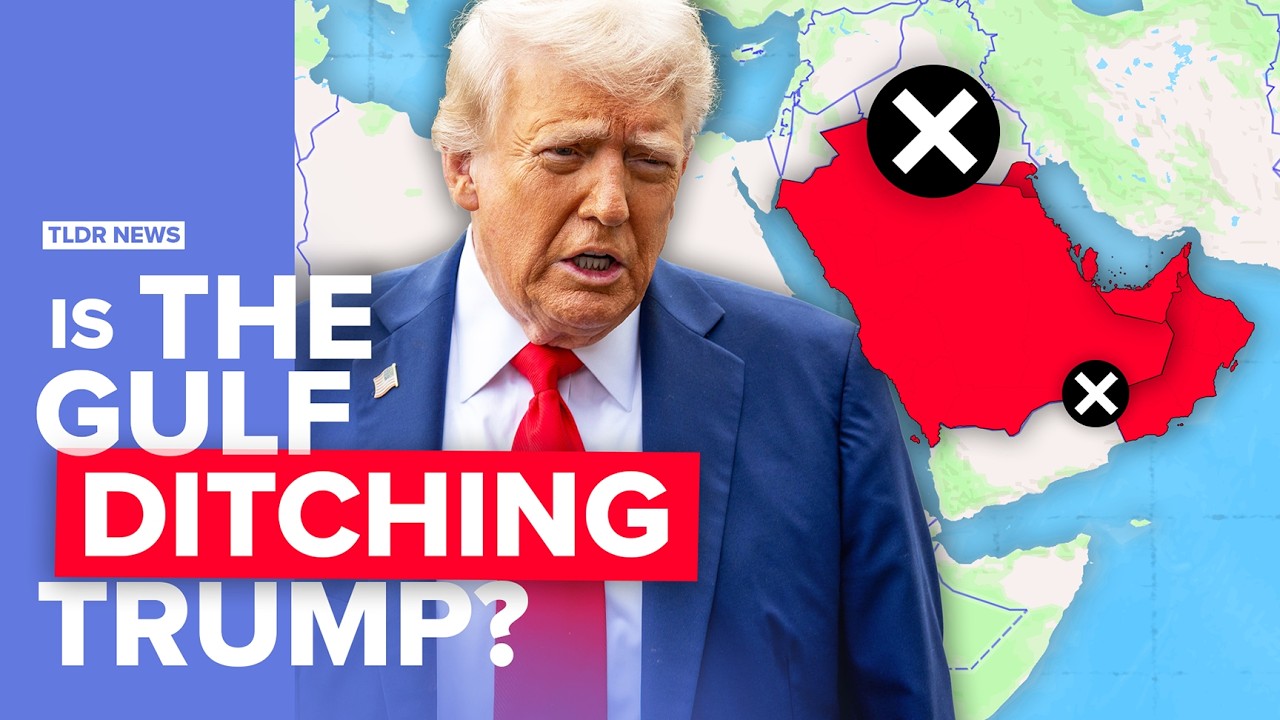
Washington’s Fickle Embrace: Why the Gulf States Are Losing Patience with Trump
For decades, the relationship between the United States and the Gulf monarchies has rested on a simple bargain: American security guarantees in exchange for oil stability and regional alignment. Yet, beneath the surface of official summits and handshakes, a quiet but profound erosion of trust is un
For decades, the relationship between the United States and the Gulf monarchies has rested on a simple bargain: American security guarantees in exchange for oil stability and regional alignment. Yet, beneath the surface of official summits and handshakes, a quiet but profound erosion of trust is underway. The Gulf states—Saudi Arabia, the UAE, Qatar, and Kuwait—are increasingly frustrated with Washington’s erratic posture. This frustration is not born of ideology but of pragmatism. When the guarantor of your security becomes unpredictable, you begin to look for other insurance policies.
The Problem of Unpredictability
The core grievance among Gulf leaders is not what the Trump administration has done, but how it has done it. Policy shifts on Iran, Syria, and energy markets have often been announced via social media or in the heat of a rally, leaving allies scrambling to interpret the next move. For Gulf capitals, where statecraft is measured in decades and dynasties, this transactional, impulsive approach is a liability. They cannot build a long-term security architecture on a foundation of tweets.
The Iran Dilemma
Nowhere is this tension more visible than in the handling of Iran. The Gulf states supported the withdrawal from the Joint Comprehensive Plan of Action (JCPOA), viewing the nuclear deal as flawed. However, the subsequent "maximum pressure" campaign created a vacuum. When the United States assassinated General Qassem Soleimani in January 2020, the Gulf states were not consulted. They were left to absorb the immediate threat of retaliation, fearing that their oil infrastructure would become a battleground for a U.S.-Iran conflict they did not choose. The perception that Washington is willing to escalate but unwilling to bear the regional consequences has led to a deep sense of abandonment.
The Energy War
The friction extends to oil policy. The Trump administration’s public pressure on OPEC+ to increase production during an election year was viewed as a direct assault on the economic sovereignty of Gulf states. While they ultimately complied to avoid a trade war, the resentment lingered. The Gulf states remember that when their own economies were struggling, Washington’s demands did not reflect their interests. The relationship, they argue, has become a one-way street where American political expediency overrides mutual economic partnership.
The Rise of Strategic Autonomy
The result is a strategic recalibration. The Gulf states are not severing ties with Washington; they are diversifying their dependencies. We see this in their deepening engagement with China and Russia, not as an ideological pivot, but as a hedge. They are purchasing advanced weaponry from Moscow, signing long-term energy contracts with Beijing, and positioning themselves as neutral brokers in the Ukraine conflict. This is not betrayal; it is survival. If the United States cannot be a reliable partner, the Gulf states will ensure they have multiple partners.
A Crisis of Credibility
The final straw is the issue of credibility. The Gulf states have heard promises of protection and democratic values for years, yet they watch Washington’s hesitation to commit to formal defense treaties, preferring ambiguous security pledges. They observe the U.S. Congress’s increasing hostility toward Saudi Arabia, particularly regarding human rights and the war in Yemen. When a superpower’s legislative branch actively works against its executive’s allies, the ally must question the durability of the entire relationship.
Conclusion
The Gulf states are not "fed up" in the sense of seeking a rupture. They are fed up in the sense of a business partner who is tired of missed deadlines and broken promises. They are adjusting their portfolios, building new bridges, and ensuring that their future does not hinge on the whims of a single election cycle. The United States remains the dominant military power in the region, but the era of unquestioning Gulf loyalty is over. The new order is one of transactional caution, where every handshake is measured against the last betrayal. Washington may not have lost the Gulf, but it is perilously close to losing their trust. And in the Gulf, trust is the only currency that matters.
Related Coverage
US in ‘Panic’ as Gulf States Threaten to Ditch Washington for Own Security Pact
The White House is scrambling to keep Gulf allies from forming their own independent security alliance, a move that would shatter American influence in the region and undermine the Abraham Accords.
US Troops in Gulf at Risk as Allies Lose Patience with Iran War
A prolonged standoff over the Strait of Hormuz is pushing Gulf allies to question the cost of hosting American forces, while Washington weighs new economic pressure that could hit China’s oil purchases.
Netanyahu’s ‘Forever War’ Strategy Splits US and Israel as Gaza Death Toll Mounts
The United States and Israel are increasingly at odds over how to end the war with Iran, as Israeli Prime Minister Benjamin Netanyahu pursues a strategy that analysts say is driven by his own political survival rather than shared US priorities. Washington wants an exit from a conflict that is disrupting oil markets and growing unpopular at home, but Netanyahu, facing elections by the end of October and a criminal investigation, is betting on a new “hexagon of alliances” that risks deepening global rifts [170083][169001].
Trump’s Honduras Aid Threat: A Cash-for-Votes Shakedown
Donald Trump has openly threatened to cut U.S. aid to Honduras unless his preferred candidate wins the country’s presidential election, turning a foreign democratic process into a direct financial transaction [12511].
War, Profit, and a Broken System: How Endless Conflict and a Super El Niño Are Crushing Global Stability
A fragile peace deal between the United States and Iran that could unlock the world’s most vital oil route is collapsing under the weight of the very conflicts it was meant to end, while a record-breaking climate disaster threatens global food supplies and a system that prioritizes profit over people leaves ordinary citizens bearing the costs.
Gulf States Scramble for UN Deal as Houthi Pipeline Attacks Threaten Global Oil
Gulf states are pushing for urgent UN diplomacy to end the Iran war as Houthi attacks on Saudi energy infrastructure raise fears of deeper economic damage. President Trump is set to meet Gulf leaders at the UN General Assembly next week.
Related Editorials
The Unraveling Alliance: Why a US-Israel Divorce Looks Increasingly Inevitable
For decades, the bond between the United States and Israel was considered unbreakable—a cornerstone of Middle Eastern geopolitics. Yet, beneath the surface of official statements and military aid packages, tectonic plates are shifting.
Is Washington Turning Its Back on the Indo-Pacific?
For decades, the United States has positioned itself as the indispensable power in the Asia-Pacific region, anchoring security alliances and driving economic integration. Yet, under the current administration, a growing chorus of diplomats and strategists is asking a provocative question: has Washi
How Washington’s New Tariffs Are Pushing the World into Beijing’s Arms
The United States has long positioned itself as the central node of global trade, the indispensable partner for any nation seeking economic security. Yet, according to economists Yanis Varoufakis and Wolfgang Münchau, the latest wave of American protectionism is achieving the exact opposite of its
The Quiet Surrender: How the United States Lost the War with Iran
For over two decades, the United States has been locked in a strategic confrontation with the Islamic Republic of Iran. Yet, according to a sweeping analysis of American foreign policy, the U.
OPEC’s Unraveling: Why the Cartel’s Collapse Now Looks All But Certain
For decades, the Organization of the Petroleum Exporting Countries (OPEC) has functioned as the undisputed referee of global energy markets, wielding its members’ vast crude reserves to set prices and stabilize supply. Yet, beneath the veneer of quarterly meetings and production quotas, tectonic fo
The Rise of the AI Dollar: How Silicon Valley Replaced Saudi Arabia as the Backbone of the US Currency
For decades, the global dominance of the US dollar rested on a single, tangible commodity: oil. The "petrodollar" system, forged in the 1970s, ensured that the world’s most crucial energy resource was traded exclusively in dollars, creating an insatiable global demand for American currency.