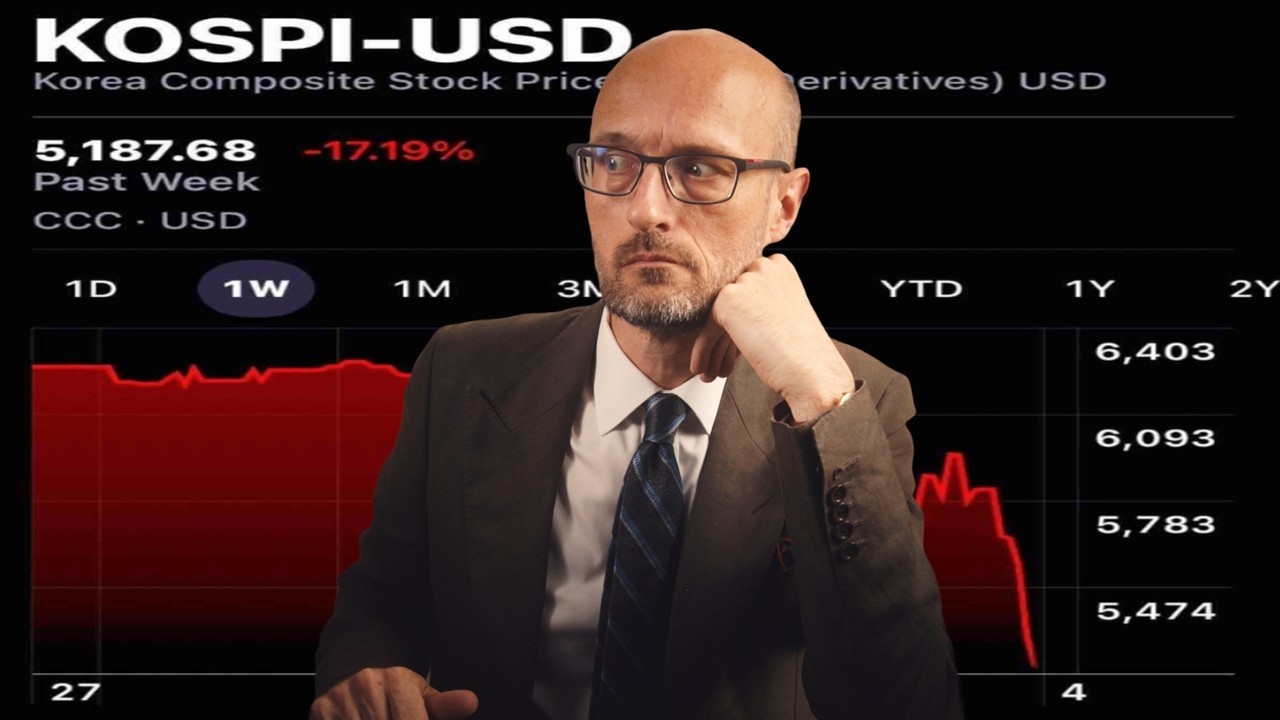
The World’s Best Stock Market Is Also Crashing: What Investors Need to Know
For years, one stock market has been the envy of the world—a relentless bull run that made early investors rich and attracted global capital. But now, that same market is experiencing a dramatic reversal.
For years, one stock market has been the envy of the world—a relentless bull run that made early investors rich and attracted global capital. But now, that same market is experiencing a dramatic reversal. In a paradox that has left many analysts scratching their heads, the market that was once the best performer is now leading the downturn. This article explains what happened, why it matters, and what investors should watch next.
The Market That Outperformed All Others
From 2023 through mid-2024, the Indian stock market was the undisputed global champion. The Nifty 50 index, which tracks the 50 largest companies listed on the National Stock Exchange of India, delivered returns that far exceeded those of the S&P 500, the Nikkei 225, and every other major index. Foreign institutional investors poured billions into Indian equities, drawn by the country’s strong GDP growth, a young and expanding workforce, and pro-business government policies.
By September 2024, the Nifty 50 had risen by nearly 40% over the previous 18 months. The market capitalization of Indian stocks crossed $5 trillion for the first time. Optimism was so high that many analysts predicted the rally would continue for years.
The Sudden Reversal
Then came the crash. Starting in October 2024, the Indian stock market began to fall—and it has not stopped. As of early 2025, the Nifty 50 has lost more than 15% from its peak. Some individual stocks have fallen by 30% or more. The same foreign investors who were buying aggressively are now selling just as aggressively.
What caused this sudden change? The answer lies in a combination of global and domestic factors.
Global Headwinds
The first factor is the change in US interest rate policy. The US Federal Reserve, after a long period of high rates, signaled in late 2024 that it would keep rates higher for longer than markets had expected. This made US bonds more attractive compared to emerging market stocks. Foreign investors began to pull money out of India and other emerging markets to reinvest in safer US assets.
The second global factor is the strength of the US dollar. When the dollar strengthens, it becomes more expensive for foreign investors to hold Indian stocks. The dollar index rose sharply in late 2024, triggering a wave of selling.
Domestic Pressures
Within India, several issues compounded the problem. Corporate earnings, which had been growing at a rapid pace, began to slow. Many companies reported lower-than-expected profits for the third quarter of 2024. This disappointed investors who had been paying high prices for stocks based on expectations of continued strong growth.
Valuations had become stretched. The price-to-earnings (P/E) ratio of the Nifty 50 had reached over 24, well above its historical average of around 20. When earnings growth slowed, investors realized that stocks were overpriced and began to sell.
Regulatory concerns also played a role. India’s securities regulator, SEBI, introduced new rules to curb excessive speculation in the derivatives market. While these rules were intended to protect retail investors, they also reduced trading volumes and liquidity, adding to the selling pressure.
The Impact on Different Sectors
The sell-off has not been uniform. Some sectors have been hit harder than others.
Information Technology (IT): Indian IT companies, which earn a large portion of their revenue from the US and Europe, have been particularly affected. Concerns about a potential recession in the US have led clients to cut spending on technology services. The Nifty IT index has fallen by over 20% from its peak.
Banking and Financial Services: Banks initially held up well, but as the sell-off deepened, even the largest banks have seen their stocks decline. Worries about rising bad loans and a slowdown in credit growth have weighed on the sector.
Consumer Goods: Companies that sell to Indian consumers have been relatively more resilient. However, even this sector has not been immune, as rising inflation and higher borrowing costs have squeezed household budgets.
What the Data Shows
The scale of the sell-off becomes clear when looking at the numbers. In the last three months of 2024, foreign institutional investors sold Indian stocks worth more than $15 billion—the largest quarterly outflow in over a decade. Domestic institutional investors, such as mutual funds and insurance companies, have tried to absorb some of the selling, but they have not been able to stop the decline.
The Indian rupee has also weakened against the US dollar, falling to a record low. This has made imports more expensive and added to inflationary pressures, further hurting consumer spending and corporate profits.
Is This a Buying Opportunity?
Some investors see the current downturn as a chance to buy quality stocks at lower prices. They argue that India’s long-term fundamentals remain strong. The country’s GDP is still growing at around 6-7% annually, which is among the fastest in the world. The government continues to invest in infrastructure, and the digital economy is expanding rapidly.
However, others caution that the correction may not be over. They point out that valuations, while lower, are still not cheap by historical standards. The earnings outlook remains uncertain, and global risks—such as a potential trade war or a deeper slowdown in the US—could trigger further selling.
What to Watch Next
Investors should monitor several key indicators in the coming weeks and months:
- US Federal Reserve policy: Any signal that the Fed will cut rates could trigger a rebound in emerging markets, including India.
- Indian corporate earnings: The next earnings season, starting in April 2025, will be critical. If companies report better-than-expected profits, it could restore confidence.
- Foreign investment flows: If foreign selling slows or reverses, it would be a positive sign.
- Domestic policy: Any new government measures to boost the economy or attract investment could help stabilize the market.
Conclusion
The Indian stock market’s fall from grace is a powerful reminder that no market rises forever. The same factors that drove its extraordinary rally—strong global liquidity, low US interest rates, and high investor optimism—have now turned against it. While India’s long-term story remains intact, the short-term outlook is uncertain. Investors should approach the market with caution, focus on fundamentals, and be prepared for further volatility.
The world’s best stock market is also crashing. But for patient investors, this may eventually become an opportunity—if they can weather the storm.
Related Coverage
Record Markets, Endless Wars: How a Broken Global Economy Fuels Crisis as Millions Suffer
Global stock markets are smashing records, with the Dow Jones Industrial Average closing above 52,000 for the first time and Spain’s Ibex 35 hitting an all-time high near 20,000 points [14618]. Yet beneath this wave of investor euphoria, a cascade of interconnected crises—collapsing peace deals, escalating wars, a record-breaking climate emergency, and mounting debt burdens—is pushing the world’s most vulnerable populations to the brink, all driven by a global economic system that prioritizes military spending and corporate profit over human welfare [14624][14634][14649].
Global Markets in Meltdown: Tech Stocks Crash 10% in South Korea, Dollar Hits One-Year High
Global financial markets are in turmoil as a massive selloff in technology stocks sweeps across Asia and Europe, while the U.S. dollar surges to its strongest level in a year after the Federal Reserve signaled it will keep interest rates high.
Record Markets, Endless Wars: How a Broken System Fuels Global Crisis as Millions Mourn and Nations Burn
Global stock markets are smashing records, with the Dow Jones Industrial Average closing above 52,000 for the first time, yet beneath this wave of investor euphoria, a cascade of interconnected crises—collapsing peace deals, escalating wars, a record-breaking climate emergency, and mounting debt burdens—is pushing the world’s most vulnerable populations to the brink, driven by a global economic system that prioritizes military spending and corporate profit over human welfare.
South Korea’s KOSPI Crashes 44%—$2 Trillion Wiped Out in 40-Day AI Chip Selloff
South Korea’s main stock index has plunged nearly 44% in just 40 days, erasing about $2 trillion in market value as a brutal selloff in artificial intelligence and semiconductor stocks shakes the country’s export-driven economy [207274]. The KOSPI suffered its worst single-day drop in years, falling 11% in one session, as investors panicked over rising competition from Chinese chipmakers and fears that the AI boom is overinflated [206335][206120].
Global Markets Soar to Records as War, Climate Crisis, and Debt Crush the Vulnerable
Stock markets around the world are smashing records, with the Dow Jones Industrial Average closing above 52,000 for the first time and Spain’s Ibex 35 hitting an all-time high near 20,000 points [14618]. Yet beneath this wave of investor euphoria, a cascade of interconnected crises—collapsing peace deals, escalating wars, a record-breaking climate emergency, and a mounting debt burden—is pushing the world’s most vulnerable populations to the brink, all driven by a global economic system that prioritizes military spending and corporate profit over human welfare [14605][14621].
Record Markets, Endless Wars: How a Broken Global Economy Fuels Crisis as Millions Suffer
Global stock markets are smashing records, with the Dow Jones Industrial Average closing above 52,000 for the first time and Spain’s Ibex 35 hitting an all-time high near 20,000 points [14618]. Yet beneath this wave of investor euphoria, a cascade of interconnected crises—collapsing peace deals, escalating wars, a record-breaking climate emergency, and mounting debt burdens—is pushing the world’s most vulnerable populations to the brink, all driven by a global economic system that prioritizes military spending and corporate profit over human welfare.
Related Editorials
The Startup Nation’s Reckoning: Why Israel’s Economic Miracle Is Hitting a Wall
For decades, Israel has been celebrated as the “Startup Nation,” a global powerhouse of innovation, boasting more NASDAQ-listed companies than any country outside North America and a tech sector that attracts billions in foreign investment. Its economy has weathered wars, intifadas, and global rece
The 50% Wipeout: Why This Market Crash Could Be Different
The warnings are growing louder. According to a growing chorus of financial analysts, the stock market is not merely due for a correction—it is facing a potential collapse that could erase half of its value.
Australia’s Economic Paradox: Why the Lucky Country Is Running Out of Luck
For decades, Australia has been the envy of the developed world. It weathered the 2008 global financial crisis without entering a recession, thanks to a mining boom fueled by China’s insatiable demand for iron ore and coal.
Argentina’s Economic Miracle Is Unraveling
Last year, Argentina’s chainsaw-wielding President Javier Milei appeared unstoppable. GDP growth was rising, inflation was falling, and his approval ratings were sky-high.