Australia’s Economic Paradox: Why the Lucky Country Is Running Out of Luck
For decades, Australia has been the envy of the developed world. It weathered the 2008 global financial crisis without entering a recession, thanks to a mining boom fueled by China’s insatiable demand for iron ore and coal.
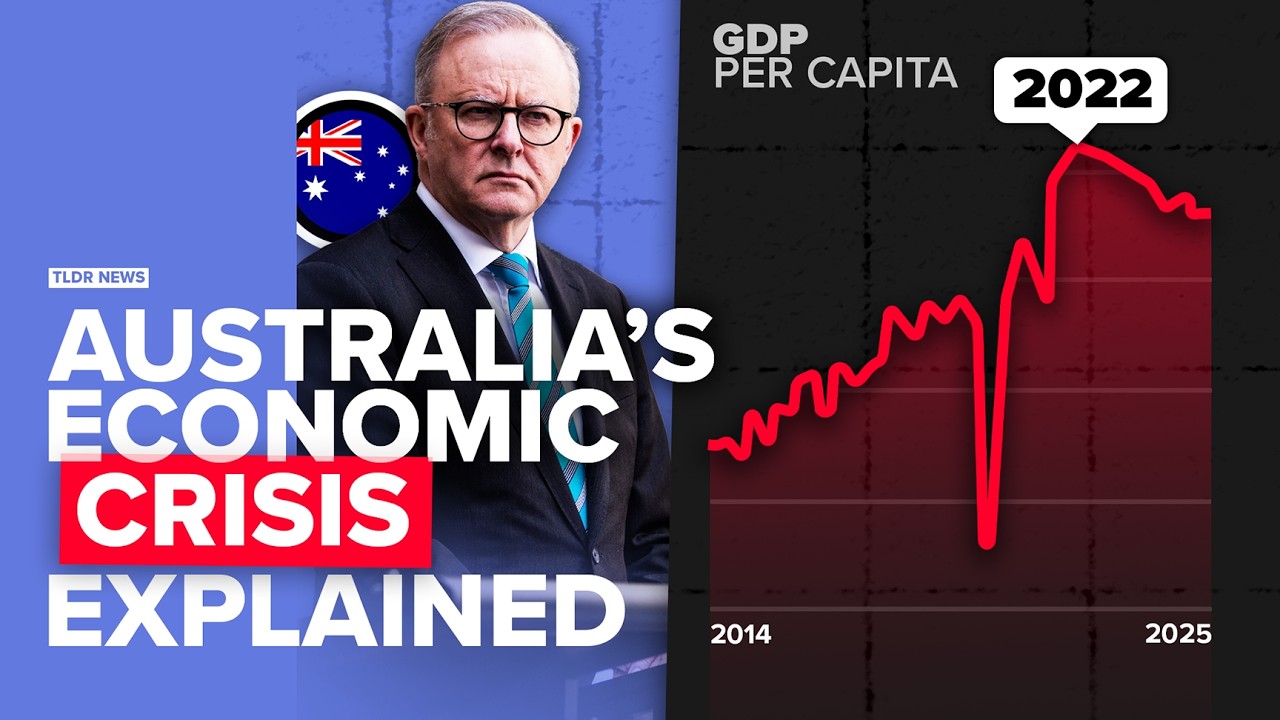
For decades, Australia has been the envy of the developed world. It weathered the 2008 global financial crisis without entering a recession, thanks to a mining boom fueled by China’s insatiable demand for iron ore and coal. The economy grew, wages rose, and the "Lucky Country" moniker seemed permanent. But today, that narrative has shifted. Beneath the surface of a resilient labor market, a troubling paradox has emerged: Australia’s economy is stagnating, productivity is falling, and the standard of living is quietly eroding.
This is not a story of sudden collapse, but of a slow, structural decline driven by policy inertia, over-reliance on commodities, and a housing market that has cannibalized the nation’s future. To understand what has gone wrong, we must dissect the three pillars of Australia’s economic malaise: the productivity slump, the housing trap, and the fiscal handcuffs.
The Productivity Paradox
The most alarming indicator is productivity. For the first time since the 1980s, Australia’s labour productivity—the amount of output produced per hour worked—has fallen for six consecutive quarters. This is not a statistical blip; it is a systemic failure. When productivity stalls, wages stagnate, and the cost of living rises faster than income.
The causes are multifaceted. The mining boom that once supercharged the economy has matured. The "easy wins" of the 2000s—massive capital investment in extraction—have faded, leaving a gap that services and manufacturing have failed to fill. Unlike the United States or Germany, Australia lacks a robust high-tech export sector. Innovation is stifled by a "tall poppy syndrome" in corporate culture and a tax system that penalizes risk-taking.
Furthermore, the digital adoption gap is widening. While the U.S. and Europe have seen a surge in AI and automation investment, Australian businesses lag. A 2023 report by the Productivity Commission found that Australia ranks 19th out of 38 OECD countries for digital intensity. This is not a failure of workers, but a failure of management and policy to incentivize adaptation.
The Housing Trap
If productivity is the engine, housing is the anchor dragging it down. Australia’s property market is a behemoth, valued at over AUD 10 trillion—roughly four times the size of the entire economy. For decades, this was seen as a strength. In reality, it has become a wealth extraction mechanism that punishes the young and strangles mobility.
The core issue is supply. Years of restrictive zoning laws, high construction costs, and a tax code that heavily favors property investment have created a structural shortage. The result is that housing prices have decoupled from wages. The average home in Sydney now costs over 13 times the average annual salary, making it one of the most unaffordable cities on Earth.
This has profound macroeconomic consequences. Capital that could be invested in productive businesses is instead funneled into real estate. Negative gearing—a tax break that allows investors to deduct losses on property—distorts investment decisions. It encourages speculation over development. Consequently, a generation of Australians is locked out of homeownership, forced to rent, and unable to accumulate the capital needed to start businesses or take risks. The economy is effectively eating its own seed corn.
The Fiscal Handcuffs
The final piece of the puzzle is the government’s fiscal position. The public debt is manageable by international standards, but the trajectory is concerning. The government is facing a "structural deficit"—meaning it spends more than it takes in, regardless of the economic cycle.
This is driven by two pressures. First, an aging population is increasing healthcare and pension costs. Second, tax revenue is overly reliant on corporate taxes from mining and personal income taxes. When commodity prices fall—as they are beginning to do with the global energy transition—the budget bleeds.
This creates a policy paralysis. The government cannot afford to invest in the infrastructure and education needed to boost productivity, yet it also cannot afford to cut spending without hurting the social safety net. The Reserve Bank of Australia (RBA) is caught in the middle, forced to keep interest rates high to combat inflation, which further chokes investment and exacerbates the housing crisis.
The Road Ahead
Australia is not facing a 2008-style crash. The banks are well-capitalized, and unemployment remains low. But the country is facing a "lost decade" if it does not act. The path forward is politically difficult but economically clear.
First, tax reform is non-negotiable. The negative gearing loophole must be closed, and the capital gains tax discount should be reduced. These savings should be redirected toward research and development tax credits and infrastructure for renewable energy.
Second, housing supply must be treated as a national security issue. This means overriding local zoning objections to build high-density housing near transport hubs. It means fast-tracking approvals and investing in prefabricated construction to lower costs.
Finally, Australia must pivot its export strategy. The world is decarbonizing, and reliance on coal and gas is a sunset industry. The nation has vast potential in green hydrogen, critical minerals, and battery storage. But this requires a coordinated industrial policy—something Australia has historically avoided.
Australia’s economy is not broken, but it is bruised. The question is whether its leaders have the courage to perform the surgery necessary to save the patient. The "Lucky Country" has survived on luck for too long. It is time for strategy.
Related Coverage
Militarization and Profit: How War, Energy Shocks, and Runaway Arms Spending Are Draining Public Wealth Worldwide
A wave of converging crises—oil chokepoint seizures, escalating wars, climate disasters, and an artificial intelligence arms race—is squeezing ordinary households while powerful interests reap record profits, diverting crucial public resources from health, education, and social needs toward conflict and profiteering.
When Power Trumps People: How War, Climate Chaos, and an AI Debt Bubble Are Reshaping Global Politics
The global order is buckling under the weight of interconnected crises, where the pursuit of geopolitical power and corporate profit is colliding with fundamental human needs, leaving the world’s most vulnerable populations to bear the heaviest burden of inflation, displacement, and violence. From the closed oil routes of the Strait of Hormuz and the escalating aerial war in Ukraine to drought-parched rivers across Europe and famine-stricken regions of Africa, a cascade of emergencies is diverting public resources away from social welfare and toward conflict [15614][15642]. At the center of this turmoil lies a massive arms trade and militarization drive that escalates global insecurity for the benefit of a few, while the financial system itself teeters on an artificial intelligence debt bubble that central banks and sovereign wealth funds warn is overheating [15672].
Related Editorials
The End of Contentment: Why Global Stability Is Fracturing
For decades, a fragile global equilibrium held: cheap energy from Russia, ultra-efficient manufacturing from China, and a security umbrella provided by the United States. This arrangement delivered unprecedented prosperity to the developed world.
Canada’s Economic Crisis: A Global Warning
Canada has long been held up as a model of stability—a wealthy G7 nation with abundant natural resources, a strong banking system, and universal healthcare. Yet beneath this veneer of prosperity, a quiet crisis has been unfolding.
The Great Contradiction: How Neoliberal Austerity Made Britain’s Debt Explode
In the aftermath of the 2008 financial crisis, a political consensus emerged across much of the Western world: governments had spent too much, and the only path to prosperity was deep, immediate spending cuts. Nowhere was this experiment pursued with more ideological fervour than in the United King
Japan’s Debt Time Bomb: Is the World’s Largest Fiscal Experiment Finally Failing?
For decades, Japan has defied economic gravity. While economists warned that its national debt—the highest in the developed world at over 260 percent of GDP—would trigger a catastrophic collapse, the country continued to borrow cheaply, pay its bills, and keep its markets stable.
The World’s Best Stock Market Is Also Crashing: What Investors Need to Know
For years, one stock market has been the envy of the world—a relentless bull run that made early investors rich and attracted global capital. But now, that same market is experiencing a dramatic reversal.
Australia’s Quiet Rise as the Pacific’s New Power Broker
For decades, the Pacific Islands were viewed by much of the world as a postcard backdrop—remote, idyllic, and strategically peripheral. That perception has shifted dramatically.