Iran Exports 80M Barrels, Strikes Hormuz Corridor Deal With Oman as US Sanctions Bite
Iran says it has shipped 70 to 80 million barrels of oil despite the maritime blockade, while Tehran and Oman have agreed to open a temporary shipping corridor through the Strait of Hormuz — but the waterway stays closed unless the United States accepts their terms [228887][228884][228081].
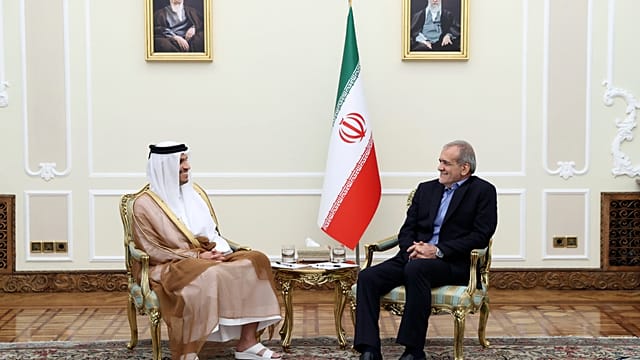
Diplomatic efforts to ease tensions around the Strait of Hormuz intensified this week as Qatar’s foreign minister met with Iranian officials in Tehran, following a report that an oil tanker was struck by an unknown projectile in the strategic waterway [228856]. The United Kingdom Maritime Trade Organization (UKMTO), which monitors maritime security, did not say who fired the projectile or how much damage was caused [228856].
Qatar and Iran are discussing the creation of a temporary shipping corridor through the strait, a narrow passage between the Persian Gulf and the Gulf of Oman through which about one-fifth of the world’s oil passes daily [228816]. A temporary corridor would allow cargo ships to move more predictably during a period of heightened tensions, though details on its terms, duration, or operational rules have not been publicly released [228816].
The foreign ministers of Oman and Iran have called for “practical understandings” to restore safe navigation through the strait, focusing on easing tensions and resuming normal traffic [224481]. In a phone conversation, the two ministers reviewed regional developments and discussed the safe passage of vessels [224352]. Both sides agreed on the need for concrete measures rather than broad promises, signaling a potential easing of maritime tensions in the coming weeks [224481].
Iran’s Revolutionary Guards said Wednesday that Iran and Oman have agreed on how to share control and revenues from the strait, but the waterway will stay closed unless the United States accepts their terms [228081]. Most shipping through the strait has stopped since the conflict began in February, cutting off vital energy supplies and shaking world markets [228081]. Iran also dismissed U.S. claims that mines in the area had been cleared [228884].
The secretary of Iran’s Supreme National Security Council said Tehran broke the maritime blockade during the ceasefire and exported between 70 and 80 million barrels of oil [228887]. The official did not specify the time period for the exports or the buyers involved, and the claim is difficult to verify independently [228887]. Iran has repeatedly said it will not accept limits on its oil trade [228887].
Iran has warned it will respond harshly to expanded U.S. sanctions, including measures aimed at countries that cooperate with Washington [226523]. Officials in Tehran say the sanctions hurt ordinary people but will not change the government’s position [226523].
Pakistan’s army chief and Iran’s top diplomat met Wednesday to discuss how to revive direct negotiations between Tehran and Washington [225519]. Iran’s direct talks with the United States have been frozen for months, and the two nations have not had formal diplomatic relations since 1980 [225519].
Egypt’s foreign minister met Qatar’s prime minister in Cairo to discuss bilateral cooperation and ways to reduce regional tensions, with a focus on the Strait of Hormuz [224442]. Both sides stressed the need for dialogue to avoid further escalation [224442].
Iran’s President Masoud Pezeshkian said his country is ready to move beyond “painful events” with Qatar and restore bilateral cooperation, stressing that all legal rights of the Iranian people must be fully recognized [228910]. He offered no concrete timeline or details on what steps either side might take next [228910].
Qatar’s prime minister arrived in Iran on Thursday for talks aimed at reducing tensions between Tehran and Washington, acting as a mediator in a region where a single mistake could spark a wider war [228501].