Latest News
Stay updated with the latest news and articles
Top Stories
AI Companions for the Elderly: China’s Tech Giants Target 400 Million Seniors
AI Companions for the Elderly: China’s Tech Giants Target 400 Million Seniors A wave of artificial intelligence (AI) chatbots is being redesigned in China to serve as digital companions for the country’s rapidly aging population [129203]. Tech companies are retooling their popular AI assistants with features tailored for seniors, aiming to combat loneliness and provide daily assistance. The push targets a massive demographic shift. By 2035, an estimated 400 million people in China will be aged 60 or over, creating a vast new market for digital services [129203]. To reach this group, companies are moving beyond text-based interfaces. The updated chatbots operate by voice, eliminating the need to type, and are trained to understand local dialects instead of only formal Mandarin [129203]. Responses are programmed to be slower, louder, and more repetitive to accommodate older users [129203]. Seniors can ask these "Auntie AIs" to perform tasks like telling stories, playing traditional opera, or giving reminders to take medicine [129203]. For families, the technology offers a way to remotely check on older relatives who may live alone [129203]. Parallel developments in other countries show a similar focus on using technology to support seniors. In some communities, virtual reality (VR) programs are being introduced in senior living facilities to help residents combat social isolation through shared virtual experiences [129485]. These VR tools are designed with simple controls and familiar scenarios to reduce technical barriers [129485]. Tech analysts see the senior market as a major, mostly untapped business opportunity [129203]. Success hinges on making the technology feel familiar, helpful, and trustworthy rather than complex [129203]. If the strategy proves effective, AI companions could become a common feature in households across China, changing how millions experience aging [129203]. China’s AI Chatbots Get a New Job: Babysit Grandma VR for Seniors: Fighting Loneliness with Virtual Reality


Olympic Dreams Drive Athletes Through Setbacks, Delays, and Defiance
Olympic Dreams Drive Athletes Through Setbacks, Delays, and Defiance From GPS failures to snowstorms and political bans, athletes worldwide are pushing through significant obstacles in their determined pursuit of major sporting goals this weekend. In Poland, the British athletics team's arrival at the World Indoor Championships was delayed by a faulty aircraft navigation system [107260]. Despite the disrupted travel, star runner Keely Hodgkinson remains focused on her target: winning her first world gold medal. "I couldn't ask to be in a better position," Hodgkinson stated [107260]. Weather is causing major disruptions at the Winter Olympics, where a heavy snowstorm forced the postponement of the women's slopestyle skiing finals [78851]. Other events, including freestyle skiing's big air qualification and curling matches, are proceeding under challenging conditions [78851]. For some, the barriers are political. A group of Afghan refugee women, who fled after the Taliban banned women's sports, have formed a new soccer team in Houston, Texas, rebuilding community and identity through the game [20194]. Meanwhile, in the last Olympic sport that excludes women—Nordic combined—athletes are urging fans to watch the men's events this week, hoping high TV ratings will prove the interest needed to add a women's competition by 2030 [77899]. The drive to compete persists even against long odds. Three American sisters, each specializing in a different skiing discipline, continue to train together with their sights set on qualifying for the 2026 Winter Games [70176]. At the Paralympics, American Dani Aravich is attempting a rare double, competing in both track sprints and the long jump, aiming to inspire young athletes with disabilities [95020]. As competitions from the Africa Cup of Nations to World Darts unfold this weekend, the central story remains the athletes' unwavering commitment to their sports in the face of logistical, environmental, and societal challenges [40057]. British Team's GPS Fails, But Star Athlete's Focus is Unbreakable Too Much Snow: Women's Slopestyle Postponed at Winter Olympics Afghan Refugee Women Build New Team and Community on the Soccer Field One Sport Bans Women. This Week's TV Ratings Could End It. Olympic Dream Still Alive for Three-Sister Ski Team Paralympian Races for Two Medals, One Mission Sports Weekend: Darts Final, Cricket, and Africa's Cup Kick Off

Forget the Algorithm: From Burundi to the Arctic, Locals Fight to Save Culture from Fads and Forgetting
**Forget the Algorithm: From Burundi to the Arctic, Locals Fight to Save Culture from Fads and Forgetting** From the remote villages of Burundi to the Arctic homes of Sámi DJs, communities worldwide are mobilizing grassroots efforts to protect their unique cultural heritage from the dual threats of homogenization and fleeting viral trends. These movements emphasize deep, sustained practice over superficial online appreciation, using everything from children’s books to electronic music as tools for preservation. In Burundi, writer Aïta Chancella Kanyange, 33, is safeguarding traditions by authoring simple children’s stories. Her books, written for kids aged 2 to 10, are designed to pass on national customs and values in accessible language, ensuring the country’s rich heritage is not lost to modernization [129635]. Similarly, in Syria, the ancient craft of embroidery has endured through years of war. Researcher Heike Weber calls it a powerful symbol of living cultural identity, a deeply rooted form of expression that survives as a testament to resilience despite widespread physical destruction [47200]. The Circassian community in Syria also exemplifies this balance, having preserved its unique language and customs for over a century while fully integrating into national society [36001]. This work of preservation is also being done through sound. In Norway, the Sámi DJ duo Article 3, comprising Alice Marie Jektevik and Petra Laiti, draws direct inspiration from their Indigenous heritage. They blend modern electronic beats with traditional Sámi rhythmic singing, or *joik*, meeting a growing audience appetite for authentic Indigenous culture in global music [79759]. Meanwhile, a new collection of Ukrainian Christmas carols, or *koliadky*, connects centuries-old folk chants to the present, with scholars noting the songs have long preserved language and identity during periods of oppression [32337]. These sustained efforts stand in contrast to viral, short-lived internet trends. The recent "Chinamaxxing" phenomenon, which saw people globally adopting Chinese habits like drinking hot water for online content, highlighted a tension. For many Chinese people, watching lifelong customs become a temporary meme raises questions about the depth of such online appreciation [109231]. Experts stress that true cultural continuity requires more than passing fascination. As Chinese writer Feng Jicai explains about the Spring Festival, it is a "cultural river" that has flowed for thousands of years, offering a vital, living link to history and identity—far more profound than holiday imagery alone [84043]. Burundian Author Fights to Save Culture with Children's Books Syrian Embroidery Survives War, Defines Identity Syria's North Caucasus Legacy: The Circassians' Enduring Identity Remote DJs Rise with Sámi Sound, Fueling Indigenous Pride Ukrainian Christmas Carols: Ancient Sounds of Defiance and Hope Chinamaxxing: When Your Culture Becomes a Viral Meme Feng Jicai: Chinese New Year is More Than Fireworks

Private Healthcare Boom Sparks Fears of a "Two-Tier" UK Health System
Private Healthcare Boom Sparks Fears of a "Two-Tier" UK Health System
A surge in Britons turning to private doctors is triggering warnings of a deepening "two-tier" health system, where timely care increasingly depends on a patient's ability to pay.
Experts point to the ongoing crisis in National Health Service (NHS) dentistry as a blueprint for what could happen across general medicine. Many NHS patients now struggle to find affordable dental appointments, forcing those who can afford it to seek private treatment [129379].
The concern is that this pattern is now repeating. As more people opt for private general practice and hospital care to avoid long NHS waiting lists, the state-funded system could be critically weakened. Critics argue this creates a vicious cycle, draining public support and drawing key medical staff away from the NHS into the private sector [129379].
The debate centers on whether private care relieves pressure on the NHS or ultimately harms it by siphoning off resources. The current situation has sparked a national alarm that the fundamental principle of equal access to care is under threat [129379].
Two-Tier Health Warning: UK's Private Boom Echoes Dental Crisis


U.S. Forces Capture Venezuelan President Maduro in Shock Raid, Sparking Continental Crisis
U.S. Forces Capture Venezuelan President Maduro in Shock Raid, Sparking Continental Crisis U.S. military forces have captured Venezuelan President Nicolás Maduro, forcibly removing him from his country to face criminal charges in New York and triggering a political earthquake across Latin America [41460][41880]. In a surprise operation on Saturday, American troops entered Caracas and detained Maduro, 63, along with his wife [41880]. The Venezuelan leader is now in U.S. custody and is scheduled to appear in a federal court in New York on Monday to face drug trafficking charges [41880]. President Donald Trump announced the capture, stating the U.S. will run Venezuela's government but did not provide a timeline for new elections [41460]. The dramatic seizure of a sitting head of state has split regional governments and set a stark new precedent for foreign intervention in the Americas [47126][47297]. While nations historically critical of Maduro, including Colombia and Brazil, have offered cautious support, others have issued sharp condemnations [47297]. Mexico and Bolivia have denounced the action as a blatant violation of international law and national sovereignty [47297]. Analysts say the operation has revived the long-standing U.S. policy of the Monroe Doctrine, which opposes foreign powers in the Western Hemisphere, and is a direct challenge to China's expanding economic and diplomatic influence in the region [41460][45747]. China has become the leading trading partner and lender for many South American nations in recent years [45747]. Beyond the immediate crisis in Venezuela, the capture has instilled a private, continent-wide fear among leaders of all political stripes, who are now urgently reviewing their own vulnerability to similar foreign actions [47126][47297]. The United Nations Security Council will hold an emergency meeting on Monday at Venezuela's request to address the incident [41880]. U.S. Capture of Venezuela's Maduro Sends Shockwaves Through Latin America U.S. Capture of Maduro Sends Shockwave Through Latin America U.S. Captures Venezuela's Leader, Challenging China's Regional Reach Venezuela's President Seized by U.S., Faces Court in New York Trump Revives US Habit of Ousting Latin American Leaders
Global Leaders Warn "Geoeconomic Warfare" Is Now the World's Top Threat
Global Leaders Warn "Geoeconomic Warfare" Is Now the World's Top Threat A new report from the World Economic Forum (WEF) has identified economic conflict between nations as the most severe and immediate danger to global stability, surpassing traditional military threats [49991]. The warning highlights a world where countries are increasingly weaponizing trade, supply chains, and investment in their strategic rivalries. The WEF's latest Global Risks Report states that this "geoeconomic confrontation" now ranks above all other global dangers for the next two years [49991]. Analysts say this deep integration of geopolitics and economics is creating a volatile environment where every financial and trade decision carries strategic weight. The short-term global risk outlook is dominated by three interconnected threats: geopolitical rivalry, the rapid spread of misinformation, and severe social and political polarization [49991]. The report argues these forces feed into each other, driving nations toward more aggressive economic posturing. This shift occurs against a backdrop of persistent global economic unease, with slowing growth and rising prices putting pressure on governments worldwide [42503]. The weaponization of economic tools threatens to further destabilize recovery efforts and international alliances. The findings will be a central topic at the WEF's annual meeting in Davos, Switzerland, next week, where global leaders will confront the challenge of managing competition without triggering widespread economic disruption [49991]. Geoeconomic Warfare Named Top Global Threat for 2026 **Six Global Flashpoints That Will Define 2026
Governments Unleash 10,000+ Homes in Crackdown on Vacation Rentals and Red Tape
Governments Unleash 10,000+ Homes in Crackdown on Vacation Rentals and Red Tape In a series of aggressive moves from Hawaii to the Netherlands, governments are directly confronting severe housing shortages by seizing tourist accommodations, streamlining construction, and passing major new legislation aimed at flooding the market with new homes. Hawaii’s governor has ordered the conversion of 10,000 short-term rental units into local housing, a drastic measure targeting the state’s critical shortage [61634]. Officials plan to use new laws and tax rules to force condos and houses currently used for tourists back into the long-term rental market for residents [61634]. This action mirrors a global conflict seen in tourist hotspots like Cape Town, where a surge in short-term rentals via platforms like Airbnb has pushed rents and property prices beyond the reach of local workers [39353]. The economic benefits of tourism are creating a severe housing shortage, displacing residents to distant outskirts or illegal settlements [117472]. Meanwhile, in the Netherlands, the new housing minister—a former top military officer—has launched a campaign to build 100,000 homes a year to address a deficit of 400,000 units [108952]. Her strategy focuses on cutting complex rules and speeding up a notoriously slow planning process, declaring, “Luxury takes time. We don’t have time” [108952]. In the United States, the Senate passed the most significant housing bill in decades with strong bipartisan support, aiming to lower costs by increasing the supply of new homes [100719][100991]. Senator Elizabeth Warren summarized the approach: “It will bring down housing costs by just having more of it” [100991]. The legislative package, which includes funding and policy changes to encourage construction, now faces an uncertain path in the House of Representatives [100719]. These government interventions highlight a widespread shift toward treating housing scarcity as a crisis requiring direct supply-side solutions, from reclaiming existing stock to accelerating the creation of new units. Hawaii to Seize 10,000 Vacation Rentals in Housing Crisis Move From Battlefield to Building Sites: Ex-General Takes On Dutch Housing Crisis U.S. Senate Passes Major Housing Bill, But House Hurdle Looms Senate Passes Bill to "Flood the Market" with New Homes Tourism Boom Pushes Workers Into Illegal Homes Tourists in Luxury, Locals in Shacks: Cape Town's Coastal Divide

Wall Street Banks Rake in $16.5 Billion as Middle East Conflict Sparks Trading Frenzy
Wall Street Banks Rake in $16.5 Billion as Middle East Conflict Sparks Trading Frenzy Major Wall Street banks have reported surging profits, collectively earning billions from a trading boom ignited by market volatility following Iran's attack on Israel. The surge highlights how global geopolitical shocks translate directly into windfalls for the world's largest financial institutions. JPMorgan Chase kicked off the earnings season by posting a massive $16.5 billion profit for the first quarter, its second-best result ever [128412]. The bank's CEO, Jamie Dimon, stated the institution was prepared for volatile environments as clients rushed to trade and hedge investments amid the uncertainty [128412]. The trend continued across the street. Morgan Stanley capped the season with a 30% jump in profit, powered by the same surge in client trading activity [129683]. Analysts note that banks profit from fees generated when customers buy and sell stocks, bonds, and other assets in reaction to shifting prices and uncertainty [129683]. The immediate trigger was the unprecedented direct attack by Iran on Israel, which initially sparked a global sell-off as investors fled to safe-haven assets [128437]. However, as the immediate fears of a major regional escalation subsided, markets rebounded sharply, creating a whirlwind of trading opportunities [128231][128437]. This volatility proved extremely lucrative for bank trading desks. "Across Wall Street, trading desks have seen major gains," one analysis noted, as the conflict drove a boom in transaction volume [129683]. The results demonstrate the powerful mechanism by which periods of global instability can fuel record profits for major investment banks. Wall Street's War Windfall: Bank Profits Surge on Middle East Volatility JPMorgan's $16.5 Billion Quarter: Fueled by Market Chaos Iran Attack Fallout Fades: Asian Markets Rebound Sharply Iran Attack Fears Fade, Asian Stocks Surge


Global Energy Crisis Deepens as Nations Scramble for Alternatives Amid Middle East Conflict
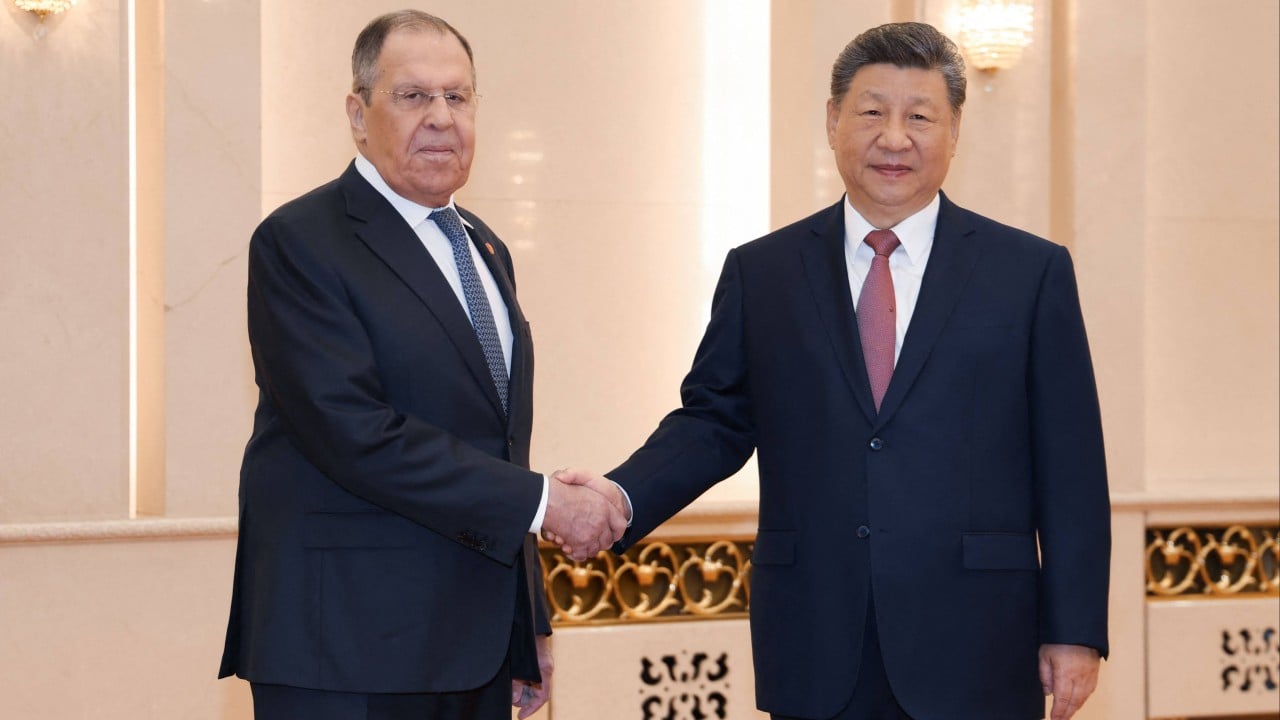
Global Energy Crisis Deepens as Nations Scramble for Alternatives Amid Middle East Conflict A widening war in the Middle East has triggered a global energy crisis, forcing nations to seek emergency oil deals and alternative suppliers as a critical shipping chokepoint remains blocked. The disruption is driving up fuel prices worldwide and threatening to push millions into poverty [128236]. The core of the crisis is the effective closure of the Strait of Hormuz, a major route for seaborne oil and gas shipments, due to regional hostilities [129561]. This blockade has sent shockwaves through the global economy, reversing inflation progress in war-torn Ukraine and creating severe economic pressure on vulnerable African nations [128542][129561]. In response, countries are urgently pursuing new alliances and supply routes. Indonesia's new president flew to Moscow to negotiate an emergency deal for cheap Russian oil, aiming to shield his country from soaring costs [128236]. Similarly, China dispatched a high-level official to Turkmenistan to secure more natural gas via overland pipelines, seeking reliable alternatives to vulnerable maritime shipments [128463]. Russia has positioned itself as a solution to the shortage. Foreign Minister Sergey Lavrov stated that Russia is ready to "compensate for the shortfall" in global energy supplies caused by the Middle East conflict [129421]. He made the declaration during a meeting in Beijing with Chinese leader Xi Jinping, where the two allies reinforced their "unshakeable" partnership against what they termed global instability [129421][129011]. The price surge is having a direct human impact. In Indonesia, officials warn that millions of citizens risk being pushed into poverty by rising fuel costs, prompting the desperate diplomatic mission to Russia [128236]. The economic damage is also spreading to Europe, where Ukraine saw fuel costs jump 23% in a single month, forcing its central bank to consider interest rate hikes [128542]. Major energy importers like Japan are also feeling the strain. The Japanese Prime Minister is personally lobbying Australia, its largest supplier of liquefied natural gas, to avoid new taxes on exports that would further increase Japan's energy bills [129018]. Indonesia's New President Flies to Russia for Emergency Oil Deal War's Ripple Effect: African Economies Hit by Gulf Blockades China Seeks Central Asian Gas as Hormuz Blockade Threatens Supplies Middle East Conflict Reverses Ukraine's Wartime Inflation Progress Russia Offers to Replace Blockaded Oil, Calls China Ties "Unshakeable" Japan's PM to Australia: Hands Off Our Gas
Trump's GOP Allies Dodge Questions on His Religious Claims and Mental State
Trump's GOP Allies Dodge Questions on His Religious Claims and Mental State More than a dozen Republican U.S. Senators are refusing to address concerns about former President Donald Trump's recent behavior, including his criticism of the Pope and comparisons of himself to Jesus Christ [129033]. When questioned by reporters, most declined to comment directly, instead using vague descriptors like "a person of enthusiasm" to characterize him [129033]. This pattern of deflection highlights a strategic choice by Trump's party to avoid engaging with questions about his conduct as he campaigns for a return to the White House. The silence from Capitol Hill follows Trump's social media attack on Pope Leo XIV, whom he labeled "weak" and a "globalist" after the pontiff condemned all war [129548]. The controversy touches a key political vulnerability. Catholic voters are a major swing bloc in U.S. elections, and Trump's running mate, JD Vance, is a convert to Catholicism [129548]. Analysts note that alienating this group could be costly in a close race [129548]. The unified front from Republican senators demonstrates a continued focus on defending Trump publicly rather than examining his statements, even those that have shocked religious and political observers [129033]. This dynamic persists as the election season intensifies. Title: Republicans Dodge Questions on Trump's Mental State Trump's Attack on Pope Risks Alienating Catholic Swing Voters

Latest Articles

Germany's 35 Billion Euro Bet on Military Space
Germany has announced a massive 35 billion euro investment into military space systems. This marks a major shift for a nation long hesitant to view s...
Livestream Attack: Influencer Choked and Dragged in NYC
A controversial online personality was violently assaulted during a live broadcast in New York City. The incident occurred while he was streaming fro...
UK Leader Defies Trump Threat Over Iran Policy
British Prime Minister Boris Johnson has stated he will not change his position on Iran, despite pressure from U.S. President Donald Trump. Presiden...
Paris Man Wins Picasso in $140 Raffle, Stuns Art World
A software salesman from Paris has won a Pablo Picasso painting valued at $1.2 million. He bought a raffle ticket for just 140 dollars. The drawing...
Michigan Dam Fails, Forcing Evacuations
A dam has breached near Cheboygan, Michigan. Emergency officials have ordered immediate evacuations. The failure follows days of heavy rain and rapi...
Your Dog Isn't a Genius, and Science Says That's Better
Forget the clever tricks in online videos. New research suggests most pet dogs are not exceptionally intelligent. Scientists argue that average probl...
John Lithgow Uncovers Roald Dahl's "Monstrous" Side in New Play
A new play presents a shocking portrait of beloved children's author Roald Dahl. Actor John Lithgow portrays Dahl as a man who openly expressed hatef...
New Roald Dahl Play Confronts Author's Antisemitism
A new Broadway play is forcing audiences to re-examine the legacy of beloved children's author Roald Dahl. The production does not shy away from his...
LA Rebuilds with Radical New Blueprints After Fires
Los Angeles is rebuilding after devastating wildfires. But it is not simply recreating what was lost. In the fire zones, a wave of experimentation is...
A Final Act of Faith: Last Nun to Decide Fate of Historic Order
An American order of Catholic nuns has made a solemn decision. The Sisters of Charity of Cincinnati will not recruit new members. Instead, they will...
The "Soft Skills" AI Can't Replace: Why That Dreaded Meeting Might Save Your Job
A new focus is emerging in the age of artificial intelligence. As AI handles more technical tasks, uniquely human skills are becoming more valuable....
Forget Human Smarts: AI's "Jagged Intelligence" Reveals Its True Threat
A new concept is changing how experts predict which jobs artificial intelligence will take. The key is to stop comparing AI to human intelligence. I...
National Security: Trump's Answer for Everything?
The Trump administration repeatedly uses "national security" to justify unusual or controversial decisions. This claim is now facing serious legal ch...
Trump Ally Meloni in Diplomatic Storm Over Pope and Iran
A once-close political friendship between former U.S. President Donald Trump and Italian Prime Minister Giorgia Meloni is now under serious strain....
Companies Raise Prices to Protect Record Profits
Major corporations are raising prices for consumers. Their goal is to protect high profit margins, even as inflation begins to ease. This strategy c...
Nations Spend Billions on Energy Crisis, Sparking Debt Fears
Governments worldwide are spending huge amounts of emergency money to shield citizens and companies from high energy prices. Now, experts are warning...

Trump Administration Seeks to Overturn Jan. 6 Seditious Conspiracy Convictions
The Trump administration is taking new legal action to clear the records of extremists convicted for their roles in the January 6, 2021, Capitol riot...

Nairobi's Buses Blast Music, Declare Cool
In Nairobi, the matatu is more than just a bus. It is a loud, rolling art project. These privately owned minibuses are famous for their bright, colo...

Trump Threatens to Fire Fed Chair Powell, Repeats Unfounded Claims
President Donald Trump has again stated he intends to remove Jerome Powell as Chair of the Federal Reserve. He also repeated a disproven accusation a...

Kevin Klose, NPR's Growth Architect, Dies at 84
Kevin Klose, the former president who transformed National Public Radio into a modern media powerhouse, has died. He was 84. Klose led NPR for a dec...