Latest News
Stay updated with the latest news and articles
Top Stories
AI Takes Center Stage at Winter Olympics, Creating Jaw-Dropping Replays and Live Feeds
AI Takes Center Stage at Winter Olympics, Creating Jaw-Dropping Replays and Live Feeds A suite of artificial intelligence (AI) technologies is fundamentally changing how the world watches and experiences the Olympic Games, transforming broadcasts with impossible camera angles and blending vintage photography with instant digital delivery. The global debut of a new AI replay system at the Milano Cortina Winter Olympics allowed millions of viewers to see athletic performances like never before [82096]. When American figure skater Ilia Malinin executed a quadruple jump, the replay used AI to generate a three-dimensional model, creating a video that appeared to orbit around the spinning athlete in mid-air [82096]. This "orbiting" perspective is one of many new views generated not by physical cameras, but by AI software that constructs 3D models from standard broadcast footage [82096]. Beyond dazzling replays, the AI is also assisting officials with judging and generating tailored content for social media platforms [82096]. In a separate project marrying Olympic history with modern demand, photographers are using adapted 70-year-old Graflex cameras to cover the 2026 Games [79782]. The vintage equipment, honoring the 1956 Winter Games also held in Cortina, has been modified to transmit its images directly to smartphones, allowing photos shot on film to be shared live from the event [79782]. Together, these innovations highlight a Games where cutting-edge AI creates new forms of storytelling and bridges decades of technological change for a global audience expecting instant, immersive content. AI Replay Tech Makes Olympic Jumps Spin on Screen Vintage Cameras Capture 2026 Olympics for Modern Crowd


Olympic Holdout Sport Makes Women's Future a Ratings Battle
Olympic Holdout Sport Makes Women's Future a Ratings Battle The last Olympic sport without a women's event is making a direct, high-stakes appeal to television audiences this week. Athletes and advocates for Nordic combined—a sport that combines ski jumping and cross-country skiing—are urging viewers to watch the men's competition, arguing that strong ratings are the key to finally gaining inclusion for women [77899]. Female Nordic combined athletes have campaigned for years to be added to the Olympic program. International Olympic Committee (IOC) officials have previously cited a lack of global reach and development as reasons for their exclusion. The current strategy is to use television audience numbers from the men's events as concrete proof of viewer interest and the sport's viability [77899]. The stated goal is to secure a women's Nordic combined event for the 2030 Winter Olympics. With their competitive future hinging on this data, athletes are in a unique position of encouraging fans to tune into the men's broadcasts. They hope demonstrating substantial viewership will force Olympic organizers to reconsider and end the sport's status as the final all-male holdout in the Games [77899]. One Sport Bans Women. This Week's TV Ratings Could End It.


From Arctic DJs to Earth-Built Hubs: How Communities Are Fighting to Keep Their Cultures Alive
**From Arctic DJs to Earth-Built Hubs: How Communities Are Fighting to Keep Their Cultures Alive** Around the world, from the remote Arctic to bustling global capitals, communities are leveraging creativity and tradition to assert their identities in the face of homogenizing global trends. This movement sees culture not merely as entertainment, but as a vital tool for preservation, resistance, and community building. In Norway’s far north, the Indigenous Sámi DJ duo Article 3 is turning geographic isolation into a musical advantage. By blending modern electronic beats with traditional Sámi rhythmic singing, known as *joik*, they are fueling a growing appetite for Indigenous culture in global club music [79759]. Similarly, in Burundi, author Aïta Chancella Kanyange is using children’s books written in accessible language to pass on national customs and values to the youngest generation, viewing stories as a key tool for preserving a cultural identity under pressure [129635]. This cultural assertion often carries a tone of resilience. In Ukraine, a new collection of Christmas carols, or *koliadky*, connects ancient folk chants to modern adaptations, with many songs historically carrying subtle messages of national identity during periods of oppression [32337]. In Syria, the Circassian community has maintained its unique language and social customs for over a century while fully integrating into national society, serving as a model of sustained cultural preservation [36001]. The physical spaces of culture are also being reimagined to reflect heritage. In Dakar, Senegal, the new Goethe-Institut building, designed by architect Francis Kéré, is constructed primarily from compressed earth blocks. This use of local, sustainable materials makes the institute itself a statement of traditional craftsmanship meeting contemporary global dialogue [131302]. Even within dominant cultural flows, local expressions persist and adapt. The global spread of Korean pop culture, or the "Korean Wave," is shifting influences in regions like Latin America, where K-pop dance practices in public squares are now common [118721]. Meanwhile, figures like Chinese writer Feng Jicai argue that traditions like the Spring Festival represent an unbroken "cultural river" that offers a vital, profound link to history and identity beyond superficial celebration [84043]. These parallel efforts highlight a global pattern: communities are actively using music, literature, architecture, and tradition to ensure their unique heritages endure, adapt, and remain relevant for future generations. Remote DJs Rise with Sámi Sound, Fueling Indigenous Pride Burundian Author Fights to Save Culture with Children's Books Ukrainian Christmas Carols: Ancient Sounds of Defiance and Hope Syria's North Caucasus Legacy: The Circassians' Enduring Identity **Dakar's New Cultural Hub is Built from Earth** Korean Wave Washes Over Latin America, Shifting Cultural Tides Feng Jicai: Chinese New Year is More Than Fireworks

Dangerous "Neck-Hanging" Fitness Trend Alarms Chinese Doctors, Risks Paralysis
Dangerous "Neck-Hanging" Fitness Trend Alarms Chinese Doctors, Risks Paralysis A dangerous fitness trend where people hang by their necks from trees is spreading among young people in China, prompting urgent warnings from doctors about severe and permanent spinal injuries [122710]. The activity, known as "neck-hanging exercise," involves participants suspending their full body weight from tree branches using their head. It is an attempt to mimic professional cervical traction therapy, a medical treatment for neck pain administered by specialists [122710]. Doctors state that performing such traction without supervision uses uncontrolled force and can lead to ligament damage, paralysis, and even stroke [122710]. The trend follows a reported rise in cervical spine disorders in China. An official 2024 health report indicates over 200 million people in the country suffer from such conditions, with more than 40% of patients under the age of 30 [122710]. Despite the clear medical dangers, the practice continues to gain popularity through online platforms [122710]. In a separate but related incident highlighting the risks of extreme exercise, a 23-year-old woman in China's Zhejiang province stopped menstruating after an intense workout regimen caused rapid weight loss [46995]. Hospital tests revealed her hormone levels were comparable to those of a typical 50-year-old woman [46995]. Doctors diagnosed her with related health deficiencies and instructed her to stop all exercise immediately to begin recovery [46995]. Medical experts strongly advise against attempting any form of unsupervised spinal manipulation or extreme physical regimens, emphasizing that professional therapy relies on controlled, measured force applied by trained specialists [122710]. **Dangerous "Neck-Hanging" Trend Alarms Doctors in China** **Young Woman's Extreme Fitness Halts Her Periods**
U.S. Forces Seize Venezuelan President Maduro in Unprecedented Military Raid
U.S. Forces Seize Venezuelan President Maduro in Unprecedented Military Raid In a dramatic escalation, United States military forces captured Venezuelan President Nicolás Maduro in a surprise operation in Caracas, marking the first direct U.S. military attack on a South American nation and sending shockwaves across the region [41064][41460][41880]. The operation, which took place on Saturday, resulted in the detention of Maduro, 63, and his wife. They were subsequently transported out of Venezuela and are now in U.S. custody [41460][41880]. President Donald Trump announced the capture, stating the U.S. would oversee Venezuela's government but did not provide a timeline for new elections [41460]. Maduro is scheduled to appear in a federal court in New York on Monday to face charges of drug trafficking [41880]. The United Nations Security Council will hold an emergency meeting on Monday at Venezuela's request to address the incident [41880]. The action has sharply divided Latin American governments. While nations like Colombia and Brazil have offered cautious support, others, including Mexico and Bolivia, have condemned it as a dangerous violation of international law and sovereignty [47297]. Analysts note that despite public disagreements, the event has instilled a private fear among leaders who are now urgently assessing their own vulnerability to similar foreign interventions [47126][47297]. President Trump framed the operation as a reassertion of American power, declaring that "American dominance in the western hemisphere will never be questioned again" [41064]. Experts warn the move revives the long-standing U.S. "Monroe Doctrine," a policy opposing foreign influence in the Americas, and is seen as a direct challenge to China's growing economic and diplomatic footprint in the region [41460][45747]. The capture sets a major precedent for the extraterritorial apprehension of a sitting head of state, fundamentally altering the geopolitical landscape of Latin America and raising tensions continent-wide [47297][47126]. U.S. Capture of Venezuela's Maduro Sends Shockwaves Through Latin America U.S. Capture of Maduro Sends Shockwave Through Latin America U.S. Captures Venezuela's Leader, Challenging China's Regional Reach Venezuela's President Seized by U.S., Faces Court in New York Trump Revives US Habit of Ousting Latin American Leaders Trump Orders First Direct US Military Attack on South America
Global Leaders Warn "Geoeconomic Warfare" Now Tops List of World's Most Dangerous Threats
Global Leaders Warn "Geoeconomic Warfare" Now Tops List of World's Most Dangerous Threats A new report from the World Economic Forum (WEF) has identified economic conflict between nations as the most severe global risk for the next two years, surpassing traditional threats like armed conflict and climate disasters [49991]. The warning highlights a world where countries are increasingly using trade, supply chains, and investment as weapons in strategic rivalries. The WEF's annual Global Risks Report states that this "geoeconomic confrontation" is the dominant short-term danger, fueled by deepening geopolitical fractures [49991]. The report links this economic weaponization directly to two other top risks: the rapid spread of misinformation and severe social and political polarization worldwide [49991]. Analysts conclude these interconnected forces are creating a highly volatile international environment that threatens global stability and economic growth [49991]. This shift occurs against a backdrop of continued, deep economic interdependence between major powers, which complicates any clean break into rival blocs [6971]. Despite this integration, the strategic competition is intensifying, with the upcoming U.S. presidential election poised to significantly influence the direction of key international policies, from trade to climate [35508]. Observers note that the global order is undergoing a deliberate transformation, with allies and rivals alike preparing for potential shifts in American foreign policy [54213]. The findings will be a central topic at the WEF's upcoming annual meeting in Davos, Switzerland, where global leaders will confront a landscape where economic tools have become the newest instruments of power and conflict [49991]. Geoeconomic Warfare Named Top Global Threat for 2026 Globalization Shifts, But It Doesn't Reverse 2026: A World Shaped by Washington Trump's Plan to Remake the World Order Begins
Governments Take Aim at Housing Shortages with Major Construction and Conversion Plans
Governments Take Aim at Housing Shortages with Major Construction and Conversion Plans Facing severe housing shortages and skyrocketing costs, governments from the United States to Hawaii are pushing aggressive new plans to increase the supply of homes. The strategies range from sweeping national legislation to direct intervention in local rental markets, all targeting the core issue of a lack of affordable places to live. In the United States, the Senate has passed its most significant housing bill in decades with strong bipartisan support. The legislative package is designed to lower costs by funding and encouraging the construction of new homes across the country [100991]. Supporters argue that increasing supply is the primary way to address high prices [100991]. However, the bill's future remains uncertain as it moves to the House of Representatives, where it faces significant political hurdles [100719]. Taking more direct action, Hawaii's governor has ordered the conversion of 10,000 short-term rental units into long-term housing for local residents [61634]. The move directly targets the state's severe shortage, aiming to "return" thousands of condos and houses currently used as vacation rentals to the local market [61634]. Officials blame the prevalence of short-term rentals for driving up prices and forcing residents to leave the islands [61634]. Similarly, in the Netherlands, the new housing minister has declared a mission to build 100,000 homes a year to tackle one of Europe's worst housing shortages [108952]. The country needs an estimated 400,000 new homes, and the minister's strategy focuses on cutting complex rules and speeding up a notoriously slow planning process to break the current construction deadlock [108952]. Other regions are addressing specific housing crunches. Delta State in Nigeria has approved a large-scale project to build new student hostels across nine state-owned institutions to relieve severe accommodation shortages [103687]. In Hong Kong, officials are scrambling to secure land to build subsidized housing to rehouse residents left homeless by a deadly fire [25239]. These government-led initiatives highlight a growing consensus that addressing housing affordability requires direct intervention to increase the number of available homes, whether through new construction or reclaiming units from the tourist market. Senate Passes Bill to "Flood the Market" with New Homes U.S. Senate Passes Major Housing Bill, But House Hurdle Looms Hawaii to Seize 10,000 Vacation Rentals in Housing Crisis Move From Battlefield to Building Sites: Ex-General Takes On Dutch Housing Crisis Delta State Tackles Student Housing Crisis with Major Hostel Expansion Hong Kong Scrambles to Rehouse Deadly Fire Victims

Turkish Stocks Surge Repeatedly as Central Bank Fuels Rally with New Cash Injection
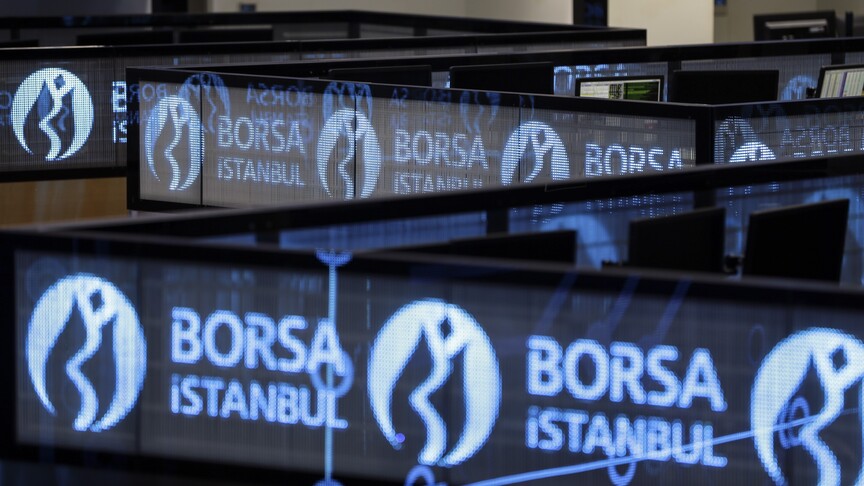
Turkish Stocks Surge Repeatedly as Central Bank Fuels Rally with New Cash Injection Turkey's stock market is experiencing a sustained rally, marked by repeated single-day surges, as a new central bank policy directly funnels cheaper funding into local equities. The benchmark BIST 100 index, which tracks Turkey's top 100 companies, has posted a series of sharp gains. In one session, the index jumped 2.34%, a rise of approximately 316.4 points [71758]. The market opened another day with a powerful surge, gaining 99.1 points at the opening bell [110976]. The rally continued into a new trading year, with the BIST 100 leaping 2.1%, or 236.86 points, on its first session of 2026 [40181]. Analysts directly link the strong performance to a major policy shift by the Central Bank of the Republic of Turkey (CBRT). The bank announced it will provide cheaper financing to lenders who increase their purchases of domestic stocks, a move designed to directly support the equity market [80220]. Following this announcement, the BIST 100 closed with a strong increase of 32.6 points [80220]. The positive momentum has been consistent across multiple sessions. The index opened higher on a Tuesday, gaining 20.8 points [21230], and rose another 34.58 points at the Friday open [131327]. It also gained more than 55 points at the start of a Thursday session [8749] and added 26.64 points at a Wednesday open [33768]. The market closed one Tuesday up 143.73 points, a rise of more than 1% [128734]. Market observers view the BIST 100 as a key indicator of Turkey's financial health and economic sentiment [71758]. The current rally, fueled by targeted central bank action, indicates a period of renewed investor confidence in local assets [40181]. Analysts are now watching to see if this policy-driven positive trend will hold in the coming days and weeks [80220]. Turkish Stocks Surge as Key Index Jumps Over 1% Turkish Stock Market Rises in Early Tuesday Trading Turkish Stock Market Opens Strong, Gaining 34 Points Turkish Stocks Surge 2.3% in Single-Day Rally Turkish Stock Index Rises in Thursday Trading Turkish Stock Market Surges on Central Bank Boost Turkish Stocks Surge at Midweek Open Turkish Stock Market Opens Higher on Tuesday Turkish Stocks Soar 2.1% in First Session of 2026 Turkish Stocks Surge in Midweek Rally

Putin Demands Oligarch Cash and Digs In for Long War as Ukraine Fight Drains Russia
Putin Demands Oligarch Cash and Digs In for Long War as Ukraine Fight Drains Russia Facing severe financial strain from its prolonged invasion of Ukraine, the Kremlin is turning to Russia's wealthiest citizens for direct funding while signaling a commitment to fight indefinitely, according to multiple reports and analyses. Russian President Vladimir Putin has personally asked the country's oligarchs for donations to support the military budget, a move highlighting the growing pressure on state finances [112938]. This request comes as Russia's defense spending surged by 42% last year, widening the budget deficit [112938]. Analysts observing the diplomatic front report a firm, unchanged stance from the Russian leadership, suggesting a strategy built for a prolonged conflict despite the economic difficulty [17910]. An expert on U.S.-Europe relations stated that Russia, believing it holds a strong battlefield position, feels no urgency to negotiate a peace deal [17045]. This resolve was underscored by Putin himself, who declared that Moscow's goals in Ukraine would be achieved "through diplomatic negotiations or continued military force," positioning talks as a tool to secure gains rather than a path to compromise [28790]. U.S. intelligence assessments support this, indicating Putin's ultimate aim extends beyond Ukraine to reclaiming influence over former Soviet states, pointing to a long-term campaign [31282]. Financially, the war effort is taking a toll. To stabilize the economy, the Russian government has raised taxes, including a recent increase in value-added tax, or VAT [112938]. Sanctions have also forced Russia to sell oil at large discounts, reducing state income [112938]. In a meeting with officials, Putin advised a "moderately conservative approach" to spending any extra revenue from global oil prices [112938]. On the ground, Ukrainian President Volodymyr Zelenskyy reported that Russia is using better weather to intensify its attacks, though he claimed Russian army losses have increased even more [108784]. The Russian defense ministry announced the capture of a small village in Ukraine's northern Sumy region [108784]. Internationally, Russia is pursuing a dual-track strategy, analysts say. To European leaders, Russian messages remain aggressive, blaming the West for the conflict, while simultaneously asking the United States to remove "illegal" sanctions and resume trade talks [82150]. Putin has also engaged in a diplomatic surge, holding high-level meetings with the leaders of Turkey and Iran to discuss Ukraine and strengthen regional partnerships [24521]. Putin Seeks Oligarch Donations to Fund War as Defence Budget Strains Putin Signals Long War in Ukraine Amid Economic Strain Russia Holds Advantage, In No Rush on Ukraine Deal, Expert Says Putin: Russia Will Take Ukraine by "Force or Diplomacy" U.S. Intelligence: Putin's Goal is "Former Soviet Empire" Russia Intensifies Attacks as US-Ukraine Peace Talks End Russia's Dual Strategy: Talk War with Europe, Talk Trade with America Putin's Diplomatic Surge: Talks with Turkey, Iran Focus on Ukraine and Regional Crises

Turkish Opposition Leaders Decry "Political Operations" as Government Detentions Spark Crisis
Turkish Opposition Leaders Decry "Political Operations" as Government Detentions Spark Crisis A wave of detentions targeting opposition officials in Turkey has ignited a fierce political crisis, with senior figures accusing the government of orchestrating "political operations" and abandoning the rule of law [73277]. The arrests have drawn sharp condemnation from across the opposition, framing the actions as a direct assault on democratic institutions. The tensions escalated following the detention of a former mayor from the main opposition Republican People'ss Party (CHP) and other officials. Akın Gürlek, a CHP MP, declared the country is not a "state of law" and labeled the legal actions a politically motivated operation [73277]. "The detentions are not based on legitimate law," Gürlek stated. Echoing this sentiment, Istanbul Mayor Ekrem İmamoğlu, who recently faced his own high-profile trial, accused the judiciary of being a political tool. Outside a courthouse, he asserted his trial was "political from the beginning" and accused a leading prosecutor of being a "politician in disguise" who used "the tentacles of an octopus" to send messages to the capital [98374]. The opposition's warnings point to a deepening conflict. CHP leader Özgür Özel forecast difficult days ahead, telling supporters, "Tomorrow morning will be harder than this morning. Let no one have any doubt about that" [73277]. Within this charged climate, opposition politician Halide Türkoğlu argued that the state's suppression extends to fundamental democratic struggles, including women's rights. She stated that “the political institution itself is becoming the most fundamental obstacle in front of women,” and concluded that for the state to become democratic, it must recognize this struggle [92666]. The coordinated statements from opposition leaders frame the recent detentions not as isolated legal events, but as part of a systematic political campaign, setting the stage for further confrontation [73277][98374]. Turkish Opposition MP: "This is a Political Operation, Not Rule of Law" Istanbul Mayor: "This Trial Was Political From the Start" "State Must Recognize Women's Struggle to Become Democratic, Says Turkish Politician"
Latest Articles

Top UK Diplomat Quits After Clashing Over Cuts
A senior British civil servant, brought in to slash costs at the Foreign Office, has resigned after a short and turbulent tenure. Olly Robbins, a po...