Three Summits, One Week: Who Actually Has the Money Behind the Words?
In one week, West Africa produced three stories that looked like headlines but were really about something harder to see: the gap between what governments announce and what they can deliver. Mali's leader flew to two allies in a single day and signed what looked like a business plan.
In one week, West Africa produced three stories that looked like headlines but were really about something harder to see: the gap between what governments announce and what they can deliver. Mali's leader flew to two allies in a single day and signed what looked like a business plan. Nigeria's army denied a ceasefire nobody had announced. And African oil producers opened a bank with five billion dollars on the label and a fraction of that in the drawer. Only one of these three has real money behind it. The other two are still words.
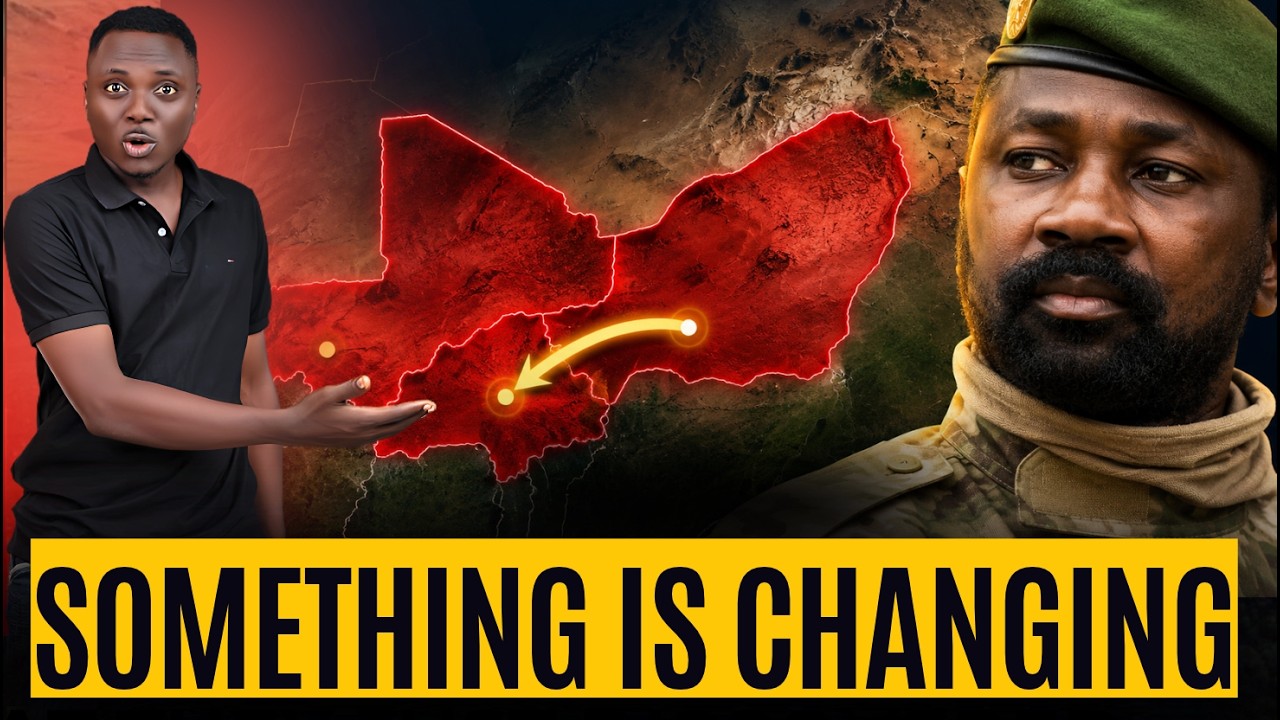
Start in Niamey, Niger's capital. Niger's leader, Abdourahamane Tiani, waited on the tarmac for Assimi Goïta, Mali's leader. A few hours later, Goïta was in Ouagadougou shaking hands with Burkina Faso's leader, Ibrahim Traoré. Visiting two allies in one day is not a courtesy call. These three countries, Mali, Burkina Faso, and Niger, form the Alliance of Sahel States, or AES. It began as a defense pact. The real question this week is whether it is turning into something bigger.
Most headlines called the meeting a security summit. The joint statement says more. Security is there: the leaders praised their joint force and promised to keep fighting armed groups. But the list continues: free movement of people and goods, transport, infrastructure, agro-industry (turning crops into products), energy, and mining. That is a shopping list for an economy.
Here is why it matters. None of these three countries has a coastline. Almost everything they sell abroad must cross another country's land before it reaches a ship. Consider Niger's oil. The country built a pipeline almost 2,000 kilometers long to carry crude to the sea. In 2024, Benin blocked Niger's oil from loading at its port, and Niger responded by closing the valves itself. Roughly 1,930 kilometers of pipeline went quiet in a dispute between neighbors. When the AES talks about transport and free movement, this is the pain it is trying to fix.
There is an awkward detail. The day before Goïta landed, Algeria's foreign minister, Ahmed Attaf, was in Niamey carrying a written message from President Abdelmadjid Tebboune for Tiani. Is Niger drifting from its allies? Look at the map first. Niger shares a long border with Algeria, which for a landlocked country is a second road to the sea. According to Niger's foreign minister, Tiani told Attaf that Niger's ties with Algeria are not aimed at the AES.
Still, most of the joint statement is plans, not projects. Roads, railways, and secure borders all require money. In October, the AES and ECOWAS, the wider West African bloc, met in Accra and agreed to set up working groups on trade and security. Agreeing is the easy part. Mali knows how fast a union can fail: in 1960, its federation with Senegal lasted just two months after independence. No army broke it. The two sides could not agree on who was in charge. That is the real test for the AES. Who decides, and who pays?
South of Niger lies its biggest neighbor, Nigeria. The two share a long border and, around Lake Chad, the same armed groups cross it. On Thursday, November 5, Major General Samaila Uba, a top military spokesman, stood up at a security briefing in Abuja and said plainly that there was nothing like a ceasefire. A ceasefire is a deal to stop fighting, and nobody in government had announced one. So why deny it? Because people were already talking about one.
In September, the news site The New Humanitarian reported that 360 civilians kidnapped from Mozogo, a town on the Cameroon border, were freed in June. That is roughly 20 packed minibuses of mothers, sons, and neighbors. The site also reported a quiet truce with one Boko Haram faction. A week later, a Boko Haram religious leader denied any deal. Nigeria's government denied paying a ransom. What nobody denies is that 360 people came home. That alone does not prove a deal, and Nigeria has been burned before. In October 2014, the defense chief announced a ceasefire with Boko Haram. It lasted about six hours. Then Boko Haram's leader, Abubakar Shekau, said, "We have not made ceasefire with anyone." That history explains why the army would rather deny early this time.
Both sides can be right because three different things get mixed up. A ceasefire stops the fighting everywhere. A local arrangement keeps one area quiet with one group. A ransom is money for captives. The army denied the first. The September report described the other two. And there is not just one enemy. Boko Haram split in 2016; the breakaway group is called ISWAP, and the two now fight each other. The report was about one part of Boko Haram. The army's denial was about everyone.
Think of a market with 20 stalls. You make a deal with one boy so that your shop stays open. Is that peace? No. Is it a deal? Sort of. Can that boy stop the other 19? Definitely not. Now think of a farmer in Borno State. A quiet month means she can plant and harvest. But a quiet month can also give fighters time to rest and rearm. If a local deal brought 360 people home but also let local fighters regroup, would you sign it? Hold that question.
Five days before the briefing, in the same city, Africa's oil producers opened their own bank. The Africa Energy Bank was set up by Africa's big trade bank and APO, a club of African countries that produce oil. Its main job is to lend money for African oil, gas, and power projects. It fills a real gap. Many Western banks have stepped back from lending to oil and gas companies, and many of the biggest oil companies operating in Africa are foreign. The bank is meant to help Africa build its own major players, the way TotalEnergies is to France, ExxonMobil to the United States, or BP to the United Kingdom.
It starts with a five billion dollar target. Energy news site Energy Base reports just over 500 million dollars so far, with the first loans due in January 2027. Every big bank starts somewhere. The number to watch now is the first loan.
Namibia shows why African countries want their own bank. A few years ago, Namibia found oil under the sea, more than 11 billion barrels. A French company, TotalEnergies, leads the biggest find. Namibia's own company, Namcor, owns just 10 percent. Compare that with the Gulf. In Saudi Arabia, the government owns almost all of its oil company, Aramco. In Abu Dhabi, the state oil company keeps about 60 percent of its main oil fields even with BP and TotalEnergies as partners. More ownership means a bigger seat at the table. Namcor says it wants 20 to 30 percent of future oil projects. But owning more costs money, and for years African oil companies have borrowed that money from outside Africa. This bank is meant to change that.
Outside money is getting much harder to find. Most of Europe's big banks refused to fund EACOP, an oil pipeline from Uganda to Tanzania, citing climate concerns and families losing their land. Those worries are real. Chinese lending for African energy has also fallen by more than 85 percent, according to the International Energy Agency. So who still drills when the banks say no? The giants. BP plans to spend about 10 billion dollars a year on oil and gas. TotalEnergies owns 62 percent of the Ugandan pipeline. Companies that big can pay with their own money. Namcor cannot. When banks stop lending, the giants stay in the game and small African companies get pushed out. There is no proof anyone planned it that way, but that is what happens.
Here is the good part. In March 2025, the Uganda pipeline got its first loans anyway, from Africa's Standard Bank and banks in Uganda and Kenya. When Europe's big banks walked away, mostly African money stepped in. That is what this new bank wants to do again and again. African banks can grow big: Afreximbank had about 40 billion dollars on its books by 2025. The bank was supposed to open in July 2024, so it is running late. Late does not mean dead, but its first loans will show what it can really do.
Now return to the deal promised earlier. Nigeria says it does not make deals with Boko Haram. In May 2017, 82 of the Chibok schoolgirls kidnapped by Boko Haram in 2014 came home. How? Through talks, with help from the Red Cross and Switzerland. Nigeria's government said the girls were swapped for Boko Haram prisoners. One official, speaking without attribution, told reporters it was five commanders. So the army may be right that there is no ceasefire. But when children's lives were on the line, Nigeria did talk, and 82 families got their daughters back. There is a price. If kidnapping gets commanders released, armed groups quickly learn that kidnapping works. That is why governments rarely admit to talks even when they happen. Every government in this region has both talked and fought. The hard part is choosing who to talk to, what to give, and how to make them keep their word.
So the week ends like this. The AES leaders signed a shopping list; now they need the money. Nigeria says there is no ceasefire, and a deal with one faction remains unconfirmed. Africa's new bank is open, with its first loans on the way. The lesson from this week is simple. Speeches tell you what people hope. Spending tells you what they mean. Watch three things: who gets the bank's first loan, whether trucks start crossing the Sahel borders faster, and whether the quiet near Cameroon's border holds, and who is keeping it. Watch the words if you want the story. Watch what gets built if you want the truth.
Related Coverage
Trump’s Asia Trip: High-Stakes Talks With Xi and Putin
President Donald Trump is traveling to Asia for high-level meetings, including a planned sit-down with Chinese President Xi Jinping, with technology and artificial intelligence (AI) expected to be central topics.
Arms Over Everything: How War, Debt and an AI Gold Rush Drained the World in 2026
A year of collapsed ceasefires, record military spending and a trillion-dollar artificial intelligence gamble diverted money from hospitals, schools and food aid — while arms traders, fuel speculators and a handful of tech giants profited. From Riyadh to Kyiv to Gaza, the bill was paid by ordinary people.
Oil Shocks, Drone Wars, and a Shifting World Order: The Crises Reshaping Global Power
A wave of attacks on oil routes, escalating drone warfare in Ukraine, and a landmark BRICS summit are testing alliances and squeezing households worldwide.
War, Debt, and an AI Gamble: How a Year of Converging Crises Reshaped the World
A year of failed ceasefires, a global debt crisis, and a trillion-dollar artificial intelligence bet has exposed a world order that serves powerful interests while ordinary people absorb the shocks. From Gaza to Ukraine to Sudan, conflict and restricted access—not bad weather—decided who ate and who did not.
Indonesia Pushes Climate Bills and Cash Demands at COP31 While Signing New Oil Deals Back Home
Indonesia is heading to the COP31 climate summit in Türkiye with a dual message: it wants wealthy nations to pay up for the energy transition, and it wants the world to see its own climate solutions. But back in Abu Dhabi, the same government was sealing new oil and gas deals.
Arms, Debt and an AI Gamble: How Militarization Drained the World in 2026
A year of collapsed ceasefires, record military spending and a trillion-dollar technology bet diverted money from hospitals, schools and food aid — while arms traders, fuel speculators and a handful of tech giants profited. This is the story of who paid for the world's insecurity.
Related Editorials
It Looked Like an Invasion. It Was a Rescue — and Proof of Africa's New Security Blueprint
A story raced across social media. Cameroonian soldiers had crossed into Nigerian territory.
The Sahel Alliance Just Redrew West Africa’s Geopolitical Map—And ECOWAS Is Scrambling
In a move that has sent ripples through West African diplomacy, the Alliance of Sahel States (AES) has unveiled a significant new project that regional bloc ECOWAS did not anticipate. The development marks a decisive step in the consolidation of the AES as a standalone geopolitical and economic for
The Sahel’s Quiet Revolution: Why Mali, Burkina Faso, and Niger Turned Their Backs on the West
In a move that has reshaped the geopolitical map of West Africa, three nations—Mali, Burkina Faso, and Niger—have collectively severed ties with their traditional Western allies. This is not a sudden coup or a fleeting protest; it is a calculated, strategic pivot that signals a new era of self-dete
The Empty Grandeur of Trump’s China Visit: A Diplomatic Spectacle With No Substance
In November 2017, President Donald Trump embarked on a three-day state visit to China that was visually spectacular, economically aggressive, and diplomatically shallow. The trip produced billions of dollars in tentative business deals, a series of carefully choreographed photo opportunities, and a
Mali’s Bold Pivot: How a Surprise Alliance Is Redrawing West Africa’s Geopolitical Map
In a region already defined by coups, sanctions, and shifting loyalties, one man’s unexpected diplomatic gambit is sending shockwaves through West Africa. Colonel Assimi Goïta’s Mali has long been a flashpoint for international tension, but the latest development—a deepening military and political