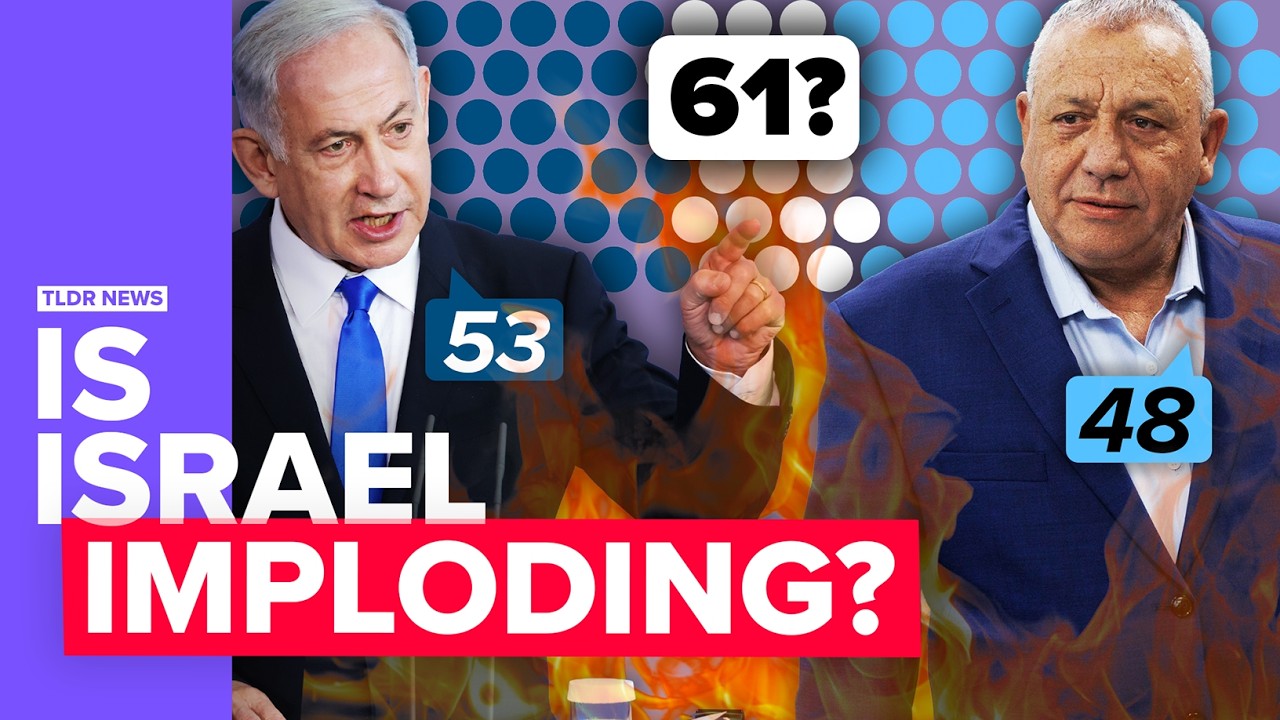
Israel’s Gathering Storm: Why the Nation’s Political Crisis Is Now a Fight for Survival
Israel is facing a crisis of governance that threatens its very future. What began as a contentious debate over judicial reform has evolved into a fundamental struggle over the character of the state, the nature of its democracy, and its ability to confront external threats.
Israel is facing a crisis of governance that threatens its very future. What began as a contentious debate over judicial reform has evolved into a fundamental struggle over the character of the state, the nature of its democracy, and its ability to confront external threats. The current government, led by Prime Minister Benjamin Netanyahu, has ignited a firestorm of opposition with its legislative agenda, exposing deep fractures in Israeli society.
The Judicial Overhaul and Its Discontents
At the heart of the turmoil is the government's plan to weaken the judiciary. The proposals include granting the Knesset (Israel's parliament) the power to override Supreme Court decisions with a simple majority, and changing the way judges are selected. Critics argue that these measures would destroy the system of checks and balances, remove the only effective oversight on government power, and pave the way for authoritarian rule.
The government contends that the court has become an unaccountable, elitist body that oversteps its authority and thwarts the will of the elected majority. This argument resonates with a significant portion of the Israeli public, creating a stark divide. On one side are those who see the judicial overhaul as a necessary correction to an imbalance of power. On the other are hundreds of thousands of protesters who view it as a coup d'état, a direct assault on the country's democratic foundations.
A Society at War with Itself
The implications of this conflict extend far beyond legal theory. The protest movement is not a fringe group; it is a broad cross-section of Israeli society. It includes reservists, high-tech workers, doctors, and academics—the very people who form the backbone of the nation's economy and security. The refusal of hundreds of military reservists to report for duty has raised serious questions about the military's readiness and cohesion, a dangerous vulnerability in a volatile region.
The crisis has also exposed the deep-seated tensions between Israel's secular, liberal majority and its growing ultra-Orthodox and nationalist communities. The government's agenda is seen by many as an attempt to impose a more religious and nationalist vision on the entire country, alienating large segments of the population who feel their way of life is under threat.
Netanyahu’s Precarious Position
Prime Minister Netanyahu is at the center of the storm. He faces a severe conflict of interest, as he is on trial for corruption charges. His political survival depends on his coalition partners, who are driving the judicial overhaul. Many Israelis believe he is using the legislation to escape his legal troubles, a charge he denies. This perception has fueled the protests and eroded public trust in his leadership.
The government's handling of the crisis has been widely criticized as heavy-handed and divisive. The firing of Defense Minister Yoav Gallant for calling for a pause in the legislative process—a move that was later reversed—only added to the sense of chaos. The government appears to be lurching from one crisis to the next, unable to build consensus or address the legitimate concerns of its opponents.
The Path Forward
Israel stands at a critical crossroads. The current trajectory is unsustainable. The government must find a way to de-escalate the situation and engage in genuine dialogue with the opposition. A unilateral imposition of the judicial overhaul would deepen the rifts in society and could have catastrophic consequences for the country's economy, security, and international standing.
The crisis is a wake-up call. It reveals that Israel's democratic institutions are more fragile than many believed. The fight is not just about the judiciary; it is about the soul of the nation. The outcome of this struggle will determine whether Israel remains a liberal democracy or becomes an increasingly illiberal and divided state. The world is watching, and the stakes could not be higher.
Related Coverage
Netanyahu Clings to Power as Israel Votes in First Election Since Oct. 7
Israel holds its first national election since the Hamas-led attacks of October 7, 2023, with Prime Minister Benjamin Netanyahu fighting for his political survival as security and democracy dominate the race.
Netanyahu Fights for Survival in First Israeli Vote Since Oct. 7 — but Analysts Refuse to Count Him Out
A national election widely seen as a referendum on Benjamin Netanyahu's leadership is testing whether Israel's longest-serving prime minister can survive the fallout from the Oct. 7, 2023 attacks — with analysts warning his opponents should not assume his defeat.
Israel’s ‘Decisive Days’: Netanyahu Pushes ‘Hexagon of Alliances’ as Military Escalation Stirs Fear and Moral Decline
As Israel enters what media and opposition leaders call “decisive days” following a major military escalation, Prime Minister Benjamin Netanyahu has unveiled a new foreign policy plan called a “hexagon of alliances”—a six-nation bloc aimed at countering “radical axes”—that experts warn risks deepening global rifts and isolating Israel further [169001][168235].
Netanyahu Fights for Survival as Israel Heads to October 27 Election After Security Disaster
Israel will hold national elections on October 27, the first full-term vote in decades, with Prime Minister Benjamin Netanyahu facing a rare underdog battle as the country heads to the polls just 20 days after the third anniversary of the Hamas attack on October 7, 2023.
Netanyahu Faces Israel's First Post-Oct. 7 Election as Tens of Thousands Fly Home to Vote
Israelis are voting in the country's first national election since the October 7, 2023, Hamas attack, with Prime Minister Benjamin Netanyahu's political future hanging in the balance. Tens of thousands of citizens living abroad are flying home to cast ballots in what is expected to be an extremely tight race.
Netanyahu’s ‘Forever War’ Strategy Splits US and Israel as Gaza Death Toll Mounts
The United States and Israel are increasingly at odds over how to end the war with Iran, as Israeli Prime Minister Benjamin Netanyahu pursues a strategy that analysts say is driven by his own political survival rather than shared US priorities. Washington wants an exit from a conflict that is disrupting oil markets and growing unpopular at home, but Netanyahu, facing elections by the end of October and a criminal investigation, is betting on a new “hexagon of alliances” that risks deepening global rifts [170083][169001].
Related Editorials
Netanyahu’s Political Tightrope: Why the Wartime Coalition Is Fracturing
In the annals of modern Israeli politics, few leaders have demonstrated the political survival instincts of Benjamin Netanyahu. Yet, despite his reputation as the "magician" of Israeli statecraft, recent polling data suggests that his grip on power is loosening.
France on the Brink: Is This the Unravelling of a Nation?
France is once again convulsed by violent unrest, and the question echoing across its cities is whether this is merely another episode of social turmoil—or something far more serious. The riots have forced the government into crisis mode, exposed deep fractures in French society, and raised doubts
Could Turkey and Israel Go to War? The Rising Risk of a New Middle Eastern Conflict
For decades, the relationship between Turkey and Israel has oscillated between strategic partnership and bitter rivalry. Today, that rivalry has reached its most dangerous point in modern history.
The Drift Toward War: Why Syria and Israel Are Inching Closer to a Direct Confrontation
The long-standing ceasefire between Israel and Syria is unraveling. What was once a stable, if tense, border is now a flashpoint for escalating military action, shifting alliances, and deepening suspicion.
Will Trump’s Escalation with Iran Trigger a UK Housing Market Crash?
The connection between geopolitical tensions in the Middle East and the value of a semi-detached house in Manchester may seem tenuous. Yet, as President Donald Trump intensifies his administration’s stance toward Iran, a growing number of analysts are asking a pointed question: could a military con
The Coming Energy Market Meltdown: Why Experts Are Sounding the Alarm
Global energy markets are approaching a critical inflection point. While the transition to renewable sources dominates headlines, a less visible but equally dangerous crisis is brewing beneath the surface—one that could destabilize power grids, spike electricity prices, and trigger widespread econo