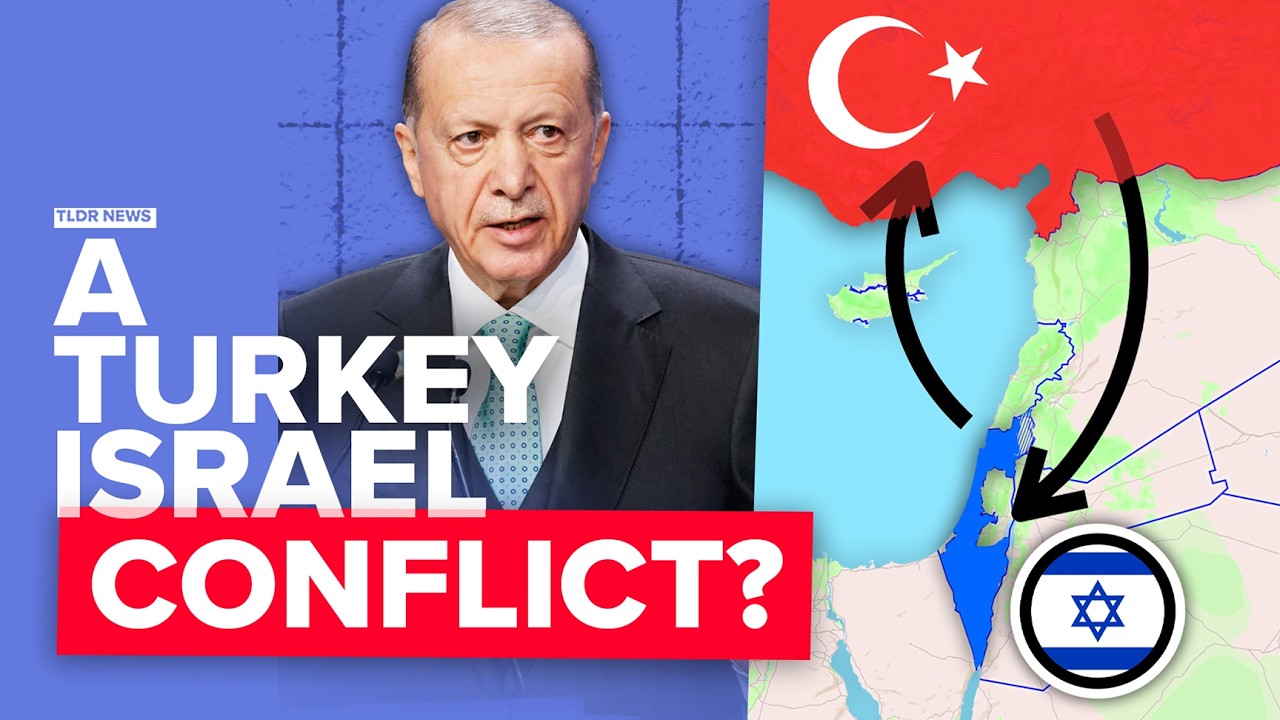
Could Turkey and Israel Go to War? The Rising Risk of a New Middle Eastern Conflict
For decades, the relationship between Turkey and Israel has oscillated between strategic partnership and bitter rivalry. Today, that rivalry has reached its most dangerous point in modern history.
For decades, the relationship between Turkey and Israel has oscillated between strategic partnership and bitter rivalry. Today, that rivalry has reached its most dangerous point in modern history. With Turkish President Recep Tayyip Erdogan openly threatening military intervention in Israel, and Israel vowing to defend its sovereignty, the question is no longer academic: could these two regional powers actually go to war?
The Breaking Point: Erdogan’s Threat
On July 28, 2024, President Erdogan delivered a speech that sent shockwaves through diplomatic circles. He stated that Turkey might "enter Israel" militarily, just as it had previously intervened in Libya and Nagorno-Karabakh. His exact words were: "We must be very strong so that we cannot do to Palestine what we did to Karabakh, what we did to Libya." The implication was clear: Turkey would use military force to prevent further Israeli operations in Gaza.
Erdogan later attempted to clarify his remarks, claiming that his words were misinterpreted. He insisted that Turkey had no intention of attacking Israel, but rather that it would intervene "if Israel attacks Turkey." However, the damage was already done. Israeli Foreign Minister Israel Katz responded sharply, comparing Erdogan to Saddam Hussein and warning that Turkey should remember what happened to Saddam when he threatened Israel.
The Historical Context: From Allies to Adversaries
To understand this crisis, one must look at the history. Turkey was the first Muslim-majority country to recognize Israel in 1949. For decades, the two nations maintained a quiet but functional alliance, rooted in shared security concerns—particularly regarding Syria and Iran. Military cooperation was deep, with joint exercises and intelligence sharing.
The turning point came in 2009. At the World Economic Forum in Davos, Erdogan famously stormed off the stage after a heated exchange with then-Israeli President Shimon Peres over Gaza. The following year, Israeli commandos raided the Mavi Marmara, a Turkish ship attempting to break the blockade of Gaza. Ten Turkish activists were killed. Turkey expelled the Israeli ambassador, and diplomatic relations were frozen for over a decade.
Relations were partially restored in 2022, with ambassadors returning to their posts. But the October 7, 2023, Hamas attacks and the subsequent Israeli military campaign in Gaza shattered any remaining goodwill. Turkey has since recalled its ambassador and severed all trade ties with Israel.
The Current Flashpoints
The immediate source of tension is the war in Gaza. Turkey has been one of the most vocal critics of Israel's military operations, which have killed over 40,000 Palestinians, according to Gaza health authorities. Ankara has suspended all trade with Israel and is actively supporting legal cases against Israel at the International Court of Justice and the International Criminal Court.
But the conflict extends beyond Gaza. Turkey is deeply involved in Syria, where it supports rebel groups opposed to the Assad regime and has conducted multiple military operations against Kurdish forces. Israel, meanwhile, has carried out hundreds of airstrikes in Syria targeting Iranian-linked targets, including Hezbollah and other proxies. These operations sometimes bring Israeli jets close to Turkish positions or interests.
The Military Balance: Who Has the Advantage?
A direct conventional war between Turkey and Israel would be unprecedented. Here is a comparison of their military capabilities:
Turkey has the second-largest standing army in NATO, with over 355,000 active personnel. Its air force includes around 250 F-16s, making it one of the largest F-16 fleets in the world. Turkey also has a significant domestic defense industry, producing drones (Bayraktar TB2), armored vehicles, and naval vessels. However, its air force is aging, and the country was removed from the F-35 program after purchasing Russian S-400 missile systems.
Israel has a smaller active force of around 170,000, but it can mobilize over 400,000 reservists within 48 hours. Its air force is considered one of the most advanced in the world, with F-35 stealth fighters, F-15s, and F-16s. Israel also possesses nuclear weapons, an undeclared but widely acknowledged arsenal. Its missile defense systems—Iron Dome, David's Sling, and Arrow—are battle-tested.
In a conventional war, Turkey would have advantages in manpower and ground forces. But Israel's technological edge, air superiority, and nuclear deterrent would make any Turkish invasion extremely costly. The geography also favors Israel: Turkey would need to project power across either Syria or the Mediterranean, both of which are heavily contested.
The Proxy Dimension: A War by Other Means
A direct war remains unlikely, but a proxy conflict is already underway. Turkey supports Hamas politically and logistically, allowing its leaders to operate from Istanbul. Israel has repeatedly accused Turkey of providing financial support to Hamas, which Turkey denies.
In Syria, the two countries are on opposite sides of the conflict. Turkey backs rebel groups fighting the Assad regime, while Israel has struck Iranian and Hezbollah positions that support Assad. There have been reports of Turkish-backed groups clashing with Israeli-linked forces in southern Syria.
In the energy-rich Eastern Mediterranean, competition over natural gas reserves has added another layer of tension. Turkey does not recognize the exclusive economic zones claimed by Cyprus, Greece, and Israel, and has sent naval vessels to assert its claims.
The Role of Major Powers
The United States has a delicate balancing act. Both Turkey and Israel are key allies, but the relationship with each is strained. The Biden administration has been critical of Israel's conduct in Gaza but continues to provide military support. With Turkey, Washington has concerns over human rights and the S-400 purchase, but Ankara remains a crucial NATO member.
Russia has exploited these tensions, deepening its military cooperation with Turkey while also maintaining ties with Iran and Syria. China, meanwhile, has increased its economic presence in Turkey and the broader region.
What Would Actually Trigger War?
Analysts identify several scenarios that could escalate into direct conflict:
- A major Israeli operation in Syria that kills Turkish soldiers or destroys Turkish equipment.
- A Turkish military intervention in Gaza, perhaps by sending naval vessels or troops under the guise of humanitarian aid.
- A miscalculation—an accidental clash between Turkish and Israeli forces in Syria or the Mediterranean.
- A regional war involving Hezbollah and Iran that draws in Turkey.
The Most Likely Outcome: Continued Hostility, Not War
Despite the heated rhetoric, most experts believe a full-scale war is unlikely. Both countries have strong incentives to avoid direct confrontation. Turkey is struggling with a severe economic crisis, with inflation over 50% and a collapsing currency. A war would be financially ruinous. Israel is already fighting on multiple fronts—Gaza, Lebanon, the West Bank, and Yemen—and has no desire to open a new one.
Instead, the conflict will likely continue in the gray zone: diplomatic warfare, economic sanctions, proxy battles in Syria, and a war of words. The risk is that one side misjudges the other's red lines, or that events on the ground spiral out of control.
Conclusion
The Turkey-Israel relationship has never been more hostile. Erdogan's threat to "enter Israel" was unprecedented, but it reflected a deeper strategic shift. Turkey is no longer content to be a passive observer in the Middle East; it wants to be a military power that shapes events. Israel, meanwhile, is determined to maintain its freedom of action, especially regarding Iran and its proxies.
War is not inevitable, but neither is peace. The next few months will be critical. If diplomacy fails, the Middle East may witness a conflict that no one wants but no one can prevent.
Related Coverage
Erdogan and Netanyahu’s War of Wills: 2 Armies, 1 Region, Zero Room for Compromise
Turkey’s opposition has dropped its domestic fight to back President Recep Tayyip Erdogan as the standoff with Israel over Syria and Gaza escalates, turning a personal rivalry into a strategic clash reshaping the Middle East.
Netanyahu’s ‘Forever War’ Strategy Splits US and Israel as Gaza Death Toll Mounts
The United States and Israel are increasingly at odds over how to end the war with Iran, as Israeli Prime Minister Benjamin Netanyahu pursues a strategy that analysts say is driven by his own political survival rather than shared US priorities. Washington wants an exit from a conflict that is disrupting oil markets and growing unpopular at home, but Netanyahu, facing elections by the end of October and a criminal investigation, is betting on a new “hexagon of alliances” that risks deepening global rifts [170083][169001].
Netanyahu Bombs Near Turkey Border as Election Clock Ticks Down—Interpol Warrant Adds Fuel to Feud
Israel is escalating its confrontation with Turkey, bombing a base near the Turkish border in Syria and trading sharp insults after Ankara requested an Interpol arrest warrant for Prime Minister Benjamin Netanyahu over a Gaza aid raid.
US Signs Two Conflicting Middle East Deals, Risking Collapse
The United States has signed two contradictory Middle East agreements that risk canceling each other out, with one deal allowing Israel to stay in Lebanon while the other demands a full withdrawal.
Iran and Israel Trade Direct Missile Strikes, Ceasefire Collapses
Iran and Israel have launched direct military strikes against each other for the first time since April, shattering a fragile ceasefire and raising fears of a wider regional war.
Iran and Israel Trade Strikes as Ceasefire Collapses, Oil Prices Spike
Iran launched its first missile attacks on Israel since a ceasefire was agreed in April, calling the strikes the start of "a full week" of operations, which pushed oil prices higher as markets reacted to the renewed conflict [167961]. Israel retaliated with air strikes on Iran, testing the fragile two-month truce [167976]. The direct exchanges mark the collapse of the ceasefire and have sparked fears of a wider regional war [168078].
Related Editorials
Is Trump’s Trade War with Canada a Declaration of Economic Hostility?
The relationship between the United States and Canada, long considered the world’s most stable bilateral partnership, is facing an unprecedented strain. Recent actions by the Trump administration have led economists and political analysts to question whether we are witnessing the opening salvo of a
Will Trump’s Escalation with Iran Trigger a UK Housing Market Crash?
The connection between geopolitical tensions in the Middle East and the value of a semi-detached house in Manchester may seem tenuous. Yet, as President Donald Trump intensifies his administration’s stance toward Iran, a growing number of analysts are asking a pointed question: could a military con
The Unraveling Alliance: Why a US-Israel Divorce Looks Increasingly Inevitable
For decades, the bond between the United States and Israel was considered unbreakable—a cornerstone of Middle Eastern geopolitics. Yet, beneath the surface of official statements and military aid packages, tectonic plates are shifting.
The US-Iran Nuclear Deal: A Diplomatic Tightrope Walk That Reshaped the Middle East
In 2015, the world watched as the United States and Iran—two nations locked in decades of mutual hostility—signed an agreement that many believed could prevent a catastrophic war. The Joint Comprehensive Plan of Action (JCPOA), commonly known as the Iran nuclear deal, was not merely a diplomatic do
The Ghost of Erdogan’s Rival: Can a New Party Break Turkey’s Political Glass Ceiling?
Article: In Turkish politics, the ruling Justice and Development Party (AKP) has dominated the landscape for over two decades. Yet, a new political entity is attempting to rewrite the rules of engagement.
Netanyahu’s Political Tightrope: Why the Wartime Coalition Is Fracturing
In the annals of modern Israeli politics, few leaders have demonstrated the political survival instincts of Benjamin Netanyahu. Yet, despite his reputation as the "magician" of Israeli statecraft, recent polling data suggests that his grip on power is loosening.