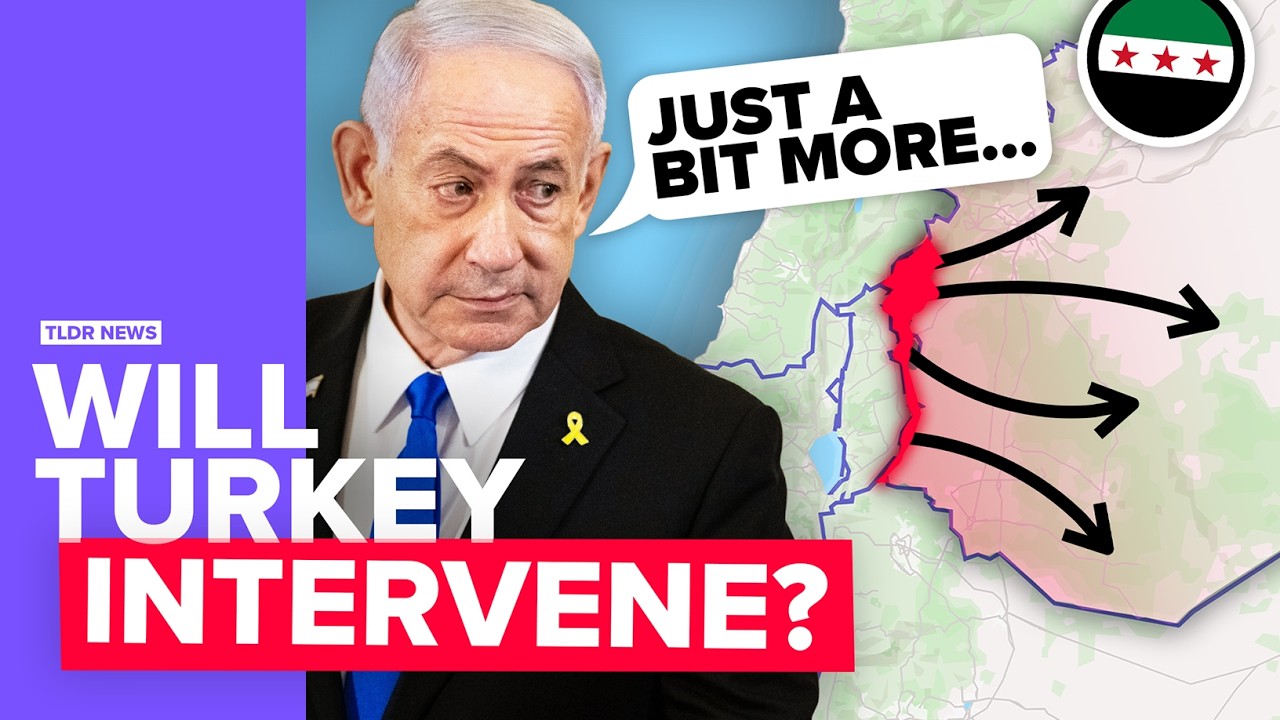
The Drift Toward War: Why Syria and Israel Are Inching Closer to a Direct Confrontation
The long-standing ceasefire between Israel and Syria is unraveling. What was once a stable, if tense, border is now a flashpoint for escalating military action, shifting alliances, and deepening suspicion.
The long-standing ceasefire between Israel and Syria is unraveling. What was once a stable, if tense, border is now a flashpoint for escalating military action, shifting alliances, and deepening suspicion. While neither nation appears to seek a full-scale war, a series of strategic calculations and recent events are making a direct conflict increasingly difficult to avoid.
At the heart of the tension is Syria’s changing geopolitical alignment. The Syrian government, seeking to reassert control over its territory after years of civil war, has allowed Iran and its proxy forces, including Hezbollah, to establish a permanent military foothold. Israel views this as a direct threat. It has repeatedly stated it will not tolerate an Iranian military presence on its border and has conducted hundreds of airstrikes against Iranian and Hezbollah targets inside Syria.
These strikes, once a covert affair, have become more frequent and lethal. Syria, emboldened by its alliance with Russia and Iran, has begun to respond more aggressively. It has fired surface-to-air missiles at Israeli jets and, in a significant escalation, launched drone attacks into Israeli territory. This cycle of retaliation and counter-retaliation has created a dangerous new normal.
The conflict is further complicated by the involvement of Russia. Russia’s military presence in Syria, while intended to prop up the Assad government, has inadvertently constrained Israel’s operational freedom. Israel must now carefully navigate Russian air defense systems and diplomatic sensitivities, adding a layer of complexity to every military decision.
Domestic politics on both sides also play a role. In Israel, the government faces pressure to act decisively against perceived threats. In Syria, the regime’s survival is tied to its ability to project strength and reward its allies. This creates a situation where each side feels compelled to take a harder line, leaving little room for de-escalation.
The core issue remains Iran’s military entrenchment. Israel’s strategic objective is to prevent a permanent Iranian presence that could serve as a launchpad for future attacks. Syria’s objective is to regain sovereignty and use its alliances to rebuild. These goals are fundamentally incompatible. As long as Iran maintains its presence and Israel continues to strike at it, the risk of a miscalculation leading to a broader war will continue to grow.
The path to war is not a straight line, but a series of small escalations. Each airstrike, each retaliatory rocket, each drone incursion pushes the two nations closer to the edge. The current trajectory suggests that unless a new diplomatic framework is established, the region may soon witness a conflict far more devastating than the sporadic exchanges of the past.
Related Coverage
Iran and Israel Trade Direct Missile Strikes, Ceasefire Collapses
Iran and Israel have launched direct military strikes against each other for the first time since April, shattering a fragile ceasefire and raising fears of a wider regional war.
Israel Strikes Beirut, Breaking Ceasefire with Lebanon
A series of military strikes between Israel and Hezbollah has broken the ceasefire that had held since April, raising fears of a wider regional conflict.
Israel Bombs Lebanon After Hezbollah Drone Attack — Ceasefire in Jeopardy
Israel launched airstrikes on southern Lebanon on Thursday, breaking a US-brokered ceasefire, after Hezbollah fired two explosive drones at Israeli troops near the border. The attack wounded no one, but it has put the fragile truce at serious risk.
Iran and Israel Trade Strikes as Ceasefire Collapses, Oil Prices Spike
Iran launched its first missile attacks on Israel since a ceasefire was agreed in April, calling the strikes the start of "a full week" of operations, which pushed oil prices higher as markets reacted to the renewed conflict [167961]. Israel retaliated with air strikes on Iran, testing the fragile two-month truce [167976]. The direct exchanges mark the collapse of the ceasefire and have sparked fears of a wider regional war [168078].
Trump’s Ceasefire Collapses as Israel Strikes Beirut, Iran Fires Missiles Back
Israel bombed southern Beirut and Iran responded with ballistic missiles, shattering a fragile U.S.-brokered truce and pushing the region toward a new open war.
Global Conflicts Intensify as Iran-Israel Ceasefire Collapses and Ukraine Strikes Deep Inside Russia
A fragile U.S.-brokered ceasefire between Iran and Israel has collapsed, triggering direct missile exchanges and a regional crisis, while Ukraine’s war with Russia reaches a new phase of long-range strikes and economic warfare.
Related Editorials
The Unraveling Alliance: Why a US-Israel Divorce Looks Increasingly Inevitable
For decades, the bond between the United States and Israel was considered unbreakable—a cornerstone of Middle Eastern geopolitics. Yet, beneath the surface of official statements and military aid packages, tectonic plates are shifting.
Could Turkey and Israel Go to War? The Rising Risk of a New Middle Eastern Conflict
For decades, the relationship between Turkey and Israel has oscillated between strategic partnership and bitter rivalry. Today, that rivalry has reached its most dangerous point in modern history.
West Bank Erupts: The Unseen Escalation Reshaping the Middle East
The world’s gaze has been fixed on Gaza, but a second, equally volatile front has been quietly igniting. Across the West Bank, violence has surged to levels not seen in nearly two decades, threatening to destabilize the entire region.
Netanyahu’s Political Tightrope: Why the Wartime Coalition Is Fracturing
In the annals of modern Israeli politics, few leaders have demonstrated the political survival instincts of Benjamin Netanyahu. Yet, despite his reputation as the "magician" of Israeli statecraft, recent polling data suggests that his grip on power is loosening.
The Afghan-Pakistan War Restarts: How Does This End?
The fragile peace along the Afghanistan-Pakistan border has shattered. A new phase of conflict, distinct from the two-decade American occupation, is now underway.
The Coming Energy Market Meltdown: Why Experts Are Sounding the Alarm
Global energy markets are approaching a critical inflection point. While the transition to renewable sources dominates headlines, a less visible but equally dangerous crisis is brewing beneath the surface—one that could destabilize power grids, spike electricity prices, and trigger widespread econo