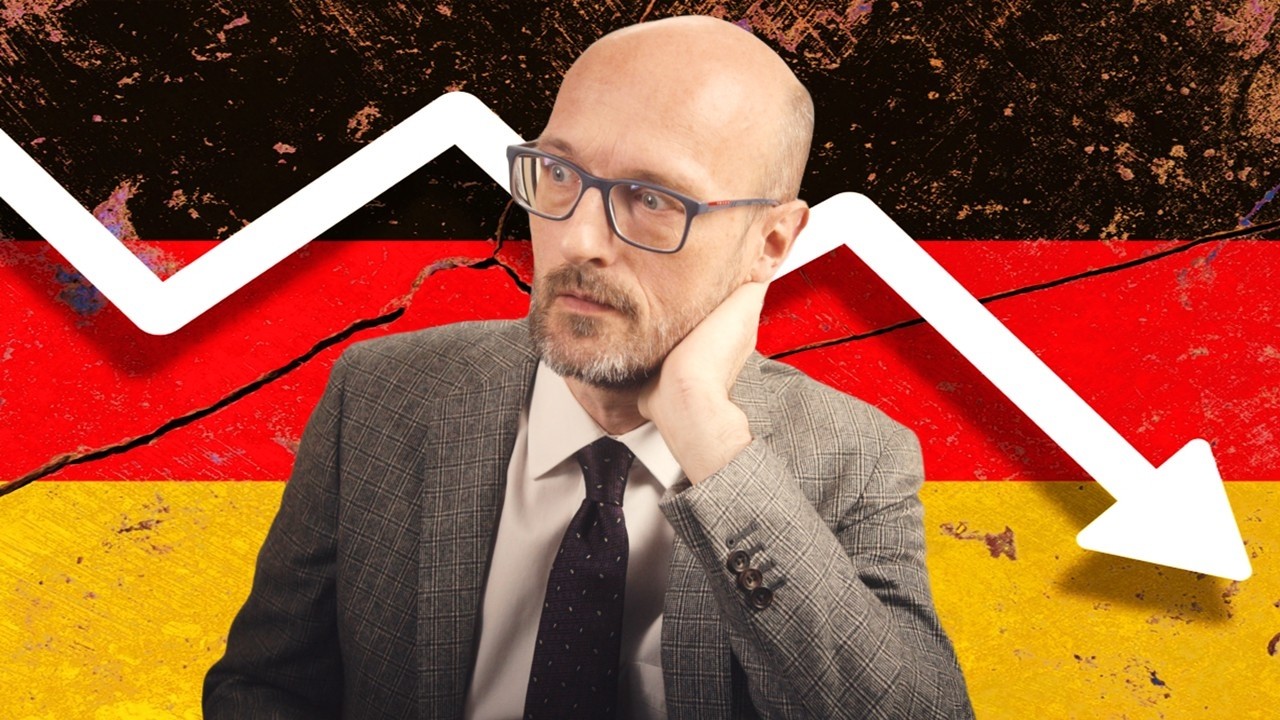
# Germany’s Economic Engine Sputters: Why the World’s Former Export Champion Is Running Out of Steam
Introduction For decades, Germany was the gold standard of European economic might—a manufacturing powerhouse whose efficiency, discipline, and engineering prowess powered the continent. Today, that engine is sputtering.
Introduction
For decades, Germany was the gold standard of European economic might—a manufacturing powerhouse whose efficiency, discipline, and engineering prowess powered the continent. Today, that engine is sputtering. Once celebrated as the world’s export champion, Germany now faces sluggish growth, rising energy costs, and an aging workforce. This article examines the structural forces behind the country’s economic slowdown and what they mean for Europe and the global economy.
The End of an Era
Germany’s post-war economic miracle, known as the Wirtschaftswunder, was built on a simple formula: export high-quality manufactured goods, maintain fiscal discipline, and rely on cheap energy from Russia. For decades, this model delivered prosperity. But the pillars that supported it have weakened, and the cracks are now impossible to ignore.
Energy: The Cost of Dependence
Germany’s decision to phase out nuclear power while remaining dependent on Russian natural gas left it exposed. When geopolitical tensions escalated, energy prices surged. German industry—particularly chemicals, steel, and automotive manufacturing—found itself paying some of the highest electricity costs in the developed world. For energy-intensive sectors, this has made domestic production increasingly uncompetitive.
The Demographic Squeeze
Germany has one of the oldest populations in Europe. As the Baby Boomer generation retires, the country loses skilled workers faster than it can replace them. The result is a shrinking labor force, mounting pressure on pension systems, and a productivity gap that immigration alone has not closed. Without enough workers, even the most advanced factories cannot operate at full capacity.
The Automotive Transition
The German auto industry, long the crown jewel of its economy, faces an existential challenge. The global shift toward electric vehicles has upended a century of engineering dominance built around internal combustion engines. German manufacturers must invest billions in new technology while competing with agile rivals from the United States and China. Meanwhile, the rise of Chinese electric vehicle makers has eroded Germany’s export advantage in key markets.
Bureaucracy and Underinvestment
Germany’s reputation for efficiency masks a growing problem: bureaucratic inertia. Permitting processes for infrastructure and industrial projects can take years. Digital infrastructure lags behind other advanced economies. Years of fiscal conservatism—enshrined in the debt brake, a constitutional limit on government borrowing—have constrained public investment in roads, bridges, and broadband. The result is an economy trying to compete in the 21st century with 20th-century infrastructure.
Trade Tensions and Global Fragmentation
Germany’s export-driven model depends on open global markets. But rising protectionism, supply chain disruptions, and trade tensions between major powers have made that model riskier. German companies that once thrived on seamless global trade now face tariffs, export controls, and the need to diversify away from concentrated markets.
What Comes Next?
Germany’s challenges are not insurmountable, but they are structural—not cyclical. Fixing them will require difficult choices: reforming energy policy, modernizing immigration to fill labor gaps, investing in digital and physical infrastructure, and rethinking fiscal rules that prioritize balanced budgets over growth.
The country that once powered Europe’s economy must now reinvent itself. Whether it succeeds will shape not only Germany’s future but the stability of the entire European project.
Conclusion
Germany’s slowdown is a cautionary tale about the dangers of complacency. Economic models that once seemed invincible can erode when the world changes around them. The question is not whether Germany can adapt—it has done so before—but whether it will act quickly enough to matter.
Related Coverage
Strait of Hormuz, Drought, and Debt: The Global Economy Strains Under War and Climate Chaos
A global economy built on the promise of open trade and cheap energy is buckling under the weight of geopolitical conflict, strategic blockades, and a technological gold rush that is straining the very limits of infrastructure, leaving ordinary citizens to bear the brunt of inflation, fuel shortages, and a widening gap between the wealthy and the rest [15239].
Europe’s Rivers Are Drying Up—Nazi Warships Emerge as Danube Hits Record Lows
Record-low water levels across Europe’s major rivers are exposing sunken Nazi warships in the Danube and forcing nuclear plants to shut down, as the continent’s worst drought in decades cripples shipping, farming, and energy production [218912][218108].
Germany’s ‘Firewall’ Against Far-Right AfD Shows Cracks
Germany’s long-standing political consensus to isolate the far-right Alternative for Germany (AfD) is beginning to fracture under political pressure.
China’s EV Juggernaut Crushes Europe’s Car Industry: 100,000 German Jobs on the Line
Chinese electric vehicle makers are flooding Europe with cheap, high-tech cars, forcing Volkswagen to consider cutting up to 100,000 jobs and leaving Germany’s once-dominant auto industry scrambling to survive [227042][228330][230580].
The Price of Power: How Sanctions, War, and Climate Chaos Are Reshaping the Global Economy
A global economy built on the promise of open trade and cheap energy is now buckling under the weight of geopolitical conflict, strategic blockades, and a technological gold rush that is straining the very limits of infrastructure. From the closed oil lifeline of the Strait of Hormuz to the drone-struck refineries of Russia and the record-breaking rallies in tech stocks, the global financial system is being pulled in opposing directions. While investors chase artificial intelligence (AI) profits and safe-haven assets like gold, millions of ordinary citizens are facing the harsh realities of inflation, fuel shortages, and a widening gap between the wealthy and the rest [15239].
Related Editorials
# The Hidden Crisis: Why European Automakers Are Losing the Global Race
Introduction For decades, European car manufacturers dominated the global automotive industry. Brands like Volkswagen, BMW, Mercedes-Benz, and Renault set the standards for engineering, luxury, and performance.
Title: Europe’s Economic Doom Loop: Why Brussels Has Lost the Wheel
Introduction Europe’s economic engine is sputtering, and according to two of the continent’s most prominent economic voices, the drivers in Brussels have lost control of the vehicle. In a recent discussion, former Greek Finance Minister Yanis Varoufakis and Financial Times columnist Wolfgang Mü
# Germany’s Political Upheaval Will Reshape Europe
Germany, long viewed as Europe’s anchor of stability, is entering a period of profound political change. The shifts underway in Berlin will not remain contained within Germany’s borders; they will reshape the European Union itself.
# Germany Just Broke the EU’s Firewall
A conversation between Yanis Varoufakis and Wolfgang Münchau reveals how Berlin’s fiscal about-face is rewriting the rules of Europe—and why the bond markets may be the only referee left. For years, the European Union’s fiscal architecture rested on a simple promise: no member state would be al
Europe’s Decline is Now Official: The Continent Has Lost Its Economic Soul
In a rare moment of bipartisan agreement, two of Europe’s most astute economic minds—Yanis Varoufakis, the former Greek Finance Minister, and Wolfgang Münchau, a veteran financial journalist and co-founder of *The Econoclasts*—have declared the end of an era. The evidence, they argue, is no longer
Title: America Is Quietly Losing the World: Two Top Economists on the Empire’s Unraveling
Introduction The United States has long been the undisputed center of global capitalism. Yet, according to two of the world’s most prominent dissenting economists, Yanis Varoufakis and Richard D.