The Hidden Crisis: Why European Automakers Are Losing the Global Race
For decades, European car manufacturers dominated the global automotive industry. Brands like Volkswagen, BMW, Mercedes-Benz, and Renault set the standards for engineering, luxury, and performance.
For decades, European car manufacturers dominated the global automotive industry. Brands like Volkswagen, BMW, Mercedes-Benz, and Renault set the standards for engineering, luxury, and performance. Yet today, a quiet but devastating shift is underway. European automakers are struggling to compete—not just against Tesla, but against a wave of aggressive, innovative Chinese competitors that have captured the world’s largest car market and are now expanding globally. The reasons go far beyond simple cost advantages. They reveal a fundamental crisis of strategy, regulation, and technological adaptation.
The Rise of Chinese Dominance
China has overtaken Europe as the world’s leading automotive powerhouse. In 2023 alone, Chinese automakers sold over 26 million vehicles domestically and exported more than 4.9 million—surpassing Japan to become the world’s largest car exporter. Brands such as BYD, NIO, and SAIC now produce vehicles that rival or exceed European offerings in quality, range, and technology, often at significantly lower prices.
The speed of this transformation is staggering. A decade ago, Chinese cars were widely dismissed as cheap copies. Today, they lead in key areas: battery technology, software integration, and manufacturing efficiency. Chinese companies control over 60% of global battery production, a critical advantage in the electric vehicle (EV) transition.
Regulatory Burdens and Strategic Paralysis
European automakers face a complex web of regulations that stifle innovation and increase costs. The European Union’s strict emissions targets, while environmentally necessary, have forced manufacturers to invest heavily in EV development while simultaneously maintaining internal combustion engine (ICE) production. This dual investment strains budgets and slows progress.
Moreover, European labor costs remain high. German auto workers earn an average of €60 per hour, compared to €10-15 in China and even less in Southeast Asia. This structural disadvantage makes it nearly impossible to compete on price, especially in the mass-market segment.
The Software and Battery Gap
Perhaps the most critical weakness is software. Modern cars are increasingly defined by their digital experience—infotainment systems, over-the-air updates, autonomous driving features, and connectivity. Chinese consumers now expect their cars to function like smartphones on wheels. Companies like BYD and NIO have integrated advanced operating systems, voice assistants, and app ecosystems that European brands have failed to match.
German automakers have struggled with software development. Volkswagen’s Cariad division, created to handle software, has faced repeated delays and budget overruns. Mercedes and BMW have similar challenges. Meanwhile, Tesla and Chinese rivals release frequent updates that improve performance, add features, and fix bugs remotely—an area where European manufacturers lag significantly.
The Price War Nobody Wins
Chinese automakers have aggressively slashed prices, particularly in the EV segment. BYD’s Seagull model, for example, sells for under $10,000—a price point European manufacturers simply cannot match. This forces European brands into a dilemma: cut prices and sacrifice margins, or lose market share.
The result is a race to the bottom. European automakers are now offering heavy discounts, but this erodes profitability and undermines their premium brand positioning. In China, once the most profitable market for German luxury brands, sales of European cars have fallen sharply. BMW and Mercedes have seen double-digit declines in Chinese sales as local brands capture the growing middle class.
What Europe Can Learn
The crisis is not irreversible, but it demands urgent action. European automakers must:
- Accelerate software development – either through massive internal investment or strategic partnerships with tech companies.
- Reduce production costs – by automating factories and relocating some production to lower-cost regions.
- Embrace joint ventures – learning from Chinese companies rather than trying to compete alone.
- Streamline regulations – European policymakers must balance environmental goals with industrial competitiveness.
Conclusion
The golden age of European automotive dominance is ending. The industry that invented the modern car is now fighting for survival against faster, cheaper, and more innovative competitors. Without fundamental changes in strategy, regulation, and execution, Europe risks becoming a relic in an industry it once defined. The race is no longer about who builds the best engine—it is about who builds the best integrated technology platform. And right now, that race is being won in Shenzhen, not Stuttgart.
Related Coverage
Japan’s Hybrid Car Boom Runs Out of Gas – Now It’s a $150 Billion Software Race
Japan’s automakers, who bought themselves years of breathing room with popular hybrid cars, now face a critical software gap that threatens their global standing, as competitors from China and the U.S. race ahead with advanced operating systems and self-driving features.
China’s EV Juggernaut Crushes Europe’s Car Industry: 100,000 German Jobs on the Line
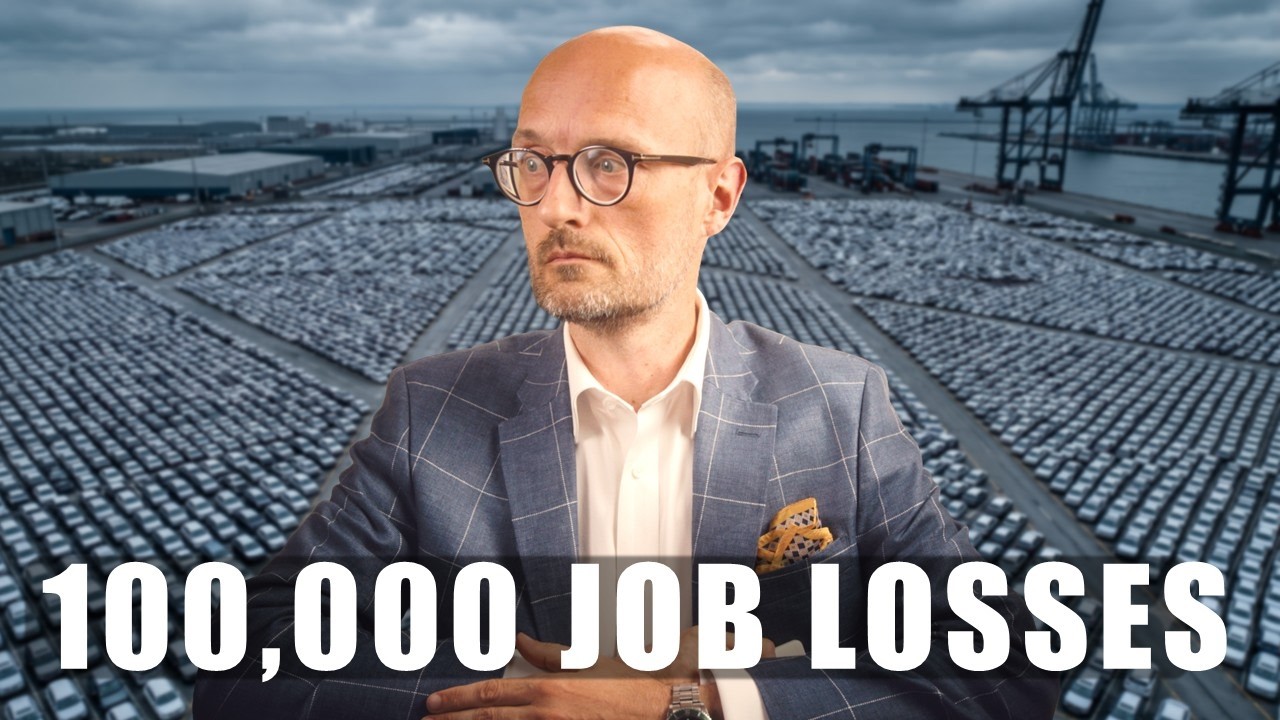
Chinese electric vehicle makers are flooding Europe with cheap, high-tech cars, forcing Volkswagen to consider cutting up to 100,000 jobs and leaving Germany’s once-dominant auto industry scrambling to survive [227042][228330][230580].
Chinese EVs Crash the Global Market as Gas Prices Soar — Now They’re Cheaper Than Hybrids
Chinese electric vehicles are flooding global markets, and for the first time ever, the average price of a new EV has dropped below that of a hybrid — landing at roughly $27,000, about $1,000 less [214592]. High gasoline prices, driven partly by ongoing conflicts, are pushing consumers and businesses toward affordable Chinese models, while Detroit’s automakers admit they are falling further behind [215996][217947].
Europe’s Rivers Are Drying Up—Nazi Warships Emerge as Danube Hits Record Lows
Record-low water levels across Europe’s major rivers are exposing sunken Nazi warships in the Danube and forcing nuclear plants to shut down, as the continent’s worst drought in decades cripples shipping, farming, and energy production [218912][218108].
China to EU: Restrict Our Firms, Get Ready for a Response
Beijing warns Brussels of firm retaliation as Europe weighs a plan to shut Chinese companies out of its market, while Ford's CEO says Europe has already lost the car race to China.
Chinese EVs Are Eating Europe Alive: Sales Up 62.7% as BYD Beats Tesla
China's electric vehicle makers are capturing record market share in Europe, with battery electric sales surging 62.7% in August and BYD overtaking Tesla in cumulative registrations.
Related Editorials
Germany’s Economic Engine Sputters: Why the World’s Former Export Champion Is Running Out of Steam
For decades, Germany was the gold standard of European economic might—a manufacturing powerhouse whose efficiency, discipline, and engineering prowess powered the continent. Today, that engine is sputtering.
Europe’s Economic Doom Loop: Why Brussels Has Lost the Wheel
Europe’s economic engine is sputtering, and according to two of the continent’s most prominent economic voices, the drivers in Brussels have lost control of the vehicle. In a recent discussion, former Greek Finance Minister Yanis Varoufakis and Financial Times columnist Wolfgang Münchau painted a s
Europe’s Decline is Now Official: The Continent Has Lost Its Economic Soul
In a rare moment of bipartisan agreement, two of Europe’s most astute economic minds—Yanis Varoufakis, the former Greek Finance Minister, and Wolfgang Münchau, a veteran financial journalist and co-founder of *The Econoclasts*—have declared the end of an era. The evidence, they argue, is no longer