America Is Quietly Losing the World: Two Top Economists on the Empire’s Unraveling
The United States has long been the undisputed center of global capitalism. Yet, according to two of the world’s most prominent dissenting economists, Yanis Varoufakis and Richard D.
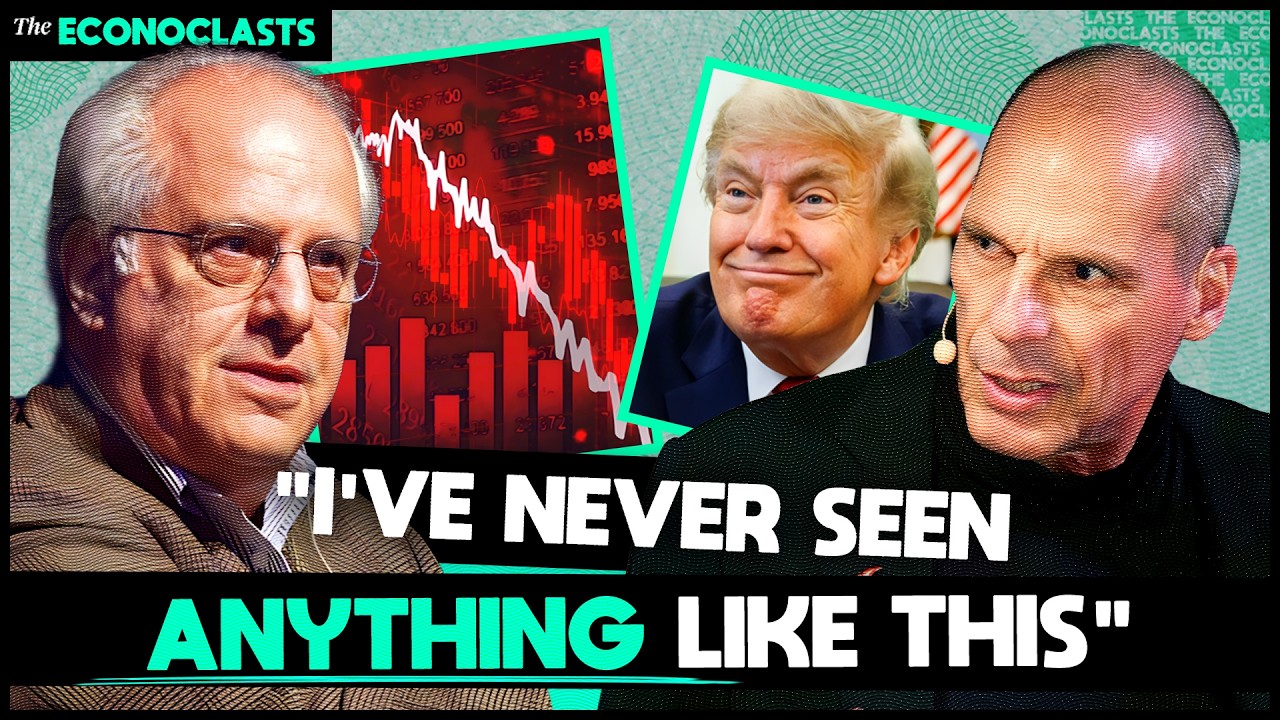
The United States has long been the undisputed center of global capitalism. Yet, according to two of the world’s most prominent dissenting economists, Yanis Varoufakis and Richard D. Wolff, that era is ending—not with a bang, but with a quiet, structural decay. In a recent episode of The Econoclasts, the former Greek Finance Minister and the American Marxian economist argue that Washington is losing its grip on the global order, not because of military defeat, but because of internal contradictions and the rise of a multipolar world. Their conversation offers a stark, data-driven diagnosis of an empire in decline, challenging the narrative of American resilience.
The "Quiet" Loss of Hegemony
Varoufakis opens the discussion with a provocative thesis: the U.S. is not losing influence through dramatic geopolitical crises, but through a slow erosion of its economic foundations. He argues that the American model of "profit without production"—driven by financialization—has alienated traditional allies. The U.S. has become a rentier state, extracting wealth through the dollar’s reserve currency status rather than through manufacturing or innovation. This, he suggests, is a fragile foundation. When a nation’s power relies on the willingness of others to hold its debt, that power is only as strong as the creditors' patience.
The Failure of the "Magic Money Tree"
Richard Wolff focuses on the domestic contradictions that underpin this global shift. He points to the widening chasm between corporate profits and worker wages, a gap that has persisted since the 1970s. Wolff argues that the U.S. economy is not "growing" in a healthy sense; rather, it is being propped up by massive government deficits and a stock market that is increasingly disconnected from the real economy. He describes this as a "magic money tree" mentality—the belief that the state can endlessly print currency without consequence. The consequence, he warns, is the devaluation of the dollar and the acceleration of de-dollarization efforts by China, Russia, and even European partners.
The China Factor and the New Multipolarity
The conversation pivots to the role of China, which both economists agree is the primary beneficiary of U.S. missteps. Varoufakis argues that China has successfully positioned itself as the world’s factory and, more importantly, as a technological innovator. The U.S. attempt to contain Beijing through tariffs and sanctions has backfired, forcing China to accelerate its internal supply chains and develop alternative payment systems. The result is a global economy that is splitting into blocs, with the U.S. increasingly isolated from the Global South, which views the "Washington Consensus" as a relic of a bygone era.
The European Dilemma
Wolff and Varoufakis also dissect Europe’s role in this shifting landscape. Varoufakis, who famously clashed with the EU over Greek debt, argues that Europe is trapped in a self-defeating austerity regime. The continent is caught between its historical reliance on the U.S. security umbrella and its economic dependence on Chinese trade. This dichotomy, he argues, makes Europe a passive observer rather than an active player in the new world order. The war in Ukraine, they suggest, has accelerated this dependency, forcing Europe to accept economic pain for U.S. strategic goals.
The Internal Threat: Political Instability
The economists conclude that the greatest threat to American power is not external, but internal. Wolff highlights the rise of political extremism and the erosion of democratic institutions. He argues that a society with such deep inequality cannot sustain a stable political system. The "quiet" loss of the world, he posits, begins at home—with a working class that has lost faith in the system and an elite that has lost touch with reality. Varoufakis agrees, noting that the U.S. is experiencing a "pre-revolutionary" state of tension, where the legitimacy of the state is increasingly questioned.
Conclusion: A World Without a Center
The discussion ends on a somber note. Both economists agree that the world is moving toward a decentralized, chaotic multipolarity where no single power—not even China—can claim hegemony. The U.S. is not collapsing, but it is receding. The question, they argue, is whether it can manage this decline gracefully or whether it will drag the global economy into a new depression. For Varoufakis and Wolff, the answer lies not in policy tweaks, but in a fundamental reimagining of capitalism itself. As the U.S. loses its quiet grip, the world is forced to ask: what comes next?
Related Coverage
War, Climate, and Collapsing Peace: How a Broken Global Order Is Crushing the World’s Most Vulnerable
A fragile moment of hope for global stability has shattered as a historic peace deal between the United States and Iran collapses, wars in Ukraine and Gaza intensify, and a record-breaking climate disaster threatens millions, all driven by a global economic system that prioritizes military spending and corporate profit over human welfare.
War, Oil, and a Burning Planet: How Conflict and Climate Collapse Are Crushing the World’s Most Vulnerable
A fragile global order is fracturing under the weight of collapsing ceasefires, escalating wars, and a deepening climate emergency, while an economic system that prioritizes military spending and corporate profit leaves millions of ordinary people—especially the world’s poorest—to bear the heaviest costs.
Strait of Hormuz, Drought, and Debt: The Global Economy Strains Under War and Climate Chaos
A global economy built on the promise of open trade and cheap energy is buckling under the weight of geopolitical conflict, strategic blockades, and a technological gold rush that is straining the very limits of infrastructure, leaving ordinary citizens to bear the brunt of inflation, fuel shortages, and a widening gap between the wealthy and the rest [15239].
War, Oil, and a World Off Balance: How Conflict and Climate Are Reshaping the Global Economy
A fragile global economy is buckling under the weight of escalating wars, a worsening climate crisis, and a financial system that prioritizes profit over human welfare, leaving millions of ordinary people to bear the cost.
War, Drought, and Debt: How a Strained Global Economy Is Crushing the Vulnerable
A global economy built on the promise of open trade and cheap energy is buckling under the weight of geopolitical conflict, strategic blockades, and a climate crisis that is no longer a distant warning but a lived reality. From the battlefields of Ukraine and the besieged oil routes of the Middle East to the drought-parched heart of Europe, the pursuit of geopolitical power and corporate profit is increasingly colliding with fundamental human needs, leaving ordinary citizens to bear the brunt of inflation, fuel shortages, and a widening gap between the wealthy and the rest.
War, Oil, and a World on Fire: How Collapsing Ceasefires and a Burning Planet Are Crushing the Global Economy
A fragile global order is fracturing as a cascade of collapsing ceasefires, escalating wars, and a deepening climate emergency converge, pushing energy markets into chaos and leaving millions of ordinary people to bear the costs of a system that prioritizes military spending and corporate profit over human welfare.
Related Editorials
How Washington’s New Tariffs Are Pushing the World into Beijing’s Arms
The United States has long positioned itself as the central node of global trade, the indispensable partner for any nation seeking economic security. Yet, according to economists Yanis Varoufakis and Wolfgang Münchau, the latest wave of American protectionism is achieving the exact opposite of its
Europe’s Decline is Now Official: The Continent Has Lost Its Economic Soul
In a rare moment of bipartisan agreement, two of Europe’s most astute economic minds—Yanis Varoufakis, the former Greek Finance Minister, and Wolfgang Münchau, a veteran financial journalist and co-founder of *The Econoclasts*—have declared the end of an era. The evidence, they argue, is no longer
The Quiet Collapse of American Influence: Why the World No Longer Listens
For decades, the United States wielded a unique form of power. It was not the power of bombs or banks, but the power of attraction.
Title: The Quiet Unraveling of Dollar Hegemony
The global financial order is not built on treaties or pacts. It is built on a single currency, the US dollar, which underpins international trade, central bank reserves, and the pricing of commodities from oil to wheat.
Europe’s Economic Doom Loop: Why Brussels Has Lost the Wheel
Europe’s economic engine is sputtering, and according to two of the continent’s most prominent economic voices, the drivers in Brussels have lost control of the vehicle. In a recent discussion, former Greek Finance Minister Yanis Varoufakis and Financial Times columnist Wolfgang Münchau painted a s
The World After Capitalism: Economists Debate What Comes Next
A live panel of leading thinkers explores whether capitalism can survive its own contradictions—and what might replace it. --- The global financial system is showing unprecedented strain.