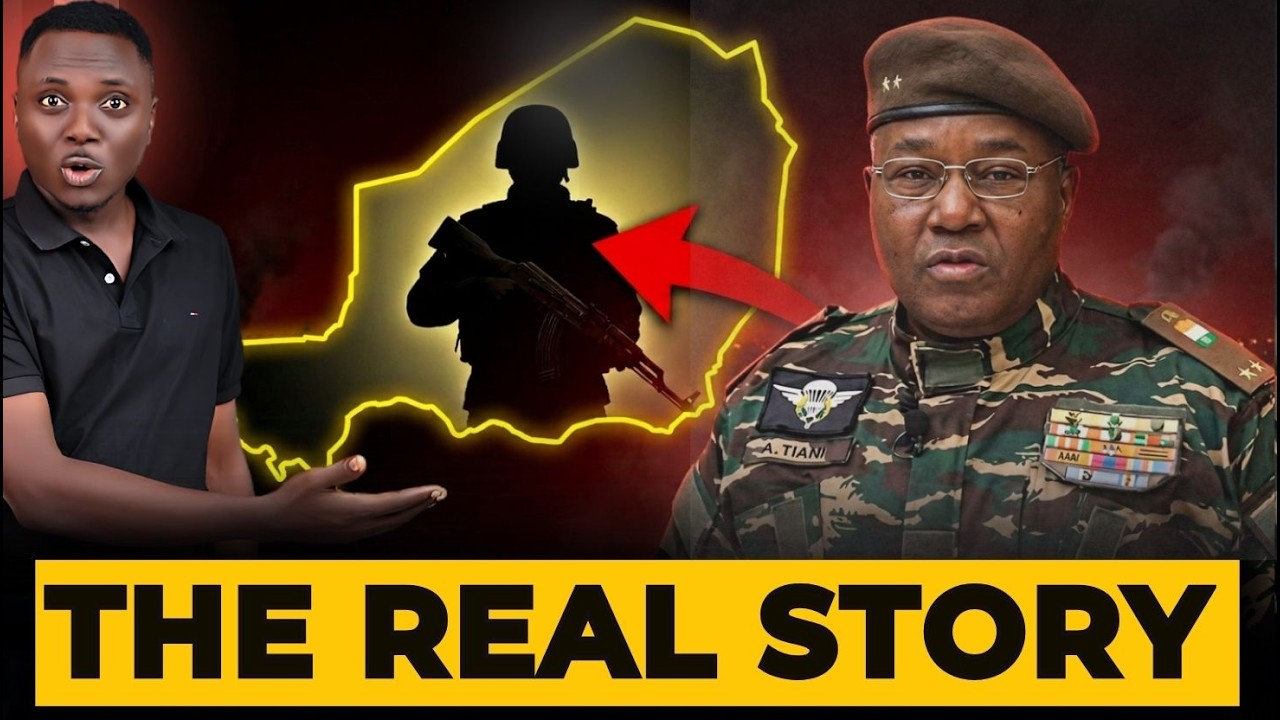
Niger’s Silent Coup: Why the Junta’s Own Soldiers Turned on General Tiani
Article: In a dramatic turn of events that has sent ripples through the Sahel region, Niger’s military junta faces its most significant internal challenge yet. Reports from Niamey confirm that a faction of the country’s own armed forces has moved against General Abdourahamane Tiani, the man who sei
Article:
In a dramatic turn of events that has sent ripples through the Sahel region, Niger’s military junta faces its most significant internal challenge yet. Reports from Niamey confirm that a faction of the country’s own armed forces has moved against General Abdourahamane Tiani, the man who seized power in a coup just over a year ago. The question on everyone’s mind is simple: why would the soldiers who helped install him now seek his removal?
The answer lies not in a single grievance, but in a confluence of broken promises, economic collapse, and a shifting geopolitical landscape that has left the military rank-and-file feeling abandoned.
The Initial Promise
When General Tiani ousted President Mohamed Bazoum in July 2023, he justified the action by citing rampant corruption and the government’s failure to contain jihadist insurgencies. The soldiers on the ground, many of whom had been fighting a losing battle against groups linked to Al-Qaeda and ISIS, initially viewed the coup as a necessary reset. They believed Tiani would prioritize their needs: better equipment, regular pay, and a clear strategy for victory.
That promise evaporated quickly. According to internal military sources, morale has plummeted as soldiers continue to face supply shortages. Paychecks, while delivered, have lost significant value against the backdrop of double-digit inflation. More critically, the junta’s tactical focus shifted from combating insurgents to consolidating political power, leaving units in the field without clear directives or reinforcements.
The Geopolitical Fallout
A major turning point was the junta’s aggressive pivot away from Western allies. Tiani expelled French troops and severed military ties with the United States, turning instead to Russia for security support. While this move was popular among certain civilian factions, it created a logistical nightmare for the military. The departure of French and American advisors meant the loss of critical intelligence, surveillance, and air support capabilities that the Nigerien army had come to rely on.
The promised Russian hardware and mercenary support, delivered via the Africa Corps (formerly Wagner Group), has largely failed to materialize in the quantities or quality expected. Soldiers on the frontlines report that they are now fighting with outdated equipment against an enemy that has adapted to new tactics. The result has been a series of tactical setbacks, leading to significant casualties in the Tillabéri and Diffa regions.
Economic Strangulation
The coup also triggered severe economic sanctions from the Economic Community of West African States (ECOWAS), which, while partially lifted, have crippled the state’s finances. The junta has struggled to pay civil servants, and the military budget has been stretched thin. In an attempt to maintain loyalty, Tiani reportedly promoted several of his cronies to high-ranking positions, bypassing more experienced officers. This favoritism has bred deep resentment within the officer corps, who see the leadership as detached from the harsh realities on the ground.
The Breaking Point
The immediate trigger for the mutiny appears to be a proposed redeployment of troops to the northern borders, a move many soldiers viewed as a death sentence due to lack of logistical support. When orders were issued, a unit stationed near Niamey refused to comply, leading to a standoff that quickly escalated. The mutineers have reportedly taken control of key military installations, demanding not only a change in leadership but a full audit of defense spending.
What Happens Next?
The situation remains fluid. While loyalist forces have surrounded the mutineers’ positions, a full-scale firefight has been avoided, suggesting that there is significant sympathy for the rebels’ demands even among Tiani’s inner circle. International observers note that this is not a coup attempt driven by political ideology, but a mutiny driven by survival.
For General Tiani, the path forward is narrow. He can either negotiate, which would signal weakness and potentially embolden other factions, or he can attempt a violent crackdown, which risks igniting a civil war. For the soldiers who turned against him, the calculus is equally stark. They have crossed a line from which there is no return; they must now see their rebellion through to a conclusion.
This internal fracture reveals the fundamental fragility of military juntas. A regime built on the barrel of a gun is always vulnerable to the whims of those who hold the weapons. In Niger, the men who once carried Tiani to power have realized that the revolution they fought for has betrayed them, and they are now demanding a new one. The outcome of this standoff will determine not just the fate of one general, but the stability of the entire Sahel region.
Related Coverage
Sahel Juntas Crack Down on Critics as Militant Attacks Surge – Report Finds Security Worsening
A new report reveals that military juntas in Mali, Burkina Faso, and Niger are silencing journalists and activists instead of adapting their security strategies, even as Islamist militant groups make unprecedented gains across the Sahel region.
Ukraine’s Drone Chief Turns on Zelensky as Sacked Minister Demands Election
Ukraine’s wartime leadership is fracturing from within. The official who built the country’s drone program has launched the most serious political challenge to President Volodymyr Zelensky since the start of the invasion, while the recently dismissed defense minister is publicly demanding a presidential election.
Kurds Demand Kurdish-Language Schools as SDF Handover Puts Damascus in Charge
Kurdish education has become the flashpoint in northern and eastern Syria's integration with Damascus, following the official end of the Syrian Democratic Forces' military structure. At least two developments — protests over language rights and unrest tied to prisons and killings — show the dispute has moved past military arrangements.
Related Editorials
Mali’s Military Mutiny Sends a Warning to Nigeria’s President Tinubu
In the volatile landscape of West African politics, the chain of command is often the last line of defense against chaos. Yet, a recent upheaval in Mali has exposed a vulnerability that military leaders across the region fear most: the enemy within.
Title: The Call Log That Could Rewrite Niger’s Coup Narrative
In the wake of Niger’s July 2023 military takeover, a single piece of evidence has emerged that challenges the official version of events. A classified call log, attributed to a captain within the coup’s inner circle, suggests the plot may have been broader and more coordinated than initially repor
Burkina Faso’s Revolt Against France Triggers an Irreversible Domino Effect in the Sahel
In a move that has reshaped the geopolitical landscape of West Africa, Burkina Faso’s decision to sever ties with its former colonial power has ignited a chain reaction that analysts now describe as irreversible. The country’s military junta, which seized power in a 2022 coup, has not only expelled
Turkey’s Silent Surge: How Ankara Is Reshaping the Battlefield in Mali
For years, the conflict in Mali has been defined by a complex web of local militias, foreign mercenaries, and shifting jihadi alliances. Yet, a new player has quietly moved to the center of the board, altering the strategic calculus of the Sahel.
The Sahel’s Quiet Revolution: Why Mali, Burkina Faso, and Niger Turned Their Backs on the West
In a move that has reshaped the geopolitical map of West Africa, three nations—Mali, Burkina Faso, and Niger—have collectively severed ties with their traditional Western allies. This is not a sudden coup or a fleeting protest; it is a calculated, strategic pivot that signals a new era of self-dete
The Silent Pivot: Why Chad’s Unnoticed Move Just Rewrote the Rules
In the high-stakes arena of international strategy, the most consequential moves are often the ones that make no sound. While commentators focused on the obvious theater and public posturing, a subtle but seismic shift occurred—one that most observers completely missed.