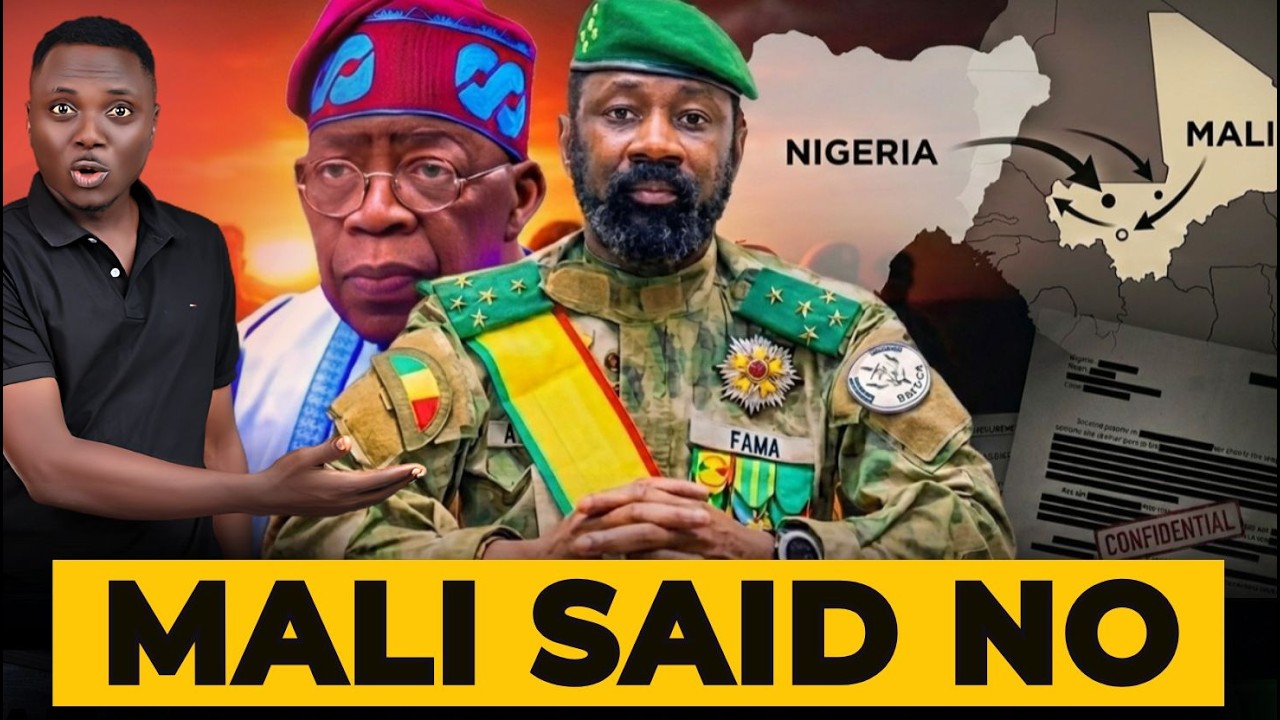
Mali’s Military Mutiny Sends a Warning to Nigeria’s President Tinubu
In the volatile landscape of West African politics, the chain of command is often the last line of defense against chaos. Yet, a recent upheaval in Mali has exposed a vulnerability that military leaders across the region fear most: the enemy within.
In the volatile landscape of West African politics, the chain of command is often the last line of defense against chaos. Yet, a recent upheaval in Mali has exposed a vulnerability that military leaders across the region fear most: the enemy within. For Nigeria, the lesson is stark and immediate. President Bola Ahmed Tinubu must look at the events unfolding in Bamako not as a distant crisis, but as a mirror reflecting the internal fractures threatening his own armed forces.
The Anatomy of a Mutiny
The situation in Mali escalated when disgruntled soldiers, reportedly frustrated by delayed wages and poor conditions, turned against their superiors. What began as a protest over logistics quickly morphed into a security crisis, forcing the ruling junta to scramble for control. The mutiny was not a coup attempt in the traditional sense; it was a spontaneous eruption of pent-up grievances that the high command had failed to address. This distinction is critical. A coup seeks power; a mutiny seeks survival. When soldiers feel abandoned by their leadership, they stop fighting for the state and start fighting for themselves.
The Nigerian Parallel
Nigeria’s military is not immune to these pressures. Deployed across multiple theaters—from the northeastern insurgency of Boko Haram to banditry in the northwest and separatist tensions in the southeast—the Nigerian Army is stretched dangerously thin. Troops on the front lines often cite poor equipment, irregular pay, and a lack of rotation as chronic issues. These are not new complaints, but the Mali incident proves that ignoring them carries existential risks.
The "Trojan Horse" in this context is not a foreign spy, but the accumulation of internal neglect. When morale collapses, discipline follows. A soldier who feels betrayed by the state is easily swayed by ethnic or religious agitators, or worse, by corrupt commanders who exploit the system for personal gain. The Nigerian military has historically prided itself on its professionalism, but the gap between the officer corps and the enlisted ranks is widening.
The Lesson for Tinubu
President Tinubu’s administration has focused heavily on economic reforms and diplomatic positioning, but security remains the bedrock of any nation’s stability. The Malian lesson suggests that military loyalty cannot be purchased with rhetoric alone. It requires tangible investment in welfare, transparent promotion systems, and a clear exit strategy for prolonged deployments.
Furthermore, the mutiny in Mali highlights the danger of political interference in military appointments. When officers are selected for their loyalty to the president rather than their competence, the chain of command weakens. Subordinates quickly notice when leadership is hollow, and respect evaporates. For Tinubu, who has made several high-level military reshuffles, the message is clear: prioritize merit over patronage.
The Regional Ripple Effect
The instability in Mali is not isolated. The Sahel region is already a powder keg, with juntas in Burkina Faso and Niger breaking ties with traditional Western allies and turning to Russia. If Nigeria, the region’s dominant power, suffers a similar internal fracture, the consequences would be catastrophic. Not only would it destabilize West Africa, but it would also provide a strategic opening for extremist groups to expand their caliphate ambitions.
Conclusion
The "Trojan Horse" inside Nigeria’s Army is not a secret weapon smuggled in by enemies; it is the slow decay of trust between the soldier and the state. Mali has just shown that when that trust collapses, the fallout is immediate and bloody. President Tinubu has a choice: invest in the welfare and integrity of his armed forces now, or face the consequences of a mutiny that no amount of foreign aid or diplomatic maneuvering can contain. The warning has been issued; the time to act is now.
Related Coverage
Sahel Juntas Crack Down on Critics as Militant Attacks Surge – Report Finds Security Worsening
A new report reveals that military juntas in Mali, Burkina Faso, and Niger are silencing journalists and activists instead of adapting their security strategies, even as Islamist militant groups make unprecedented gains across the Sahel region.
Global Regulators Warn AI Could Trigger Cross-Border Financial Crash
A new wave of AI-driven cyber threats is putting the world's financial system on edge, with top regulators warning that a single failure could spread across borders.
Osun Election in Chaos: 10,210 Cops Deployed as Watchdog Warns of Killings and Vote Buying
Nigeria’s Osun State governorship election is facing a credibility crisis, with a civil society watchdog warning of killings and vote buying just days before the vote, even as authorities deploy over 10,000 security personnel to maintain order.
Minority Takes Religious Rights Fight to UN as Human Rights Defenders Face Rising Risk
Western Thrace's Turkish minority is challenging state control over its religious leadership at the United Nations, even as a new UN report warns that people who cooperate with the world body on human rights face intimidation and reprisals.
Related Editorials
Niger’s Silent Coup: Why the Junta’s Own Soldiers Turned on General Tiani
Article: In a dramatic turn of events that has sent ripples through the Sahel region, Niger’s military junta faces its most significant internal challenge yet. Reports from Niamey confirm that a faction of the country’s own armed forces has moved against General Abdourahamane Tiani, the man who sei
ECOWAS Just Drew a Red Line Around the Sahel—Here’s Why
The Economic Community of West African States (ECOWAS) has issued a stark warning regarding the escalating crisis in the Sahel region. The bloc’s latest declaration signals a firm stance against further instability spilling across its southern borders.
Mali’s Bold Pivot: How a Surprise Alliance Is Redrawing West Africa’s Geopolitical Map
In a region already defined by coups, sanctions, and shifting loyalties, one man’s unexpected diplomatic gambit is sending shockwaves through West Africa. Colonel Assimi Goïta’s Mali has long been a flashpoint for international tension, but the latest development—a deepening military and political
The Coup That Exposed the West's Hidden Hand in Africa's Resource Wars
Burkina Faso's young leader Ibrahim Traoré has done what few African presidents dare: he named the foreign powers quietly profiting from the continent's instability. His evidence is forcing a global reckoning.
Burkina Faso’s Football Revolution: Traore Defies FIFA with a Threat to Dissolve the Federation
In a dramatic escalation of the ongoing power struggle between African football governance and its European headquarters, Burkina Faso’s military leader, Captain Ibrahim Traore, has issued a defiant ultimatum to FIFA. The Burkinabe government has threatened to dissolve the national football federat
The Hidden Hand Behind Africa’s Fractures: A Question of External Influence
Across the African continent, a troubling pattern has emerged. From the Sahel to the Horn of Africa, communities that once coexisted are now divided by suspicion, ethnic tension, and political violence.