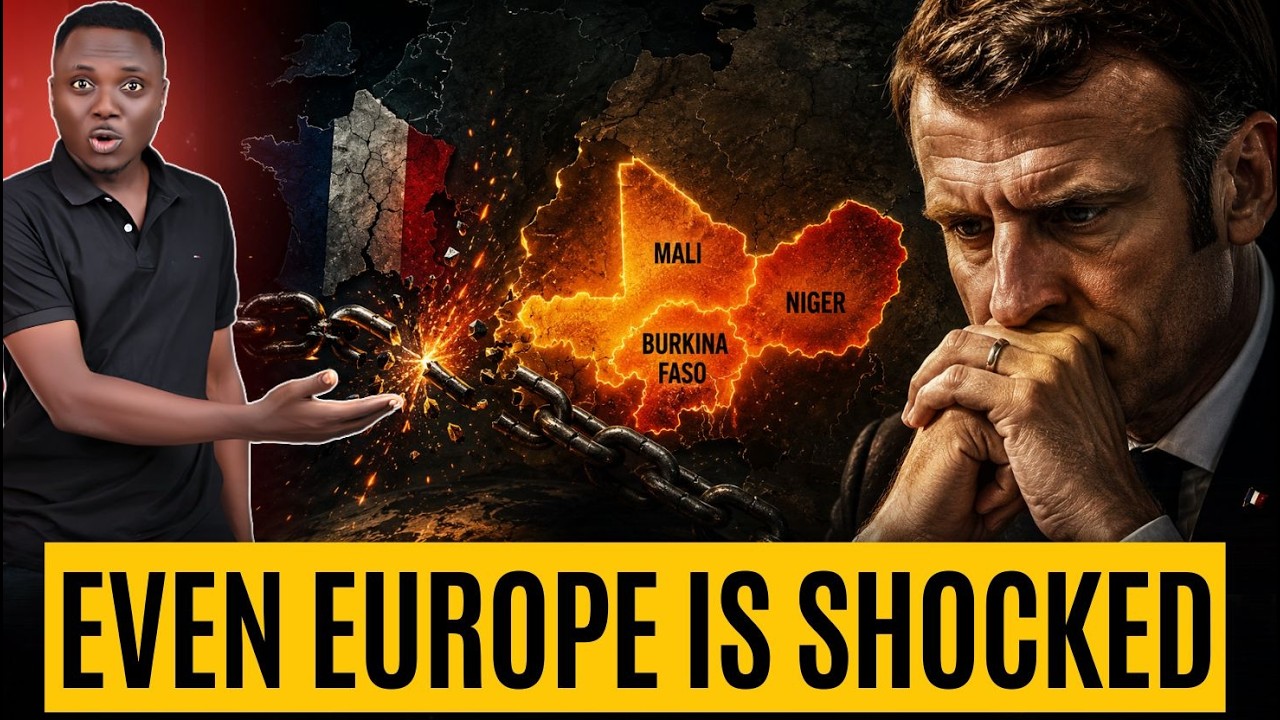
Burkina Faso’s Revolt Against France Triggers an Irreversible Domino Effect in the Sahel
In a move that has reshaped the geopolitical landscape of West Africa, Burkina Faso’s decision to sever ties with its former colonial power has ignited a chain reaction that analysts now describe as irreversible. The country’s military junta, which seized power in a 2022 coup, has not only expelled
In a move that has reshaped the geopolitical landscape of West Africa, Burkina Faso’s decision to sever ties with its former colonial power has ignited a chain reaction that analysts now describe as irreversible. The country’s military junta, which seized power in a 2022 coup, has not only expelled French troops and diplomats but has also catalyzed a wave of anti-French sentiment across the Sahel region. This is not a fleeting protest; it is a structural realignment of power.
The immediate trigger was the growing public frustration with France’s military presence, which many Burkinabè perceived as ineffective against a rising jihadist insurgency. For nearly a decade, French Operation Barkhane—a 5,000-strong counterterrorism force—failed to stem the violence that has displaced over two million people and killed thousands. When the junta demanded a renegotiation of military agreements, Paris refused. In response, Ouagadougou gave French forces 30 days to leave the country in early 2023.
What followed was a diplomatic earthquake. Mali, which had already expelled French troops in 2022, quickly deepened its alliance with Burkina Faso. Niger, long considered France’s most stable ally in the region, saw its own junta seize power in July 2023 and immediately follow suit. The three nations now form a new axis, the Alliance of Sahel States, explicitly designed to replace the French-led G5 Sahel security framework.
This shift is not merely symbolic. The new alliance has begun coordinating military operations without French intelligence or air support. They have also turned to new partners: Russia’s Wagner Group (now rebranded as Africa Corps) has been invited to provide training and equipment. Meanwhile, Turkey and the United Arab Emirates have stepped in with drone technology and economic deals. France, once the undisputed gatekeeper of the region, now finds itself locked out of three capitals it once controlled.
The economic consequences are equally stark. Burkina Faso, Mali, and Niger are landlocked nations that previously relied on French-controlled ports and the West African CFA franc—a currency pegged to the euro and guaranteed by the French Treasury. The juntas have begun exploring alternative currencies and trade routes, including closer ties with China and the use of gold reserves to back new monetary systems. The French Treasury, which manages the CFA franc’s convertibility, now faces a credibility crisis.
Critics argue that the juntas are trading one form of dependency for another. Russia and Turkey are not altruistic partners; they demand concessions in mining rights and military basing. Yet for the populations of these Sahelian states, the calculus is different. A 2023 Afrobarometer survey showed that 78% of Burkinabè now view France’s influence as negative—a dramatic reversal from a decade ago. The emotional and political momentum is no longer with Paris.
The question now is whether the domino effect will spread further. Chad, another key French ally, has seen protests demanding a similar break. Senegal, Ivory Coast, and Benin—all with French military bases—are watching nervously. Each country’s calculus is unique, but the pattern is clear: the era of “Françafrique,” where France maintained political and economic control over its former colonies, is ending not with a negotiation, but with an expulsion.
For France, the loss is strategic and reputational. The Sahel is a vast, unstable region where jihadist groups like JNIM and the Islamic State in the Greater Sahara operate freely. Without local partners on the ground, French intelligence and counterterrorism efforts are now blind. The chain reaction triggered by Burkina Faso has not only cost France its military foothold but has also fundamentally altered the balance of power in a region that will define the next decade of African security.
Related Coverage
Mali, Burkina Faso, Niger Bolt From ICC in Triple Blow to Global Justice
Three West African nations under military rule have formally quit the International Criminal Court, dealing a major blow to the institution's ability to prosecute war crimes and genocide.
Sahel Juntas Crack Down on Critics as Militant Attacks Surge – Report Finds Security Worsening
A new report reveals that military juntas in Mali, Burkina Faso, and Niger are silencing journalists and activists instead of adapting their security strategies, even as Islamist militant groups make unprecedented gains across the Sahel region.
Sahel on the Brink: 3 Million Displaced as Violence and Climate Shocks Push Region to Collapse
The humanitarian crisis in Africa’s Sahel region is rapidly worsening, with millions now facing dire conditions driven by a surge of violence, mass civilian displacement, climate shocks, and widespread hunger spilling across national borders.
Global Crises Converge: War, Oil Blockades, and a Climate Emergency Reshape the World Order
A cascade of collapsing ceasefires, escalating military conflicts, and a rapidly accelerating climate emergency is shattering the global order, pushing energy markets into chaos and leaving millions of ordinary people—especially the world’s poorest—to bear the costs of a system that prioritizes military spending and corporate profit over human welfare.
Global Crises Converge: Wars, Oil Blockades, and Climate Disasters Reshape the World Order
A cascade of collapsing ceasefires, escalating military conflicts, and a rapidly accelerating climate emergency is shattering the global order, pushing energy markets into chaos and leaving millions of ordinary people—especially the world’s poorest—to bear the costs of a system that prioritizes military spending and corporate profit over human welfare.
El Niño on Steroids: Supercharged Climate Event Threatens to Wipe Out Millions in the Sahel
Across Africa’s Sahel region, a catastrophic mix of surging violence, climate shocks, and hunger is pushing millions to the brink of collapse — and a potentially historic “super” El Niño threatens to make the crisis even deadlier. The United Nations warns that the humanitarian disaster, which has largely faded from global headlines since 2012, is now spilling across borders as civilians flee brutal attacks, droughts destroy crops, and extreme weather strains already broken systems.
Related Editorials
Why Burkina Faso Severed Ties with Its Former Colonial Master
In a dramatic shift that has reshaped West African geopolitics, Burkina Faso has turned its back on France, its former colonial ruler. The move, driven by a wave of anti-French sentiment and a desire for national sovereignty, marks a decisive break from decades of political and military dependency.
The Sahel’s Quiet Revolution: Why Mali, Burkina Faso, and Niger Turned Their Backs on the West
In a move that has reshaped the geopolitical map of West Africa, three nations—Mali, Burkina Faso, and Niger—have collectively severed ties with their traditional Western allies. This is not a sudden coup or a fleeting protest; it is a calculated, strategic pivot that signals a new era of self-dete
Burkina Faso’s Arms Industry Ambition: A Turning Point for West African Sovereignty?
In a significant shift for West African geopolitics, Burkina Faso has announced the establishment of a military manufacturing complex. This move signals a bold stride toward defense autonomy for the junta-led nation, potentially altering the regional balance of power.
The Sahel Alliance Just Redrew West Africa’s Geopolitical Map—And ECOWAS Is Scrambling
In a move that has sent ripples through West African diplomacy, the Alliance of Sahel States (AES) has unveiled a significant new project that regional bloc ECOWAS did not anticipate. The development marks a decisive step in the consolidation of the AES as a standalone geopolitical and economic for
Russia’s Silent Takeover: How Moscow Is Replacing France in the Sahel
In a dramatic geopolitical shift, Russia is quietly but decisively expanding its military and political influence across West Africa’s Sahel region. Recent developments in Mali, Burkina Faso, and Niger signal a coordinated effort by Moscow to fill the vacuum left by departing Western powers—particu
Mali’s Offensive Breaks Rebel Siege: A Turning Point in the Sahel Conflict
In a dramatic reversal of fortune, Malian government forces have launched a counteroffensive that has shattered the momentum of two of the Sahel’s most formidable militant coalitions. The operation, which caught the al-Qaeda-aligned group JNIM and the separatist FLA off guard, marks one of the most