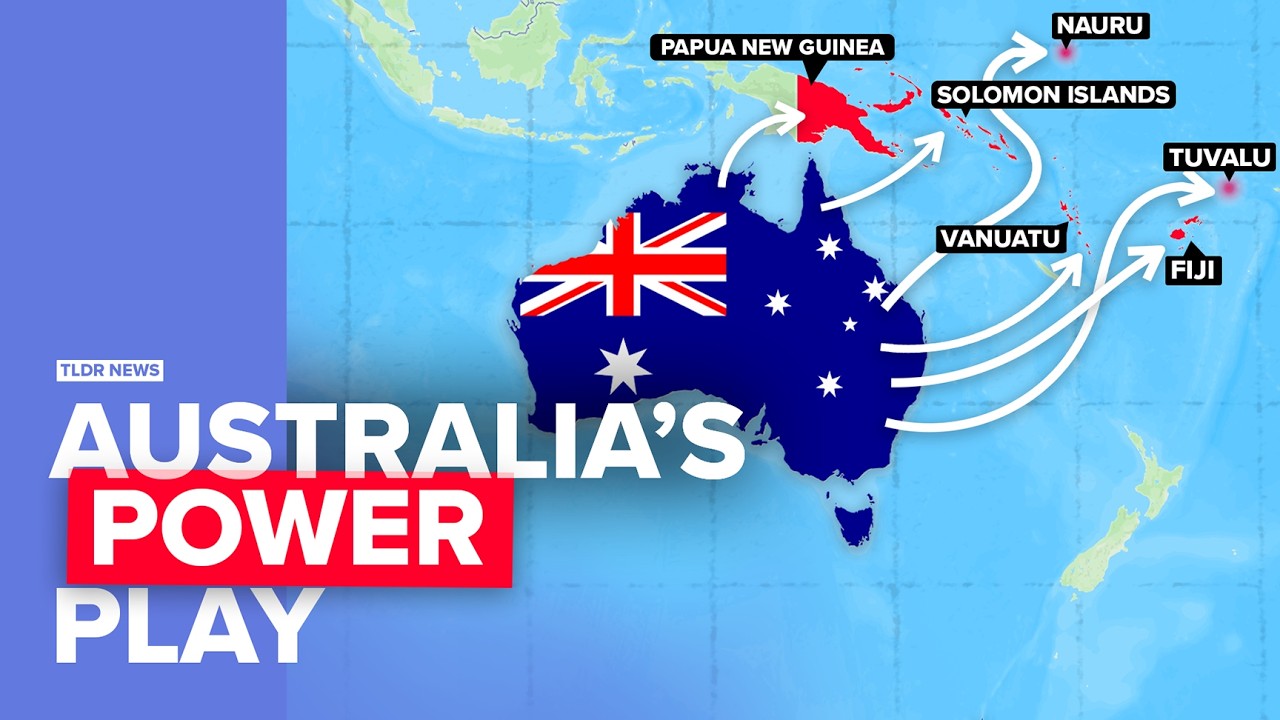
Australia’s Quiet Rise as the Pacific’s New Power Broker
For decades, the Pacific Islands were viewed by much of the world as a postcard backdrop—remote, idyllic, and strategically peripheral. That perception has shifted dramatically.
For decades, the Pacific Islands were viewed by much of the world as a postcard backdrop—remote, idyllic, and strategically peripheral. That perception has shifted dramatically. Australia is now executing one of the most significant geopolitical recalibrations of its modern history, positioning itself as a primary security and economic partner for a region that has become the frontline of great-power competition.
This transformation is not the result of a single policy decision but a coordinated strategy combining defense modernization, climate diplomacy, and infrastructure investment. The result is a new architecture of influence that is reshaping the balance of power in Oceania.
The Strategic Imperative
The Pacific’s strategic value has skyrocketed due to two converging factors: the intensifying rivalry between the United States and China, and the existential threat of climate change facing low-lying island nations. For Canberra, the region is no longer a distant neighborhood to manage but a critical buffer zone where sovereignty and stability are directly linked to Australian security.
The shift began with a recognition that traditional aid packages were insufficient. Island nations demanded respect, not patronage. Australia’s response has been to pivot from a donor-recipient model toward a partnership model, prioritizing long-term resilience over short-term handouts.
Defense and Security Architecture
The most visible pillar of this strategy is defense. The AUKUS pact, which will deliver nuclear-powered submarines to Australia, serves a dual purpose: it bolsters the Australian navy’s reach and signals a permanent commitment to the region’s maritime order. But the more immediate impact is visible in the expansion of bilateral security agreements.
Australia has signed framework agreements with Papua New Guinea and Tuvalu, allowing for rapid military deployment and joint patrols in the exclusive economic zones. These treaties are designed to counter illegal fishing—a multi-billion-dollar drain on Pacific economies—and to provide a credible deterrent against coercive actions.
Crucially, these agreements emphasize local capacity. Australian forces are training Pacific police and military units to manage their own security challenges. This approach reduces the perception of foreign occupation while increasing operational interoperability. It is a calculated move to ensure that when crises occur—be they natural disasters or geopolitical provocations—Australia is the first responder.
Climate: The Hard Currency of Influence
No discussion of Pacific power is credible without addressing climate change. For island states, rising sea levels are not a future threat; they are a present reality. Australia has historically been criticized for its fossil fuel reliance, and that criticism created a diplomatic vacuum that Beijing eagerly filled.
Canberra has since recalibrated. It has increased its climate finance commitments to the Pacific, focusing on tangible projects: sea walls, water desalination plants, and renewable energy grids. More importantly, Australia has begun framing climate action as a security issue, not just an environmental one. By linking climate resilience to defense planning, Australia has made itself indispensable to the region’s survival.
This is not altruism; it is strategic necessity. A Pacific nation that is destabilized by climate-induced displacement is a nation vulnerable to foreign influence. By funding adaptation, Australia buys stability and goodwill.
Economic Levers and Labor Mobility
Soft power has a hard edge in the Pacific. Australia’s Pacific Australia Labour Mobility (PALM) scheme has become a cornerstone of its influence. The program allows tens of thousands of Pacific workers to fill labor shortages in Australian agriculture and healthcare. For the sending nations, remittances from these workers often exceed foreign direct investment.
This creates a profound dependency, but one that is mutually beneficial. Workers gain skills and income; Australia gains labor and, crucially, a generation of Pacific islanders who have direct experience with Australian society. These personal connections form a diplomatic web that is far more resilient than any treaty.
Infrastructure is the second economic lever. Australia has launched the Australian Infrastructure Financing Facility for the Pacific, a multi-billion-dollar fund dedicated to building roads, ports, and telecommunications. The goal is to provide an alternative to Chinese loans that often come with opaque terms and strategic strings attached.
The Diplomatic Tightrope
Australia’s rise has not been without friction. The region is not a monolith, and several nations—including the Solomon Islands and Vanuatu—have signed security pacts with China, seeking to diversify their partners. Australia has learned that heavy-handedness backfires. Instead of demanding exclusive loyalty, Canberra now emphasizes transparency and choice.
This is a delicate balance. Australia must assert its primacy without appearing imperialistic. It does so by championing the Pacific Islands Forum as the primary decision-making body, ensuring that regional consensus, not Australian diktat, drives policy. This multilateral approach allows Australia to lead from behind, shaping outcomes while allowing island leaders to claim ownership.
The Road Ahead
Australia is no longer a distant neighbor to the Pacific; it is the anchor of its security and economic architecture. The strategy is comprehensive, combining hard military power with soft diplomatic engagement. It is expensive, but the cost of inaction is far higher.
The true test will come in the next decade. As climate impacts accelerate and great-power rivalry intensifies, the Pacific will face unprecedented pressures. Australia’s success will be measured not by the number of treaties it signs, but by the resilience of the island nations it supports. If it maintains this trajectory, Australia will not just be a major Pacific power—it will be the defining one.
Related Coverage
Japan Flogs Stealth Warships to Allies, Ditches Pacifist Arms Ban in Asia Power Play
Japan is actively marketing its advanced Mogami-class stealth frigates to foreign buyers, signaling a major shift away from its post-World War II pacifist stance as it builds a new security role in the Indo-Pacific to counter China’s rising power [180157]. The move, which includes loosening long-standing restrictions on lethal arms exports, comes as Tokyo doubles its defense budget and pushes through sweeping security reforms that critics call “new militarism” [180130][175118].
Bond Market’s New Power: Japan’s Budget No Longer Capped by Law, But by Investors
Japan’s government has lost its main fiscal guardrail, and now global bond investors hold the real power over Tokyo’s spending decisions.
Chinese Tech Now Runs Taliban’s Info War, Japan’s EV Push, and the Global AI Power Grab
Chinese technology is reshaping global industries from Afghanistan to Japan, with new developments showing Beijing’s growing grip on everything from digital censorship to electric vehicle supply chains and cloud computing dominance.
Hormuz Crisis Splits ASEAN: Thailand Bleeds, Indonesia Gains as Oil Shock Hits 20% Monthly Jump
A sharp rise in global oil prices—roughly 20 percent in a single month—is redrawing the economic map of Southeast Asia, creating clear winners and losers as the Strait of Hormuz crisis disrupts energy flows and fuels inflation across the region [208198].
Pacific Islands Ditch Solo Moves — Micronesia Unites as Superpowers Circle
Amid intensifying China-U.S. rivalry, Pacific island nations are shifting from individual approaches to a coordinated strategy to protect their interests and strengthen their regional identity.
Japan’s 80-Year Defense Doctrine Just Collapsed—And India Is Building a $2 Billion Air Shield to Match
A new arms race is reshaping Asia as Japan abandons its post-war pacifism and India deploys a layered missile-defense system, forcing Pakistan to scrap its first-strike playbook.
Related Editorials
The Silent Pivot: Why Chad’s Unnoticed Move Just Rewrote the Rules
In the high-stakes arena of international strategy, the most consequential moves are often the ones that make no sound. While commentators focused on the obvious theater and public posturing, a subtle but seismic shift occurred—one that most observers completely missed.
Africa’s Silent Giant: The $5 Billion Megaproject Reshaping the World’s Economy
While global attention fixates on trade wars and energy crises, a quiet revolution is underway in North Africa. Morocco has just completed a project that analysts are calling the most consequential infrastructure development for the continent in decades—yet it has barely made headlines.
Is Washington Turning Its Back on the Indo-Pacific?
For decades, the United States has positioned itself as the indispensable power in the Asia-Pacific region, anchoring security alliances and driving economic integration. Yet, under the current administration, a growing chorus of diplomats and strategists is asking a provocative question: has Washi
Russia’s Silent Takeover: How Moscow Is Replacing France in the Sahel
In a dramatic geopolitical shift, Russia is quietly but decisively expanding its military and political influence across West Africa’s Sahel region. Recent developments in Mali, Burkina Faso, and Niger signal a coordinated effort by Moscow to fill the vacuum left by departing Western powers—particu
The Sahara Just Became the World’s Most Expensive Warzone
For decades, the Sahara Desert has been a harsh, sparsely populated expanse—a natural barrier for trade, migration, and conflict. That reality has changed.
The Sahel’s Hidden War: Why Mali’s Conflict Is Far Larger Than Reported
For years, the war in Mali has been framed as a remote insurgency—a localized struggle between government forces and Tuareg rebels in the country’s vast northern desert. But new evidence suggests that this framing is dangerously incomplete.