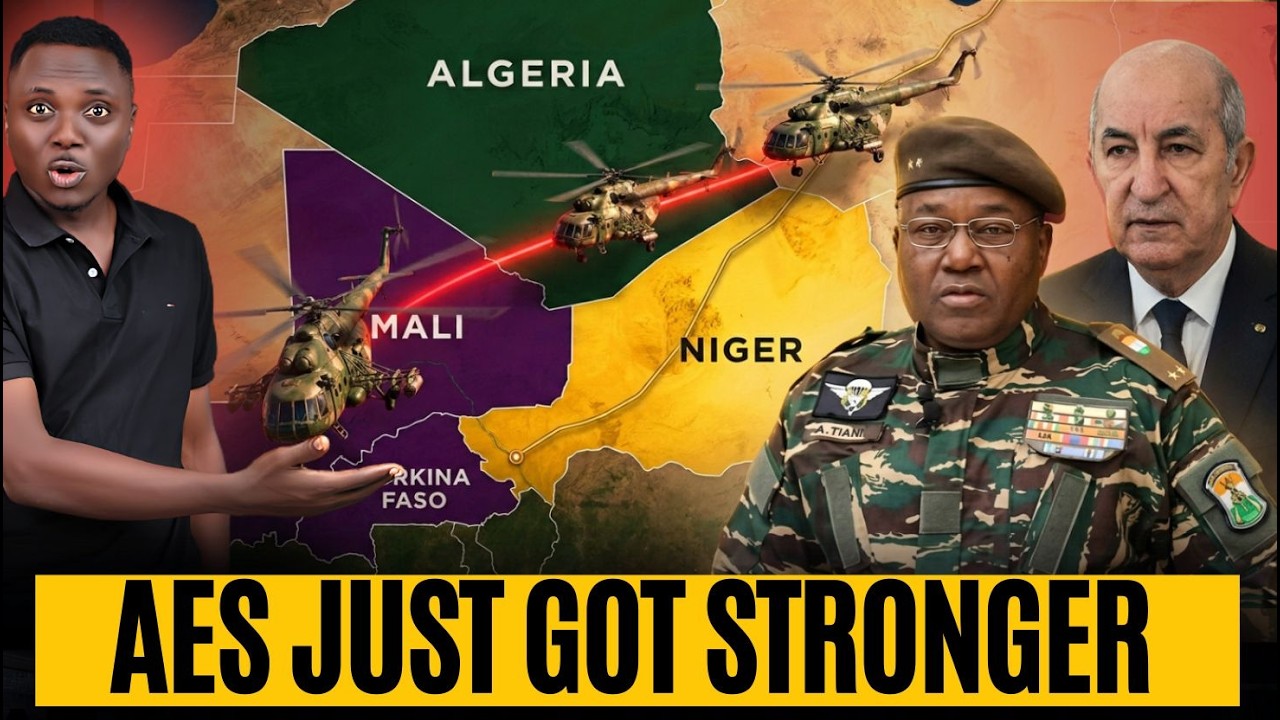
Algeria’s Quiet Rearmament of the Sahel: A Strategic Shift with Regional Shockwaves
In a move that has recalibrated the balance of power in Northwest Africa, Algeria has begun a significant military supply program to the Alliance of Sahel States (AES). The deliveries, which include armored vehicles, artillery systems, and advanced drone technology, mark a decisive departure from A
In a move that has recalibrated the balance of power in Northwest Africa, Algeria has begun a significant military supply program to the Alliance of Sahel States (AES). The deliveries, which include armored vehicles, artillery systems, and advanced drone technology, mark a decisive departure from Algiers’ decades-long policy of diplomatic neutrality and border policing.
For years, Algeria positioned itself as a mediator rather than a participant in the region’s conflicts. That posture has now ended. The arming of the AES—a mutual defense bloc comprising Mali, Burkina Faso, and Niger—signals a new phase in the Sahel’s security architecture, one that directly challenges both French influence and the regional ambitions of Morocco.
The Strategic Rationale
The primary driver behind Algeria’s shift is security. The AES nations share a porous southern border with Algeria, a frontier that has become a transit corridor for arms, fuel, and fighters linked to jihadist networks. By equipping the AES militaries with modern hardware, Algiers aims to create a hardened buffer zone. The logic is straightforward: a stronger, better-equipped AES reduces the likelihood of terrorist spillover into Algerian territory, particularly in the volatile southern provinces of Tamanrasset and Adrar.
The supply package is not limited to small arms. According to regional defense analysts, the deliveries include Chinese-made Wing Loong II drones and Russian-origin T-90 tanks, likely procured through Algeria’s existing military stockpiles. This hardware is designed for long-range desert warfare, a capability the AES forces have lacked despite their recent battlefield gains against insurgent groups.
A Message to Rabat and Paris
The rearmament is also a geopolitical statement. Algeria and Morocco have been locked in a cold war over the Western Sahara dispute for decades. By arming the AES, Algiers extends its influence deep into the Sahel, effectively encircling Morocco’s southern flank. The AES nations have already expelled French troops and severed military agreements with Paris, and Algeria is now positioning itself as the primary security guarantor in their place.
This move complicates France’s efforts to maintain a military foothold in the region. With the AES now equipped with Algerian-supplied hardware, any future French intervention would face a far more capable and coordinated adversary. The message is clear: the Sahel is no longer France’s backyard.
The Economic and Diplomatic Calculus
Algeria’s decision is also grounded in economic pragmatism. The country is Europe’s largest natural gas supplier after Russia, and its economy is heavily reliant on hydrocarbon revenues. The Sahel holds potential mineral wealth, including lithium and uranium, which Algiers views as critical for its long-term diversification plans. By arming the AES, Algeria secures preferential access to these resources, locking in economic partnerships before other actors—namely China and Turkey—can deepen their own footholds.
Diplomatically, the move aligns Algeria with a growing bloc of nations rejecting external military intervention. The AES has already formed a confederation and announced plans for a shared currency. Algeria’s support effectively legitimizes this breakaway structure, further isolating the Economic Community of West African States (ECOWAS) and its Western backers.
Risks and Reactions
The rearmament is not without significant risks. Algeria now inherits a degree of responsibility for the AES’s military actions. If the supplied weapons are used in operations that result in civilian casualties, Algiers could face international condemnation. Furthermore, the move could provoke a counter-response from Morocco, which has been expanding its own military ties with Israel and the United States.
Domestically, the Algerian government faces a delicate balancing act. The country’s military budget is already stretched, and a prolonged commitment to arming its southern neighbors could strain public finances. However, the Algerian leadership appears to have calculated that the cost of inaction—a destabilized border and a power vacuum filled by hostile actors—is far greater.
A New Axis in the Sahel
What is emerging is a new axis of power: Algeria, Mali, Burkina Faso, and Niger, bound by mutual defense and a shared rejection of external interference. This bloc controls a territory larger than Western Europe, and with Algerian weaponry, it now possesses the means to enforce its sovereignty.
The international community, particularly the United States and the European Union, has watched these developments with growing unease. Sanctions against the AES have had little effect, and Algeria’s decision to arm the bloc effectively undermines those punitive measures.
For now, Algeria has achieved its immediate objective: a fortified frontier and a strengthened position in the Sahel’s geopolitical chessboard. But by arming the AES, Algiers has also lit a fuse. The region’s conflicts are far from resolved, and the influx of advanced weaponry could either stabilize the region—or turn it into a far more lethal battlefield.
Related Coverage
Ukraine's $9,900 Drone Mothership Just Changed the War
Ukraine has unveiled a new carrier drone that ferries attack drones deep behind Russian lines, while both sides rapidly expand their unmanned arsenals in an escalating race for air supremacy.
Ukraine Signs Drone Deals with 7 NATO Countries, Exports Combat Drones to US for First Time
Ukraine is shifting from a recipient of military aid to a provider of drone technology and expertise, aiming to finalize defense agreements with at least seven NATO countries by the end of the year.
Ukraine Blasts Russian Fuel Depots, Tests Cheap New Drone-Killer Missiles
Ukraine is hitting Russian supply lines hard while rolling out cheap new weapons to defend its own skies, as the war enters a new phase of low-cost, high-impact tactics.
Drones Are Africa’s Newest Park Rangers: A Tech Revolution Takes Flight
Instructors and conservationists from 11 African countries are training with thermal drones in South Africa, marking a major shift in how the continent protects its wildlife.
Title: The Age of Autonomous Power: How AI, Drones, and Chip Wars Are Redrawing the Map of Global Control
A new technological order is taking shape, one in which artificial intelligence, autonomous weapons, and advanced computing are not neutral tools but instruments of power, reshaping who controls territory, who manages labor, and who holds leverage in the global economy.
Zelenskyy Rolls Out Secret Asymmetric Plan to Counter Russia’s Ballistic Missile Barrage
Ukraine has approved a new set of technological and asymmetric measures to counter Russia’s intensifying use of high-speed ballistic missiles, President Volodymyr Zelenskyy announced Wednesday, signaling a shift away from conventional warfare.
Related Editorials
Algeria’s Silent War: How Fighter Jets Answered the AES’s Declaration of Hostility
In the shifting sands of the Sahel, diplomatic rhetoric has given way to the roar of jet engines. After the Alliance of Sahel States (AES)—a military junta-led bloc comprising Mali, Burkina Faso, and Niger—formally labeled Algeria an "enemy," the North African powerhouse responded not with a press
Russia’s Silent Takeover: How Moscow Is Replacing France in the Sahel
In a dramatic geopolitical shift, Russia is quietly but decisively expanding its military and political influence across West Africa’s Sahel region. Recent developments in Mali, Burkina Faso, and Niger signal a coordinated effort by Moscow to fill the vacuum left by departing Western powers—particu
The Sahel Alliance Just Redrew West Africa’s Geopolitical Map—And ECOWAS Is Scrambling
In a move that has sent ripples through West African diplomacy, the Alliance of Sahel States (AES) has unveiled a significant new project that regional bloc ECOWAS did not anticipate. The development marks a decisive step in the consolidation of the AES as a standalone geopolitical and economic for
Turkey’s Silent Surge: How Ankara Is Reshaping the Battlefield in Mali
For years, the conflict in Mali has been defined by a complex web of local militias, foreign mercenaries, and shifting jihadi alliances. Yet, a new player has quietly moved to the center of the board, altering the strategic calculus of the Sahel.
Burkina Faso’s Arms Industry Ambition: A Turning Point for West African Sovereignty?
In a significant shift for West African geopolitics, Burkina Faso has announced the establishment of a military manufacturing complex. This move signals a bold stride toward defense autonomy for the junta-led nation, potentially altering the regional balance of power.
Mali’s Bold Pivot: How a Surprise Alliance Is Redrawing West Africa’s Geopolitical Map
In a region already defined by coups, sanctions, and shifting loyalties, one man’s unexpected diplomatic gambit is sending shockwaves through West Africa. Colonel Assimi Goïta’s Mali has long been a flashpoint for international tension, but the latest development—a deepening military and political