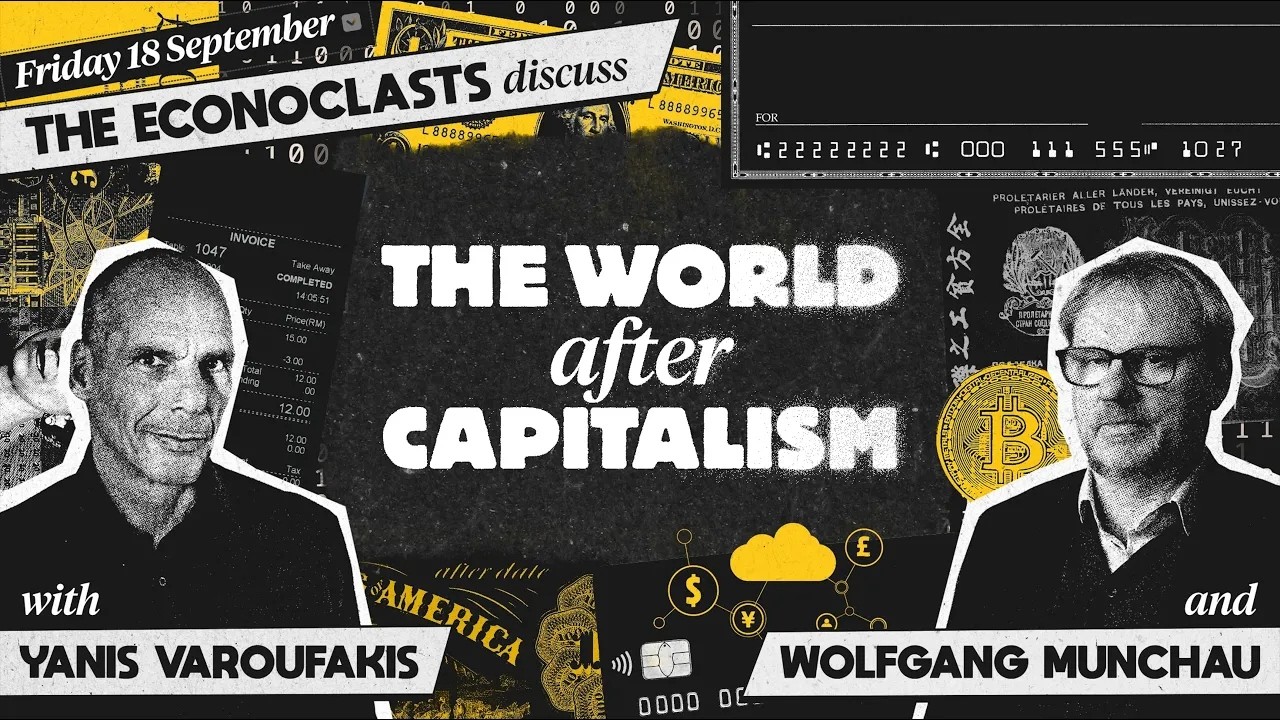
# The World After Capitalism: Economists Debate What Comes Next
A live panel of leading thinkers explores whether capitalism can survive its own contradictions—and what might replace it. --- The global financial system is showing unprecedented strain.
A live panel of leading thinkers explores whether capitalism can survive its own contradictions—and what might replace it.
The global financial system is showing unprecedented strain. Inequality has reached levels not seen since the Gilded Age. Climate change threatens the foundations of industrial civilization. And a new generation of economists is asking a radical question: Is capitalism itself the problem?
In a recent live discussion, a panel of economic thinkers gathered to debate the future of the market system. Their conclusions were provocative, contentious, and occasionally alarming.
The Case Against the Status Quo
The panel opened with a stark assessment. Modern capitalism, one participant argued, has evolved into a system that concentrates wealth among a tiny elite while externalizing costs onto society and the environment. The mechanisms that once distributed prosperity—competitive markets, labor unions, progressive taxation—have been systematically weakened over four decades.
"You can't separate economic policy from political power," one panelist noted. Deregulation and privatization, they argued, were not neutral technical choices but deliberate transfers of wealth and authority from the public to the private sphere.
The result: stagnant wages despite rising productivity, crumbling public infrastructure, and a financial sector that generates enormous profits without producing corresponding social value.
Defining the Terms
The discussion turned to definitions. What exactly do we mean by "capitalism"? The panelists distinguished between market exchange—buying and selling goods—and capitalism as a specific historical system characterized by private ownership of the means of production, wage labor, and capital accumulation as the primary economic driver.
This distinction matters. Critics of capitalism are not necessarily opposed to markets. They object to a system where a small class owns the productive assets on which everyone else depends.
Alternative Models
Several alternatives emerged from the conversation:
Democratic socialism. Under this model, key industries—energy, healthcare, housing—would be publicly owned and democratically managed. Markets might still exist for consumer goods, but strategic sectors would be accountable to citizens rather than shareholders.
Cooperatives and worker ownership. Instead of centralized state control, this approach distributes ownership among workers and communities. The Mondragon Corporation in Spain, a federation of worker cooperatives employing tens of thousands, was cited as a working example.
Degrowth. Perhaps the most radical proposal, degrowth challenges the assumption that economies must expand indefinitely. Proponents argue that ecological limits require wealthy nations to reduce production and consumption while improving quality of life through redistribution and shorter working hours.
The Transition Problem
The panelists acknowledged a critical challenge: How do we get from here to there?
Revolutionary change risks violence and authoritarianism. Gradual reform may be co-opted by the very interests it seeks to constrain. The panelists suggested a mixed strategy: build alternative institutions in the present while pushing for policy changes that shift power.
Examples included public banking, community land trusts, and universal basic services. Each prefigures a different economic logic while functioning within the current system.
Objections and Rebuttals
Not all panelists agreed. One raised concerns about incentives: Without the profit motive, what drives innovation and efficiency? The response: Innovation thrived under public funding in areas like the internet, GPS, and vaccines. The question is who captures the rewards.
Another objection concerned feasibility. Large-scale economic transformation has historically produced unintended consequences. The panelists conceded the point but argued that the status quo also carries enormous risks—including ecological collapse and political instability.
What Comes Next
The discussion concluded without consensus on a single path forward. But several themes emerged:
- The current system is not sustainable, environmentally or socially.
- Alternatives exist and are being tested at various scales.
- Transition will require both institutional experimentation and political struggle.
- No single model will fit all contexts.
The panelists urged viewers to engage locally—in unions, cooperatives, municipal politics—while keeping sight of systemic change. The world after capitalism, they suggested, will not arrive all at once. It will be built, piece by piece, by those willing to imagine something different.
The views expressed in this article reflect the panel discussion and do not represent the editorial position of this publication.
Related Coverage
War, Oil, and a World Off Balance: How Conflict and Climate Are Reshaping the Global Economy
A fragile global economy is buckling under the weight of escalating wars, a worsening climate crisis, and a financial system that prioritizes profit over human welfare, leaving millions of ordinary people to bear the cost.
Global Economic Order Buckles Under War, Debt, and a Tech-Led Market Meltdown
The global economy is navigating a perfect storm of cascading crises, as war-driven hunger, volatile financial markets, and the escalating human and environmental costs of unchecked growth expose the deep fault lines in a system that prioritizes profit over people. From a brutal sell-off in Asian stock markets sparked by cooling AI demand, to a record 363 million people facing acute starvation, the past week has laid bare a world where financial accumulation and geopolitical conflict are generating unsustainable inequality and precarious conditions for billions.
Global Economy Buckles as War, Climate Chaos, and Financial Greed Reshape the World Order
A global economy built on the promise of open trade and cheap energy is buckling under the weight of geopolitical conflict, strategic blockades, and a climate crisis that is no longer a distant warning but a lived reality. From the besieged oil routes of the Middle East and the battlefields of Ukraine to the drought-parched heart of Europe, the pursuit of geopolitical power and corporate profit is increasingly colliding with fundamental human needs. This convergence of crises is leaving the world’s most vulnerable populations to bear the heaviest burden of inflation, fuel shortages, and a widening chasm between financial accumulation and human welfare [1][2].
Strait of Hormuz, Drought, and Debt: The Global Economy Strains Under War and Climate Chaos
A global economy built on the promise of open trade and cheap energy is buckling under the weight of geopolitical conflict, strategic blockades, and a technological gold rush that is straining the very limits of infrastructure, leaving ordinary citizens to bear the brunt of inflation, fuel shortages, and a widening gap between the wealthy and the rest [15239].
# Global Economy Buckles as Energy Wars, Climate Chaos, and AI Speculation Reshape the World Order
The global economic system is under unprecedented strain as geopolitical conflict, extreme weather, and financial speculation converge into a cascade of interconnected crises. From the closed oil routes of the Strait of Hormuz and the battlefields of Ukraine to the drought-parched rivers of Europe, the pursuit of geopolitical power and corporate profit is increasingly colliding with fundamental human needs, leaving ordinary citizens to bear the heaviest burden of inflation, fuel shortages, and food insecurity.
War, Oil, and a World Off Balance: How Conflict and Climate Are Reshaping the Global Economy
The global economy is buckling under the weight of escalating wars, a worsening climate crisis, and a financial system that prioritizes military spending and corporate profit over human welfare, leaving millions of ordinary people to bear the cost.
Related Editorials
The Establishment is Panicking: Why the Old Rules of Economics No Longer Apply
The global economic establishment is in a state of deep anxiety. This is not merely a feeling; it is a rational response to a world in which the central pillars of post-war economic policy—inflation targeting, central bank independence, and the assumption of stable growth—are crumbling.
Title: America Is Quietly Losing the World: Two Top Economists on the Empire’s Unraveling
Introduction The United States has long been the undisputed center of global capitalism. Yet, according to two of the world’s most prominent dissenting economists, Yanis Varoufakis and Richard D.
### Germany Has Just Hit the Point of No Return
In a stark and urgent analysis, economist Yanis Varoufakis and journalist Wolfgang Münchau argue that Germany’s economic model has reached a critical juncture—a “point of no return. ” The conversation, hosted on *The Econoclasts*, dissects the structural collapse of the German economy, moving beyond
Why I Am a Communist: Slavoj Žižek’s Unsettling Case for a Radical Idea
In a world where communism is often dismissed as a failed ideology of the past, philosopher Slavoj Žižek offers a provocative defense. Speaking in a concise video, he argues that communism remains the only coherent response to the systemic crises of capitalism—not as a nostalgic dream, but as a pra
### The Next Financial Crash: Why “Uninvestable” Assets Are the Real Threat
The global financial system is a complex web of interdependencies. When a major shock occurs—like a pandemic or a sudden spike in interest rates—the initial damage is often visible.
# Will Trump’s Escalation with Iran Trigger a UK Housing Market Crash?
The connection between geopolitical tensions in the Middle East and the value of a semi-detached house in Manchester may seem tenuous. Yet, as President Donald Trump intensifies his administration’s stance toward Iran, a growing number of analysts are asking a pointed question: could a military con