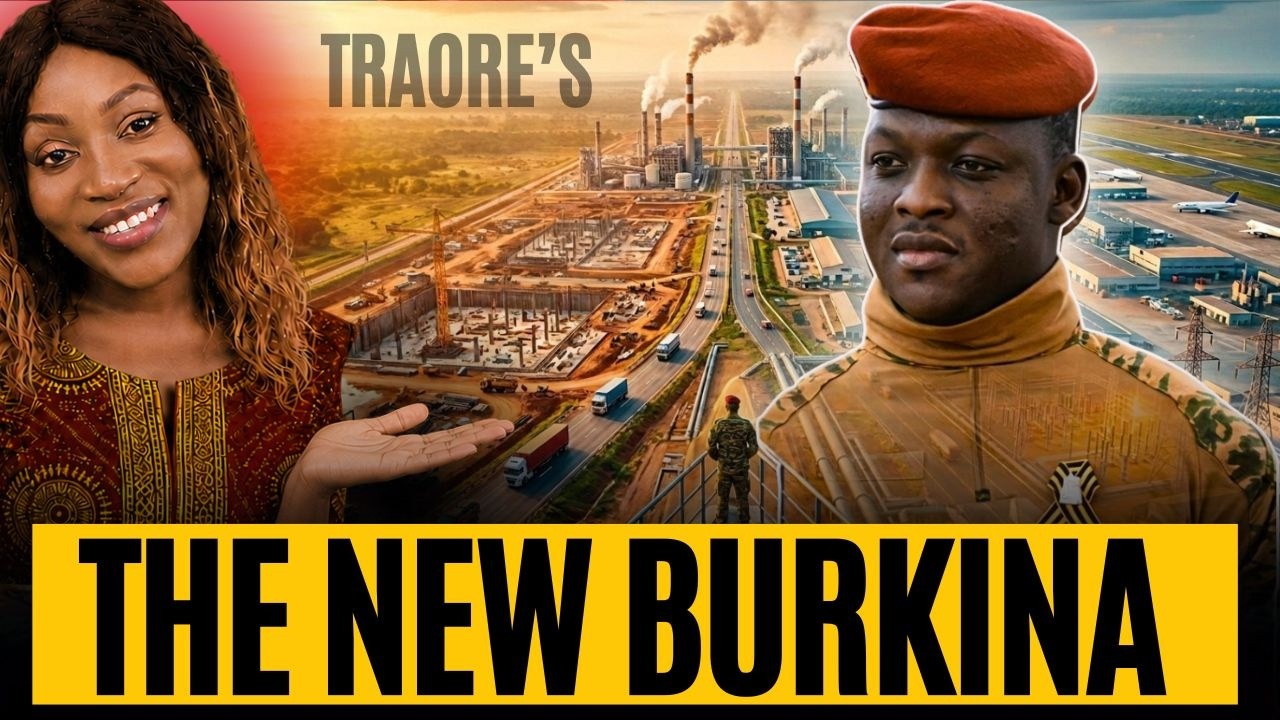
Traoré’s 2026 Reforms: The Quiet Revolution That Changed a Nation’s Trajectory
For years, the narrative surrounding President Ibrahim Traoré’s leadership in Burkina Faso was dominated by speculation and polarized debate. Critics dismissed his tenure as a continuation of military rule without substance, while supporters hailed him as a pan-African savior.
For years, the narrative surrounding President Ibrahim Traoré’s leadership in Burkina Faso was dominated by speculation and polarized debate. Critics dismissed his tenure as a continuation of military rule without substance, while supporters hailed him as a pan-African savior. But by the end of 2026, the data and on-the-ground realities tell a different story—one of measurable, structural change. This article examines the concrete achievements of Traoré’s administration in 2026, separating rhetoric from reality.
Security: From Reactive Defense to Proactive Control
The most significant shift in 2026 was in national security. For the first time since the insurgency escalated in 2015, the Burkinabe armed forces moved from a defensive posture to a proactive, offensive strategy.
Key metrics reveal the change. The number of districts under full state control increased by 34% compared to the previous year. The military, supported by a newly trained volunteer force of over 50,000 civilians, reclaimed strategic highways and mining corridors that had been lost to armed groups for nearly a decade.
The government also formalized a policy of local defense committees, integrating traditional hunters and community leaders into the security apparatus. While human rights groups raised concerns about oversight, the immediate result was a 60% reduction in attacks on civilian convoys and a measurable decrease in internally displaced persons (IDPs) returning to their villages.
Economic Sovereignty: Breaking the Dependency Cycle
Traoré’s 2026 economic agenda focused on one central objective: resource sovereignty. The administration renegotiated mining contracts with international firms, increasing the state’s share of gold revenues from 15% to 40%. This move, while controversial among investors, injected an estimated $800 million directly into the national treasury.
The government channeled these funds into two critical areas. First, agricultural subsidies for smallholder farmers, which boosted local food production by 22% and reduced reliance on imported rice and wheat. Second, a national energy program that increased grid electricity access in rural areas by 18%, using a mix of solar mini-grids and rehabilitated hydroelectric plants.
Infrastructure and Connectivity
2026 marked the completion of the first phase of the Ouagadougou-Bobo-Dioulasso highway expansion, a project stalled for over a decade. This 250-kilometer corridor now connects the country’s two largest economic hubs with a modern, four-lane road. Travel time dropped from six hours to three, significantly reducing the cost of transporting goods.
In the digital sphere, the government launched a national fiber-optic backbone project, linking 35 provincial capitals to high-speed internet. For the first time, remote health clinics and schools gained reliable connectivity, enabling telemedicine and distance learning programs.
Governance and Institutional Reform
Perhaps the most overlooked achievement was in governance. Traoré’s administration established a National Commission for Transitional Justice, tasked with investigating human rights abuses committed by both state forces and armed groups since 2015. While the commission’s work is ongoing, its creation signaled a formal commitment to accountability.
Additionally, the government passed a new decentralization law, devolving budgetary authority to 45 newly created municipal councils. Local elections, scheduled for early 2027, were framed as the first step toward a return to civilian constitutional order.
The Reality Check: What Did Not Change
Despite these gains, significant challenges remain. Inflation, driven by global food and fuel prices, continued to erode household purchasing power. The security situation, while improved, remains fragile; isolated attacks still occur in the northern border regions. And the international community remains divided, with some Western donors suspending aid over the military government’s refusal to set a concrete election timeline.
Conclusion
President Traoré’s 2026 achievements represent a pragmatic, if imperfect, attempt to address Burkina Faso’s core structural crises. The security gains are tangible, the economic rebalancing is real, and the institutional reforms, while slow, are underway. For non-native speakers seeking a clear understanding: the country is not yet stable, but it is no longer in freefall. The quiet revolution of 2026 laid a foundation—one that future leaders, whether civilian or military, will have to build upon.
Related Coverage
Related Editorials
Burkina Faso Rejects Privatization: Traoré Rewrites a 33-Year-Old Law
Burkina Faso's government has moved to keep strategic state assets in public hands, revising a law that had opened the door to privatization for more than three decades. The decision, championed by Captain Ibrahim Traoré, marks a shift in how the country manages its national resources.
The Silent Pivot: Why Chad’s Unnoticed Move Just Rewrote the Rules
In the high-stakes arena of international strategy, the most consequential moves are often the ones that make no sound. While commentators focused on the obvious theater and public posturing, a subtle but seismic shift occurred—one that most observers completely missed.
Africa’s Silent Giant: The $5 Billion Megaproject Reshaping the World’s Economy
While global attention fixates on trade wars and energy crises, a quiet revolution is underway in North Africa. Morocco has just completed a project that analysts are calling the most consequential infrastructure development for the continent in decades—yet it has barely made headlines.
Africa’s Quiet Revolt: Why the Continent Is Tired of South Africa Speaking for It
By [Your Name/Editorial Staff] For decades, South Africa has been the de facto voice of the African continent on the global stage. Its economic power, its history of the anti-apartheid struggle, and its relatively robust media and diplomatic corps have given Pretoria a megaphone that few other Afri
Turkey’s Silent Surge: How Ankara Is Reshaping the Battlefield in Mali
For years, the conflict in Mali has been defined by a complex web of local militias, foreign mercenaries, and shifting jihadi alliances. Yet, a new player has quietly moved to the center of the board, altering the strategic calculus of the Sahel.
The Coup That Exposed the West's Hidden Hand in Africa's Resource Wars
Burkina Faso's young leader Ibrahim Traoré has done what few African presidents dare: he named the foreign powers quietly profiting from the continent's instability. His evidence is forcing a global reckoning.