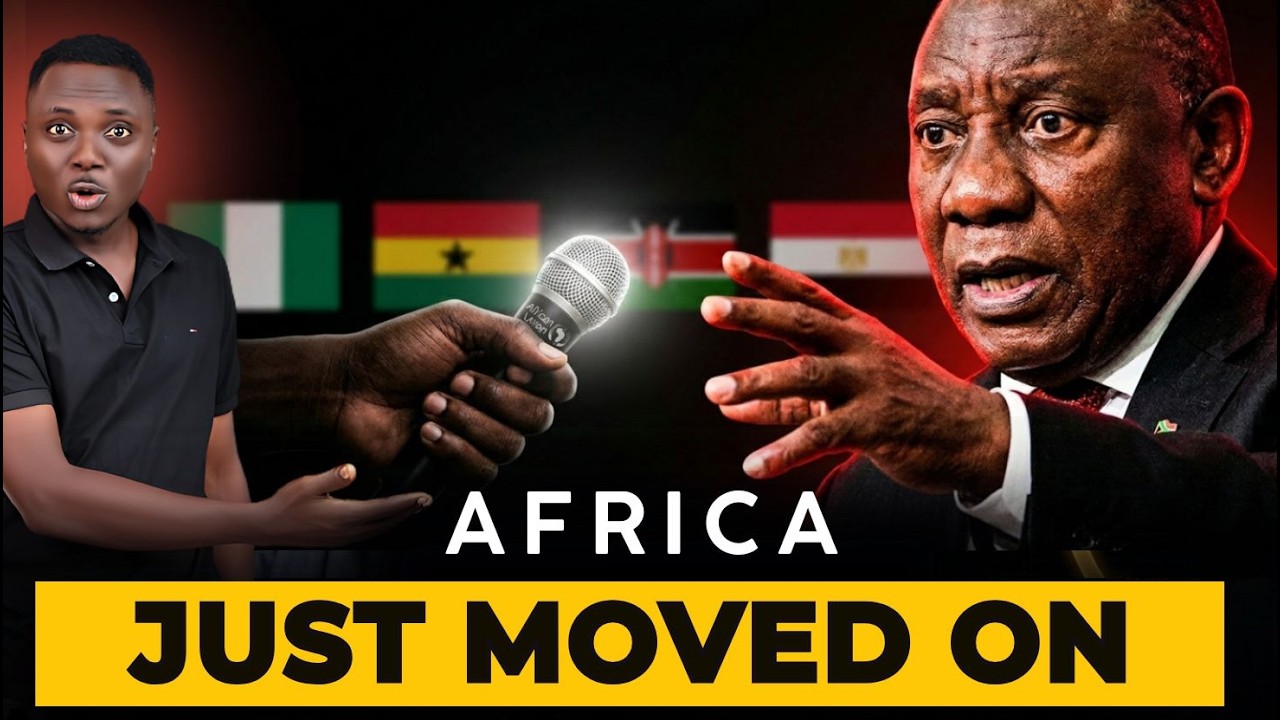
Africa’s Quiet Revolt: Why the Continent Is Tired of South Africa Speaking for It
By [Your Name/Editorial Staff] For decades, South Africa has been the de facto voice of the African continent on the global stage. Its economic power, its history of the anti-apartheid struggle, and its relatively robust media and diplomatic corps have given Pretoria a megaphone that few other Afri
By [Your Name/Editorial Staff]
For decades, South Africa has been the de facto voice of the African continent on the global stage. Its economic power, its history of the anti-apartheid struggle, and its relatively robust media and diplomatic corps have given Pretoria a megaphone that few other African capitals possess. But a shift is underway. From the halls of the African Union to the boardrooms of international finance, a growing chorus of nations is asking a pointed question: Why does one country get to define the narrative for 54 others?
The answer is rooted in a profound geopolitical and economic recalibration. The old assumption—that South Africa’s interests naturally align with the rest of the continent—is fracturing.
The Economic Disconnect
South Africa is no longer the undisputed economic engine of Africa. Nigeria, with its massive population and oil wealth, has long surpassed it in GDP. Ethiopia, Kenya, and Rwanda have become hubs for technology and innovation. Meanwhile, South Africa’s own economy has stagnated, plagued by energy crises, high unemployment, and policy uncertainty. When South Africa speaks on trade or investment, other nations increasingly feel that it speaks for its own struggling economy first—and the continent second.
For example, South Africa’s protectionist stance on certain agricultural imports has frustrated neighboring countries like Botswana and Namibia, who see it as blocking regional integration rather than leading it. The result is a quiet but persistent push to decentralize leadership.
The Political Shift
The political landscape has also changed. The moral authority South Africa earned from its transition to democracy in 1994 has faded. Newer democracies and emerging powers on the continent—such as Ghana, Senegal, and even Angola—now demand a seat at the table. They argue that a single country should not dominate the African Union’s agenda or represent the bloc in high-stakes negotiations with the United Nations, the World Bank, or China.
A senior diplomat from a West African nation, speaking on condition of anonymity, recently noted: “When South Africa speaks on a crisis in the Sahel or the Horn of Africa, it feels like an outsider giving advice. We want our own voices—not a relayed message.”
The Rwanda Factor
Nowhere is this tension more visible than in the strained relationship between South Africa and Rwanda. President Paul Kagame’s government has openly criticized South Africa for what it calls a “patronizing” attitude. The dispute is not just personal; it reflects a broader resentment against what many see as South Africa’s attempt to act as the continent’s policeman and primary spokesman.
Rwanda, alongside other nations, has begun forming coalitions that deliberately exclude South Africa, pushing for decisions to be made by consensus rather than by default deference to Pretoria.
What This Means for the World
For international partners—whether in Washington, Brussels, or Beijing—this shift carries significant implications. For years, they could deal with one powerful interlocutor to gauge African opinion. That era is ending. The continent is becoming multipolar, and its voice is becoming a cacophony of competing interests.
This is not a rejection of South Africa’s role entirely. It remains a critical player, especially in Southern Africa. But the days of South Africa automatically “speaking for Africa” are numbered. The continent is demanding a new model: one where the microphone is passed around, not held permanently by one hand.
As African nations grow more confident and diverse in their ambitions, the world must learn to listen to many voices—not just the loudest one.
Related Coverage
South Africa’s Immigration Standoff: 3 Protests, 1 Court Ruling, and a Government Caught in the Middle
South Africa is caught between rising anti-immigration protests and a Constitutional Court that keeps protecting asylum seekers’ rights, forcing the government to seek court oversight of its own asylum process while reviewing policies that businesses warn could hurt the economy.
Africa’s 54 Votes vs. 5: The Fight to Fix the UN’s Most Powerful Club
The UN Security Council faces growing pressure to give Africa a permanent seat, with 54 member states currently shut out of the veto-holding group.
Related Editorials
The Gathering Storm: How a Continental Shift Is Threatening South Africa’s Regional Dominance
A quiet but seismic shift is underway in African geopolitics. For decades, South Africa has operated as the continent’s economic and diplomatic anchor, wielding influence from Cape Town to Cairo.
The Political Calculus Behind South Africa’s Silence on Xenophobia
South Africa has long been a destination for migrants from across the African continent, yet it is also home to recurring waves of xenophobic violence. For years, observers have asked a troubling question: Why does the government appear to ignore or underplay these attacks?
Africa’s Silent Giant: The $5 Billion Megaproject Reshaping the World’s Economy
While global attention fixates on trade wars and energy crises, a quiet revolution is underway in North Africa. Morocco has just completed a project that analysts are calling the most consequential infrastructure development for the continent in decades—yet it has barely made headlines.
Paris Makes African Economic Decisions—Not Africans
For decades, the economic policies of many West African nations have been written not in their own capitals, but in Paris. This is not a conspiracy theory; it is the legacy of a colonial-era monetary system that persists into the present day.
BRICS Summit 2026: No Common Currency, and Africa Moved First
The bloc's most ambitious idea—a shared currency to rival the dollar—is dead on arrival. Instead, the real story out of the 2026 summit is a quiet power shift: African members are setting the agenda before the giants finish talking.
The Inevitable Mamdani Revolution: Why the Global South Is Rejecting the “NGO Republic”
For decades, a single model of governance has dominated the developing world: the post-colonial state, propped up by international aid, non-governmental organizations (NGOs), and a Western-educated elite. According to a growing chorus of political analysts, that model is not just failing—it is coll