Ceuta’s 80,000-Person Border Breach: Spain’s Weakest Point Exposed?
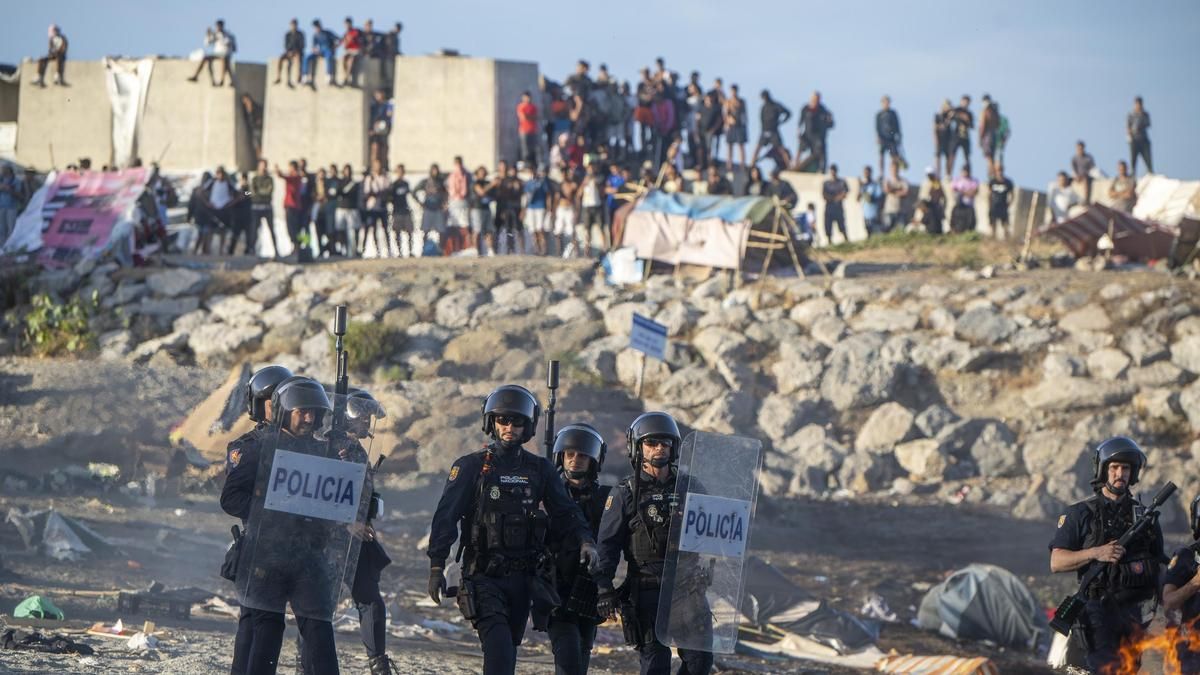
A mass border crossing that saw up to 80,000 people enter the Spanish enclave of Ceuta in a single day has left the city in crisis, with thousands still stranded in unsanitary conditions and the government struggling to respond.
The event, which took place on July 30, saw a number of people nearly equal to Ceuta’s entire population attempt to enter from Morocco. While most were returned within days, thousands remain, including hundreds of unaccompanied minors sleeping on the streets. Spanish Prime Minister Pedro Sánchez has admitted the state’s response was “insufficient,” while local leaders say they received no prior warning of the scale of the crossing [233520][236961].
The influx has triggered a political firestorm. Ceuta’s president, Juan Jesús Vivas, has stated he is convinced Morocco is behind the mass entry, accusing the neighboring country of using migration as a tool against the European Union [236961]. However, migrants on the ground tell a different story, claiming they were not forced by Moroccan authorities but that no one tried to stop them. “Morocco didn’t send us, but nobody held us back either,” one migrant said [236055].
The humanitarian situation remains dire. NGOs report that thousands of people are living in makeshift camps with limited access to water, food, and healthcare. Children as young as 13 are sleeping on cardboard between industrial warehouses, and local residents have organized shifts to protect girls from the risk of sexual assault [236023]. The Spanish government has blocked transfers of migrants to the mainland, prioritizing returns to Morocco, a process that is moving slowly [236023].
Political tensions have boiled over. Protests have erupted in Ceuta, with some residents chanting “Expulsion, invaders,” while others have called for a humanitarian approach. The far-right Vox party and the opposition Popular Party (PP) have used the crisis to attack Sánchez, accusing him of being “submissive” to Morocco [236021]. Meanwhile, the government has approved over €306 million in new aid for Ceuta to support housing, security, and basic services [233442].
Sánchez has called for a “different cooperation” with Morocco and urged the EU to protect Ceuta and Melilla, suggesting both cities should become permanent members of the European Committee of the Regions [234798]. He has also pledged to declassify intelligence dossiers to prove the government had no prior warning of the scale of the influx [234798]. Despite these efforts, the situation remains unresolved, with thousands of migrants still stranded and the city described as “a pressure cooker that could explode at any moment” [236961].