141 Dead at Ceuta Border: Why Did They Risk Everything?
Part of composite article Ceuta’s 80,000-Person Border Breach: Spain’s Weakest Point Exposed? View full article →
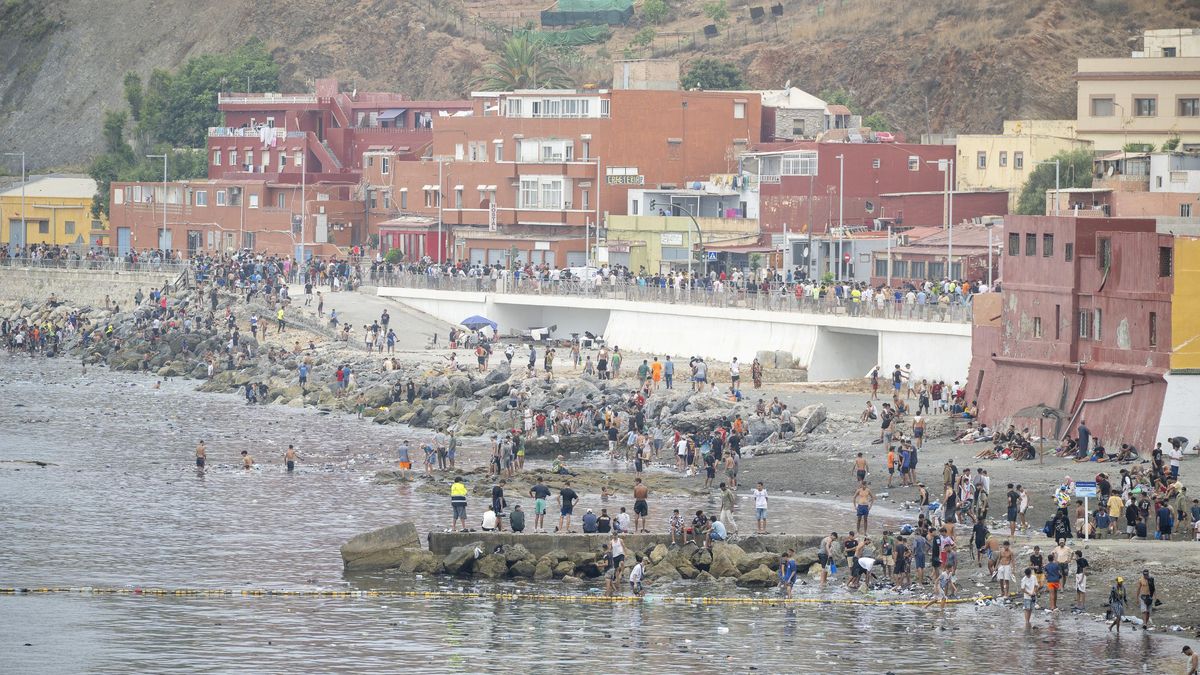
The recent crisis at the border of Ceuta, a Spanish enclave in North Africa, has been described as a migration crisis, a diplomatic dispute, and a political battle. But none of these labels fully explains why tens of thousands of people were willing to risk their lives to cross into Europe. The tragedy, which claimed the lives of 141 people, many of them children and young adults, demands a deeper look.
**The Political Battle Over the Narrative**
How we describe the event shapes our understanding of it. A 2025 academic study by Gabrielli and Garcés analyzed media coverage of a similar crisis in 2021. It found that narratives often shifted to portray migrants as "weapons," turning a migration issue into a matter of security and "hybrid threat." The words we use matter: calling people "migrants" and "victims" tells one story, while calling their arrival an "invasion" tells another.
In Spain, the political parties PP and Vox have framed the event as a failure of immigration policy and border control, using terms like "invasion." However, this framing has fueled hate speech. A monitoring system called FARO detected 9,590 hate messages on July 30 and 31 alone. This is not just a local issue. Former President Trump called the event an "invasion" to support his domestic political arguments, and Italian Prime Minister Giorgia Meloni used it to justify suspending free movement between Italy and Spain. This is not about security; it is about politics.
**A Border Already Fortified**
The high death toll proves that crossing the Ceuta border was no casual walk. Before July 30, Ceuta was already one of the most heavily fortified borders in Spain and the European Union. It combines physical barriers, maritime surveillance, cameras, sensors, biometric systems, and police cooperation with Morocco. The perimeter has seen successive generations of fortifications, including walls, patrol roads, lighting, and watchtowers.
Research by the Transnational Institute and the Centre Delàs documents contracts for advanced surveillance technology in Ceuta and Melilla, including facial recognition and automated control systems. The Integrated External Surveillance System (SIVE) uses radar, cameras, and sensors. This shows that even an extraordinarily securitized border cannot stop a mass mobilization. Furthermore, outsourcing border control to other countries creates vulnerabilities. Europe pays or cooperates with third countries to stop migrants, which gives those countries leverage. Morocco holds this leverage over Ceuta, a small European city in Africa with a massive income gap compared to the EU.
**The Real Reasons People Migrate**
Europe is not just a nearby territory; it is an imagined and desired one. The economic hardships, lack of job opportunities, and the inability of many young people to maintain a dignified life explain why so many were willing to take the risk. The crossing was not because everyone was tricked by smugglers or politically manipulated. The possibility of a better life in Europe made an exceptional and dangerous opportunity seem rational.
Several rigorous analyses support this. The Carnegie Endowment points to persistent economic difficulties and a lack of prospects for young people. Le Monde interviewed young Moroccans with education and jobs who still faced poverty-level wages and unaffordable housing. One 19-year-old described working 12-hour days for a salary of about 280 euros a month. People do not only flee absolute destitution; they also migrate when they have enough information to compare their lives with a possible alternative but lack realistic legal pathways to achieve it.
The crisis is not a single migration event. Human Rights Watch (HRW) interviewed people from Morocco, Sudan, Chad, Senegal, Somalia, Tunisia, Yemen, Algeria, Syria, Egypt, and Palestine. Many had been on migration journeys for years and wanted to seek asylum. One Palestinian man from Gaza said, "This is barely a life, but it is nothing compared to what my family is going through in Gaza." A 47-year-old woman crossed with her 11-year-old son to escape an abusive husband. A Sudanese man who had spent a year and a half in Morocco said he preferred to die there than go back.
**Europe’s Role in the Crisis**
Does Europe have a responsibility for the wealth gap between continents? The answer is complex. Historically, European economies were built on extracting resources from colonized territories. Today, many African economies still depend on exporting raw materials to their former colonizers. UNCTAD notes that half of these countries rely on oil, gas, or minerals. These businesses are often in the hands of foreign, mostly European, companies. This structure does not create enough well-paid jobs for the local population, meaning Europe shares responsibility for the lack of opportunities that pushes young people to leave.
Furthermore, European states and companies are part of international arms chains. A 2017 report by the Centre Delàs showed that 29% of European arms exports between 2003 and 2014 went to countries in conflict. These 26 countries generated approximately 75% of the world's refugees and displaced people. The SIPRI Yearbook 2025 confirms that arms transfers fuel conflicts, and the European Migration Network identifies wars in Ukraine, Gaza, Syria, and Sudan as major drivers of displacement.
**The Question We Should Be Asking**
The initial question in the Ceuta crisis was, "How did we let them in?" The more pertinent question should be, "Why were tens of thousands of people willing to enter?" The militarization of the border explains how entry is attempted to be prevented. The political battle explains how the event is spun for electoral gain. But neither explains the root cause.
To understand, we must look at persistent economic hardship, a colonial economic structure that still hampers African economies, and the wars and weapons that people are fleeing. The young people and children who entered Ceuta are victims of a political and economic system that benefits Europe. They are equal in dignity and have the same right as anyone else to want a better life.