Title: 5,000 or 50,000? Migrants trapped in Ceuta as Spain blocks transfers.
Part of composite article Ceuta’s 80,000-Person Border Breach: Spain’s Weakest Point Exposed? View full article →
**Article:**
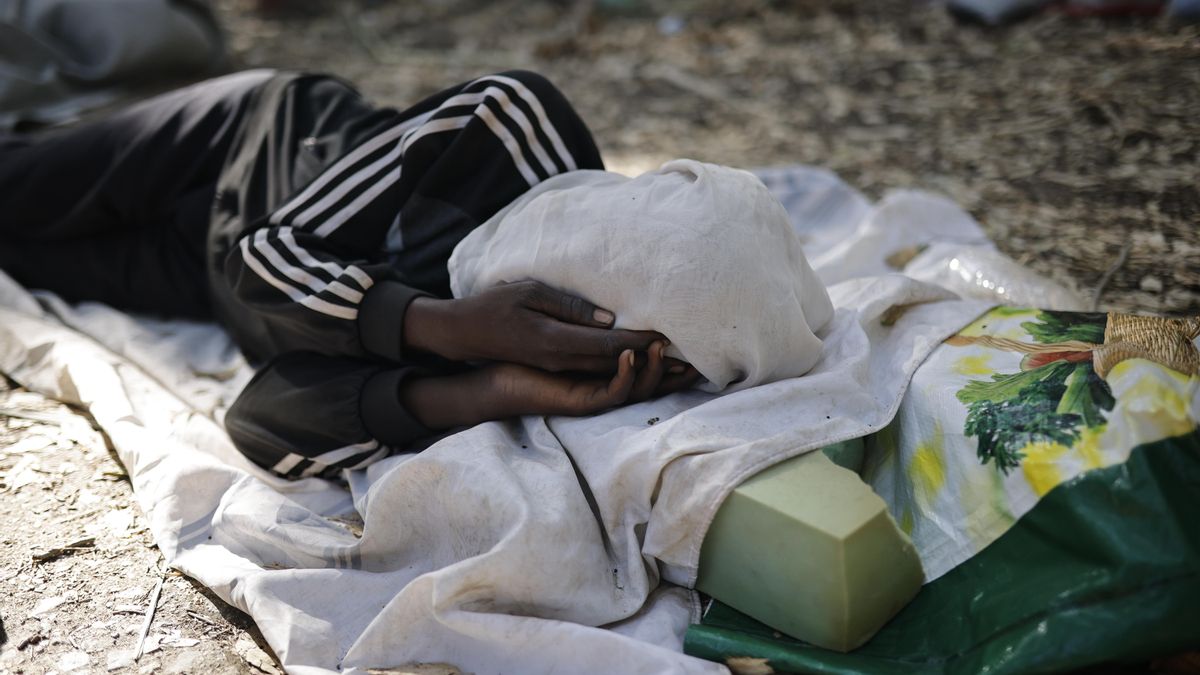
More than a month after a mass arrival of migrants to the Spanish city of Ceuta, a humanitarian crisis continues on its streets. Thousands of people remain homeless, living in unsanitary conditions with insufficient food and facing the risk of attacks.
The crisis began in late July when over 70,000 people entered Ceuta from Morocco. According to the Interior Ministry, most have since returned to Morocco. The government claims only 5,000 migrants remain in the city.
However, the size of informal settlements and delays in registering migrants suggest the real number may be much higher. Among those remaining are hundreds of unaccompanied minors living on the streets.
**Children sleeping on cardboard**
Omar is 13 years old. He has been living on the street for over a month, sleeping on cardboard between industrial warehouses. He swam to Ceuta alone on July 30, having tried since he was 10.
"I am alone here. I have no mother, I have no one," he says. When he tried to register at a police station to be taken to a shelter, he claims he was told to leave.
Hundreds of children are in similar situations. Local government shelters are full. The central government has offered to house about 500 girls in NGO centers on the mainland, but officials say they have not received a response from the Ceuta government.
Around 200 girls currently sleep in an open-air football field. Local residents have organized shifts to protect them from risks of sexual assault or exploitation.
**Government blocks transfers**
In previous migration crises, the government moved adults from overwhelmed cities to reception centers on the Spanish mainland. This time, the Interior Ministry confirms it will not do so.
Their stated goal is to return people to Morocco. However, the return process is slow and requires more reception capacity than Ceuta currently has. Thousands of people remain unidentified and on the streets.
The government says its priority is to complete the screening process for adults and execute returns "as quickly as possible." It adds that people who cannot be returned, such as asylum seekers, will be dealt with in a second phase.
Aya, a 27-year-old from Western Sahara, sleeps on the ground with her boyfriend. She says the area is not safe. "There are many fights, we cannot shower, and we barely eat. We want to go to a center, but they always reject me," she says. She wants to apply for asylum but does not know how.
**Building new shelters faces local opposition**
The Migration Ministry has begun building new shelters in Ceuta. Construction of new spaces and tents is progressing. However, some residents organize almost daily protests against them.
The central government needs the city council to provide land. The city president has already rejected using sports facilities for shelter. Plans to use port spaces have also faced obstacles.
**Basic needs not met**
NGOs on the ground report that basic needs are not being covered. Food is a major issue. The Red Cross provides one ration per day, but it does not reach everyone. Some people hide due to fear of attacks and miss the distribution.
Ric Fernández, coordinator of the group No Name Kitchen, says the situation is getting worse. "We have seen people chewing tree branches. We saw it at the beginning, and we have seen it a month later," he says.
Medical charity Doctors of the World reports that thousands of people live in makeshift camps with limited access to water, food, hygiene, and healthcare. Common health issues include dehydration, skin problems, infections, and mental health trauma.
**Local solidarity amid tension**
While some residents protest against the migrants, others have chosen to help. Volunteers without organizational backing bring water, food, and trash bags daily to those sleeping outside.
One resident, Fatima, says she helps with what little she has. She did not attend a protest against the government's crisis management, saying she sees political manipulation in it. "I am the first to say that [Morocco's king] is a dictator. Ask these people if they want to return to Morocco. They say no. How can people not understand that?" she asks.
UNICEF Spain has called for urgent action. "There are still hundreds of children alone on the streets of Ceuta, exposed to multiple risks such as violence, abuse, or even human trafficking," said José María Vera, executive director of UNICEF Spain. "These children need to be properly registered, have their circumstances assessed, and be moved to safe places."