Ceuta: 80,000 migrants cross in one day—Spain's weakest point exposed?
Part of composite article Ceuta’s 80,000-Person Border Breach: Spain’s Weakest Point Exposed? View full article →
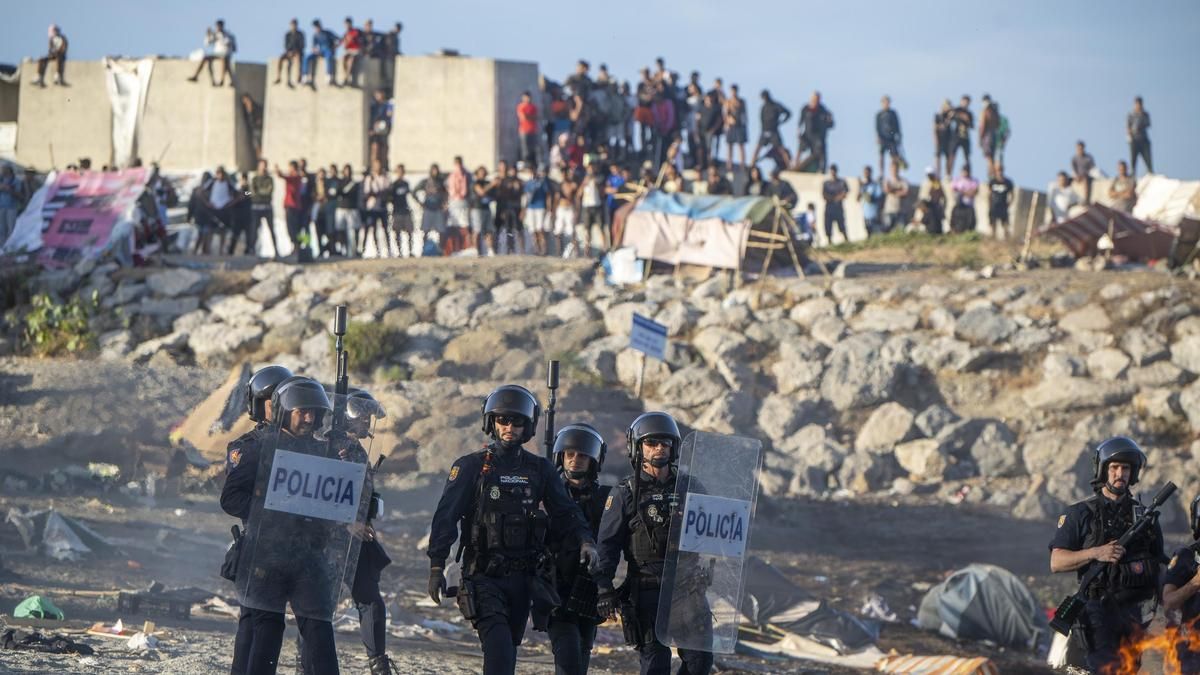
Spain's government is facing one of its most delicate crises in years, and the spotlight has fallen on Ceuta, a small Spanish city on the northern coast of Africa. On July 30, around 80,000 people crossed into the city—almost exactly matching its entire population. They were not soldiers or invaders, as some political groups claim. They were migrants carrying little more than need and hope. Dozens died or disappeared in the attempt.
Ceuta has been Spanish since 1580. No one disputes that. But the sudden arrival of thousands of people in a single day overwhelmed the city. Most returned within days, but several thousand stayed, facing harsh conditions. No community can absorb such a shock overnight, especially without housing or resources for the newcomers.
The Spanish government's response has been slow. Critics say it has not been good enough. But it is also true that the situation was extremely difficult. The conservative People's Party (PP) and the far-right Vox party have used the crisis to attack the government. Yet their record in managing similar emergencies is poor. They have also shown no intention of reducing Spain's concessions to Morocco, which many see as a root cause of the problem.
Some voices have even suggested Russia was behind the mass crossing. There is no solid evidence for that. What is clear is that disinformation spread after the event, not before it. The real issue may be simpler: Ceuta has become a key piece in global geopolitics. The Strait of Gibraltar, where Spain holds both Ceuta and Melilla, is a vital maritime route. Unlike other strategic passages like the Bab el-Mandeb or the Strait of Hormuz, the Strait of Gibraltar is relatively easy to control. And that makes it valuable.
The United States, under President Trump, has shown growing interest in Spain's position. Washington's recent deal with Venezuela's government—allowing access to its oil—shows that American strategy is not just about money. It is also ideological.
Meanwhile, Europe is watching its own political tensions. In Germany, the far-right party AfD is gaining ground ahead of elections. Former Chancellor Angela Merkel has urged citizens to "fight for their democracy." German public broadcaster DW recently highlighted Spain's strong economic growth, which triples the European Union average. That report may have been an attempt to show a positive example—or a warning about what is at stake.
Disinformation is a growing threat across Europe. It feeds extremism and confuses the public. Some Spanish media outlets have gone so far as to call for military action or to use the King in attacks against Prime Minister Pedro Sánchez. They have also dragged intelligence services into the political fray. The government has made mistakes, but it has also faced relentless opposition from political and media circles that seem more interested in creating chaos than solving problems.
Public protests have been called, but their purpose is unclear. Slogans like "Ceuta is Spain" are obvious—no one argues otherwise. Are the protests really against the government? Against migrants? The Madrid city hall organized a rally without proper legal authorization, and right-wing leaders have twisted the facts to suit their narrative.
There are even absurd scenes of wealthy figures sailing to Ceuta on yachts to stage protests, while migrants risk their lives crossing the sea in search of a better future. The contrast is striking.
Society is not immune to this manipulation. In a supermarket, one worker joked about migrants taking over beach houses. A reminder of how fear and misinformation can spread quickly, even among ordinary people.
This is a time when many cannot tell who their real enemies are. Humanity and reason seem to be losing ground. But not everyone has given up. There are still those who stand firm against the tide.
The government must act wisely. It must strengthen its foundations, not just for today, but for the future. Because in this game of political Jenga, one wrong move could bring the whole tower down.