Russia’s New War Tactics Exploit Ukraine’s Drone Blind Spots
Russia is shifting its battlefield strategy to exploit gaps in Ukraine’s aerial surveillance, using bad weather and interceptor drones to blind Kyiv’s forces during ground assaults.
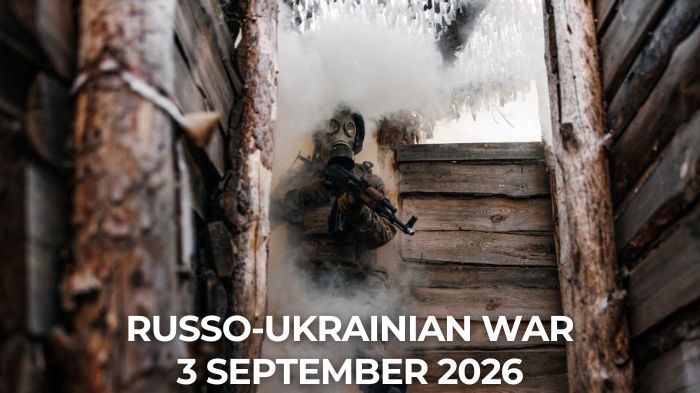
The change was exposed during Russia’s attack on the village of Hannivka, where Moscow combined poor visibility, smaller assault units, and FPV (first-person view) drones to hunt down Ukrainian reconnaissance drones [235700]. By clearing the sky of Ukrainian eyes, Russian troops moved in groups small enough to avoid detection, neutralizing the real-time intelligence that has defined much of Ukraine’s defense [235700].
The tactic directly targets a known vulnerability: Ukraine’s reliance on drones for battlefield awareness. When those drones are grounded by weather or shot down by interceptors, ground units lose their tactical edge [235700]. Military analysts note that this approach marks a departure from larger armored maneuvers, signaling that Russia is adapting quickly to counter drone-based warfare [235700].
The development comes as Ukraine faces broader pressure in the air and on the ground. Kyiv has requested that the United Nations’ aviation agency, the International Civil Aviation Organization (ICAO), issue a global warning to airlines about flying over Russian territory, citing safety risks from missiles and drones near flight paths [235367]. Poland has also introduced air traffic restrictions along its eastern border, requested by its armed forces to ensure the safety of Polish airspace amid the conflict [234753].
In the capital, Russia has launched massive air strikes, turning Kyiv into a daily target of aerial attacks [235340]. Ukrainian air defense systems have intercepted many threats, but the sheer volume of attacks means not all are stopped [235340]. Russia has also shifted to daytime drone attacks, using slower, low-flying loitering munitions that are harder for radar to detect, forcing civilians into shelters during work and school hours [234009].
Ukraine is adapting its response. The country has introduced a two-tier air raid alert system to distinguish between drone-only threats and more severe missile or combined strikes, allowing businesses and cities to tailor their reactions [235357]. Kyiv is also forming a new military unit dedicated to drone warfare, the 446th Unmanned Systems Brigade, marking the second such brigade established this year [232817]. President Volodymyr Zelenskyy has also announced that Ukraine and Germany are finalizing a bilateral agreement on drone technology to strengthen aerial reconnaissance and strike operations [233471].
On the front lines, Ukrainian forces from the Khartiia Brigade have retaken four square kilometers of territory near the eastern city of Kupiansk, disrupting Russian supply operations on the left bank of the Oskil River [235371]. The disruption has become so acute that Russian troops are now resorting to delivering water by drone [235371]. Meanwhile, Russia is tightening a pincer movement around Sloviansk and Kramatorsk, the final two major urban centers in the Donbas region still under Kyiv’s control, prompting a Ukrainian counterattack [234010].
The situation has also drawn international attention. Senior US envoys Steve Witkoff and Jared Kushner are set to travel to Kyiv and Moscow in a push to revive stalled peace negotiations, even as Russian forces escalate strikes [235358]. Zelenskyy has proposed a mutual halt to aerial attacks, just as the envoys travel to the Ukrainian capital after first stopping in Moscow [235536]. Germany, meanwhile, is pushing its European Union partners to tighten restrictions on Russian tourist visas following a foiled drone attack at Leipzig Airport that Berlin has blamed on Moscow [235495][235391].