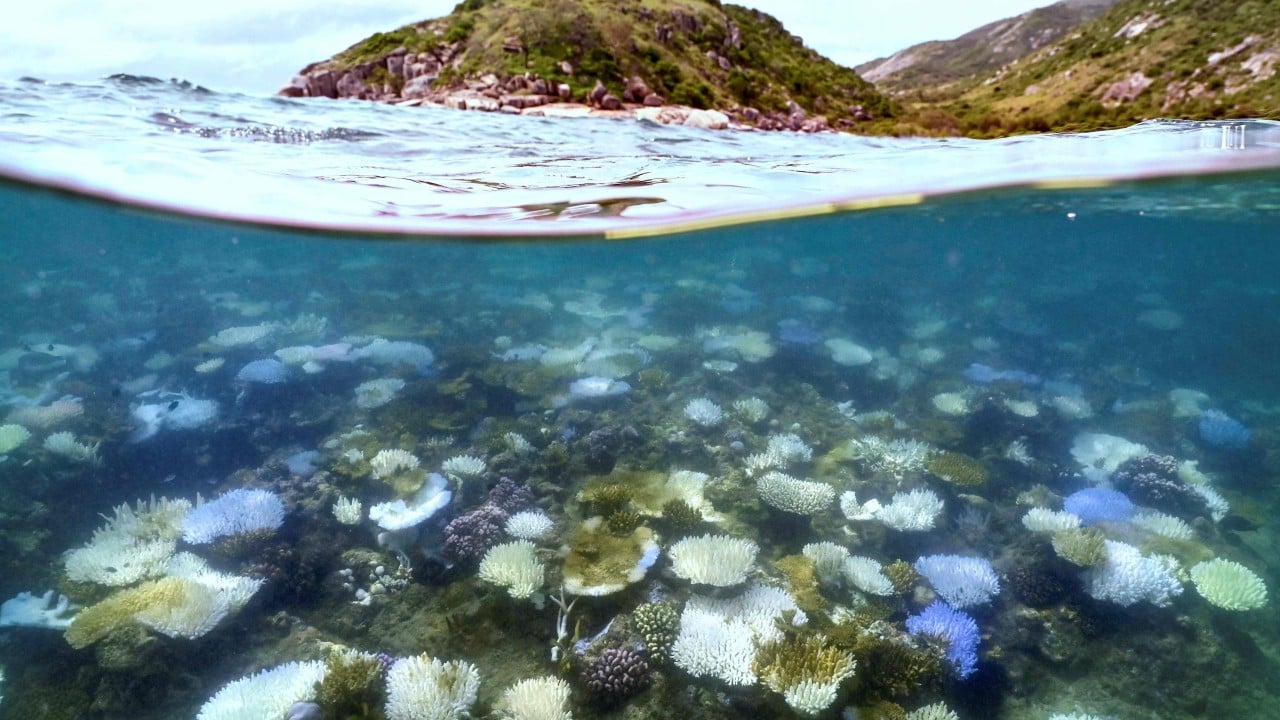
Coral Crisis: Disease, Dredging, and Climate Change Push Unique Reefs to the Brink
Scientists warn that unique coral reefs around Norfolk Island are facing extinction from a triple threat—disease, El Niño, and a government-approved dredging project—while the Great Barrier Reef barely dodges an "endangered" label and the Maldives turns to 3D-printed reefs as a temporary lifeline.
The world’s coral reefs are under siege from multiple, compounding threats. On Australia’s remote Norfolk Island, scientists report that most of the island’s coral species have not yet been formally identified, yet they are already facing severe stress from disease outbreaks, algae growth, and a federal government plan to dredge a nearby shipping channel [189950]. Experts blame poor management of sediment and pollution from cattle farming, land clearing, and wastewater, which flow into the bays, fueling disease and smothering the corals [189950]. If these threats are not controlled, researchers fear these rare corals could disappear entirely [189950].
Meanwhile, Australia’s Great Barrier Reef—the world’s largest coral reef system, stretching 2,300 kilometers along the Queensland coast—has once again avoided being placed on the United Nations’ list of endangered World Heritage sites [188665][188868]. UNESCO’s draft decision to keep the reef’s status unchanged was welcomed by Australia’s government, but the UN body expressed “utmost concern” about mass coral bleaching and the effects of climate change [188665]. Environmental groups warn the reprieve is only temporary without stronger action on climate change [188868].
In the Maldives, a nation of low-lying islands, rising sea levels and warming oceans are killing natural coral reefs that act as a barrier against waves and storms [188634]. Scientists are now testing 3D-printed artificial reefs made from ceramic and concrete, designed to mimic real coral and provide a base for baby coral to attach and grow [188634]. Initial results near the capital, Malé, show that the printed reefs have attracted fish and other marine life within months [188634]. However, experts warn this is not a permanent fix—the technology is expensive and cannot cover vast areas of damaged reef [188634].
Across the Atlantic, a plan to build 28 fish cages inside a protected marine zone off Tenerife has sparked opposition from environmental groups and local authorities [188395]. The site is in the Teno-Rasca Special Conservation Zone, a European protected area home to bottlenose dolphins, loggerhead sea turtles, and Europe’s only Whale Heritage Site [188395]. The project, which aims to produce 3,000 tons of fish per year, has not yet been approved and must pass all required evaluations under regional, national, and European law [188395]. The environmental group ATAN has filed objections, citing a 2004 study showing that aquaculture cages change dolphin behavior and warning about pollution and the risk of introducing non-native species [188395]. “The ZEC is for conservation, not for a company's extractive profit,” ATAN stated [188395].