Cantabria's Livestock Crisis: “Worst Drought in 60 Years” Forces Cattle to Eat Tree Leaves
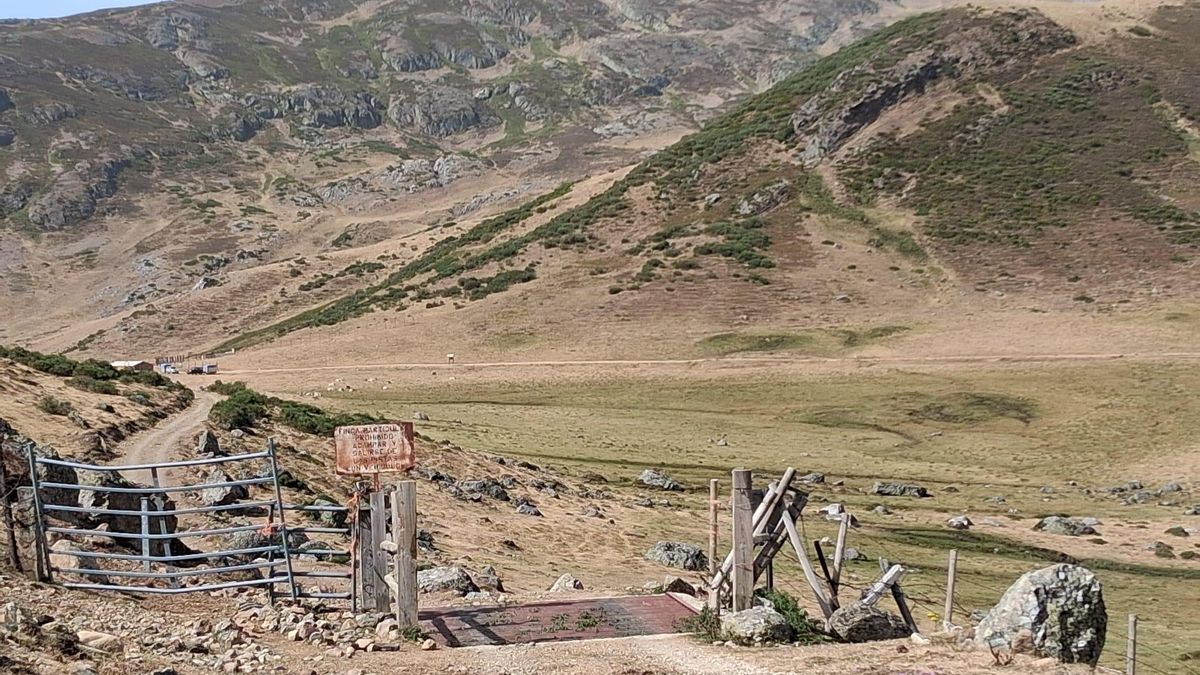
The most severe drought to hit Cantabria's high mountains since July 1961 is pushing livestock farmers to the brink. In the municipality of Vega de Liébana, where altitudes range from 344 to 2,536 meters, a lack of water and pasture has cornered ranchers, with no official measures yet proposed to address the crisis.
The drought has broken the natural cycle of the region. Due to its geography, surrounded by peaks that block summer storms, the landscape has turned desolate. May and June brought green growth, but it has since dried up completely. Local farmer Alberto from Cucayo described the year as “extreme.” Another rancher, Javi, called the situation “bad,” noting that several springs have dried up and may never return.
In the mountain pastures, water is scarce. Cattle must now walk one to two kilometers to find drinking spots, forcing herds to split up. Alberto explained that his 50 cows scattered in different directions, each searching for water based on thirst.
The crisis has hit villages too. Javi reported that his town now requires daily water deliveries by truck from other municipalities. “We run out of water even in winter when the cows are in the barns,” he said. He added that while this problem has occurred before, “this is the worst year yet, and it has been building for several years.”
The drought also threatens transhumance, the seasonal movement of herds between winter and summer pastures. Many Liébana ranchers pay to move cattle to Palencia's mountains, but that region is even drier. Ranchers are now forced to bring animals down early, by late August or early September, instead of the usual October or November.
With no grass, cattle are losing weight rapidly. Calves are not reaching sale weight, forcing farmers to buy expensive feed and forage from outside. Javi warned of a chain reaction: thin breeding cows have more difficulty getting pregnant. Some farmers may have to sell part of their herd to save the rest. “If a bad winter comes and you have to buy feed, the technique is to sell some so the others can eat,” Alberto said.
The drought has also pushed wild animals closer to human settlements. Bears, including mothers with cubs, have been spotted near homes. Alberto said guests at his inn encountered a female bear with cubs on a walk. While no attacks on people or livestock have occurred, bears have damaged fruit trees and silage bales. Foxes have also repeatedly raided chicken coops this spring.
Beyond climate change, ranchers say bureaucratic requirements are adding pressure. Some subsidies require animals to spend a set time on communal lands, but farmers may have to move them to private fields to feed and water them, potentially breaking those commitments.
Ranchers are demanding urgent government help. Javi suggests aid for purchasing feed, similar to support provided in the Basque Country, to maintain herd numbers. Alberto proposes financial assistance calculated per Livestock Unit (UGM) for all affected farms in Cantabria. He clarified this is not compensation but “help to keep going and face a problem that affects many people, directly or indirectly.”