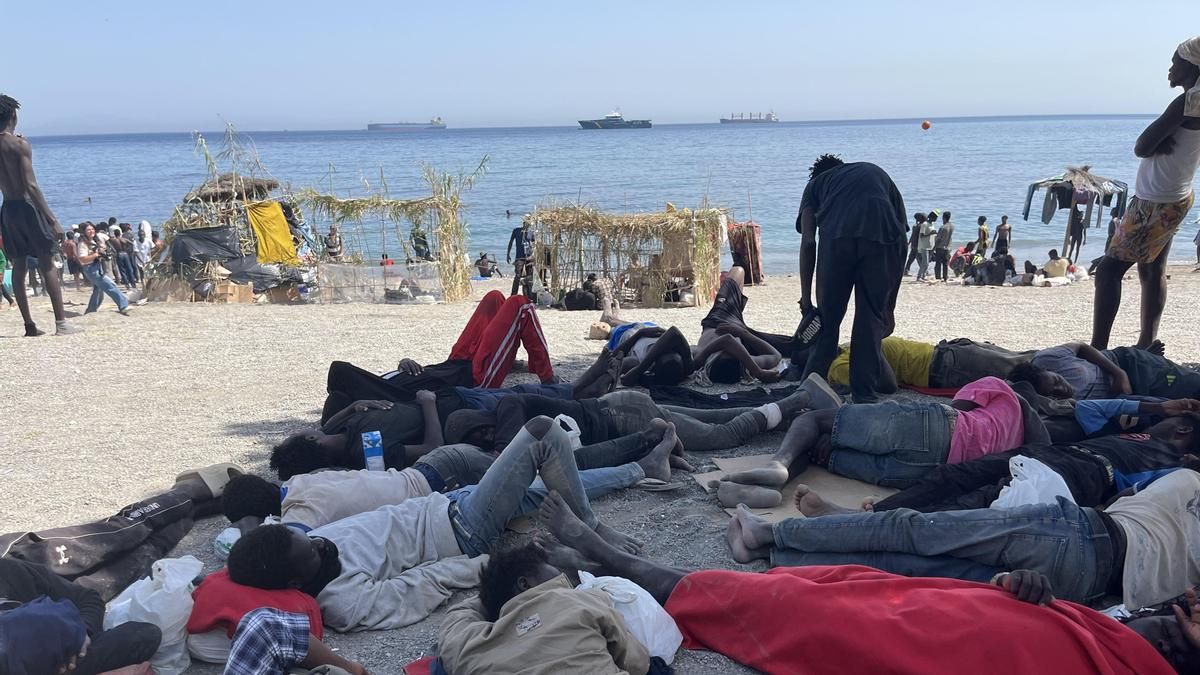
Ceuta's Tragedy: 140 Dead, But Why Do They Still Come?
The recent events in Ceuta, a Spanish enclave on Africa's coast, have sparked shock and debate across the country. Around 140 people lost their lives attempting to reach Spanish shores, while thousands of others made it, only to face an uncertain future. The situation has exposed deep questions about migration that Europe has yet to answer.
For years, politicians and citizens have argued about migration without resolving its root causes. The central issue remains: why do people risk everything, and what should receiving countries do? These questions have no easy solutions, but the drama unfolding in Ceuta makes them impossible to ignore.
The immediate crisis is clear. Days after the mass arrival, thousands of migrants, many of them minors, remain in a dire situation. Local residents express fear and anger. These problems are solvable with the right resources and a commitment to dignified reception and public safety.
However, the deeper issue is far more complex. People from developing nations, especially sub-Saharan Africa, do not leave home on a whim. They are driven by profound injustice. Their "crime" is often simply being born in the wrong place, in a world where borders are heavily guarded and wealth is unequally distributed.
While the removal of borders is unrealistic, this perspective must remain part of the debate. Furthermore, borders are not closed to everyone. They open for those with money or skills that benefit the economy. Migration is often viewed through a purely commercial lens, valuing people for their labor rather than their humanity.
Despite this, migration has clear benefits. Remittances—money sent home by migrants—are a lifeline for many economies. In 2024, remittances made up 2.3% of Colombia's GDP. In Nicaragua, they reached a staggering 29.5% of GDP in 2025. Similar figures are seen in Honduras, Guatemala, and El Salvador. Morocco received 8.2% of its GDP in remittances in 2023, and Nigeria received 6%. For smaller nations like Gambia and Cabo Verde, the figure is between 10% and 20%.
These funds are not just statistics. They reduce poverty, cover basic needs like food, health, and education, and fuel local entrepreneurship. This is why people come. They are seeking a better life for themselves and their families—a right they legitimately hold.
Meanwhile, the EU is moving in the opposite direction. In 2024, a controversial Migration and Asylum Pact was approved, backed by conservative and socialist groups. Two regulations from this pact took effect in February 2026, making it easier to deny asylum claims and send applicants to "safe" third countries. They also allow for border control to be outsourced. Whether these rules align with the EU's core values is a matter of serious concern.
For now, the focus must remain on Ceuta. Migrants and local residents alike need support and clear answers. The state must act with all its resources to ensure safety and uphold justice. If it fails, the argument for humane migration becomes much harder to defend.