Meloni and Denmark’s PM Unite Against Spain’s Migrant Plan: “Protect Christian Europe”
Part of composite article Italy-Spain Border Feud Erupts: 78,000 Migrants Trigger Airport Chaos and Schengen Crisis View full article →
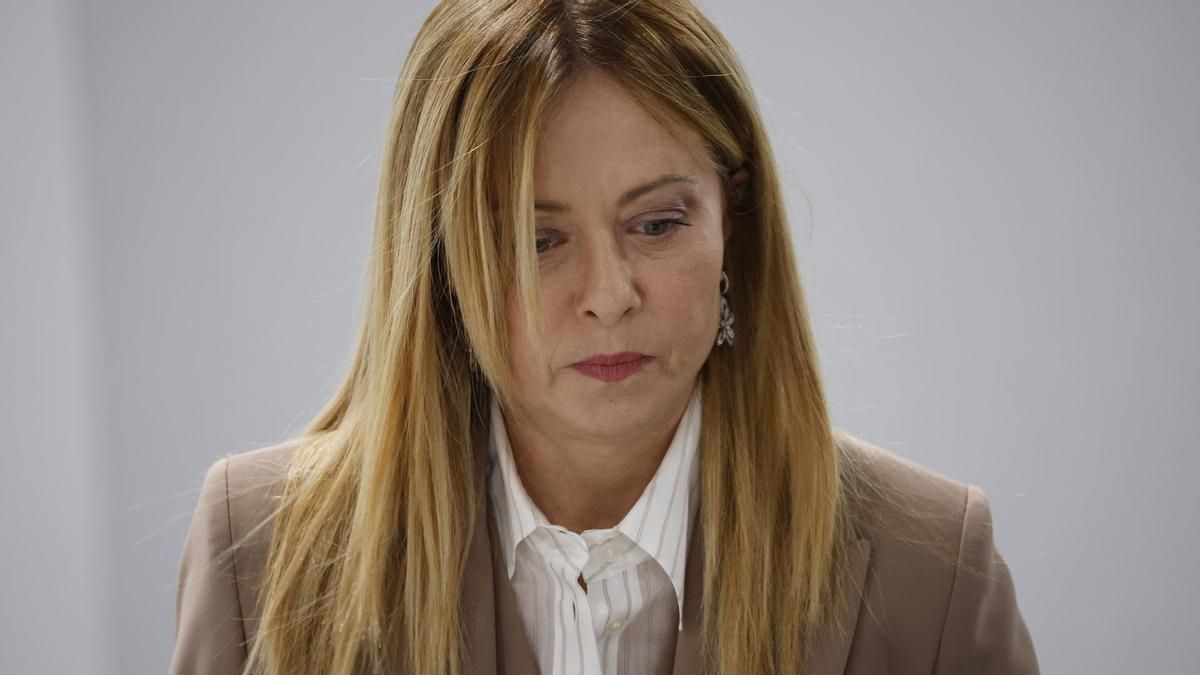
Italy’s Prime Minister Giorgia Meloni and Denmark’s Mette Frederiksen have signed a joint letter criticizing Spain’s mass regularization of illegal immigrants. The two leaders—the only women heading EU governments—call for stricter migration rules and the creation of repatriation centers outside Europe.
This is not a new dispute. Earlier this year, both opposed Spain’s plan to legalize 500,000 undocumented migrants. That move prompted a letter from 22 EU member states against Spanish Prime Minister Pedro Sánchez. Now, Meloni and Frederiksen have again singled out Spain’s policy.
The core problem, experts say, is not the migrants themselves but the Schengen Area. Once inside, irregular arrivals can travel freely across Europe for up to 180 days as tourists. This makes national borders meaningless and fuels tension between southern and northern EU states.
The EU’s new Migration and Asylum Pact, approved in 2024 after years of debate, was meant to solve this. Southern countries wanted mandatory quotas to share the burden. Instead, the pact made relocation voluntary. Countries that refuse must pay €20,000 per migrant—permanently, not yearly.
Spain already spends that amount or more on each irregular migrant upon arrival. Those rescued at sea near the Canary Islands are flown to the mainland, housed in hotels for up to six months, and given food, health care, legal aid, and weekly pocket money.
Meloni and Frederiksen’s letter goes further. It links uncontrolled migration to insecurity and sexual crime. It also stresses the importance of Europe’s Christian heritage. “We are proud of the Christian cultural heritage of Europe and want to protect it,” they wrote. “We expect those who come to our countries and choose Europe as their home to respect our values.”
Observers note that Meloni’s stance is predictable ahead of elections. But Frederiksen is a social democrat, making the alliance surprising.
The deeper issue, analysts say, is integration. Europe has struggled with this for over 60 years, especially in France, Belgium, and the UK after decolonization. Many migrants come from countries where women are not treated as equals—a fact often ignored by liberal and left-wing leaders in the name of multiculturalism.
One Iraqi Christian lawyer in Brussels told a journalist that his parents changed his name as a child to hide his Muslim background. “Muslim boys were not promoted to higher grades and were blocked from university,” he said. He succeeded only under a false name.
The letter ends with Meloni’s phrase: “Cari tutti”—“Dear everyone.” But for now, the message to Spain is clear: Europe’s migration policy is not a matter of charity, but of control.