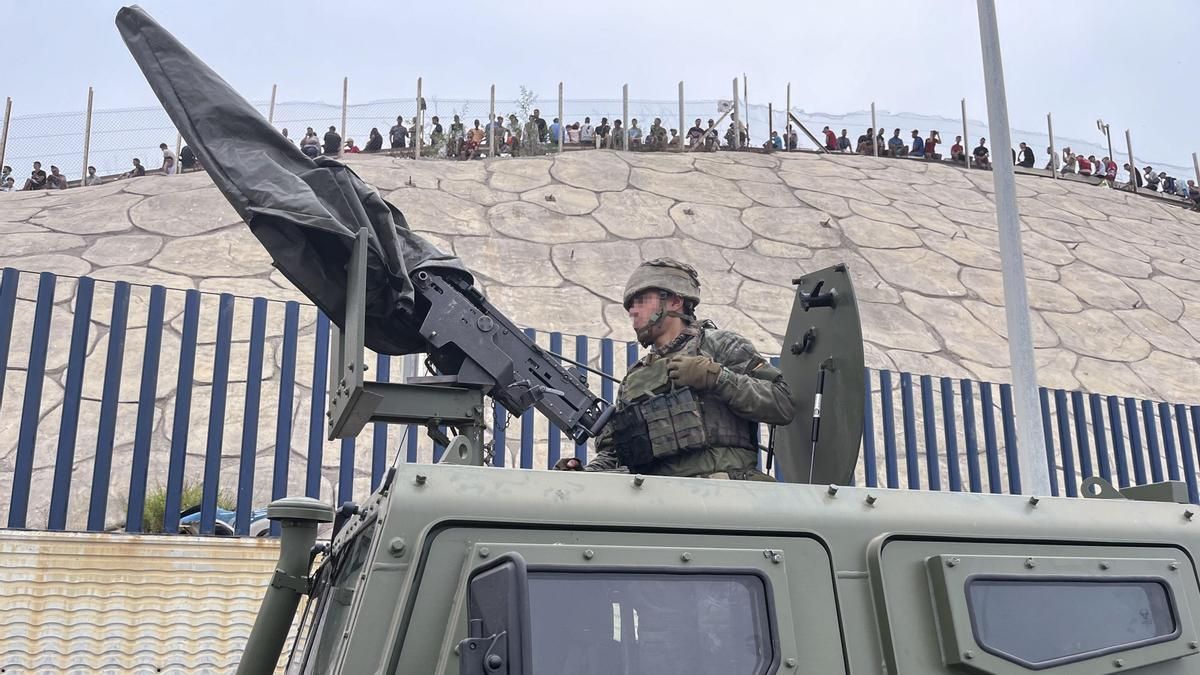
Title:
Ceuta Crisis: Why Morocco Isn’t Europe’s Border Guard—and Migrants Aren’t Weapons
**Article:** Morocco no longer wants to be Europe’s border guard. In fact, it never did—and it has solid reasons. In political science, a state’s core components are territory, population, and sovereignty. Managing borders to protect one’s own land is a state duty. But policing borders to solve another country’s security worries? That is not a classic state role. Nor is letting foreign powers act inside your territory.
What about shared borders, like those around Ceuta and Melilla? Here, shared responsibility seems reasonable. The key issue is the principles behind the talks. A fair, horizontal dialogue works best. Reality, however, is different. The European Union has pushed “externalization”—moving border control to origin and transit countries to stop migrants before they reach Europe. This shifts Europe’s border far beyond its own land. With Morocco, this policy stems from an imbalance of power. Europe’s security agenda, which links migration to danger, dominates the process. That agenda was never Morocco’s idea or priority—it serves Europe’s interests alone.
Externalization is deeply flawed. First, it builds on dependency. The EU talks of “partners” and “shared responsibility,” but forces its own plan, turning Morocco into a migration buffer state. Second, Morocco resents this imposition. So, genuine cooperation is unlikely. Third, it fuels tension—like last week’s events—despite talk of “exemplary” Spain-Morocco ties. Worst of all, externalization fails. It practically guarantees the EU’s migration policy will collapse.
Another major result: externalization gave Rabat huge leverage. Ironically, by pushing for migration control, the EU lost control over its own policy. Years of securitization handed Morocco extraordinary bargaining power. Rabat can now use migration as political pressure when its interests are hurt. Morocco has partly reversed the power balance with the EU—though Europe still holds cards, like trade. This shift may explain why, despite reluctance, Morocco still plays the gendarme role.
A worrying trend is the militarization of public debate. Some call these events “acts of war,” specifically “hybrid war”—a mix of military and non-military tools. Even some critical scholars repeat this. But it’s basic: human beings are not weapons. Calling migration “hybrid war” militarizes the issue. It shifts focus from people to threats and security. It also denies migrants’ agency, reducing them to tools between states. This top-down view may suit military leaders, but not civil society, academia, or media. Better terms are “migration coercion” or “instrumentalization of migration.” Ceuta is not a war front, and migrants are not arms.
The Ceuta crisis exposes how vulnerable the border is due to externalization and EU dependence on Morocco. Did Morocco organize the mass crossing? So far, no proof exists. A common theory is “dropped arms”—a deliberate loosening of border control. But Mehdi Alioua, a top migration expert in Morocco, offered another view in Le Grand Continent. He said that when thousands swam across and a huge crowd gathered, the only way to avoid disaster—like trampling or drowning—was to slightly open the land border, in coordination with Spanish officials.
Alioua admits Morocco let people cross. He says it couldn’t stop it due to a security failure and overwhelmed forces, as several big events happened at once: the Throne Feast, Moroccan holidays on northern beaches, and the Operation Crossing of the Strait. Yet he rejects conspiracy theories blaming Morocco as the organizer. Why? First, such crises damage Morocco’s reputation more than anyone else’s. Second, ties with France, Spain, and the EU outweigh those with the US and Israel, given trade and the Moroccan diaspora.
Could Morocco have stopped the mass entry? Europe points to Morocco’s strong border surveillance, funded by EU money. Years of externalization meant equipment and training for Moroccan security forces. Morocco argues otherwise. It has over 3,000 kilometers of coastline—too vast to watch 24/7. Add another 1,000 kilometers because of a paradox: Europe doesn’t recognize Moroccan sovereignty over Western Sahara, yet demands Morocco stop irregular migration from that territory. Morocco also insists the financial aid it gets is far below the real cost of blocking migration.
In the end, instead of blaming hybrid war, an “occupation attempt,” or conspiracies involving the US and Israel, look from the ground up. A stronger factor? Morocco’s Generation Z has unmet expectations. They see the social contract as broken. In a country building giant projects—like the world’s largest stadium—young people shout: “We don’t want the World Cup, we want healthcare.” That frustration may explain more than any secret plot.