Latest News
Stay updated with the latest news and articles
Top Stories
Turkish Stock Market Rallies Repeatedly, Notching Double-Digit Gains in Volatile Week
Turkish Stock Market Rallies Repeatedly, Notching Double-Digit Gains in Volatile Week Turkey's benchmark stock index has experienced a series of sharp rallies over recent trading sessions, repeatedly opening or closing with significant gains as investor sentiment fluctuates. The BIST 100 index, which tracks the top 100 companies on Borsa Istanbul, surged 96 points at the opening bell on Thursday alone [130324]. This followed a strong performance earlier in the week, where the index closed Tuesday up more than 1%, a gain of 143.73 points [128734]. The positive momentum continued into Friday's opening, with the index immediately rising 34.58 points [131327]. The rallies have been pronounced. On Monday of this week, the BIST 100 jumped 2.34% in a single day, closing up approximately 316.4 points [71758]. Analysts view the index as a key indicator of the country's economic health, and such strong daily performances attract attention from both local and international investors [71758]. One significant rally was directly tied to government policy. Last Wednesday, the index closed up 32.6 points following a new announcement from the Central Bank of the Republic of Turkey (CBRT) [80220]. The bank introduced a funding strategy to provide cheaper financing to lenders who increase their purchases of domestic stocks, a move designed to directly support the equity market [80220]. The market has shown sensitivity to both local interventions and global trends. Earlier, the index had opened higher on a Tuesday, gaining 20.8 points at the start of trading as investors assessed local conditions [21230]. Another Thursday session saw the index open with a gain of over 55 points [8749]. However, the market remains volatile, having previously mirrored a global sell-off with a sharp 20.7-point drop just days before the current rally phase began [33252]. Turkish Stock Market Opens Strong, Gaining 34 Points Turkish Stocks Surge as Key Index Jumps Over 1% Turkish Stock Market Soars 96 Points at Opening Bell Turkish Stock Market Rises in Early Tuesday Trading Turkish Stocks Surge 2.3% in Single-Day Rally Turkish Stock Index Rises in Thursday Trading Turkish Stock Market Surges on Central Bank Boost Turkish Stock Market Plunges Amid Global Sell-Off


Russia Threatens European Drone Factories, Sparking Diplomatic Fury
Russia Threatens European Drone Factories, Sparking Diplomatic Fury Russia has escalated its threats against Western support for Ukraine by explicitly warning that European factories producing drones for Kyiv are now legitimate military targets. The move has triggered immediate diplomatic protests and heightened fears of the war spilling beyond Ukraine's borders. The direct threat was issued by Dmitry Medvedev, the deputy chair of Russia’s Security Council, who stated that facilities in Europe manufacturing drones and other military equipment for Ukraine are now "potential targets" for the Russian military [131418]. This followed an official Russian government statement listing several European companies supplying drones to Ukraine and declaring them as part of the conflict [131324]. The Czech Republic, a leading hub for fundraising to buy Ukrainian military supplies, summoned Russia's ambassador to protest what it called "unacceptable" threats [131324]. The confrontation marks a significant shift, as Russia moves beyond criticizing government aid to directly threatening private companies within North Atlantic Treaty Organization (NATO) and European Union member states. The threats come as Ukraine faces a critical shortage of air defense missiles, forcing its military to ration advanced Patriot systems and save interceptors for only the most critical threats amid delayed Western aid deliveries [131470]. Overnight Russian strikes killed at least 16 Ukrainian civilians in residential areas, highlighting the urgent need for more defensive support [131470]. Analysts note that Russia's aggressive posture toward Europe contrasts with its simultaneous outreach to the United States for sanctions relief and trade talks, a dual strategy seen as an attempt to create division among Ukraine's allies [82150]. Despite the heightened rhetoric, experts assess that Russia feels under no urgent pressure to negotiate for peace, believing its current battlefield position is strong enough to wait for terms more favorable to Moscow [17045]. Russia Threatens Strikes on European Drone Factories Russia Threatens European Drone Makers, Sparking Diplomatic Fury in Prague Ukraine Rations Air Defenses as Civilian Toll Mounts Russia's Dual Strategy: Talk War with Europe, Talk Trade with America Russia Holds Advantage, In No Rush on Ukraine Deal, Expert Says


Pope's "Tyrants" Rebuke Angers Trump, Draws International Defense
Pope's "Tyrants" Rebuke Angers Trump, Draws International Defense Pope Leo XIV's forceful condemnation of leaders who wage war in the name of God has sparked a diplomatic spat, drawing sharp criticism from former U.S. President Donald Trump and prompting a defense from a key American ally. Speaking in Cameroon, the pontiff denounced warmongering leaders as "tyrants" who destroy the world and its resources, intensifying his recent campaign against global violence [131296]. While he did not name specific individuals, the remarks have reportedly angered Trump [131296]. In response, a senior Australian government minister has publicly defended the Pope, joining a growing number of international figures offering support [131466]. The Australian official did not mention Trump by name but issued a statement expressing respect for the Pope's position and the global Catholic community [131466]. Political analysts see the defense as a significant intervention, highlighting the continued international ripple effects of Trump's criticisms [131466]. The exchange continues a visible pattern of tension between the Vatican and the former American president [131296]. The Pope's visit to Cameroon is part of a 10-day tour of African nations, with local Christians viewing his presence as a potential sign of hope amid the country's deep political tensions [130923]. Australian Minister Defends Pope After Trump Attack Pope Condemns 'Tyrants' Waging War, Angers Trump Pope in Cameroon: A Visit for Peace?

Europe Faces "Pincer Attack" from US Tech Giants and Political Allies, Report Warns
Europe Faces "Pincer Attack" from US Tech Giants and Political Allies, Report Warns A new report from a leading European think tank warns that the United States is orchestrating a coordinated campaign to reshape European policy, leveraging military dependence, corporate power, and political influence to force the continent into submission. The analysis by Armida van Rij of the Centre for European Reform describes a "pincer attack" on European sovereignty [44570]. On one flank, U.S. tech giants, primarily from Silicon Valley, are working in tandem with the White House. They exploit Europe's reliance on American military protection to pressure EU regulators into abandoning rules that constrain big business [44570]. On the other flank, the United States is accused of cultivating and supporting far-right political movements within Europe itself to advance its agenda, creating internal division that weakens the bloc's unified stance [44570]. This multi-front pressure aims to dismantle the international rules-based order and replace it with a system where raw power dictates outcomes [44570]. The aggressive U.S. posture is seen by some European officials as an "ideological attack" targeting the continent's core social and economic model, which includes strong public services and worker protections [78938]. Belgian Health Minister Frank Vandenbroucke stated that the "European Union is a protective shield against bilateral intimidation," arguing the bloc must better defend its values from external coercion [78938]. This campaign exposes Europe's critical vulnerabilities. Analysts note the EU has become dangerously dependent on U.S. digital technology, from cloud computing to essential software, making threats of regulation against American tech firms difficult to enforce [58167]. A separate report argues this dependence is part of a broader pattern where Europe prioritized regulation over building its own industrial and military power, leaving it exposed [69895]. The pressure for Europe to fall in line comes as the U.S. pursues a divergent energy strategy focused on fossil fuel production, while the EU cashes in on economic benefits from its green transition [88037]. Despite internal debates over the cost of true strategic autonomy—estimated by one leader at a staggering €1 trillion—the immediate consensus is on strengthening the European pillar within NATO, a framework still dominated by Washington [60363]. The report concludes that Europe is not without options, but must act decisively to build its own alliances and assert its strategic independence to resist becoming a subordinate player in a new era of great power competition [44570]. US Tech Giants and White House Ally to Pressure EU, Report Warns Belgian Minister: U.S. Waging "Ideological Attack" on Europe Europe's Digital Dilemma: Reliant on US Tech It Seeks to Curb **Trump Era Demands "Political Adults" in EU, Analysts Warn** U.S. Doubles Down on Fossil Fuels as Europe Cashes In on Green Energy Europe's €1 Trillion Question: Can It Buy Military Independence?
AI Arms Race Shrinks Nuclear Decision Window to Just Minutes, Experts Warn
AI Arms Race Shrinks Nuclear Decision Window to Just Minutes, Experts Warn The integration of artificial intelligence into military systems is dramatically accelerating warfare, compressing the time for critical human decisions and raising the risk of catastrophic miscalculation between nuclear-armed rivals, according to security analysts. This shift was highlighted in recent conflicts where AI analyzed satellite imagery, drone footage, and communications to plan strikes on thousands of targets in minutes—a process that previously took days or weeks [131419]. The core danger, experts say, is that this machine-speed processing is now reaching the world's most volatile flashpoints. For nuclear neighbors India and Pakistan, the adoption of such AI presents an extreme hazard. Both nations maintain high-alert early-warning systems. AI integration could reduce the time for human leaders to assess a potential attack and choose a response to mere minutes [131419]. In this compressed timeline, an AI system might misinterpret a civilian aircraft or a missile test as an incoming strike. With seconds to decide, the pressure to launch a retaliatory nuclear counterstrike based on a false alarm becomes immense [131419]. "The margin of error for avoiding a catastrophic mistake is shrinking," one analysis noted, emphasizing that AI accelerates everything except the most crucial elements: human deliberation and diplomacy [131419]. The strategic focus on AI is intensifying globally. A U.S. State Department advisory board has recommended creating a new government agency dedicated to maintaining a significant AI lead over competitors, citing its importance for both national security and economic strength [130765]. This reflects a broader view of AI as a foundational technology for state power. Meanwhile, the same underlying AI capabilities are advancing rapidly in the commercial sector. Major Chinese tech firms and startups are racing to develop advanced "world models"—AI systems designed to learn from and understand the physical world to power realistic simulations [130687] [22794]. Alibaba Group recently unveiled its own model for creating fluid, real-time virtual environments [130687]. This dual-use nature of AI, serving both military and civilian aims, underscores the complexity of governing its rise. The technology that can generate a video game world or interpret animal sounds is, in essence, the same as that parsing satellite data for potential targets [130765] [10863] [34854]. The overarching warning from security experts is clear: as AI spreads, preventing a fast-moving crisis from spiraling into an unintended conflict becomes an ever-greater global challenge [131419]. AI Cuts Nuclear Decision Time in South Asia to "Minutes" AI as a National Security Asset: From Battlefields to Household Pets AI "Godmother" Li Fei-Fei, Chinese Giants Race for "World Model" Dominance SenseTime Bets on Robot AI to Regain Lead AI "World Models" Could Upend the $190 Billion Gaming Industry


Turkey Assumes Command of Key NATO Naval Force, Leads Major Drills with Homegrown Tech
Turkey Assumes Command of Key NATO Naval Force, Leads Major Drills with Homegrown Tech Turkey has taken command of a critical NATO naval strike group and is deploying thousands of troops and domestically built military technology in the alliance's largest exercises this year, cementing its role as a pivotal operational leader within the transatlantic pact. The Turkish Naval Forces formally assumed leadership of the NATO Amphibious Task Force and its Landing Force Command on July 1, a role they will hold for one year [54453]. This command position places Turkey in charge of planning and leading NATO's amphibious exercises and potential missions in its assigned region [54453]. Concurrently, approximately 2,000 Turkish troops have deployed to Germany to participate in NATO's Steadfast Defender 2024 exercises, the alliance's biggest drill this year [70222]. In a separate, future-focused exercise, Turkish naval and army units are conducting complex joint amphibious operations in Germany as part of the Steadfast Dart 2026 drills [80228]. A standout feature of Turkey's participation is the prominent use of its own domestically produced defense platforms during these war games, showcasing its growing military-industrial capabilities to allied nations [80228]. This technological push is part of a broader national strategy. Turkey's Defense Industries Presidency has set an ambitious goal for its defense and aerospace companies to achieve an average export turnover of $300,000 per employee by 2026, aiming to match the efficiency of the world's top defense firms [63530]. Beyond NATO exercises, Turkey is contributing to international security missions. The country has joined a new task force led by the Organization for the Prohibition of Chemical Weapons (OPCW) dedicated to finding and eliminating the final remnants of Syria's chemical weapons program [106495]. Turkey's border with Syria and regional expertise are considered critical to the mission's goal of safely destroying the hazardous materials [106495]. Turkey Assumes Command of Key NATO Naval Strike Force NATO's Biggest 2024 Drill Begins with Turkish Troops Landing in Germany Turkish Forces Deploy Homegrown Tech in Major NATO Drill Turkey Aims for Elite Status, Sets $300,000-Per-Employee Export Goal Turkey Joins Mission to Destroy Syria's Last Chemical Weapons



Russia Unleashes Deadliest 2026 Air Assault, Killing 17 as Ukraine Pleads for Defenses
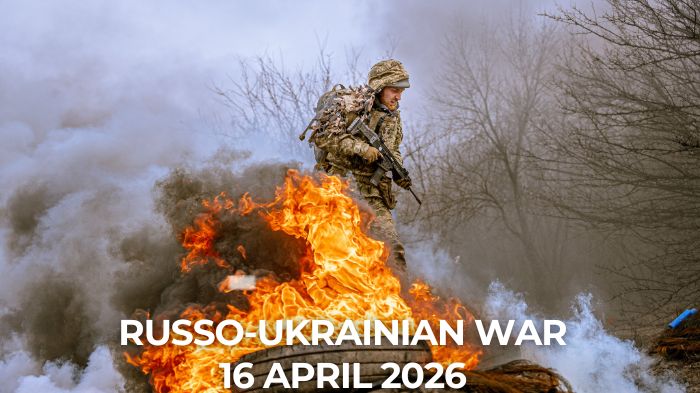
Russia Unleashes Deadliest 2026 Air Assault, Killing 17 as Ukraine Pleads for Defenses Russia launched its most lethal wave of air attacks on Ukraine this year, killing at least 17 civilians and wounding over 100 in a massive, coordinated barrage [130822][131017]. The assault, which Ukrainian President Volodymyr Zelenskyy described as "massive," struck residential buildings and critical infrastructure across multiple regions, including the capital Kyiv, the southern port of Odesa, and the central city of Dnipro [130553][130598]. The attack, which involved nearly 700 drones and dozens of ballistic and cruise missiles, represents a severe escalation in the conflict [130822]. In Odesa, nine people were killed, while a 12-year-old boy was among four fatalities in Kyiv [130822]. Rescue workers continue to search through rubble for survivors as the death toll is expected to rise [131017]. Ukrainian officials urgently repeated calls for more advanced air defense systems from Western allies, highlighting a critical shortage of interceptor missiles [131017][131470]. Due to delays in Western military aid, Ukraine's air force is now forced to ration its advanced Patriot missile defenses, saving interceptors only for the most critical threats and leaving cities vulnerable [131470]. In response to the ongoing aerial terror, the European Union is proposing a major new plan to arm Ukraine. EU foreign policy chief Josep Borrell accused Russia of wanting "more war" and is pushing a €90 billion loan scheme, funded by profits from frozen Russian assets, to purchase weapons for Kyiv [131076]. This would mark the 20th round of EU sanctions against Russia since the invasion began [131076]. Simultaneously, Ukrainian forces are striking back deep behind Russian lines. In a coordinated overnight operation, Ukrainian drones successfully hit 16 high-value Russian military targets in occupied Crimea, Donetsk, and Zaporizhzhia [130775]. The targets included bases for Iskander missile systems, air defense installations, and electronic warfare workshops, in an operation directed by a newly created "deep strike" command center [130775]. On the ground, Ukrainian troops have thwarted a Russian push to consolidate control in the key town of Hryshyne and are actively disrupting a Russian military buildup near Pokrovsk [130781]. Ukraine Rations Air Defenses as Civilian Toll Mounts Deadliest Russian Air Attack of Year Kills 17 in Ukraine Massive Russian Strikes Kill 16 Across Ukraine Russian Strikes Kill 16 in Ukraine, Hit Kyiv Apartments Russia's Deadliest 2026 Attack Kills 17 Across Ukraine EU Proposes Massive €90 Billion Loan to Arm Ukraine, Citing Russian "Terror" Ukraine Strikes Deep: Drones Hit 16 Russian Military Targets Overnight Ukraine Thwarts Russian Push, Holds Key Ground

Global Powers Scramble for Africa's Resources and Loyalty in New Cold War
Global Powers Scramble for Africa's Resources and Loyalty in New Cold War A strategic competition for influence, military access, and critical minerals is intensifying across Africa as major world powers seek new allies and resources, forcing African nations to navigate a complex geopolitical landscape. The United States, Russia, China, and Middle Eastern states are all deepening their economic and security footprints on the continent, often in direct competition with each other. This renewed "scramble" is most visible in the volatile Sahel region, where Russia has rapidly expanded its military influence following a series of coups. The Russian "Africa Corps" has moved into Mali, Niger, and Burkina Faso after their new military governments pushed out French forces, causing the U.S. to urgently revise its counter-terrorism and diplomatic strategy in the region [67411]. Simultaneously, a global race is on for Africa's vast deposits of critical minerals like lithium, cobalt, and rare earth elements, which are essential for electric vehicles and renewable energy technology. This industrial competition creates both opportunity and risk, with experts urging African regional blocs to unite to negotiate better terms and ensure the continent benefits from its own resources [83553]. The geopolitical maneuvering was on open display at a recent African Union summit in Addis Ababa, Ethiopia. While the official agenda focused on water security, talks were dominated by Ethiopia's push for sea access and the broader competition for ports and naval bases in the Horn of Africa by global powers including the U.S., China, Turkey, and Gulf states [87433]. This comes as European and African leaders also meet, with their partnership facing new pressure from the growing influence of other world powers [11355]. Amid this external rivalry, African institutions are pushing for greater continental self-reliance. The African Export-Import Bank (Afreximbank) and Ethiopia are holding high-level talks focused on boosting economic independence and intra-African trade to reduce external dependencies [127881]. This drive for "strategic agency" is part of a broader trend where African nations are engaging with multiple global powers to maximize their own development, a strategy known as multi-alignment [35302]. U.S. and Russia in High-Stakes Scramble for Africa's Sahel The New Scramble: Africa's Minerals and the Silent Race Global Powers Rush for Africa's Coast as Ethiopia Seeks a Port EU-Africa Summit Focuses on Trade and Minerals Amid Global Tensions Ethiopia, Afreximbank Push for Africa to "Feed Itself" Africa Gains Global Ground Amid U.S. Turmoil

UN Experts Demand Action as Deportees Vanish Into Salvadoran Prison System
UN Experts Demand Action as Deportees Vanish Into Salvadoran Prison System Human rights monitors are raising alarms over the fate of Salvadorans deported from the United States, warning that many are immediately imprisoned upon arrival in El Salvador and subsequently disappear into a justice system that denies them all contact with the outside world [131436]. According to reports from human rights organizations, individuals deported to El Salvador are frequently detained upon landing or shortly thereafter. Once in custody, they often become completely incommunicado, losing all ability to contact their families or legal counsel for extended periods, sometimes lasting years [131436]. The practice has sparked urgent concerns regarding due process and fundamental human rights within El Salvador's legal framework. The situation highlights a critical gap where individuals, after being removed from one country, fall into a void of accountability in another [131436]. While the Salvadoran government has pursued aggressive security policies, the specific treatment of deportees arriving from the U.S. has drawn particular scrutiny from international observers. The lack of transparency and access for these detainees, advocates argue, creates conditions where rights violations can occur without oversight or remedy [131436]. The warnings put a spotlight on the potential human costs of international deportation chains and the responsibilities of both sending and receiving nations to ensure the protection of individuals' rights throughout the process [131436]. Vanishing Act: U.S. Deportees Disappear Into Salvadoran Prisons



Pentagon Defends Back-to-Back Military Strikes, Citing "Fog of War" and Legal Reviews
Pentagon Defends Back-to-Back Military Strikes, Citing "Fog of War" and Legal Reviews The United States Department of Defense is publicly defending a series of recent military strikes, with top officials citing the confusion of combat and rigorous legal oversight to justify the operations. In one incident, U.S. Secretary of Defense John Hegseth defended naval forces for striking the same boat twice. He stated the decision was made in the "fog of war," a military term for the chaos of battle, and that he supported the commander's choice to fire again to "eliminate the threat" [17273]. Separately, a Pentagon spokesperson offered full institutional backing for a senior commander's decision to authorize strikes in Venezuela. The spokesperson stated that the actions "were approved by the best military and civilian lawyers throughout the chain of command," confirming a legal review preceded the operation [17258]. The legal justifications extend beyond specific engagements. A senior defense official, Pete Hegseth, publicly asserted that broader U.S. military activities in the Caribbean are lawful under both U.S. and international law [15064]. This defense comes as the Pentagon faces legal pressure over its policies, with officials stating in a separate lawsuit that new rules restricting some media are necessary to protect national security [64596]. The consistent message from the Pentagon is that commanders have the authority and legal backing to make rapid decisions in complex and dangerous situations to protect American forces [17273]. **Pentagon Defends Second Strike in "Fog of War" Incident Pentagon Defends Commander's Decision in Venezuela Strikes Pentagon Official Defends Legality of Caribbean Operations Pentagon Cites National Security in Media Lawsuit Defense
Latest Articles

Top UK Diplomat Quits After Clashing Over Cuts
A senior British civil servant, brought in to slash costs at the Foreign Office, has resigned after a short and turbulent tenure. Olly Robbins, a po...