Latest News
Stay updated with the latest news and articles
Top Stories
Governments Target Short-Term Rentals to Free Up Housing for Residents
Governments Target Short-Term Rentals to Free Up Housing for Residents Facing severe housing shortages, governments from Hawaii to Cape Town are taking direct action against short-term vacation rentals, aiming to convert tourist accommodations into homes for local residents. In a dramatic move, Hawaii's Governor has ordered the conversion of 10,000 short-term rental units back into the local housing market [61634]. Officials blame the large number of properties listed for tourists on platforms like Airbnb for driving up prices and pushing residents out, stating the action is necessary to keep the islands affordable for locals [61634]. This conflict is starkly visible in Cape Town, South Africa, where a tourism boom is forcing low-income workers into illegal and unsafe housing [39353]. The growth of short-term rentals in the city's central areas has caused property prices and rents to soar, making it impossible for many service workers to live near their jobs [39353]. The result is a city of extremes, with luxury villas for tourists standing next to informal metal shacks, while displaced residents face long commutes from the outskirts [117472]. The situation highlights a global pattern where the economic benefits of tourism create a severe housing crisis for permanent residents [39353]. City officials in Cape Town acknowledge the challenge of balancing tourism revenue with the urgent need for affordable homes [117472]. In the United States, legislative efforts are also focusing on supply. The Senate recently passed a major bipartisan bill with the explicit goal of reducing housing costs by increasing construction [100991]. Senator Elizabeth Warren summarized the approach, stating, "It will bring down housing costs by just having more of it" [100991]. The proposed legislation includes funding and policy changes to encourage building new homes, though it faces an uncertain future in the House of Representatives [100719]. Hawaii to Seize 10,000 Vacation Rentals in Housing Crisis Move Tourism Boom Pushes Workers Into Illegal Homes Tourists in Luxury, Locals in Shacks: Cape Town's Coastal Divide Senate Passes Bill to "Flood the Market" with New Homes U.S. Senate Passes Major Housing Bill, But House Hurdle Looms

Markets Bounce Back as Iran-Israel War Fears Cool Off
Markets Bounce Back as Iran-Israel War Fears Cool Off Asian stock markets surged on Monday, recovering almost all losses triggered by last week's unprecedented Iranian attack on Israel [128437]. The sharp rebound signals that investors' immediate fears of a wider Middle East war are subsiding after the strike resulted in limited damage [128231]. Major indexes across the region posted significant gains. Japan's Nikkei 225 rose over 1%, closing just 0.3% below its level before the attack [128231]. Hong Kong's Hang Seng jumped nearly 2%, while markets in South Korea and Australia also climbed higher [128437]. The rally marks a dramatic shift from Friday, when global markets fell sharply as investors moved money into traditional safe-haven assets like gold and the U.S. dollar [128437]. The easing of tensions has led investors to shift their focus away from geopolitical risks and toward upcoming corporate earnings reports and key U.S. economic data [128231]. Financial experts warn the situation remains volatile and markets will stay sensitive to any new military or diplomatic developments [128437]. However, the lack of a major Israeli retaliation so far has reassured markets that the risk of a immediate, disruptive regional escalation has diminished for now [128231]. Iran Attack Fallout Fades: Asian Markets Rebound Sharply Iran Attack Fears Fade, Asian Stocks Surge

Global Oil Crisis Deepens as War Shuts Key Shipping Route, Sending Nations Scrambling
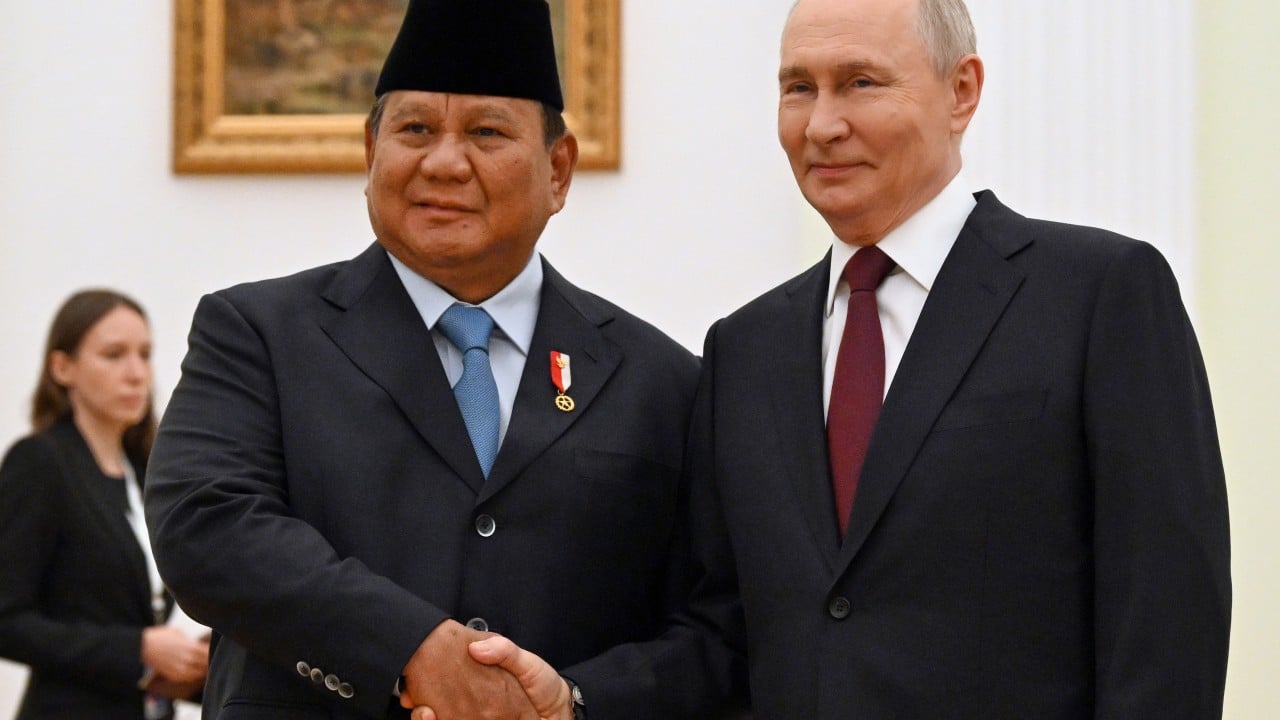
Global Oil Crisis Deepens as War Shuts Key Shipping Route, Sending Nations Scrambling A sudden and severe disruption to the world's most important oil shipping lane is triggering a global energy crisis, forcing nations into emergency diplomatic maneuvers to secure fuel and sending inflation soaring in conflict zones already under strain. The crisis stems from the near-total closure of the Strait of Hormuz, a narrow sea passage between Iran and Oman through which roughly one-fifth of the world's seaborne oil travels daily [128164]. The blockade, a result of the ongoing Middle East conflict, has caused global oil prices to spike, with immediate and severe consequences worldwide. Indonesia, facing a threat of mass poverty from rising fuel costs, dispatched its new president, Prabowo Subianto, on an urgent mission to Moscow to seek a direct deal for cheap Russian oil [128236]. The high-stakes visit underscores how the energy shock is compelling nations to seek new alliances for basic resources. The economic fallout is cascading into other war zones. In Ukraine, which had been slowly stabilizing its wartime economy, the Middle East conflict has caused a sharp reversal. Ukrainian fuel costs surged 23% in March alone, blowing past central bank forecasts and threatening to force an interest rate hike to control renewed inflation [128542]. Major powers are urgently diversifying their energy supply chains to avoid the maritime choke point. China, seeking reliable alternatives, has sent a Vice-Premier to Turkmenistan as a special representative of President Xi Jinping. The goal is to accelerate development of the giant Galkynysh gas field and secure more overland pipeline supplies from Central Asia, which are immune to sea lane blockades [128463]. Meanwhile, diplomatic coordination is intensifying among nations aligned against Western sanctions. Russia's Foreign Minister Sergey Lavrov met with China's top diplomat Wang Yi in Beijing, with the Middle East crisis and the Ukraine war as top agenda items. The talks aimed to synchronize the two powers' positions in international organizations, presenting a united front [128404]. The situation remains highly volatile. Australia's Defense Minister stated the country is "deeply invested" in keeping the Strait open but is adopting a cautious "wait-and-see" approach, monitoring ceasefire efforts and the developing military situation around the waterway [128164]. Indonesia's New President Flies to Russia for Emergency Oil Deal Middle East Conflict Reverses Ukraine's Wartime Inflation Progress Russia's Lavrov in Beijing: Ukraine, Middle East Top Agenda China Seeks Central Asian Gas as Hormuz Blockade Threatens Supplies Australia Warns: Key Global Oil Chokepoint Under Threat


Trump and Allies Weaponize Ukraine Aid, Creating Blueprint for Far-Right in Europe
Trump and Allies Weaponize Ukraine Aid, Creating Blueprint for Far-Right in Europe The political battle over U.S. support for Ukraine has undergone a fundamental shift, transforming from a bipartisan foreign policy issue into a potent domestic political weapon. Under the leadership of former President Donald Trump and his running mate, J.D. Vance, opposition to aid for Kyiv is now a central tactic for mobilizing their base, a strategy that is providing a direct model for far-right parties across Europe [127814]. The Trump-Vance approach involves reframing the discussion on military assistance with repeated, exaggerated claims and stereotypes about Ukraine. The goal is to rally core supporters and systematically undermine broader public and political support for continuing the flow of weapons and funds [127814]. This political maneuver is seen as a major strategic victory for the Kremlin, as it actively weakens Western unity against Russian President Vladimir Putin’s invasion [127814]. European nationalist and far-right leaders are closely observing and beginning to replicate this method. By labeling aid a waste of money or echoing Russian propaganda points, they are using the issue to win domestic votes, copying the playbook established by the Trump movement [127814]. Experts warn this deliberate weaponization of foreign policy is likely to intensify, threatening long-term Western backing for Ukraine at a critical juncture in the war [127814]. The strategy has effectively ended the era of bipartisan consensus on Ukraine in the United States. Support for the war effort is now a polarized, politically charged tool for voter mobilization, creating a new and volatile dynamic in international relations [127814]. Trump-Vance Shift Turns Ukraine Aid into Far-Right Political Weapon
Europe's €1 Trillion Military Tab Exposed as NATO Reliance Deepens
Europe's €1 Trillion Military Tab Exposed as NATO Reliance Deepens The staggering cost of European strategic independence has been laid bare, with leaders admitting that breaking free from American military protection would require defense spending of up to 10% of the bloc's economic output—a sum approaching €1 trillion [60363]. This revelation comes as the continent grapples with a fragmented internal market and heavy reliance on U.S. technology, leaving its ambitions for autonomy mired in dependency. The eye-watering figure was cited by outgoing Dutch Prime Minister Mark Rutte, a candidate for NATO Secretary General. He stated that building a "war-fighting and war-winning" defense industrial base capable of operating without the United States would demand this unprecedented financial commitment [60363]. Rutte and other officials have dismissed such full autonomy as impractical, instead advocating for a stronger European pillar within the existing North Atlantic Treaty Organization (NATO) framework. This debate over military sovereignty is unfolding against a backdrop of severe internal economic weaknesses. A major report warns that Europe's fractured Single Market is a "big problem," raising costs for businesses and consumers and crippling the bloc's global competitiveness [127418]. Former Italian Prime Minister Enrico Letta, who authored the report, lamented that key recommendations to unify the market remain unimplemented, leaving the economy vulnerable. The dependency extends into the digital sphere, where European threats to regulate U.S. tech giants clash with a deep reliance on their cloud computing, software, and payment systems [58167]. Analysts warn this "digital sovereignty" struggle is hampered by Europe's failure to build its own champions, forcing it to use the very technologies it seeks to curb. Concurrently, Europe faces accusations of preparing for a "major war" from Russian Security Council Secretary Nikolai Patrushev, who pointed to a nearly 60% surge in EU defense spending since 2022 as evidence of aggressive planning [127947]. EU officials maintain the spending is a necessary response to Russian aggression and to support Ukraine's defense. The combined pressures reveal a continent caught between soaring ambitions for independence and the stark economic and technological realities of entrenched reliance. The immediate path forward, leaders suggest, is not a €1 trillion leap to autonomy, but a more modest and costly deepening of integration within the U.S.-led security architecture [60363]. Europe's €1 Trillion Question: Can It Buy Military Independence? EU Single Market "Failing," Warns Top Official, Citing War and High Costs Europe's Digital Dilemma: Reliant on US Tech It Seeks to Curb Russia Accuses EU of "Major War" Preparations After Defense Spending Surge

AI Reshapes Global Industries: From Consulting Cuts to Olympic Commentary
AI Reshapes Global Industries: From Consulting Cuts to Olympic Commentary A wave of artificial intelligence is forcing major changes across global business, education, and entertainment, as companies and governments rush to adapt to the new technology. The world's largest consulting firm, PricewaterhouseCoopers (PwC), is planning a major restructuring of its global operations in a direct response to the rise of AI, which experts warn could automate many traditional consulting tasks [128415]. The strategic overhaul aims to future-proof the business by focusing on training its workforce in advanced AI skills and reshaping its services for the digital age [128415]. This shift is echoed in the automotive sector, where Nissan is cutting 20% of its car models and betting on AI to boost profits amid intense electric vehicle competition [128228]. The Japanese automaker says AI will be used in vehicle development, manufacturing, and customer service to improve efficiency [128228]. Meanwhile, nations are mobilizing to build AI competency. China has launched a nationwide "AI+ Education" action plan, requiring AI to be integrated into all stages of learning from primary school to adult career training to prepare its workforce for global tech competition [127274]. The technology is also moving into new frontiers of creation and communication. In the $190 billion video game industry, tech giants and startups are developing AI "world models" that can generate entire 3D environments, promising to automate and reduce the cost of game development [34854]. Separately, Alibaba Cloud will embed its large language model into the core digital systems of the 2026 Winter Olympics to power AI assistants that generate commentary, create social media summaries, and act as multilingual chatbots for staff [66986]. The push extends to fundamental research. A Chinese AI system recently solved a math problem that had puzzled experts for over a decade, working independently without human help to achieve a breakthrough in high-level reasoning [127270]. French startup AMI, backed by $1 billion in new funding, is pursuing a different path, aiming to build AI that learns about the physical world directly "in the way animals and humans do" [98165]. As AI handles more routine technical work, workplace dynamics are expected to change. Experts predict a rise in the value of "glue work"—human skills like mentoring, team coordination, and communication—which will become premium abilities as they are needed to hold projects together and ensure AI tools are used effectively [128201]. PwC to Slash 100,000 Jobs? AI Forces Consulting Giant's Overhaul Nissan Bets on AI, Cuts Car Models to Survive China Orders AI Lessons for All Students, From Primary School Up AI "World Models" Could Upend the $190 Billion Gaming Industry AI to Call the Shots? Alibaba Brings LLM to 2026 Winter Olympics AI Solves Decade-Old Math Puzzle, No Humans Needed French AI Startup Aims for Animal-Like Intelligence with $1 Billion Boost AI Era Set to Elevate Critical "Glue Work" in the Workplace


Turkey Takes Charge: Commands Key NATO Forces and Deploys Homegrown Tech in Major 2024 Drills
Turkey Takes Charge: Commands Key NATO Forces and Deploys Homegrown Tech in Major 2024 Drills Turkey has assumed a prominent role in NATO's military readiness, taking command of a major naval strike force while simultaneously deploying thousands of troops and domestically developed technology in the alliance's largest exercises this year. The Turkish Naval Forces formally took command of the NATO Amphibious Task Force and its Landing Force Command on July 1, a role they will hold for one year [54453]. This command position places Turkey in charge of planning and leading critical NATO exercises and potential missions involving coordinated sea-to-land assaults [54453]. Concurrently, approximately 2,000 Turkish troops have deployed to Germany to participate in NATO's Steadfast Defender 2024 exercise, the alliance's biggest drill this year [70222]. The first Turkish military aircraft landed at Germany’s Wunstorf Air Base, marking the start of the Turkish contingent's involvement in the widespread European maneuvers [70222]. In a related demonstration of military capability, Turkish naval and army units are conducting joint amphibious operations as part of the separate NATO exercise Steadfast Dart 2026 [80228]. A key feature of Turkey's participation is the operational use of its own domestically produced defense platforms, showcasing national technology on a multinational stage [80228]. These developments underscore Turkey's active and multifaceted role within the NATO alliance, combining strategic command responsibilities with large-scale troop contributions and the fielding of indigenous military systems. Turkey Assumes Command of Key NATO Naval Strike Force **NATO's Biggest 2024 Drill Begins with Turkish Troops Landing in Germany Turkish Forces Deploy Homegrown Tech in Major NATO Drill



Ukraine Goes on the Offensive: New Missiles, Space Launches, and Arms Deals Signal Strategic Shift
Ukraine Goes on the Offensive: New Missiles, Space Launches, and Arms Deals Signal Strategic Shift Ukraine is rapidly expanding its military capabilities, moving from a defensive posture to developing and exporting advanced weaponry while establishing a new presence in space. This strategic shift, driven by battlefield innovation, is being accelerated through key partnerships with Western defense firms. President Volodymyr Zelenskyy declared that, for the first time, Ukraine possesses sufficient weaponry to defend itself, crediting the widespread use of drones for reshaping the conflict [128281]. Building on this, he announced the country is now expanding government-to-government arms exports to share its combat expertise [128281]. A major development is the creation of the "Areion," a new, highly mobile missile system. Built on the framework of the Neptune anti-ship missile, it is redesigned for land attacks and can be transported on a standard trailer, allowing it to launch from almost anywhere and strike distant targets with the force of a cruise missile [127811]. In a significant industrial partnership, German arms giant Rheinmetall has teamed with Ukraine's state-owned "Artem" company, the designer of the Ruta missile system [127813]. The joint venture, based in Germany, aims to further develop and produce the long-range rocket artillery system for the NATO alliance, directly integrating Ukrainian combat technology into Western manufacturing [127813]. Concurrently, Ukraine has demonstrated a revived space capability. The country successfully launched two rockets into space from its own territory for the first time since the full-scale war began, proving its missile defense and long-range strike systems remain operational [127816]. A Ukrainian lawmaker stated the launches demonstrate an ability to hit "any target on land, at sea, or in the air" [127816]. Separately, it was revealed that Ukraine's military intelligence agency, the Main Directorate of Intelligence, has secretly completed at least two space launches since the invasion began, placing satellites into orbit likely for intelligence gathering [128282]. Officials also confirmed the formation of a new "space force" as part of the country's Air Force [127816]. The push for enhanced military effectiveness extends to training. Denmark has committed €33 million to a joint project focused on training Ukrainian soldiers in battlefield survival skills, including medical care and mine clearance, to increase the lethality and sustainability of its forces [85441]. Zelenskyy: Ukraine Now Armed to Defend Itself, Seeks to Export War Expertise Ukraine's Secret Weapon: A Trailer-Mounted Missile That Hits Like a Cruise Missile German Arms Giant Rheinmetall Teams With Ukraine's Missile Makers Ukraine Fires Rockets From Its Own Soil, Announces Space Force Plans Ukraine's Covert War Reaches Space: Spy Agency Launches Satellites Denmark's New Ukraine Aid: Buying Survival, Not Just Weapons


Global Powers Scramble for Africa's Critical Minerals in New "Silent Race"
Global Powers Scramble for Africa's Critical Minerals in New "Silent Race" A high-stakes competition for Africa's vast mineral wealth is accelerating, as world powers and industries seek to secure the critical resources needed for modern technology and green energy. This new "silent scramble" is reshaping international alliances and trade, placing African nations at the center of a global geopolitical contest. The push focuses on minerals like lithium, cobalt, and rare earth elements, which are essential for manufacturing electric vehicle batteries, renewable energy systems, and advanced military equipment [128257][83553]. With global demand soaring, the United States, European Union, China, and other powers are intensifying their engagement across the continent to lock down supplies and influence. This competition was a dominant, if unofficial, theme at recent high-level summits. During a major African Union assembly in Addis Ababa, discussions on water security were overshadowed by geopolitical maneuvering, as countries including the U.S., China, and Turkey expanded their military and economic presence in the Horn of Africa [87433]. Similarly, a recent EU-Africa summit explicitly focused on trade and critical minerals, driven by pressures from the growing influence of Russia and China in Africa [11355]. The strategic rivalry is particularly evident in the security and mining sectors. In West Africa's Sahel region, the U.S. is urgently revising its strategy as Russia rapidly expands its military influence through groups like the Africa Corps, gaining political and economic leverage in nations such as Mali, Niger, and Burkina Faso [67411]. Simultaneously, the Quad alliance—comprising the U.S., India, Japan, and Australia—is attempting to counter China's dominance in rare earths by targeting deposits in northern Myanmar, a strategy that involves navigating complex local conflicts [128257]. Analysts note that this environment creates both significant risks and opportunities for African nations. There is a danger that individual countries could be pressured into unfair deals if they negotiate alone [83553]. In response, there is a concerted push for greater African coordination and self-reliance. Ethiopia and the pan-African financial institution Afreximbank are holding urgent talks to boost continental economic independence and reduce external dependencies [127881]. Experts argue that by uniting, African regional blocs can negotiate better terms, build local processing plants, and ensure minerals benefit broader development [83553]. The outcome of this quiet contest will shape not only global supply chains for the green energy transition but also the security and economic future of the African continent for decades to come. Quad Targets Myanmar's Rare Earths to Counter China The New Scramble: Africa's Minerals and the Silent Race **Global Powers Rush for Africa's Coast as Ethiopia Seeks a Port** EU-Africa Summit Focuses on Trade and Minerals Amid Global Tensions U.S. and Russia in High-Stakes Scramble for Africa's Sahel Ethiopia, Afreximbank Push for Africa to "Feed Itself"

Nigeria Faces Catastrophic Civilian Toll as Military Airstrike and Mass Kidnappings Expose Security Crisis
Nigeria Faces Catastrophic Civilian Toll as Military Airstrike and Mass Kidnappings Expose Security Crisis A Nigerian military airstrike killed more than 100 civilians celebrating a Muslim holiday, while a separate report reveals over 1,100 people were kidnapped in just four months, exposing a severe and worsening security crisis in the country's north [127450][127372]. The airstrike occurred on Sunday in the village of Tudun Biri in Kaduna state. Survivors and local officials insist the victims were civilians gathered for a religious observance [127450]. In a statement, the Nigerian Air Force said it was targeting a known terrorist enclave and has launched a formal investigation into the incident [127450]. This deadly event coincides with a damning report from Amnesty International detailing a kidnapping epidemic. The human rights group documented more than 1,100 abductions by armed groups across several northern states between January and April of this year [127372]. Amnesty International accuses Nigerian authorities of failing in their duty to protect citizens, warning that the pervasive insecurity is disrupting daily life and local economies as people fear traveling on roads or working on farms [127372]. The twin crises highlight the extreme risks faced by civilians caught between armed groups and military operations. The airstrike, which Amnesty International labeled a "massacre," raises serious questions about military intelligence and operational procedures [127450]. Meanwhile, the scale of the kidnappings points to the brazen impunity of criminal gangs and insurgent factions operating in the region [127372]. Amnesty International has called for urgent government action, demanding increased security measures and accountability for both the kidnappers and the circumstances leading to the civilian airstrike deaths [127372][127450]. Nigerian Military Airstrike Kills More Than 100 Civilians, Amnesty Reports Over 1,100 Kidnapped in Nigeria in Just Four Months, Amnesty Reports

Latest Articles
Orban Ousted: Hungary's Election Shockwave Hits Putin and Populists
Viktor Orban's long rule in Hungary has ended. His Fidesz party lost the country's parliamentary election. The winner, Peter Magyar, has promised ma...
90-Year-Old Mother Sentenced for Laundering Son's Drug Money
A 90-year-old South Korean woman has been given a one-year prison sentence for money laundering. She helped her son process illegal drug revenues whi...
Spain Urges EU: Treat China as Ally, Not Rival
Spain is pushing the European Union to strengthen its partnership with China. The country's leader argues the EU should see China as a key strategic...
Chinese Student Guilty in Munich 'Pelicot' Rape Case
A court in Munich has convicted a Chinese student for a series of rapes. The man drugged and assaulted a woman repeatedly over several months. Inves...
Ukraine Seeks Drones and EU Path in Berlin Talks
Ukrainian President Volodymyr Zelenskyy met with German opposition leader Friedrich Merz in Berlin on Monday. Their talks focused on three key Ukrain...
Haiti Police Arrested After Deadly Stampede Kills 25
Haitian authorities have arrested five police officers in connection with a fatal crowd crush. The incident killed 25 people at a former military for...
Beluga Whale Swims to German Border in Rare Baltic Visit
A rare beluga whale has been spotted swimming from Denmark towards German waters. Local media reports confirm the unusual sighting near the maritime...
Orban Loses: What Now for His Allies in Czechia and Slovakia?
Viktor Orban’s decisive election loss in Hungary will reshape politics in Central Europe. The defeat directly challenges his closest political partne...
Stroke at 30. Now, She's an Olympic First.
A German doctor has achieved an unprecedented Olympic milestone after a devastating medical crisis nearly ended her athletic career. Kathrin Marchan...
India Drops Bid to Host Major UN Climate Summit
India has withdrawn its offer to host the 2028 UN climate change conference, known as COP33. This move reverses a public pledge made by Prime Ministe...
U.S. Blocks Iran's Oil: Will China Be Forced to Act?
A U.S. naval blockade against Iran is now testing China's resolve to stay out of the conflict. American forces are stopping Iranian oil shipments by...
France Unanimously Approves Law to Return Looted Art
France's lower house of parliament, the Assemblée Nationale, voted unanimously on Monday to pass a major bill. This legislation will make it easier t...
Trump Shares AI Image as Christ, Attacks Pope, Outraging U.S. Catholics
U.S. President Donald Trump posted an AI-generated image of himself as Jesus Christ on social media, sparking outrage among American Catholics. He la...
Food Supply Now Hinges on Fossil Fuels, Warn Experts
A major Middle East conflict is creating a chain reaction that could push global hunger to worse levels. Analysts say the crisis reveals a dangerous...
Suicide Bombing Near Algiers as Pope Begins Historic Visit
Two men carried out a suicide attack in the Algerian city of Blida on Monday. The explosion happened just hours after Pope Leo XIV arrived in the cou...
Meloni Condemns Trump's "Unacceptable" Attack on Pope
Italian Prime Minister Giorgia Meloni has sharply criticized former U.S. President Donald Trump for his recent comments about Pope Leo XIV. Meloni i...
France and UK Launch Urgent Talks to Free Seized Ships in Strait of Hormuz
France and Britain will co-host urgent international talks this Friday. The meeting aims to form a plan to protect commercial ships in the Strait of...
Italy Halts Key Military Pact with Israel
Italian Prime Minister Giorgia Meloni announced a major shift in defense policy on Tuesday. Her government has suspended the automatic renewal of a m...
LVMH Sales Halve in Gulf as Regional Conflict Hits Luxury
New figures reveal the luxury industry is feeling the impact of Middle East tensions. LVMH, the world's largest luxury group, reported a sharp drop i...
Ex-Student Opens Fire, Then Kills Self in Turkish School Attack
A former student shot and wounded 16 people at his old school in Turkey on Tuesday. The attacker later killed himself after police cornered him. The...