Latest News
Stay updated with the latest news and articles
Top Stories
U.S. Forces Capture Venezuelan President Maduro in Unprecedented Military Strike
U.S. Forces Capture Venezuelan President Maduro in Unprecedented Military Strike In a dramatic escalation of tensions, United States military forces have captured Venezuelan President Nicolás Maduro, marking the first direct U.S. military attack on a South American nation in history [41064]. The surprise operation in Caracas on Saturday detained Maduro and his wife, who were subsequently transported to New York where the president faces drug trafficking charges [41880]. President Donald Trump announced the capture, stating the U.S. will oversee Venezuela's government and declaring that "American dominance in the western hemisphere will never be questioned again" [41064][41460]. The action has sent shockwaves across Latin America, splitting regional governments between cautious approval and sharp condemnation [47297]. The operation sets a major precedent for direct foreign intervention, an act analysts describe as "extraterritorial apprehension"—the seizure of a person outside U.S. borders without the host country's consent [47297]. This move is seen as a direct challenge to China's rapidly expanding economic and diplomatic influence in the region, where Beijing has become a leading trade partner and lender [41460][45747]. Despite public divisions, a private fear is reportedly shared by leaders across the political spectrum, who are now urgently assessing their own vulnerability to similar foreign actions [47126][47297]. The United Nations Security Council has called an emergency meeting at Venezuela's request to address the incident [41880]. The long-term implications remain uncertain, but experts warn the aggressive strike revives the long-standing U.S. "Monroe Doctrine," a policy historically opposing foreign powers in the Americas, and could discourage nations from deepening ties with Beijing [41460][41465]. U.S. Capture of Venezuela's Maduro Sends Shockwaves Through Latin America U.S. Capture of Maduro Sends Shockwave Through Latin America U.S. Captures Venezuela's Leader, Challenging China's Regional Reach Trump Revives US Habit of Ousting Latin American Leaders Venezuela's President Seized by U.S., Faces Court in New York Trump Orders First Direct US Military Attack on South America

World Braces for Economic Warfare as Top Global Threat in 2026
World Braces for Economic Warfare as Top Global Threat in 2026 A new report from the World Economic Forum (WEF) has identified "geoeconomic confrontation" as the most severe risk facing the world over the next two years, warning that nations are increasingly weaponizing trade and supply chains in a dangerous new form of conflict [49991]. The WEF's latest Global Risks Report concludes that geopolitical rivalry is forcing countries to turn economic tools into weapons, a shift that now ranks above all other global dangers [49991]. This state of economic warfare creates a volatile environment that threatens international stability and growth. The short-term global outlook is dominated by three interconnected threats: intense geopolitical rivalry, the rapid spread of misinformation, and severe social and political polarization [49991]. These forces are combining to push nations toward more aggressive and protectionist economic policies. The findings will be a central topic at the WEF's annual meeting in Davos, Switzerland, next week, where global leaders will confront the escalating risk [49991]. The report signals a decisive move away from cooperative international trade frameworks toward a more fragmented and contested system. Geoeconomic Warfare Named Top Global Threat for 2026
Governments Target Vacation Rentals in Bid to Reclaim Housing for Locals
Governments Target Vacation Rentals in Bid to Reclaim Housing for Locals Facing severe housing shortages, governments in popular tourist destinations are taking direct action, moving to convert thousands of short-term vacation rentals into long-term housing for residents. In a dramatic move, Hawaii's Governor has ordered the conversion of 10,000 short-term rental units back into the local housing market [61634]. Officials blame the large number of properties listed on platforms like Airbnb for driving up prices and pushing residents out, stating the action is necessary to keep the islands affordable for locals [61634]. The conflict is stark in Cape Town, South Africa, where a tourism boom and the proliferation of short-term rentals are forcing low-income workers into illegal and unsafe housing [39353]. The city sees luxury villas and vacation rentals dominate scenic coastal areas, while many residents are pushed to distant outskirts, creating a stark divide between tourists and the local community [117472]. Experts globally link the rapid growth of rental platforms to soaring rents in city centers, making it impossible for service workers to live near their jobs [39353]. The strategy represents a significant shift for tourism-dependent economies. In Hawaii, the government will use new laws and tax rules to enforce the change, which may result in fewer rental options for visitors [61634]. The situation underscores a growing global problem where the economic benefits of tourism create a severe housing crisis for permanent residents [117472]. Hawaii to Seize 10,000 Vacation Rentals in Housing Crisis Move Tourism Boom Pushes Workers Into Illegal Homes Tourists in Luxury, Locals in Shacks: Cape Town's Coastal Divide

Markets Soar as Investors Bet on De-escalation, Ignoring Geopolitical Flames
Markets Soar as Investors Bet on De-escalation, Ignoring Geopolitical Flames Global stock markets are rallying as investors shrug off the threat of a widening Middle East war, betting instead that political leaders will pull back from the brink of major conflict. The pattern played out clearly this week. U.S. stocks closed sharply higher on Monday after fears of a major escalation between Iran and Israel subsided over the weekend [125384]. The Dow Jones Industrial Average rose 0.58%, the S&P 500 gained 0.62%, and the Nasdaq Composite climbed 0.83% as investor focus returned to corporate earnings [125384]. This rebound followed a dramatic surge the previous Wednesday, when the Dow Jones jumped over 1,000 points after President Trump agreed to a ceasefire with Iran [124317]. Traders have dubbed this predictable market behavior the "TACO" trade—an acronym for "Trump Always Chickens Out" [124317]. The strategy involves buying assets when prices drop on a new geopolitical threat and selling when they rebound after the threat is withdrawn [124317]. Despite the ongoing conflict, overall market returns have remained strong over the past year, even absorbing the recent volatility [124882]. Analysts note that the initial market drop on Friday, driven by escalation fears, was quickly reversed as the situation appeared to calm [125384]. However, the underlying fragility continues to inject uncertainty. Oil prices, a key sensitivity gauge, jumped 3% to $97.88 per barrel as investors questioned the stability of the U.S.-Iran ceasefire [124687]. "The recent conflict was a very big shock," one analyst said, noting it has caused significantly greater market volatility [124687]. In this turbulent environment, some capital is seeking safe havens. Investors have poured money into Chinese healthcare stocks listed in Hong Kong, with the Hang Seng Healthcare Index jumping roughly 13% since late March, far outpacing the main market's 6% gain [125586]. Analysts say this move into "defensive" stocks like healthcare highlights how investors use essential service sectors as shelters during global instability [125586]. U.S. Stocks Rally as Middle East Fears Ease TACO Trade: Investors Bet Trump Will "Chicken Out" Markets Soar Despite War and Tariff Shock Markets on Edge as Fragile Ceasefire Shakes Oil and Stocks China Healthcare Stocks Defy Global Market Chaos


Russia Scrambles to Triple Drone Troops as Ukraine Strikes Deep at Oil Lifelines
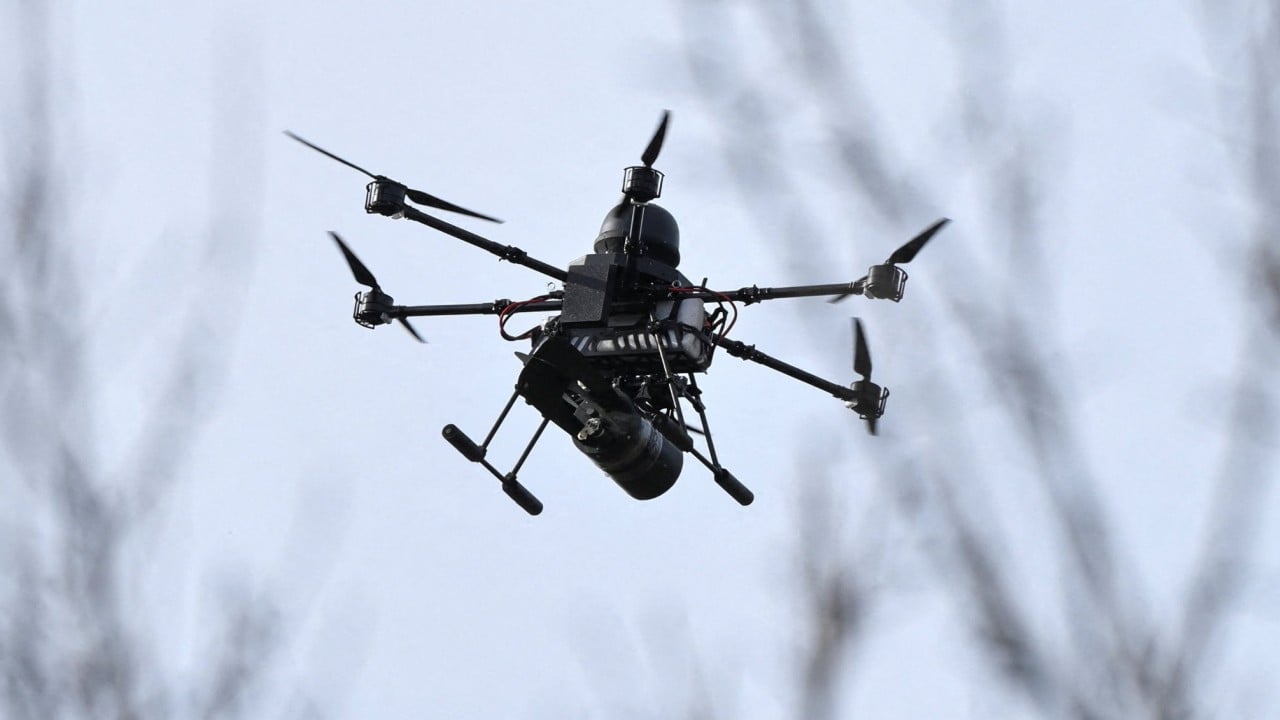
Russia Scrambles to Triple Drone Troops as Ukraine Strikes Deep at Oil Lifelines Russia is attempting to nearly triple the size of its specialized military drone units to 165,000 personnel by year's end, even as Ukrainian long-range drone strikes continue to hammer critical Russian energy infrastructure, including a key oil depot feeding the Black Sea fleet [125244]. The massive drone army expansion, revealed by Ukraine's Commander-in-Chief Oleksandr Syrskyi, underscores Moscow's focus on technological warfare amid a grueling conflict. The plan aims to deploy a force of 165,000 "drone troops," a dramatic increase from its current reported strength [125244]. Concurrently, Ukraine is intensifying a campaign to cripple Russia's war economy by targeting oil refineries and energy facilities far behind the front lines. President Volodymyr Zelenskyy has vowed these strikes will continue "until Moscow stops its own assaults on Ukraine's power grid" [125247]. He framed the strategy starkly: "If we don't hit them in the face, they will hit us and won’t feel what war is" [125247]. A recent Ukrainian attack struck the "Krymskaya" oil depot in Russia's Krasnodar region, a critical fuel artery for the strategic Black Sea port of Novorossiysk [125244]. These energy strikes are designed to reduce Russia's fuel supplies and impose a direct cost for its ongoing bombardment of Ukrainian civilian infrastructure, which has caused widespread blackouts [125247]. The financial strain of the war is mounting for Moscow. Russian President Vladimir Putin has reportedly asked the country's wealthy oligarchs for direct donations to support the military budget, following a year where defence spending surged by 42% [112938]. This request highlights the pressure from a widening budget deficit, exacerbated by sanctions that force Russia to sell oil at a discount [112938]. Despite the economic challenges, diplomatic signals suggest Russia is preparing for a prolonged conflict, with analysts noting no shift in its strategic goals [17910]. An expert on U.S.-Europe relations stated that Russia's strong battlefield position means it feels "no urgency to negotiate" a peace deal [17045]. Russia Aims to Triple Drone Army; Ukraine Hits Key Oil Depot Zelenskyy: Ukraine Will "Make Russia Feel the War" With Energy Strikes Putin Seeks Oligarch Donations to Fund War as Defence Budget Strains Putin Signals Long War in Ukraine Amid Economic Strain Russia Holds Advantage, In No Rush on Ukraine Deal, Expert Says
Turkish Opposition Figures Detained and Released in Escalating Political Clash
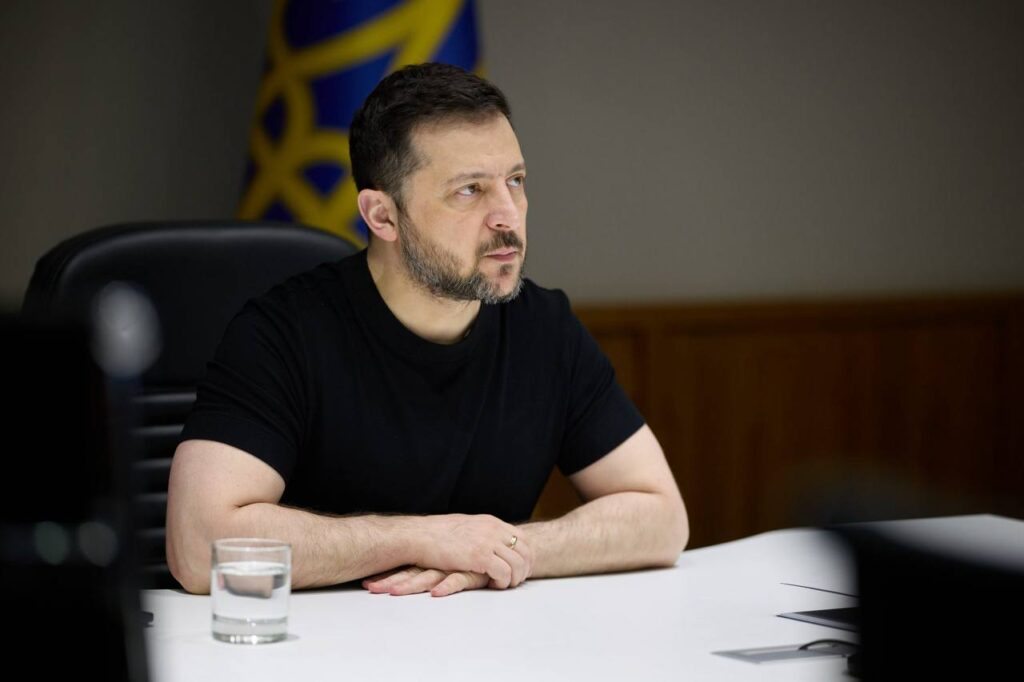
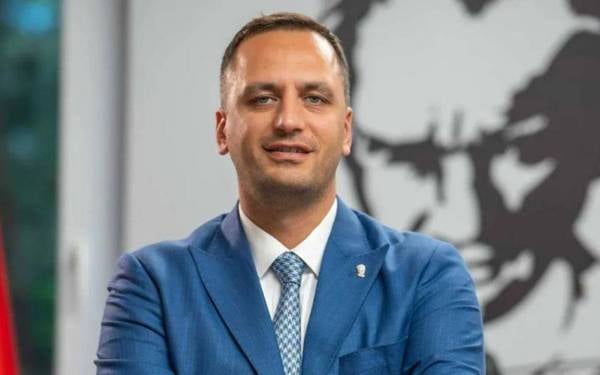
Turkish Opposition Figures Detained and Released in Escalating Political Clash A series of detentions and releases of opposition politicians in Turkey has intensified the country's political conflict, with leaders accusing the government of using the courts for political suppression. Mayor Ömer Eşki of Borna, a member of the main opposition Republican People's Party (CHP), was released from custody pending trial after being detained by national authorities [125477]. The charges against him have not been fully detailed publicly. His detention drew immediate public support from a fellow CHP mayor, İzmir Metropolitan Mayor Cemil Tugay, highlighting party solidarity against the legal action [125477]. The move is part of a broader pattern, according to opposition figures. CHP Member of Parliament Akın Gürlek condemned the recent detention of a former CHP mayor and other officials, calling it a "political operation" and declaring that Turkey is not a "state of law" [73277]. Echoing this sentiment, main opposition leader Özgür Özel warned of difficult days ahead, stating, "Tomorrow morning will be harder than this morning" [73277]. The political tensions extend to the constitutional level. Leader Özgür Özel has also accused the ruling party of avoiding a potential early election because it fears losing votes, claiming such a refusal would violate Turkey's constitution [124010]. The events have sparked a fierce debate about the relationship between national authorities and local opposition governments, with critics alleging an erosion of judicial independence for political gain [125477][73277]. Turkish Mayor Released After Detention, Sparking Political Debate Turkish Opposition MP: "This is a Political Operation, Not Rule of Law" Turkish Opposition Leader Accuses Government of Constitutional Violation
US Tech Giants and White House Team Up to Pressure Europe, Report Warns
US Tech Giants and White House Team Up to Pressure Europe, Report Warns A new report from a leading European think tank warns that the United States is conducting a coordinated campaign to reshape European policy, leveraging its military alliance and corporate power to force the bloc into compliance with American interests [44570]. The analysis describes a "pincer attack" where Silicon Valley giants work in tandem with the White House, using Europe's reliance on U.S. security guarantees as political leverage [44570]. This aggressive posture is part of a broader U.S. effort to replace a rules-based international order with one dictated by raw power, the report states [44570]. The strategy reportedly extends to cultivating support from far-right political factions within Europe itself to undermine regulatory efforts [44570]. The pressure is not limited to the digital sphere. A senior Belgian minister has publicly accused the U.S. of waging an "ideological attack" against Europe's social welfare model, which includes strong worker protections and public healthcare systems [78938]. Frank Vandenbroucke, Belgium's health minister, argued that the European Union acts as a "protective shield" against such bilateral intimidation [78938]. Europe's vulnerability is compounded by its deep technological dependence. Despite political threats from leaders like France's Emmanuel Macron to sanction major U.S. tech firms, the EU remains critically reliant on American companies for cloud computing, essential software, social media, and digital payment systems [58167]. This reliance makes any serious attempt at "digital sovereignty" difficult to enforce [58167]. Analysts argue this state of dependence is a result of deliberate policy choices, leaving the EU unprepared for a potential second Trump presidency and overly reliant on moral arguments instead of building its own economic and military power [69895]. The bloc's internal divisions, including the rise of populist right-wing politics, further weaken its ability to mount a unified response to U.S. pressure [43628]. In response, Europe is seeking to build alternative alliances to reduce its reliance on any single global power. The bloc is working to create a "hedging alliance" with Indo-Pacific nations, focusing on integrating defense industries and coordinating economic policy as a strategic counterbalance [123271]. Southeast Asian nations, in particular, are increasingly viewing the EU as a trusted partner for this role amid U.S.-China rivalry [124921]. The Centre for European Reform report concludes that Europe is not powerless but must act decisively to build its own alliances and resist external pressure [44570]. US Tech Giants and White House Ally to Pressure EU, Report Warns Belgian Minister: U.S. Waging "Ideological Attack" on Europe Europe's Digital Dilemma: Reliant on US Tech It Seeks to Curb **Trump Era Demands "Political Adults" in EU, Analysts Warn **US "Donroe Doctrine" Sparks Global Alarm: "Resources Belong to Us" EU Seeks New Allies to Counter U.S.-China Rivalry Southeast Asia Seeks EU as "Hedging" Power Against US-China Rivalry


AI's Military March: China and US Push "Digital Officers" into War Games
AI's Military March: China and US Push "Digital Officers" into War Games A new front is opening in the global arms race, not with traditional weapons, but with artificial intelligence designed to command troops and outthink human generals. Military powers, led by China and the United States, are rapidly integrating AI "staff officers" into simulated and real command structures, aiming to gain a decisive edge by shattering the "fog of war" [124817]. In a recent high-level simulation, a Chinese AI developed for battalion-level command was tested during a simulated amphibious assault. Operating from a command tent, the AI processed chaotic battlefield reports and radio traffic, providing rapid decision-making support that reportedly surpassed human planning speed in the high-pressure scenario [124817]. This development signals a move beyond experimental labs to the integration of AI into frontline tactical units. The push is not confined to China. The global competition to militarize AI is intensifying, with the core objective being to analyze data and propose strategies faster than any human can [124817]. Military analysts warn this technological shift could dramatically accelerate the pace of future conflicts, compressing decision-making cycles from hours to seconds. This strategic pivot is driving massive investment and strategic shifts within the broader AI industry. Chinese tech giant SenseTime, for example, is now betting its future on developing next-generation "embodied intelligence" for robots and autonomous agents—a field crucial for military and security applications [22794]. The company believes its expertise in visual AI, which allows machines to interpret the physical world, provides a key advantage for creating AI that can understand and interact with real environments [22794]. Simultaneously, the infrastructure underpinning advanced AI is becoming a critical geopolitical battleground. The world's reliance on Taiwan for the most advanced semiconductors creates a major strategic vulnerability, as any disruption to the island's chip supply could instantly stall AI development worldwide, including its military applications [125556]. This risk is prompting governments to spend billions to build chip factories elsewhere, though experts say it will take years to match Taiwan's current scale and technological lead [125556]. China's New AI "Officer" Outsmarts Humans in War Games SenseTime Bets on Robot AI to Regain Lead Taiwan's Chip Dominance Threatens Global AI Expansion


Turkey Assumes Command of Major NATO Naval Force, Leads Major Drills with Homegrown Tech
Turkey Assumes Command of Major NATO Naval Force, Leads Major Drills with Homegrown Tech Turkey has taken command of a key NATO naval strike group and is actively leading and participating in the alliance's largest military exercises, showcasing its growing role and domestic defense technology. The Turkish Naval Forces formally assumed leadership of the NATO Amphibious Task Force and its Landing Force Command on July 1 [54453]. This command, which will last for one year, places Turkey in charge of planning and leading NATO exercises and potential missions involving coordinated sea-to-land assaults in the region [54453]. Concurrently, Turkish forces are deeply involved in major NATO war games. The first Turkish military aircraft have landed in Germany for the Steadfast Defender 24 exercise, NATO's largest drill this year, which will see approximately 2,000 Turkish troops participate [70222]. In a separate, future-focused exercise, Turkish naval and army units are conducting joint amphibious operations in Germany as part of the Steadfast Dart 2026 drills [80228]. A prominent feature of Turkey's participation is the deployment of its domestically produced defense platforms. The exercises serve as a live showcase for these national technologies, underlining Turkey's push for greater self-reliance and export potential in the defense sector [80228]. These military developments coincide with an ambitious new economic target for Turkey's defense industry. The nation's Defense Industries Presidency has announced a goal for its companies to achieve an average export turnover of $300,000 per employee, a benchmark set by the world's top defense firms, by 2026 [63530]. The command role and high-profile exercise participation are routine rotations of duty within the NATO alliance [54453]. However, they collectively highlight Turkey's active and technically advanced contributions to the bloc's collective security and readiness posture. Turkey Assumes Command of Key NATO Naval Strike Force NATO's Biggest 2024 Drill Begins with Turkish Troops Landing in Germany Turkish Forces Deploy Homegrown Tech in Major NATO Drill Turkey Aims for Elite Status, Sets $300,000-Per-Employee Export Goal


Ukraine Intensifies Energy Strikes, Proposes Truce as War Grinds Into Fifth Year
Ukraine Intensifies Energy Strikes, Proposes Truce as War Grinds Into Fifth Year Ukraine is escalating a campaign of long-range drone strikes against Russian oil infrastructure while simultaneously proposing a temporary truce on energy targets, as the war enters its fifth year with no diplomatic breakthrough in sight. President Volodymyr Zelenskyy has framed the strikes as a necessary response to Russia's ongoing bombardment of Ukraine's power grid. "If we don't hit them in the face, they will hit us and won’t feel what war is," Zelenskyy stated, vowing to continue the attacks until Moscow stops its own assaults [125247]. The strategy has targeted critical Russian energy assets. In a recent strike, Ukrainian forces hit the "Krymskaya" oil-pumping station in southern Russia, triggering a major fire. The station is a key node sending crude oil to Novorossiysk, Russia's largest Black Sea oil export terminal [125245]. Ukrainian officials claim their strikes have already disabled over 40% of Russia's seaborne oil export capacity [122398]. Concurrently, Ukraine has proposed a mutual halt to attacks on energy infrastructure. Zelenskyy confirmed an offer was sent to Russia through United States mediators, stating, "If Russia is ready to stop striking our energy sector, we will be ready to respond in kind" [122336]. This "energy ceasefire" proposal comes as millions of Ukrainians, including 340,000 recently in the Chernihiv region alone, suffer from blackouts caused by Russian missile and drone attacks [122336]. As the fighting continues, Ukraine is preparing for another difficult winter by aiming to stockpile a record 14.6 billion cubic meters of natural gas, a buffer deemed essential to withstand further Russian strikes on heating infrastructure [125096]. International support is evolving to sustain Ukraine's defense. Denmark announced a €33 million aid package focused not on new weapons, but on training Ukrainian soldiers in battlefield survival skills like medical care and mine clearance [85441]. Meanwhile, Russia protested a Japanese company's planned investment in a Ukrainian drone manufacturer, a move analysts see as a sign of Moscow's fear that Japan may be moving toward directly arming Ukraine [125426]. The war's grim human cost was marked as Ukraine held ceremonies commemorating four years since Russia's full-scale invasion [85314]. On the ground, civilians face persistent dangers from weapons like the small, plastic PFM-1 "petal" mines, which are scattered widely and are difficult to detect and defuse [84962]. Zelenskyy: Ukraine Will "Make Russia Feel the War" With Energy Strikes Ukrainian Strike Hits Key Russian Oil Route, Triggers Major Fire Ukraine Proposes "Energy Ceasefire" After Hitting Russian Oil Ukraine Proposes "Energy Truce" to Russia, Zelensky Says Ukraine Aims to Stockpile Record Gas to Survive Winter Under Fire Denmark's New Ukraine Aid: Buying Survival, Not Just Weapons Japan's Drone Deal with Ukraine Draws Russian Fury Ukraine Marks Invasion Anniversary Amid Ongoing War 'Petal' Mines: Ukraine's Invisible, Toy-Like Killers

Latest Articles

Sara Duterte Leads 2028 Polls Despite Political Storms
Philippine Vice-President Sara Duterte-Carpio is the clear early favorite for the 2028 presidential election. This is despite a series of major polit...