AI's Military March: China and US Push "Digital Officers" into War Games
AI's Military March: China and US Push "Digital Officers" into War Games A new front is opening in the global arms race, not with traditional weapons, but with artificial intelligence designed to command troops and outthink human generals. Military powers, led by China and the United States, are rapidly integrating AI "staff officers" into simulated and real command structures, aiming to gain a decisive edge by shattering the "fog of war" [124817]. In a recent high-level simulation, a Chinese AI developed for battalion-level command was tested during a simulated amphibious assault. Operating from a command tent, the AI processed chaotic battlefield reports and radio traffic, providing rapid decision-making support that reportedly surpassed human planning speed in the high-pressure scenario [124817]. This development signals a move beyond experimental labs to the integration of AI into frontline tactical units. The push is not confined to China. The global competition to militarize AI is intensifying, with the core objective being to analyze data and propose strategies faster than any human can [124817]. Military analysts warn this technological shift could dramatically accelerate the pace of future conflicts, compressing decision-making cycles from hours to seconds. This strategic pivot is driving massive investment and strategic shifts within the broader AI industry. Chinese tech giant SenseTime, for example, is now betting its future on developing next-generation "embodied intelligence" for robots and autonomous agents—a field crucial for military and security applications [22794]. The company believes its expertise in visual AI, which allows machines to interpret the physical world, provides a key advantage for creating AI that can understand and interact with real environments [22794]. Simultaneously, the infrastructure underpinning advanced AI is becoming a critical geopolitical battleground. The world's reliance on Taiwan for the most advanced semiconductors creates a major strategic vulnerability, as any disruption to the island's chip supply could instantly stall AI development worldwide, including its military applications [125556]. This risk is prompting governments to spend billions to build chip factories elsewhere, though experts say it will take years to match Taiwan's current scale and technological lead [125556]. China's New AI "Officer" Outsmarts Humans in War Games SenseTime Bets on Robot AI to Regain Lead Taiwan's Chip Dominance Threatens Global AI Expansion
Articles in this Cluster

Taiwan's Chip Dominance Threatens Global AI Expansion
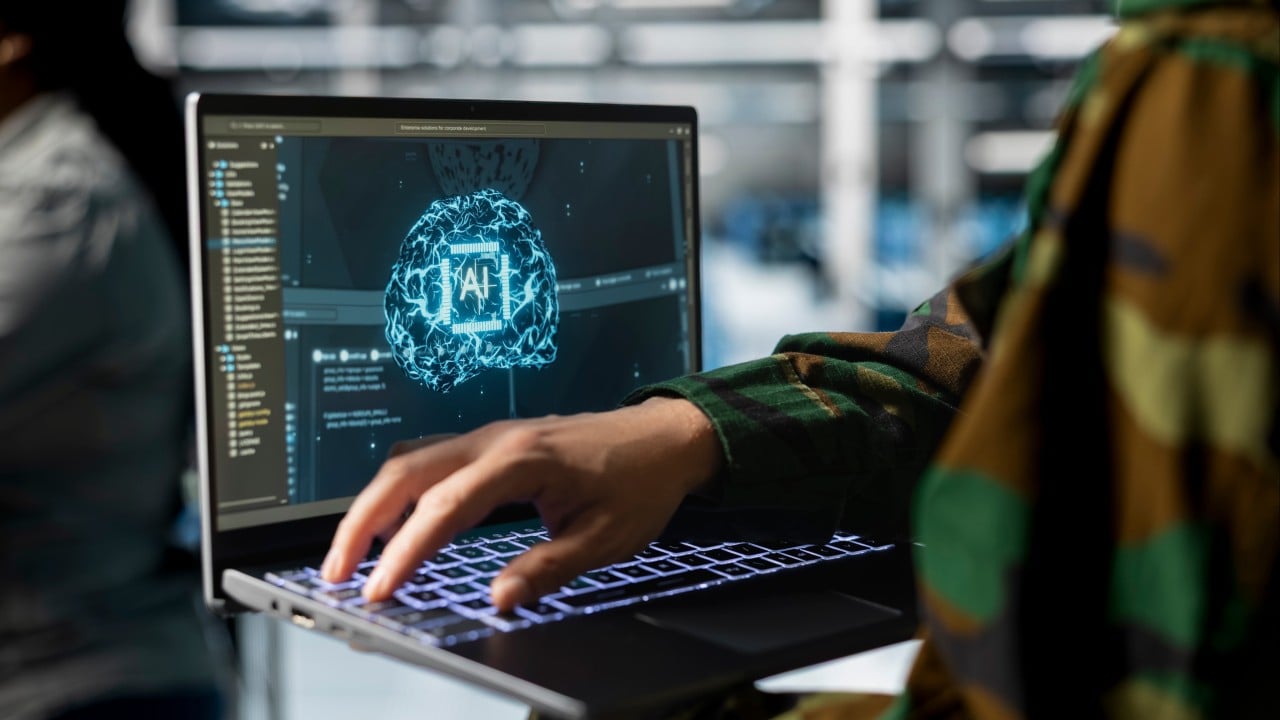
China's New AI "Officer" Outsmarts Humans in War Games

Ch
Life in 2035: A Glimpse into the AI-Dominated Era

SenseTime Bets on Robot AI to Regain Lead
AI Unlocks a New Era of Communication with Whales

A Day in 2026: AI Imagines Our World

AI "World Models" Could Upend the $190 Billion Gaming Industry

AI to Call the Shots? Alibaba Brings LLM to 2026 Winter Olympics

French AI Startup Aims for Animal-Like Intelligence with $1 Billion Boost

India Proposes New Rules to Combat Deepfake Threat

India's 3-Hour AI Takedown Rule Begins
