China’s Quiet Campaign to Reshape the United Nations
The United Nations was built around American power and money. Now, as Washington retreats, Beijing is moving in.
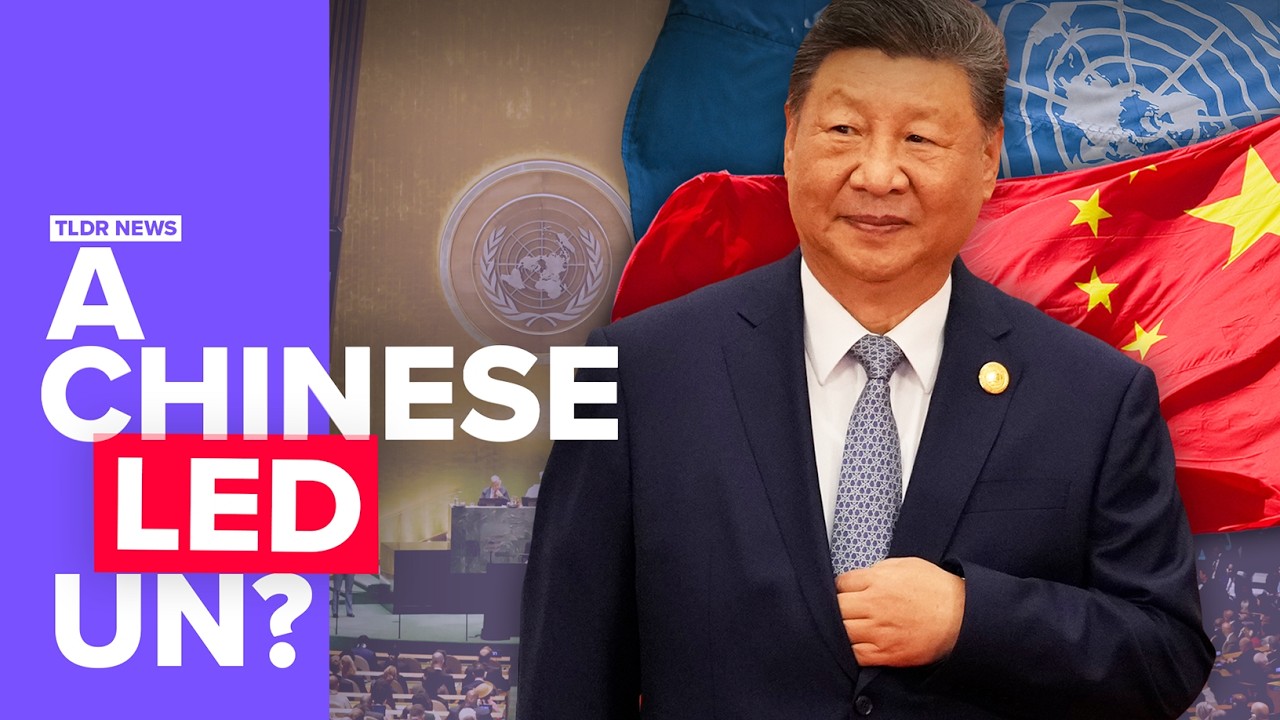
The United Nations was built around American power and money. Now, as Washington retreats, Beijing is moving in. According to multiple Western diplomats cited by the Financial Times, China is working to expand its influence across the UN, filling a vacuum left by an increasingly skeptical United States. Over the past year, Beijing has also promoted its Global Governance Initiative, a plan to cast itself as the new leader of the international community and the defender of free trade and multilateralism. Can China truly take over the UN, or are structural limits built into the institution itself?
The UN’s American-led design
In 1945, after the Second World War, the United States helped establish a set of international institutions to maintain global peace and stability. Among them was the United Nations, an intergovernmental forum created to prevent future wars, protect human rights, and address global challenges. The US, UK, France, the Soviet Union, and China became the five permanent members of the UN Security Council, and the US became the UN’s largest financial contributor. Today, the US accounts for 22 percent of the UN’s regular budget, 25 percent of its peacekeeping budget, and more than 40 percent of its humanitarian budget.
Over the UN’s 81-year history, American commitment has fluctuated, but President Donald Trump is arguably the most UN-skeptical president yet. He has twice withdrawn the US from major UN initiatives, including the 2015 Paris Climate Agreement and the UN Human Rights Council, while cutting funding to agencies such as UNRWA and the World Health Organization.
The UN faces other crises as well. Since at least 2019, it has experienced budget shortfalls, including a liquidity crisis, caused by delayed or unpaid US contributions. Several member states, including Security Council members Russia against Ukraine and the US against Venezuela and Iran, have brazenly violated the UN Charter. These violations have created deadlock in the Security Council and reduced international trust in the UN. In March 2025, the UN launched a reform program called the UN 80 initiative, a three-part plan to reduce bureaucracy, eliminate duplication, and explore structural changes and realignment. Reading between the lines, UN 80 looks like a response to the US’s shifting position and its non-payment of contributions. Different powers, however, want different things from it. The US sees an opportunity to cut bureaucracy, projects, and staff. The EU sees a way to preserve the integrity and balance of the UN’s three pillars. China apparently sees an opportunity to increase its influence over global diplomacy and international development.
How China expands its footprint
With the UN facing obstacles and Trump showing open disdain for global institutions, China has spotted an opportunity to position itself as the next leader of the international community. According to the Financial Times, China is expanding its presence in global institutions and using that influence to gradually turn them toward its own worldview. China is not trying to take over the UN literally; it is trying to reshape global systems and institutions in its own interests.
The first method is a strategic expansion of its footprint inside the UN. China is the second-largest contributor to the UN budget after the US, contributing around 20 percent compared with America’s 22 percent, yet it is massively underrepresented among UN staff. Despite its population of 1.4 billion, China ranks 20th in UN representation, supplying just 1.4 percent of UN staff, compared with 4.2 percent from the US, the most represented nation. Because UN bureaucrats ultimately decide what gets discussed, China has also been deepening ties with developing countries. A 2024 study on China’s influence at the UN found that countries voting in line with China secure more UN leadership positions, and that more China-friendly UN agencies are more likely to adopt discourse aligned with Chinese interests. By expanding internship programs for Chinese diplomats, emphasizing global governance programs at Chinese universities, supporting more Chinese candidates for UN positions, and cultivating ties with China-friendly countries in the Global South, Beijing is slowly trying to shift the global conversation in a more pro-China direction.
The Global Governance Initiative
The second method is the Global Governance Initiative, or GGI. In September 2025, Chinese President Xi Jinping announced the GGI as an effort to counter what he called a Cold War mentality, hegemonism, and protectionism. The initiative seeks to establish China as the leading defender of multilateralism, free trade, and the international rule of law as the US turns away from these principles. In a June 2026 white paper, China said the GGI is designed to offer a Chinese solution to two pressing questions: what kind of global governance system should be established, and how can global governance be reformed and improved. The paper explicitly reaffirms the importance of the UN, stating that resolutely upholding the UN’s authority and status is fundamental to the initiative’s implementation, and that all countries should uphold the international system with the UN at its core rather than reinventing the wheel. So far, more than 160 countries have welcomed or supported the GGI, and over 60 have joined a multilateral platform called the Group of Friends of Global Governance in New York, Vienna, and Geneva, a kind of mini UN for the Global South. China’s efforts will likely produce a more pro-China bloc at the UN with stronger backing for Chinese interests.
The limits of influence
Realistically, even as China expands its influence, recent history suggests there is a limit to how much any country can exert through the UN. The institution’s structure is biased toward inertia. In the Security Council, every permanent member holds a veto, which is why it rarely signs off on anything. The same applies to the UN Charter: any amendment requires a two-thirds vote in the General Assembly and the approval of all five permanent members. This is a feature, not a bug. The UN was deliberately designed this way to avoid great power conflict, but it means there has always been a limit to what any country can achieve through UN structures. This is perhaps the fundamental reason American politicians have so frequently circumvented the institution. For its part, China has not yet shown the same willingness as the US historically has to take on the broad, costly responsibilities of global leadership.
The takeaway
China is not seizing the UN by force; it is filling a vacuum, one staff position, one agency, and one diplomatic partnership at a time. Whether that campaign succeeds depends less on Beijing’s ambition than on the institution’s design, which was built to resist exactly this kind of takeover.
Related Coverage
China’s Kimi K3 Just Dropped – And Silicon Valley Is Sweating
China’s AI industry is maturing fast, with the launch of Moonshot AI’s Kimi K3 model reigniting debate over whether Beijing can match US performance despite limited access to advanced chips. The new model follows DeepSeek’s surprise breakthrough last year and suggests Chinese developers are closing the gap through architectural innovation, not just hardware [201611]. Trillions of dollars in global investment hang on the answer, as some analysts argue that if China can boost AI performance without top-tier chips, America’s export controls lose much of their power [201611].
Chinese Tech Now Runs Taliban’s Info War, Japan’s EV Push, and the Global AI Power Grab
Chinese technology is reshaping global industries from Afghanistan to Japan, with new developments showing Beijing’s growing grip on everything from digital censorship to electric vehicle supply chains and cloud computing dominance.
China Builds Sanctions Shield as 100+ Nations Plug Into Its Dollar-Free Payment System
China is quietly constructing a financial backup system designed to survive U.S. sanctions, with its Cross-Border Interbank Payment System (CIPS) now operating in over 100 countries as Beijing seeks to reduce reliance on the dollar [227337].
China’s Green Tech Is Quietly Reshaping Global Energy Survival
China is using cheap, advanced green technology to turn climate resilience into an economic growth strategy as war and blocked oil routes force governments to rethink energy security.
Singapore Weighs China-Led AI Bloc as US Watches Closely
Singapore is considering an invitation to join a China-led artificial intelligence organization, a move that could reshape how smaller nations navigate the growing tech rivalry between Washington and Beijing.
China’s Green Boom Is a Lifeline for Global Firms as Middle East Chaos Accelerates Shift
China’s massive push into renewable energy, electric vehicles, and low-carbon tech is creating fresh opportunities for multinational companies, while the escalating conflict in the Middle East is speeding up the world’s move away from fossil fuels—and China is the main beneficiary.
Related Editorials
The End of Contentment: Why Global Stability Is Fracturing
For decades, a fragile global equilibrium held: cheap energy from Russia, ultra-efficient manufacturing from China, and a security umbrella provided by the United States. This arrangement delivered unprecedented prosperity to the developed world.
The Quiet Collapse of American Influence: Why the World No Longer Listens
For decades, the United States wielded a unique form of power. It was not the power of bombs or banks, but the power of attraction.
Is Washington Turning Its Back on the Indo-Pacific?
For decades, the United States has positioned itself as the indispensable power in the Asia-Pacific region, anchoring security alliances and driving economic integration. Yet, under the current administration, a growing chorus of diplomats and strategists is asking a provocative question: has Washi
Australia’s Quiet Rise as the Pacific’s New Power Broker
For decades, the Pacific Islands were viewed by much of the world as a postcard backdrop—remote, idyllic, and strategically peripheral. That perception has shifted dramatically.
# The Corporate Sovereignty Threat: When Boardrooms Rival Capitals
A quiet power shift is underway. As multinational corporations accumulate wealth, data, and influence that dwarf many nations, the traditional boundaries between commerce and statecraft are dissolving—raising urgent questions about who truly governs our world.
The Gathering Storm: How a Continental Shift Is Threatening South Africa’s Regional Dominance
A quiet but seismic shift is underway in African geopolitics. For decades, South Africa has operated as the continent’s economic and diplomatic anchor, wielding influence from Cape Town to Cairo.