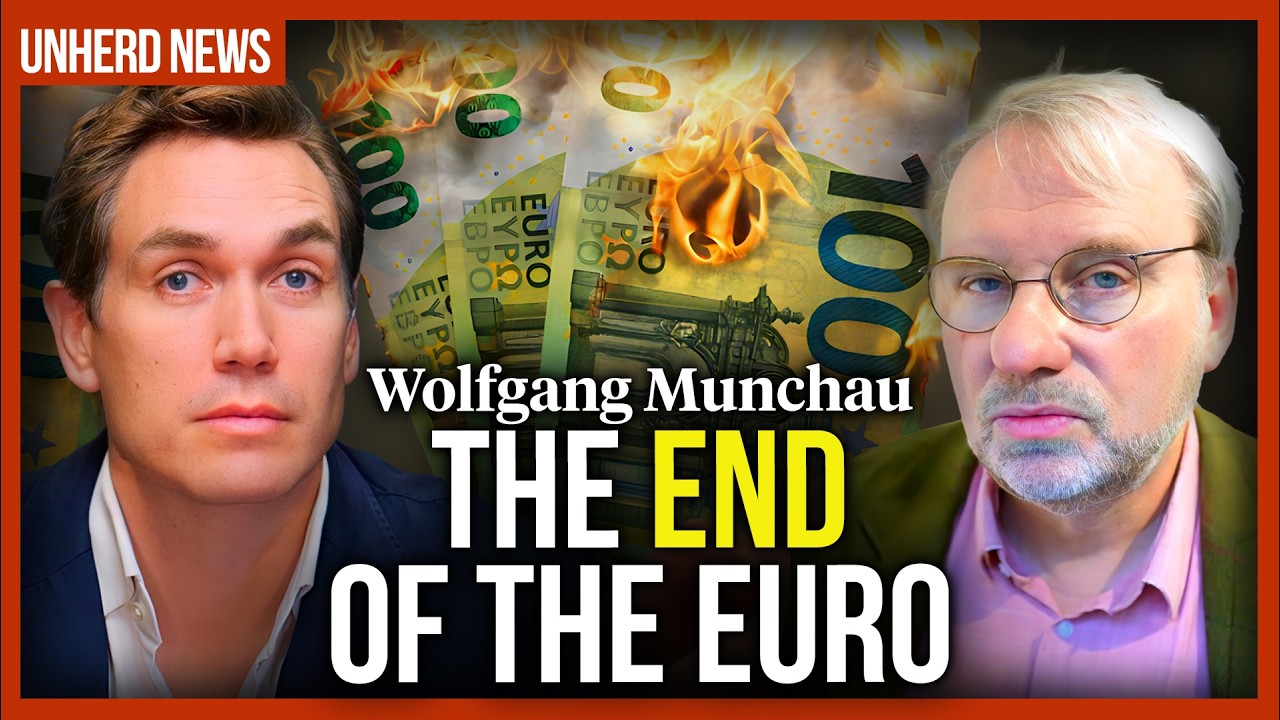
# The End of the Euro: How a Currency Union Built on Flawed Foundations Is Cracking
The euro was meant to bind Europe together. Instead, it may be tearing it apart.
The euro was meant to bind Europe together. Instead, it may be tearing it apart. For decades, economists have warned that the eurozone rests on a fundamental contradiction: a single monetary policy shared by nineteen economies with wildly different fiscal realities, labor markets, and political priorities. Those warnings are no longer theoretical. From the sovereign debt crisis in Greece to the rise of anti-euro parties in Italy and France, the currency union is under strain—and the forces pulling it apart may be stronger than those holding it together.
A Currency Without a Country
The euro's core problem is structural. A monetary union requires member states to surrender control of interest rates and exchange rates—the two primary tools nations use to absorb economic shocks. The United States manages this through federal fiscal transfers and a shared banking union. The eurozone has neither in sufficient measure.
When a recession hits one member state harder than others, that state cannot devalue its currency to boost exports. It cannot lower interest rates to stimulate borrowing. It must instead rely on internal devaluation—cutting wages, reducing public spending, and accepting prolonged unemployment. This is a recipe for social unrest and political backlash.
The North-South Divide
The eurozone has effectively split into two blocs. Northern states like Germany and the Netherlands run persistent trade surpluses, accumulate savings, and maintain low unemployment. Southern states like Greece, Spain, and Italy struggle with trade deficits, high debt, and structural unemployment.
Under a shared currency, these imbalances cannot correct through exchange rates. Surplus countries accumulate claims against deficit countries, and deficit countries accumulate debt. When lenders lose confidence, as they did during the 2010–2012 sovereign debt crisis, the entire system seizes.
The ECB's Impossible Mandate
The European Central Bank was designed to prioritize price stability above all else. Unlike the Federal Reserve, it has no mandate to maximize employment. This constraint becomes untenable during downturns.
The ECB has repeatedly stretched its mandate—through quantitative easing, negative interest rates, and the outright purchase of government bonds—to prevent the euro from collapsing. Each intervention has been politically contested, particularly in Germany, where fears of inflation and moral hazard run deep. The bank's credibility now rests on the assumption that it will do "whatever it takes"—a promise that cannot be kept indefinitely without political support.
Democratic Deficit and Rising Populism
Monetary policy is technocratic by design. Elected governments have ceded control to appointed central bankers who answer to no electorate. When citizens face austerity, wage cuts, and unemployment imposed by external creditors, they lose faith in democratic institutions.
This dynamic has fueled populist movements across the continent. Italy's Five Star Movement and Lega, France's National Rally, and Greece's Syriza all gained prominence by opposing eurozone-imposed austerity. The euro has become a symbol of distant, unaccountable power—a target for those who feel left behind by globalization.
The Path Forward
The euro can survive, but only if its architecture changes. Several reforms are essential:
Fiscal integration. A common budget, eurobonds, and automatic stabilizers would allow transfers from thriving regions to struggling ones. This requires political union—a step citizens have repeatedly rejected.
Banking union. A fully integrated banking system with a common deposit insurance scheme would break the link between sovereign debt and bank solvency that nearly destroyed the eurozone in 2012.
Democratic accountability. The ECB must be brought under greater political oversight, or voters will continue to reject the system altogether.
None of these reforms are easy. Each requires national governments to surrender sovereignty—precisely what euroskeptic parties oppose.
A Fragile Equilibrium
The euro is not doomed. It has survived crises that many predicted would destroy it. But survival is not the same as stability. The currency union remains a fragile equilibrium, held together by political will and central bank intervention rather than sound economic design.
Without fundamental reform, the next crisis—whether triggered by recession, political upheaval, or a sovereign default—could prove fatal. The question is not whether the euro can survive another shock, but whether Europe's leaders have the courage to fix what they built before the next one arrives.
Related Coverage
Oil, War, and a World on Edge: A Fragile Peace Holds the Global Economy Hostage
The global economy is caught in a brutal contradiction: a historic diplomatic breakthrough that could unlock the world’s most vital oil route is being torn apart by the very conflicts it was meant to end, leaving markets, consumers, and the world’s most vulnerable populations trapped between the hope of relief and the reality of relentless war and a worsening climate crisis.
War, Profit, and a Broken System: How Endless Conflict and a Super El Niño Are Crushing Global Stability
A fragile peace deal between the United States and Iran that could unlock the world’s most vital oil route is collapsing under the weight of the very conflicts it was meant to end, while a record-breaking climate disaster threatens global food supplies and a system that prioritizes profit over people leaves ordinary citizens bearing the costs.
Strait of Hormuz, Drought, and Debt: The Global Economy Strains Under War and Climate Chaos
A global economy built on the promise of open trade and cheap energy is buckling under the weight of geopolitical conflict, strategic blockades, and a technological gold rush that is straining the very limits of infrastructure, leaving ordinary citizens to bear the brunt of inflation, fuel shortages, and a widening gap between the wealthy and the rest [15239].
Oil, War, and a Super El Niño: A World Held Hostage by a System Built for Profit
A fragile peace deal that could unlock the world’s most vital oil route is collapsing under the weight of the very conflicts it was meant to end, while a record-breaking climate disaster threatens global food supplies and a system that prioritizes profit over people leaves ordinary citizens bearing the costs.
A Fragile Peace Shatters: How a Global System Built for Profit Fuels Endless War, Climate Chaos, and a Crushing Debt Crisis
A brief moment of hope for global stability, sparked by a tentative peace deal between the United States and Iran that promised to unlock vital oil routes, has collapsed under renewed violence, a record-breaking climate disaster, and a political upheaval that is shifting nations to the far right. At the core of this interconnected crisis lies a global economic order that prioritizes military spending and corporate profit over human welfare, funneling public resources into endless conflict while ordinary citizens bear the costs in hunger, displacement, and deepening inequality.
EU Unity Cracks as Israel Feud Splits Brussels, NATO Summit Looms
A power struggle inside the European Union over Israel policy has erupted into open conflict, just weeks before a critical NATO summit in Ankara that will test the alliance's cohesion amid US threats to pull back from Europe.
Related Editorials
Iceland’s Quiet Revolt: The End of Europe’s Political Illusion?
For decades, the European Union has sold itself as a project of perpetual integration—a political and economic engine designed to smooth over national differences and deliver shared prosperity. Yet, according to two of Europe’s most prominent economic thinkers, the recent actions of a small Nordic
Germany’s Political Upheaval Will Reshape Europe
Germany, long viewed as Europe’s anchor of stability, is entering a period of profound political change. The shifts underway in Berlin will not remain contained within Germany’s borders; they will reshape the European Union itself.
Germany Just Broke the EU’s Firewall
A conversation between Yanis Varoufakis and Wolfgang Münchau reveals how Berlin’s fiscal about-face is rewriting the rules of Europe—and why the bond markets may be the only referee left. For years, the European Union’s fiscal architecture rested on a simple promise: no member state would be allowe
Germany’s Economic Model Is Broken—and There’s No Going Back
Germany, long celebrated as Europe’s economic engine, is now facing a crisis that its political and financial leaders appear unwilling—or unable—to confront. In a candid discussion, economists Yanis Varoufakis and Wolfgang Münchau dissect the structural failures behind Germany’s stagnation, the Eur
The Unraveling Alliance: Why a US-Israel Divorce Looks Increasingly Inevitable
For decades, the bond between the United States and Israel was considered unbreakable—a cornerstone of Middle Eastern geopolitics. Yet, beneath the surface of official statements and military aid packages, tectonic plates are shifting.
Europe’s Decline is Now Official: The Continent Has Lost Its Economic Soul
In a rare moment of bipartisan agreement, two of Europe’s most astute economic minds—Yanis Varoufakis, the former Greek Finance Minister, and Wolfgang Münchau, a veteran financial journalist and co-founder of *The Econoclasts*—have declared the end of an era. The evidence, they argue, is no longer