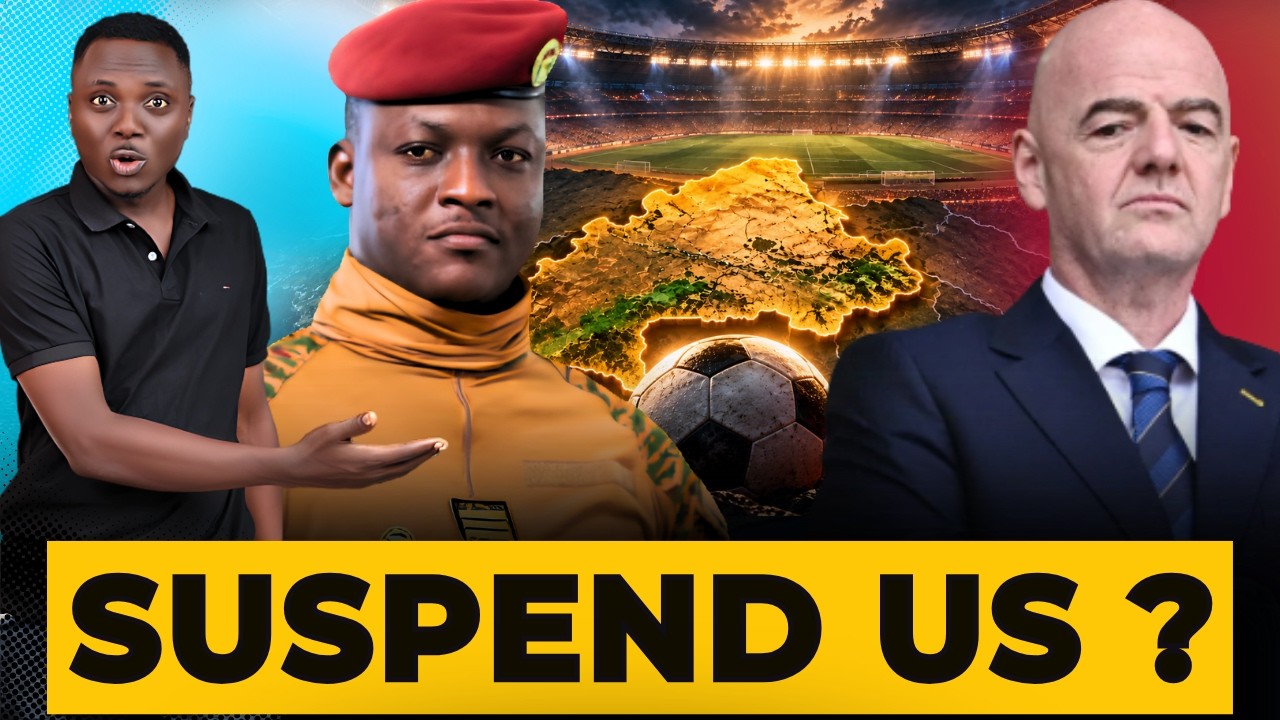
Burkina Faso’s Football Revolution: Traore Defies FIFA with a Threat to Dissolve the Federation
In a dramatic escalation of the ongoing power struggle between African football governance and its European headquarters, Burkina Faso’s military leader, Captain Ibrahim Traore, has issued a defiant ultimatum to FIFA. The Burkinabe government has threatened to dissolve the national football federat
In a dramatic escalation of the ongoing power struggle between African football governance and its European headquarters, Burkina Faso’s military leader, Captain Ibrahim Traore, has issued a defiant ultimatum to FIFA. The Burkinabe government has threatened to dissolve the national football federation entirely if the global governing body attempts to sanction the country for political interference.
The conflict highlights the deepening friction between FIFA’s strict regulations on government involvement in sports and the nationalist, sovereignty-focused agendas of West African military juntas.
The Ultimatum
The crisis centers on the Burkinabe Football Federation (FBF). Following the military junta’s decision to dissolve the FBF and replace it with a transitional committee, FIFA issued a warning, citing its statutes against third-party interference. FIFA regulations strictly prohibit governments from directly managing or interfering in the affairs of national football associations, with the standard penalty being suspension from international competitions.
Captain Traore’s response was unequivocal. In a public address, he stated that Burkina Faso is prepared to accept suspension rather than bow to external pressure. He framed the potential ban not as a punishment, but as an act of resistance against neo-colonial influence.
“If FIFA wants to suspend us, let them suspend us,” Traore said. “We are not afraid of suspension. We are fighting for the sovereignty of our nation and the reform of our football.”
Context of the Conflict
The dispute is the latest in a series of clashes between FIFA and West African nations currently led by military governments, including Mali, Guinea, and Niger. These juntas have increasingly sought to assert control over national sports bodies, arguing that existing leadership is corrupt and inefficient.
FIFA argues that political interference destroys the autonomy of the sport and often leads to governance chaos. However, the junta in Ouagadougou views the FBF’s previous leadership as a vestige of a system that failed the youth of the country.
By threatening to dissolve the federation and accept a ban, Traore is effectively calling FIFA’s bluff. A suspension would mean Burkina Faso’s exclusion from the upcoming Africa Cup of Nations (AFCON) qualifiers and other international tournaments, a move that would devastate the careers of Burkinabe players who play professionally abroad.
The Broader Implications
The standoff raises critical questions about the future of football governance in Africa. If Burkina Faso follows through on its threat, it could set a precedent for other nations under military rule to prioritize political control over international participation.
For FIFA, the challenge is maintaining the integrity of its statutes. If the organization allows Burkina Faso to operate with a government-appointed committee without penalty, it risks legitimizing political interference globally. If it suspends the country, it risks alienating a nation and punishing players who have no role in the political dispute.
As the deadline for FIFA’s decision approaches, the world watches to see whether the beautiful game can survive the collision between global regulation and national revolution.
Related Coverage
Related Editorials
Burkina Faso’s Revolt Against France Triggers an Irreversible Domino Effect in the Sahel
In a move that has reshaped the geopolitical landscape of West Africa, Burkina Faso’s decision to sever ties with its former colonial power has ignited a chain reaction that analysts now describe as irreversible. The country’s military junta, which seized power in a 2022 coup, has not only expelled
Burkina Faso’s Arms Industry Ambition: A Turning Point for West African Sovereignty?
In a significant shift for West African geopolitics, Burkina Faso has announced the establishment of a military manufacturing complex. This move signals a bold stride toward defense autonomy for the junta-led nation, potentially altering the regional balance of power.
The Coup That Exposed the West's Hidden Hand in Africa's Resource Wars
Burkina Faso's young leader Ibrahim Traoré has done what few African presidents dare: he named the foreign powers quietly profiting from the continent's instability. His evidence is forcing a global reckoning.
Why Burkina Faso Severed Ties with Its Former Colonial Master
In a dramatic shift that has reshaped West African geopolitics, Burkina Faso has turned its back on France, its former colonial ruler. The move, driven by a wave of anti-French sentiment and a desire for national sovereignty, marks a decisive break from decades of political and military dependency.
Mali’s Military Mutiny Sends a Warning to Nigeria’s President Tinubu
In the volatile landscape of West African politics, the chain of command is often the last line of defense against chaos. Yet, a recent upheaval in Mali has exposed a vulnerability that military leaders across the region fear most: the enemy within.
Algeria’s Silent War: How Fighter Jets Answered the AES’s Declaration of Hostility
In the shifting sands of the Sahel, diplomatic rhetoric has given way to the roar of jet engines. After the Alliance of Sahel States (AES)—a military junta-led bloc comprising Mali, Burkina Faso, and Niger—formally labeled Algeria an "enemy," the North African powerhouse responded not with a press