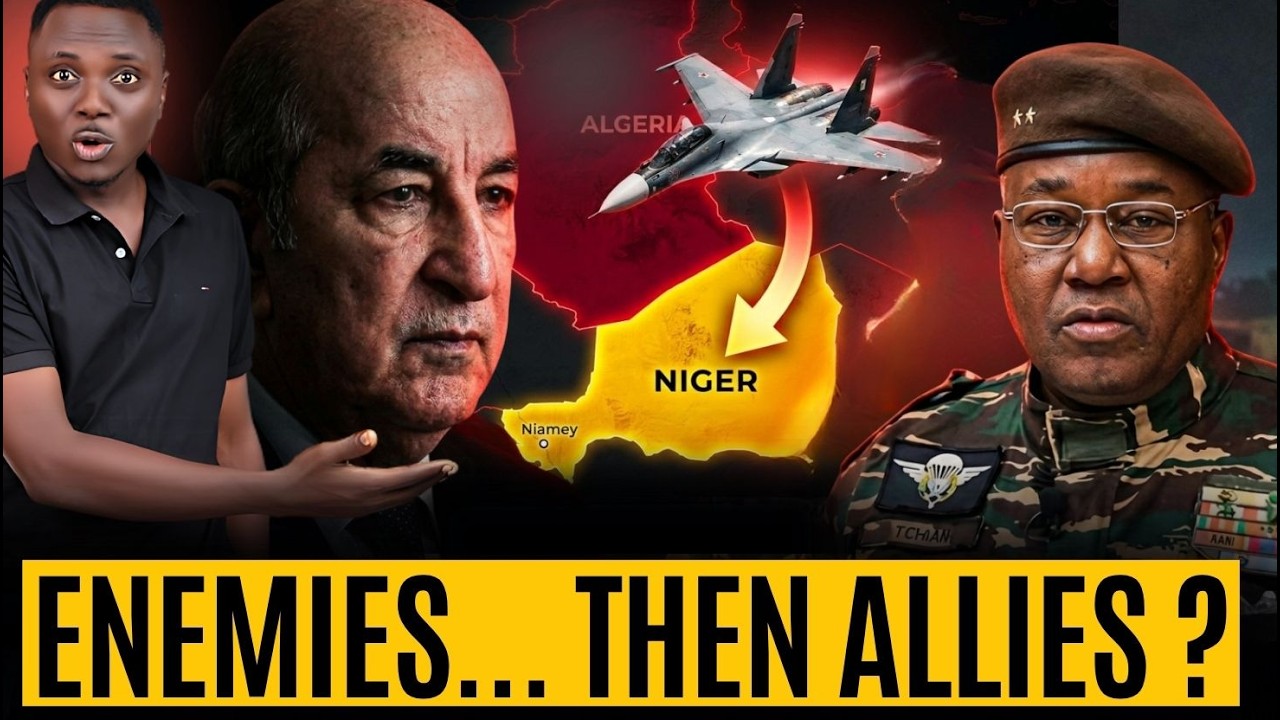
Algeria’s Silent War: How Fighter Jets Answered the AES’s Declaration of Hostility
In the shifting sands of the Sahel, diplomatic rhetoric has given way to the roar of jet engines. After the Alliance of Sahel States (AES)—a military junta-led bloc comprising Mali, Burkina Faso, and Niger—formally labeled Algeria an "enemy," the North African powerhouse responded not with a press
In the shifting sands of the Sahel, diplomatic rhetoric has given way to the roar of jet engines. After the Alliance of Sahel States (AES)—a military junta-led bloc comprising Mali, Burkina Faso, and Niger—formally labeled Algeria an "enemy," the North African powerhouse responded not with a press release, but with a demonstration of aerial force along its southern border.
The escalation marks a significant rupture in regional relations, moving a simmering dispute over security and sovereignty into a visible military posture.
The Context of the Conflict
The roots of the tension lie in the collapse of French-backed security frameworks and the subsequent rise of military governments in the Sahel. Following a series of coups, the ruling juntas expelled French forces and pivoted toward new security partnerships, consolidating their power under the AES banner.
Algeria, which shares a lengthy and porous border with Mali, Niger, and Libya, has historically positioned itself as a stabilizing mediator. However, its refusal to recognize the legitimacy of the AES governments, coupled with its insistence on diplomatic solutions over kinetic military action, has created friction. Algiers has also served as a refuge for political figures from the Sahel, further straining ties with the juntas who view such actions as direct interference in their internal affairs.
The Declaration and the Response
The AES’s characterization of Algeria as an "enemy" was a stark departure from standard diplomatic language. For Algiers, the label was not merely symbolic; it threatened to legitimize cross-border operations by AES forces and their allies against Algerian territory.
In a calculated move designed to underscore its red lines, Algeria dispatched fighter jets to patrol its southern frontiers. The sorties serve a dual purpose: a defensive measure to monitor airspace integrity and a clear signal to the AES that any aggressive posturing will be met with a credible military deterrent.
The flight paths were concentrated near areas where AES-aligned forces have been active, sending a direct message that Algeria possesses both the capability and the will to protect its sovereignty.
A Region on the Brink
This standoff occurs against a backdrop of intense instability. The withdrawal of Western forces has created a vacuum, filled by a complex web of state and non-state actors. While the AES juntas have consolidated power internally, they face persistent insurgencies and economic hardship.
Algeria’s strategic depth and its role as an energy supplier to Europe give it significant leverage. Yet, its military response indicates a shift away from its traditional role as a neutral arbiter. By mobilizing air power, Algiers is drawing a hard line, indicating that it views the AES’s rhetoric as an existential threat rather than a diplomatic nuisance.
Analysis: A Calculated Escalation
The deployment of fighter jets is a high-stakes game of deterrence. It stops short of an act of war but raises the cost of any miscalculation. For the AES, the sight of Algerian jets patrolling the border may serve as a unifying rallying point against a perceived external threat, potentially distracting from domestic governance failures.
For Algeria, the action signals that patience has limits. The country has long warned that the chaos in the Sahel could spill over its borders. By demonstrating its readiness to defend its airspace, Algiers is attempting to contain the conflict before it becomes a direct military confrontation.
The situation remains fluid. While a full-scale war between Algeria and the AES appears unlikely—given the logistical challenges and the risk of regional conflagration—the "enemy" designation has lowered the threshold for future incidents. The Sahel, already a theater of complex conflicts, now has a new, dangerous fault line.
Related Coverage
NATO’s Baltic Flank on Edge as Russia’s War Games and Bomber Flights Rattle Sweden, Latvia, and Lithuania
Sweden scrambled fighter jets to intercept a Russian bomber over the Baltic Sea, while Latvia and Lithuania have raised security alerts over what they see as a growing threat of a direct Russian military test against NATO.
Sahel Juntas Crack Down on Critics as Militant Attacks Surge – Report Finds Security Worsening
A new report reveals that military juntas in Mali, Burkina Faso, and Niger are silencing journalists and activists instead of adapting their security strategies, even as Islamist militant groups make unprecedented gains across the Sahel region.
Romania Shoots Down Explosive-Laden Drone Near Black Sea Gas Project as NATO Ally Bolsters Defenses
Romania scrambled F-16 fighter jets and destroyed a drone loaded with explosives near a major Black Sea gas project, marking the latest in a series of aerial intrusions tied to Russia's war in neighboring Ukraine [223801]. The military also discovered debris from an aerial drone on its territory during the same overnight attack, which triggered air defense systems in Poland and Moldova [223751].
Related Editorials
Algeria’s Quiet Rearmament of the Sahel: A Strategic Shift with Regional Shockwaves
In a move that has recalibrated the balance of power in Northwest Africa, Algeria has begun a significant military supply program to the Alliance of Sahel States (AES). The deliveries, which include armored vehicles, artillery systems, and advanced drone technology, mark a decisive departure from A
Title: Russia’s Silent Takeover: How Moscow Is Replacing France in the Sahel
Introduction In a dramatic geopolitical shift, Russia is quietly but decisively expanding its military and political influence across West Africa’s Sahel region. Recent developments in Mali, Burkina Faso, and Niger signal a coordinated effort by Moscow to fill the vacuum left by departing Weste
Title: Burkina Faso’s Revolt Against France Triggers an Irreversible Domino Effect in the Sahel
In a move that has reshaped the geopolitical landscape of West Africa, Burkina Faso’s decision to sever ties with its former colonial power has ignited a chain reaction that analysts now describe as irreversible. The country’s military junta, which seized power in a 2022 coup, has not only expelled
Title: Niger’s Silent Coup: Why the Junta’s Own Soldiers Turned on General Tiani
Article: In a dramatic turn of events that has sent ripples through the Sahel region, Niger’s military junta faces its most significant internal challenge yet. Reports from Niamey confirm that a faction of the country’s own armed forces has moved against General Abdourahamane Tiani, the man who
Title: The Sahel Alliance Just Redrew West Africa’s Geopolitical Map—And ECOWAS Is Scrambling
Introduction In a move that has sent ripples through West African diplomacy, the Alliance of Sahel States (AES) has unveiled a significant new project that regional bloc ECOWAS did not anticipate. The development marks a decisive step in the consolidation of the AES as a standalone geopolitical
Title: The Sahel’s Quiet Revolution: Why Mali, Burkina Faso, and Niger Turned Their Backs on the West
In a move that has reshaped the geopolitical map of West Africa, three nations—Mali, Burkina Faso, and Niger—have collectively severed ties with their traditional Western allies. This is not a sudden coup or a fleeting protest; it is a calculated, strategic pivot that signals a new era of self-dete