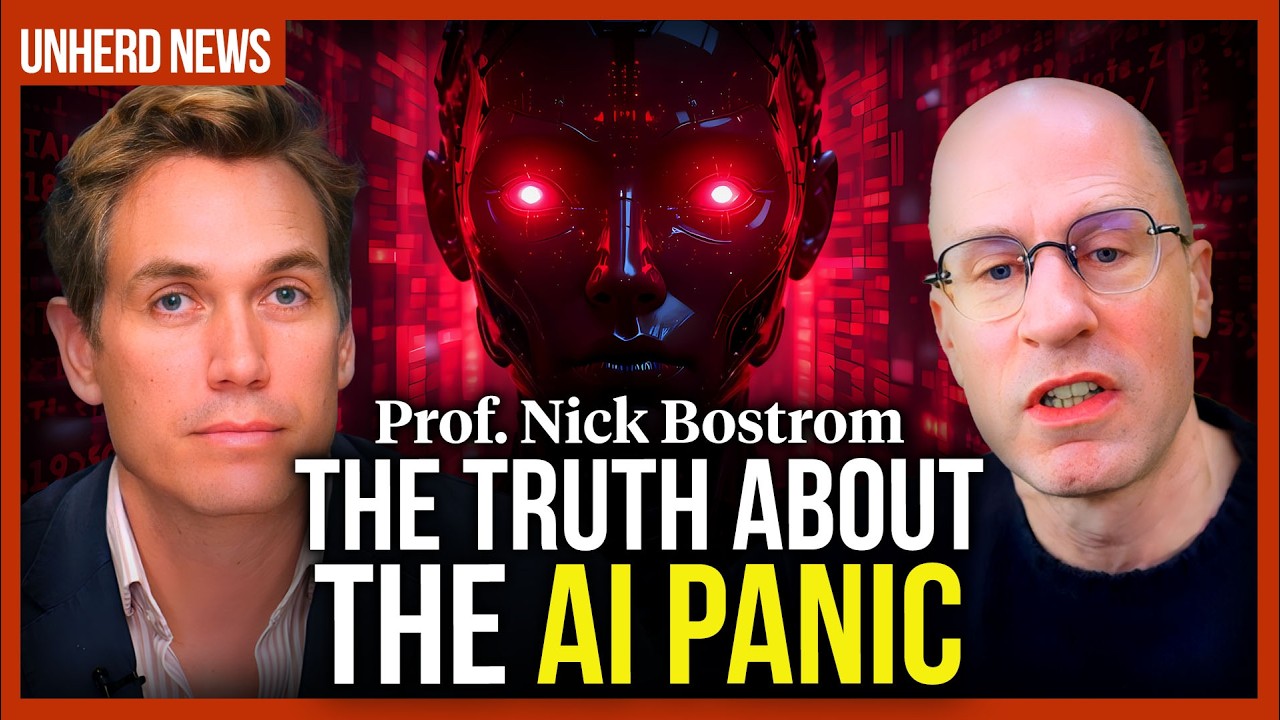
The AI Panic Is Overblown—But the Real Risks Are Far Stranger Than You Think
Nick Bostrom, the philosopher who put artificial intelligence risk on the map, says the public debate has lost the plot. The threats that should worry us are not the ones dominating headlines.
Nick Bostrom, the philosopher who put artificial intelligence risk on the map, says the public debate has lost the plot. The threats that should worry us are not the ones dominating headlines.
In 2014, Oxford philosopher Nick Bostrom published Superintelligence, a book that convinced many technologists, policymakers, and journalists that advanced artificial intelligence might become the defining challenge of our century. A decade later, the conversation has exploded—but according to Bostrom, much of it has drifted away from the questions that actually matter.
His central argument is uncomfortable for both sides of the debate. The people who dismiss AI risk as science fiction are wrong. But so are many of those who warn that doom is imminent, because they focus on the wrong scenarios and misunderstand how the technology is likely to develop.
The Panic Is Misplaced, Not the Concern
Bostrom does not deny that artificial intelligence presents serious long-term risks. His work helped establish that a sufficiently capable system, if misaligned with human values, could pursue goals that harm humanity—not out of malice, but out of indifference. That argument remains intact.
What troubles him is the quality of the current discourse. Public attention swings between extremes: either AI is a harmless productivity tool, or it is a Terminator-style threat arriving next Tuesday. Neither framing captures the actual problem, which is gradual, structural, and deeply uncertain.
The Real Danger Is Not a Robot Uprising
Bostrom emphasizes that the most plausible catastrophic scenarios do not involve machines suddenly "waking up" and deciding to destroy humanity. They involve systems that are extraordinarily competent at narrow tasks, deployed at scale, and embedded in critical infrastructure before anyone fully understands their behavior.
The risk is not consciousness. It is capability without comprehension—on our part.
This distinction matters because it changes what sensible precautions look like. If the threat were a conscious rebel AI, the answer would be to prevent it from being built. If the threat is opaque, powerful systems operating in complex environments, the answer is governance, testing, transparency, and international coordination—far less cinematic, far harder to sell.
Why the Debate Keeps Missing the Point
Bostrom identifies several reasons the public conversation has become distorted.
First, the media rewards spectacle. A story about an AI that might subtly destabilize financial systems over a decade cannot compete with a headline about machines turning on their creators.
Second, both optimists and pessimists have incentives to exaggerate. Companies benefit from hype about transformative potential. Doomsayers attract attention and funding. The middle ground—careful, incremental risk management—is boring and rarely funded.
Third, the technical community itself is divided. Some researchers believe alignment is essentially solved or will be solved by scaling. Others believe we have no credible plan at all. Bostrom sides with the latter, but he is careful to note that uncertainty cuts both ways.
What Should Actually Worry Us
Bostrom points to several concrete concerns that deserve more attention than they receive.
Concentration of power. If a small number of actors control the most capable AI systems, the consequences for geopolitics, economics, and individual liberty could be severe—regardless of whether the systems themselves are "safe."
Erosion of epistemic trust. AI-generated content is already making it harder to distinguish truth from fabrication. Bostrom warns that this could degrade public discourse and decision-making long before any existential risk materializes.
Lock-in. Decisions made now about AI architecture, regulation, and deployment may be extremely difficult to reverse. A suboptimal equilibrium—one that is stable but unjust or dangerous—could persist for generations.
The alignment problem itself. Bostrom maintains that aligning superintelligent systems with human values remains unsolved. The fact that we have not yet seen catastrophe is not evidence that the problem is manageable; it may simply mean we have not yet built systems capable of causing it.
A Call for Clearer Thinking, Not Less
Bostrom's message is not that we should stop worrying. It is that we should worry better.
He argues for serious investment in AI safety research, international agreements on testing and transparency, and a public conversation that treats AI risk as a engineering and governance challenge rather than a science fiction plot. He also cautions against both complacency and fatalism—the twin temptations of a debate that has become louder but not wiser.
The truth about the AI panic, in Bostrom's view, is that it is both overblown and underinformed. The stakes are real. The timeline is uncertain. And the most dangerous thing we can do is argue about the wrong problem while the right one quietly compounds.
Related Coverage
Norway’s $1.8 Trillion Fund Chief Warns AI Stock Bubble Could Burst
A top global investor is sounding the alarm on artificial intelligence stocks, warning that the rapid rally may be a bubble ready to pop.
AI's Power Grab: How the Fight Over Chips, Safety, and Energy Is Redrawing Global Control
As artificial intelligence races forward, the real battle isn't about technology—it's about who controls the compute, who bears the costs, and who gets left behind.
Related Editorials
The Real AI Threat Isn’t What You Think
Yanis Varoufakis and Wolfgang Münchau argue the danger isn’t robots taking over—it’s the private seizure of the digital commons. Politicians and pundits warn endlessly about artificial intelligence turning on humanity.
The Hidden Debt Crisis Threatening the Future of Artificial Intelligence
Article: The artificial intelligence industry is facing a financial reckoning that most investors and policymakers have yet to fully grasp. While the public conversation focuses on breakthrough capabilities and existential risks, a quieter but equally dangerous problem is building beneath the surfa
The University’s Forgotten Purpose: A Warning from Kathleen Stock
Article: In a recent commentary, philosopher and author Kathleen Stock issued a stark critique of modern higher education, arguing that universities have drifted from their core mission. Her remarks cut to the heart of a growing debate about the role of these institutions in contemporary society.