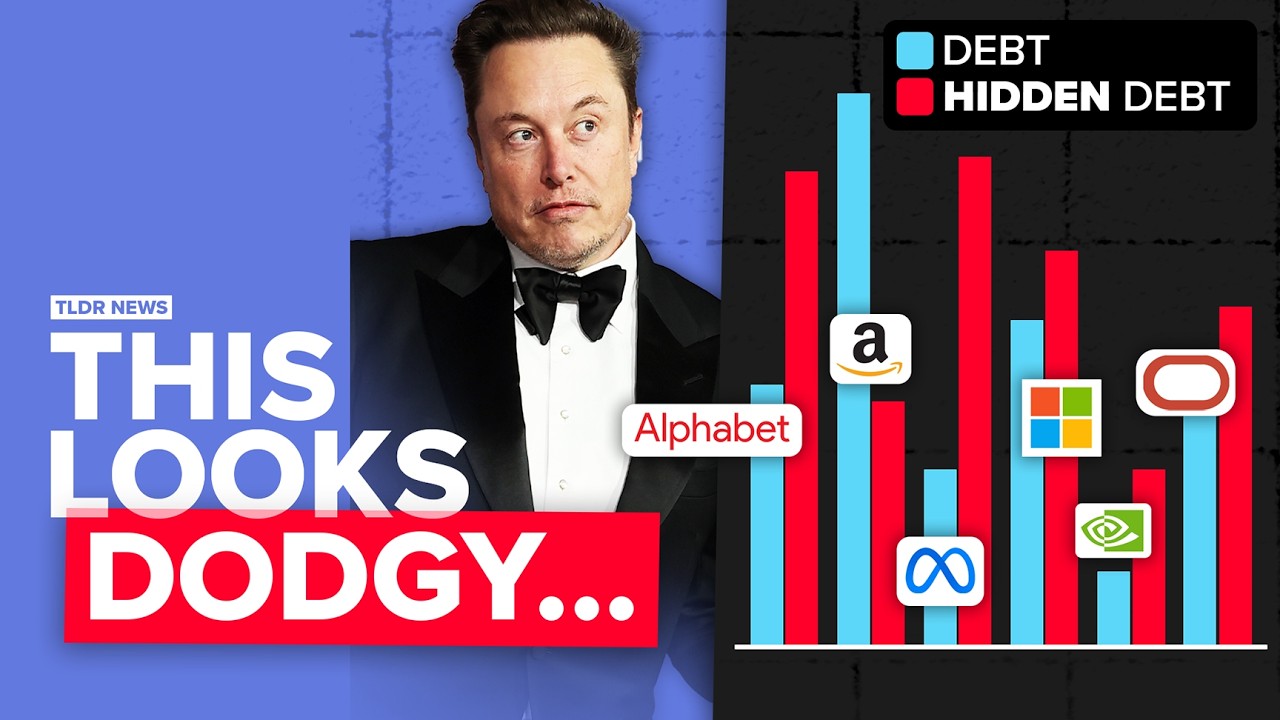
Title: The Hidden Debt Crisis Threatening the Future of Artificial Intelligence
Article: The artificial intelligence industry is facing a financial reckoning that most investors and policymakers have yet to fully grasp. While the public conversation focuses on breakthrough capabilities and existential risks, a quieter but equally dangerous problem is building beneath the s
Article:
The artificial intelligence industry is facing a financial reckoning that most investors and policymakers have yet to fully grasp. While the public conversation focuses on breakthrough capabilities and existential risks, a quieter but equally dangerous problem is building beneath the surface: the massive, unsustainable debt incurred to build the very systems that define this technological era.
The economics of modern AI are unlike any previous technological revolution. To train a single frontier model, companies must construct data centers costing billions of dollars, acquire tens of thousands of specialized chips, and consume electricity at levels comparable to small cities. This upfront capital requirement is staggering, and it is being financed almost entirely through debt.
The Scale of the Borrowing
The numbers are not speculative. Major cloud providers and AI labs have committed to capital expenditures that exceed their operating cash flows by wide margins. To bridge this gap, they are turning to bond markets, bank loans, and complex leasing arrangements. The debt is not confined to a single company; it is systemic across the sector. When one major player borrows to build, competitors feel compelled to match the spending to remain relevant, creating a cycle of leveraged investment that has no historical precedent.
The problem is compounded by the nature of the asset itself. A data center filled with GPUs is not a flexible asset. Unlike software, which can be updated or repurposed, hardware has a finite lifespan and depreciates rapidly. If the expected demand for AI services does not materialize, or if a technological breakthrough makes current chips obsolete, these assets become stranded. The debt, however, remains.
The Revenue Gap
The core tension is simple: the cost of building AI is running far ahead of the revenue it generates. While AI tools have found use cases in coding, customer support, and content generation, the monetization has not kept pace with the investment. Most companies offering AI services are doing so at a loss, subsidizing usage to build market share. This is a viable strategy in the short term, but it requires a clear path to profitability. That path is narrowing.
If the revenue gap persists, the consequences are predictable. Companies will be forced to cut costs, which means reduced investment in research, layoffs of top talent, and a slowdown in the pace of innovation. More critically, they will need to refinance their debt. In a rising interest rate environment, this becomes prohibitively expensive, potentially triggering a wave of defaults that could ripple through the financial system.
The Systemic Risk
This is not merely a problem for the tech sector. The scale of AI investment is now so large that it has become a macroeconomic factor. Banks have significant exposure to these loans. Pension funds and institutional investors hold the bonds. If the AI bubble deflates, it will not be contained to Silicon Valley; it will affect the global economy.
The situation is exacerbated by a lack of transparency. Many AI companies are privately held, and their debt obligations are not fully disclosed. This opacity prevents investors from accurately pricing risk. When the true state of affairs becomes known, the market correction could be sudden and severe.
A Call for Prudence
There is a realistic path forward, but it requires discipline. AI companies must shift their focus from raw scale to economic efficiency. This means prioritizing applications that generate genuine value over speculative research projects. It also means being honest about the timeline for profitability, rather than promising returns that are not grounded in current metrics.
Policymakers also have a role. They should scrutinize the financial health of the industry and consider regulations that require greater transparency regarding debt levels. The goal is not to stifle innovation but to prevent a crisis that would set the field back years.
The AI revolution has the potential to transform society for the better. But that potential will only be realized if the industry can manage its finances with the same rigor it applies to its algorithms. The debt problem is not a distant concern; it is a present danger. Ignoring it will not make it disappear, but addressing it head-on can secure a more stable and sustainable future for the technology that promises to define our era.
Related Coverage
Social Security’s Clock Is Ticking—Why Nobody’s Talking About It
The Social Security trust fund is projected to run short of money in the coming years, yet the issue has barely registered as a top campaign priority, leaving many Americans unaware of the program’s financial shortfall and the painful choices ahead.
Global Regulators Warn AI Could Trigger Cross-Border Financial Crash
A new wave of AI-driven cyber threats is putting the world's financial system on edge, with top regulators warning that a single failure could spread across borders.
The AI Boom Is a Power Grab: How Compute, Debt, and Geopolitics Are Redrawing the Global Order
The artificial intelligence boom is not a neutral technological revolution. It is a geopolitical and economic battleground where control over chips, data, and capital is reshaping the balance of power between states and corporations, while workers and global financial markets absorb the shockwaves. The most immediate threat to the global economy is not AI itself, but the debt being piled up to build it, as massive borrowing by tech giants to construct data centers creates a bubble that central banks and Norway's $1.8 trillion sovereign wealth fund warn is overheating [1][2].
The AI Boom Is a Power Play: How Compute, Debt, and Geopolitical Rivalry Are Reshaping Global Control
The artificial intelligence boom is not a neutral technological revolution; it is a geopolitical and economic battleground where control over chips, data, and capital is redrawing the balance of power between states and corporations, while workers and global financial markets absorb the shockwaves. The most immediate threat to the global economy is not AI itself, but the debt being piled up to build it, as massive borrowing by tech giants to construct data centers creates a bubble that central banks and sovereign wealth funds warn is overheating [1][2]. Meanwhile, China is executing a carefully calibrated strategy to build its own AI ecosystem independent of American technology, positioning itself as a global rule-maker and forcing smaller nations to choose sides in a contest that will shape the world's technological future [3][4].
The AI Power Play: How Compute, Debt, and Geopolitical Rivalry Are Reshaping Global Control
The artificial intelligence boom is not a neutral technological revolution; it is a geopolitical and economic battleground where control over chips, data, and capital is redrawing the balance of power between states and corporations, while workers and global financial markets absorb the shockwaves. The most immediate threat to the global economy is not AI itself, but the debt being piled up to build it, as massive borrowing by tech giants to construct data centers creates a bubble that central banks and sovereign wealth funds warn is overheating [1]. Meanwhile, China is executing a carefully calibrated strategy to build its own AI ecosystem independent of American technology, positioning itself as a global rule-maker and forcing smaller nations to choose sides in a contest that will shape the world's technological future [2].
The AI Power Play: How Compute, Debt, and Geopolitical Rivalry Are Reshaping Global Control
The artificial intelligence boom is not a neutral technological revolution; it is a geopolitical and economic battleground where control over chips, data, and capital is redrawing the balance of power between states and corporations, while workers and global financial markets absorb the shockwaves. The most immediate threat to the global economy is not AI itself, but the debt being piled up to build it, as massive borrowing by tech giants to construct data centers creates a bubble that central banks and sovereign wealth funds warn is overheating [1]. Meanwhile, China is executing a carefully calibrated strategy to build its own AI ecosystem independent of American technology, positioning itself as a global rule-maker and forcing smaller nations to choose sides in a contest that will shape the world's technological future [2].
Related Editorials
Title: The Invisible Fault Line: How an AI Crash Could Unravel the Global Economy
Introduction Artificial intelligence is no longer a futuristic concept confined to research labs. It is the silent engine powering modern finance, logistics, and communication.
Title: The $3.5 Trillion Shadow: Why the Global Debt Time Bomb Is Still Ticking
Introduction A financial crisis is unfolding in plain sight, yet it remains largely absent from mainstream headlines. It is not a bank run, a stock market crash, or a sudden currency devaluation.
### The Next Financial Crash: Why “Uninvestable” Assets Are the Real Threat
The global financial system is a complex web of interdependencies. When a major shock occurs—like a pandemic or a sudden spike in interest rates—the initial damage is often visible.
Title: The Hidden Crisis That Could Decide the Next Iran War
Introduction For years, the public debate on Iran has focused on centrifuges, enriched uranium, and the timeline to a nuclear weapon. Yet, a deeper, more immediate crisis is unfolding beneath the surface—one that receives far less attention but could prove decisive in any future conflict.
Title: The Hidden Cost of Circular AI Financing: A Convenient Myth or a Looming Debt Trap?
Introduction In the rush to fund the artificial intelligence boom, a new buzzword has entered the boardroom lexicon: "circular AI financing. " On its surface, the term suggests a sustainable, self-feeding economic loop—where profits from AI fund more AI, creating a virtuous cycle of innovation.
### The Coming Energy Market Meltdown: Why Experts Are Sounding the Alarm
Global energy markets are approaching a critical inflection point. While the transition to renewable sources dominates headlines, a less visible but equally dangerous crisis is brewing beneath the surface—one that could destabilize power grids, spike electricity prices, and trigger widespread econo