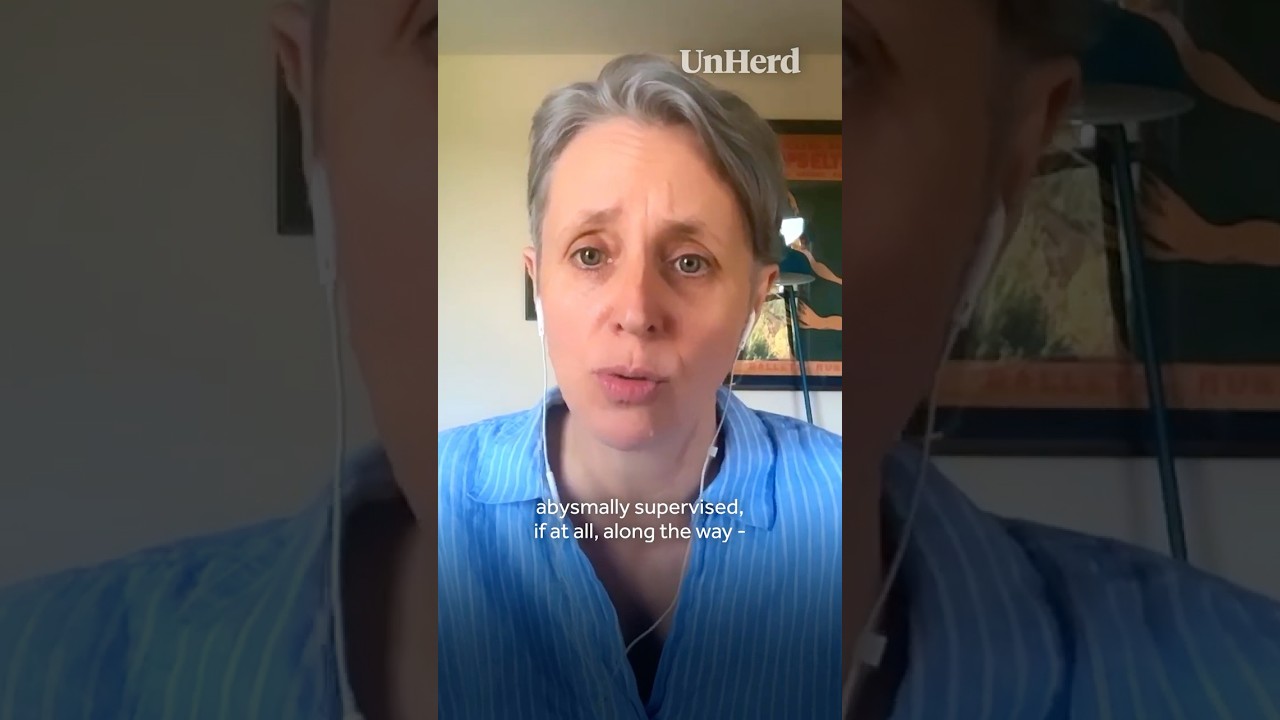
The University’s Forgotten Purpose: A Warning from Kathleen Stock
Article: In a recent commentary, philosopher and author Kathleen Stock issued a stark critique of modern higher education, arguing that universities have drifted from their core mission. Her remarks cut to the heart of a growing debate about the role of these institutions in contemporary society.
Article:
In a recent commentary, philosopher and author Kathleen Stock issued a stark critique of modern higher education, arguing that universities have drifted from their core mission. Her remarks cut to the heart of a growing debate about the role of these institutions in contemporary society.
Stock’s central argument is that universities have forgotten their primary purpose. She contends that instead of serving as bastions of intellectual rigor and the pursuit of truth, many have become preoccupied with other priorities. This shift, she suggests, has profound implications for students and for the health of public discourse.
The core of the problem, according to Stock, lies in a confusion of roles. A university is not a therapy clinic, nor is it a platform for political activism. Its fundamental function is to educate and to foster critical thinking. When institutions abandon this focus, they fail their students, who are left without the essential tools for independent analysis.
She points to a specific failure in the transmission of knowledge. The modern university, in her view, is less concerned with teaching students how to think than with telling them what to think. This approach undermines the very foundation of academic inquiry, which relies on open debate and the rigorous testing of ideas.
Stock’s critique extends to the evolution of academic disciplines themselves. She warns that some fields have become less about objective study and more about ideological conformity. This trend, she argues, stifles dissent and punishes intellectual courage, creating an environment where scholars are afraid to challenge prevailing orthodoxies.
The consequences of this shift are not abstract. Students emerge from universities having been sheltered from difficult questions rather than equipped to engage with them. They are entering the world less prepared to navigate complexity and to defend their own positions with evidence and logic.
In essence, Stock’s message is a call for a return to first principles. She advocates for an institution that values truth over comfort and inquiry over affirmation. The future of higher education, she implies, depends on rediscovering its original, essential role: the fearless pursuit of knowledge.
Related Coverage
Related Editorials
Kathleen Stock Challenges Jason Arday’s Claims on Academia and Diversity
In a recent public exchange, philosopher and author Kathleen Stock offered a pointed critique of Professor Jason Arday’s remarks on diversity and institutional change in higher education. The conversation, which circulated widely online, highlights a growing rift between symbolic representation and
Philosopher Kathleen Stock Labels University President’s Claims “Fantasist”
Article: In a recent public statement, British philosopher and author Kathleen Stock has sharply criticized the rhetoric of Jason Arday, the incoming President of the University of the West of England (UWE). Stock, a prominent figure in academic debates regarding identity and free speech, did not m
The AI Panic Is Overblown—But the Real Risks Are Far Stranger Than You Think
Nick Bostrom, the philosopher who put artificial intelligence risk on the map, says the public debate has lost the plot. The threats that should worry us are not the ones dominating headlines.
The Scandal of Jason Arday: When Academia’s Diversity Drive Undermines Its Own Credibility
In a move that has sent ripples through British higher education, the University of Cambridge’s recent appointment of Professor Jason Arday as its new Provost has sparked a fierce debate—not about his qualifications, but about the very criteria used to select him. The controversy, raised publicly b
Why the Status Quo Is "Horrible for Everyone": A Psychologist’s Stark Warning
Article: In a recent commentary, social psychologist Jonathan Haidt delivered a blunt assessment of modern society: “The status quo is horrible for everyone. ” His statement is not a cry of alarmism but a data-driven critique of how our current social and technological structures are failing both in
The Wokeness Trap: Why It’s Not a Left-Right Issue
Article: Andrew Doyle, a prominent British commentator and former comedian, argues that the phenomenon of “wokeness” defies simple political categorization. In a recent short video, he makes a compelling case that this cultural force is not inherently left-wing or right-wing, but rather a system of