US Trade Deficit Hits $88.6 Billion Despite Trump Tariffs, and AI Is a Big Reason Why
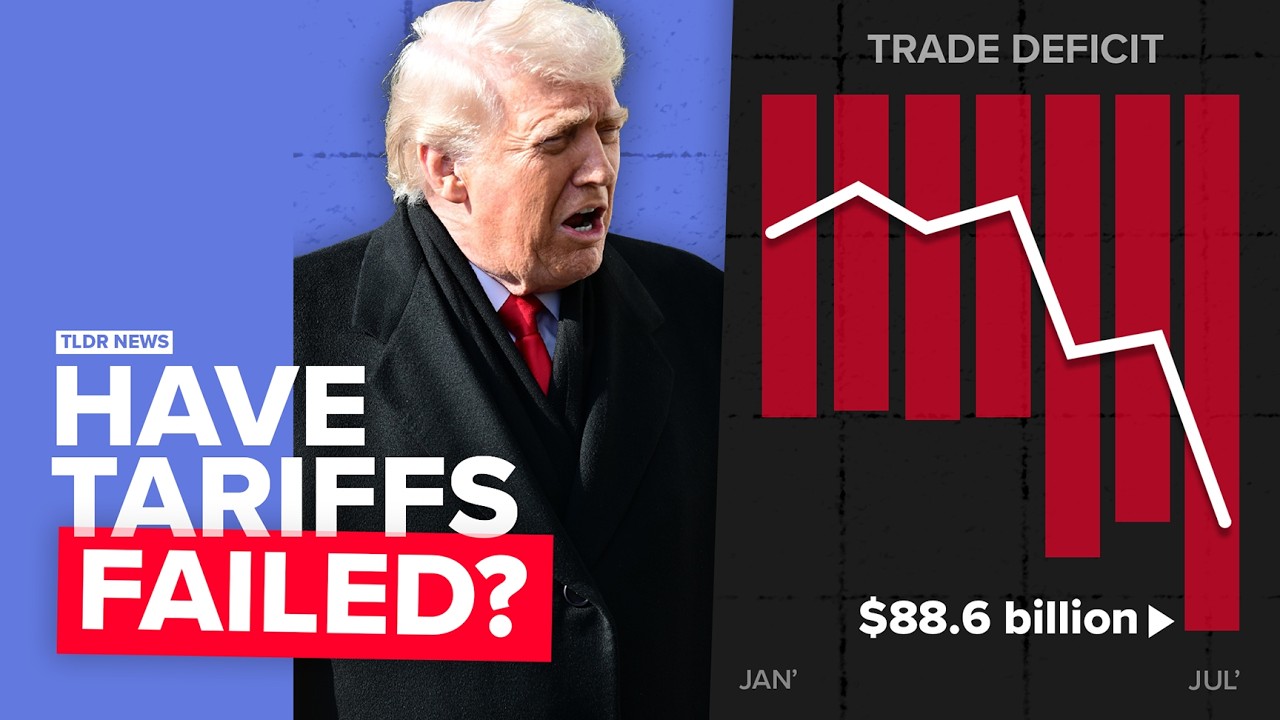
The United States trade deficit widened to $88. 6 billion in July, according to provisional data from the Bureau of Economic Analysis.
The United States trade deficit widened to $88.6 billion in July, according to provisional data from the Bureau of Economic Analysis. This represents a 25 percent increase from the previous month and marks the highest level since the pandemic, excluding the temporary import surge that occurred before tariffs took effect. More significantly, the deficit has been steadily expanding for six consecutive months, suggesting this is not a statistical anomaly but a sustained trend.
President Trump has long promised to shrink the trade deficit through tariffs. Yet the data tells a different story. Understanding why requires examining both the structural limitations of tariffs as a policy tool and several specific factors driving recent numbers, including an unexpected one: artificial intelligence.
Bilateral Versus Overall Deficits
Politicians often conflate two distinct measures when discussing trade. A bilateral trade deficit describes the imbalance between two specific countries. If Country X imports more from Country Y than it exports to Country Y, Country X runs a bilateral deficit with that partner. An overall trade deficit, by contrast, measures the gap between a nation's total imports and total exports.
The United States runs both an overall deficit and bilateral deficits with most of its trading partners. While Trump typically emphasizes bilateral figures, economists generally consider overall deficits more meaningful. Global supply chains are now so complex that bilateral data often misleads. The US, for instance, runs a trade surplus with the Netherlands. This does not reflect Dutch consumers buying American goods in unusually large quantities. Rather, many American exports to Europe pass through Dutch ports.
The Balance of Payments Identity
When a country runs an overall trade deficit, it must finance that gap. It is spending more on imports than it earns from exports. In the American context, this financing primarily occurs through foreign demand for dollar-denominated assets such as US stocks and government bonds. Foreigners convert their currency into dollars and purchase these assets, which strengthens the dollar and enables Americans to import more.
A stronger dollar also makes American products more expensive abroad, reducing exports and widening the deficit further. Economists call this the balance of payments identity. In plain terms, if more goods flow out of a country, more money must flow in. Less intuitively, if more money flows in, more goods must necessarily flow out.
Why Tariffs Have Not Closed the Gap
Trump's strategy for reducing the deficit relies on tariffs. The logic is straightforward: making imports more expensive encourages consumers to buy domestic products, reducing imports. Protecting American industry from foreign competition, meanwhile, should nurture domestic production and ultimately boost exports. Lower imports plus higher exports should equal a smaller deficit.
The recent data suggests this has not happened. Several structural factors explain why.
First, tariffs generally have limited impact on the overall balance of trade. While they discourage imports, they also raise input costs for domestic producers, making exports less competitive. Second, bilateral tariffs are particularly ineffective. They push American consumers toward importing from countries with lower tariff rates. They also encourage transshipment, whereby countries facing high tariffs route exports through third countries with lower rates. The Trump administration has recently complained about this practice. Last month, the White House published a document titled The Great Trans Shipment Scam, accusing China of routing exports through more than 40 countries and estimating the cost to the US at between $4 billion and $33 billion annually.
A further contradiction undermines Trump's deficit reduction goals. The president frequently highlights the billions, sometimes trillions, of dollars in foreign investment he has secured from trading partners. But these investments necessarily increase the trade deficit. Under the balance of payments identity, foreign money entering the US must ultimately result in more imports. Foreign currency can be used to buy foreign goods directly, or it can be converted into dollars to purchase American assets, which strengthens the dollar and stimulates additional imports.
Gold and AI: Specific Drivers of the Recent Surge
Beyond these structural issues, two specific factors have shaped recent trade figures.
The first is gold. Early in Trump's term, gold imports surged amid rumors that he would impose tariffs on precious metals. Businesses rushed to bring gold into the country before any such measures took effect. When the tariffs never materialized, this trade unwound. Between mid-2025 and mid-2026, gold that had been imported was exported back to its countries of origin. This spike in gold exports temporarily suppressed the trade deficit. That effect has now faded, contributing to the deficit's recent expansion.
The second factor is artificial intelligence. American technology companies are importing enormous quantities of AI-related hardware, including semiconductors, as data center construction accelerates. The recent widening of the trade deficit has been driven by a surge in capital goods imports, meaning tools used to produce other goods. Most of these originate from Japan, South Korea, and Taiwan, all central players in the global AI supply chain.
This development might seem unsurprising given the current dominance of AI in American business discourse. What is more revealing is that the Trump administration has exempted AI-related hardware from its tariffs. This exemption is difficult to interpret as anything other than a tacit acknowledgment that even the administration recognizes tariffs would harm competitiveness in this critical sector.
Implications for Trade Policy
The persistence of the trade deficit despite aggressive tariff policies highlights a fundamental tension. Tariffs may reshape specific bilateral trading relationships, but they cannot easily overcome the macroeconomic forces that determine overall trade balances. As long as foreign capital flows into the United States and the dollar remains strong, Americans will continue to import more than they export.
The AI-driven import surge further complicates the picture. The administration's decision to exempt these goods from tariffs suggests a pragmatic recognition that some imports are essential to maintaining American technological leadership. Whether this signals a broader shift in trade strategy or remains a narrow exception is unclear. What the data does show is that the trade deficit is widening, not shrinking, and the forces driving it extend well beyond the reach of tariff policy.
Related Coverage
Trump Slaps Double-Digit Tariffs on 60 Nations, Sparks Global Trade Chaos
The United States has imposed sweeping double-digit tariffs on 60 countries, citing forced labor practices, in a move that is disrupting trade deals and pushing allies to seek new partners.
Trump’s New Tariffs on Drone Parts Send US Stocks Soaring — But Auto Trade Crashes 21%
A new US executive order targeting foreign drone components has sent American drone stocks rallying, while new data shows car imports and exports have plummeted by over 20 percent under the same tariff pressure.
China's AI Army Doubles Learning Speed Every 3 Months as US Firms Rush to Buy Chinese Tech
China’s artificial intelligence is evolving at a blistering pace, with new research showing AI agents doubling their learning speed every three months, while American companies are now turning to Chinese AI tools in droves after US export bans backfired.
China’s AI Trust Score Crushes US and EU as 72% Innovation Surge Defies Sanctions
A new global survey shows China is trusted more than the US and EU to regulate AI, while US sanctions have failed to stop Chinese innovation—patent citations jumped 72%.
AI Jobs Shake-Up: 1 in 4 Southeast Asian Office Workers Face Disruption as U.S. Hiring Stays Strong
A new wave of artificial intelligence is hitting office workers hard across Southeast Asia, with nearly one in four employees facing job disruption, while the U.S. labor market continues to add jobs despite the AI boom.
Japan’s Hybrid Car Boom Runs Out of Gas – Now It’s a $150 Billion Software Race
Japan’s automakers, who bought themselves years of breathing room with popular hybrid cars, now face a critical software gap that threatens their global standing, as competitors from China and the U.S. race ahead with advanced operating systems and self-driving features.
Related Editorials
The $27 Trillion Time Bomb: Why the Treasury Market Is Even Shakier Than It Looks
The U. S.
How Washington’s New Tariffs Are Pushing the World into Beijing’s Arms
The United States has long positioned itself as the central node of global trade, the indispensable partner for any nation seeking economic security. Yet, according to economists Yanis Varoufakis and Wolfgang Münchau, the latest wave of American protectionism is achieving the exact opposite of its
The Tariff Paradox: Why Trump’s Trade War Exposes the True Limits of Government Power
When a head of state launches a trade war, the assumption is simple: the government, with all its authority, can dictate economic outcomes. Yet, the unfolding reality of President Donald Trump’s aggressive tariff campaign has revealed a counterintuitive truth.