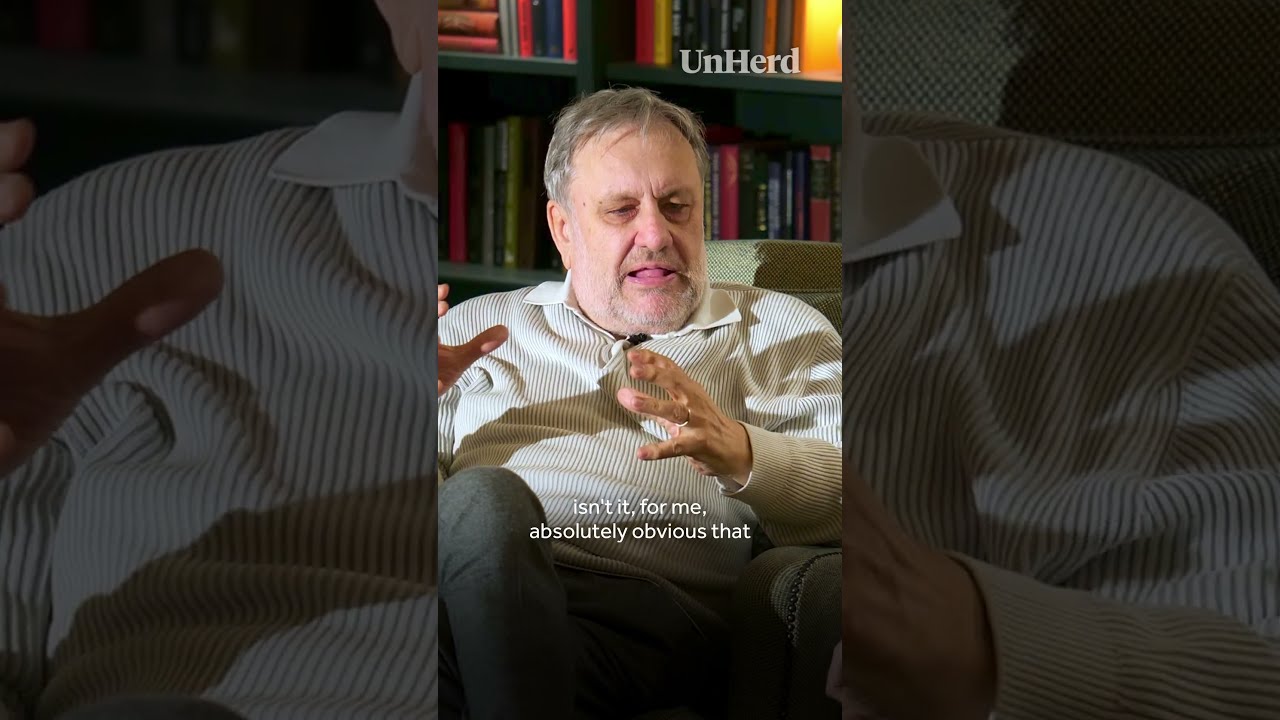
Why I Am a Communist: Slavoj Žižek’s Unsettling Case for a Radical Idea
In a world where communism is often dismissed as a failed ideology of the past, philosopher Slavoj Žižek offers a provocative defense. Speaking in a concise video, he argues that communism remains the only coherent response to the systemic crises of capitalism—not as a nostalgic dream, but as a pra
In a world where communism is often dismissed as a failed ideology of the past, philosopher Slavoj Žižek offers a provocative defense. Speaking in a concise video, he argues that communism remains the only coherent response to the systemic crises of capitalism—not as a nostalgic dream, but as a practical necessity.
Žižek begins by rejecting the common caricature of communism as state tyranny or economic utopia. Instead, he defines it as a radical project of collective ownership and democratic control over the means of production. For him, this is not about returning to Soviet-style central planning, but about confronting the fundamental contradictions of modern capitalism: endless growth, ecological collapse, and widening inequality.
The philosopher insists that capitalism, left unchecked, will destroy itself. He points to the 2008 financial crisis and the COVID-19 pandemic as evidence that markets cannot solve problems they create. “When the system fails,” he says, “we see that the only alternative is not a return to normal, but a break with the logic of profit.” Communism, in his view, offers that break—a chance to reorganize society around human needs, not capital accumulation.
Žižek is careful to avoid romanticism. He acknowledges the historical failures of communist regimes, from Stalinism to Maoism. But he argues that these were distortions, not the true essence of the idea. “The real question,” he states, “is not whether communism has been tried and failed, but whether we can learn from those failures and build something new.”
What makes Žižek’s argument unsettling is its urgency. He sees the current moment—marked by climate emergency, pandemics, and rising authoritarianism—as a window for radical change. Without a systemic alternative, he warns, we risk sliding into barbarism or technocratic control.
Critics will find plenty to challenge here. Žižek offers no blueprint for how a communist society would function, nor does he address the practical obstacles of global coordination. But his defense is not a policy paper; it is a philosophical provocation. He forces the reader to ask: If capitalism is failing, what comes next? And why is the very idea of a collective future so taboo?
For Žižek, the answer is clear: communism is not a relic of the past, but a name for the unfinished struggle for a just world. Whether one agrees or not, his argument demands that we take that struggle seriously.
Related Editorials
Title: Žižek’s Provocative Question: Is Trump a “Secret Stalinist”?
Introduction In a recent short-form video, the Slovenian philosopher Slavoj Žižek posed a deliberately provocative question that cuts through the noise of contemporary political analysis: Is Donald Trump a secret Stalinist? While the question is designed to shock, Žižek’s argument is less about
# The World After Capitalism: Economists Debate What Comes Next
A live panel of leading thinkers explores whether capitalism can survive its own contradictions—and what might replace it. --- The global financial system is showing unprecedented strain.
Title: Why One Political Candidate Calls for a “French Revolution” in Britain
In a provocative statement that has sparked debate, political candidate Stella Tsantekidou has argued that Britain needs a radical overhaul reminiscent of the French Revolution. Speaking in a recent video, Tsantekidou did not call for literal guillotines or regicide, but rather a fundamental restru
Title: The Wokeness Trap: Why It’s Not a Left-Right Issue
Article: Andrew Doyle, a prominent British commentator and former comedian, argues that the phenomenon of “wokeness” defies simple political categorization. In a recent short video, he makes a compelling case that this cultural force is not inherently left-wing or right-wing, but rather a syste