The Establishment is Panicking: Why the Old Rules of Economics No Longer Apply
The global economic establishment is in a state of deep anxiety. This is not merely a feeling; it is a rational response to a world in which the central pillars of post-war economic policy—inflation targeting, central bank independence, and the assumption of stable growth—are crumbling.
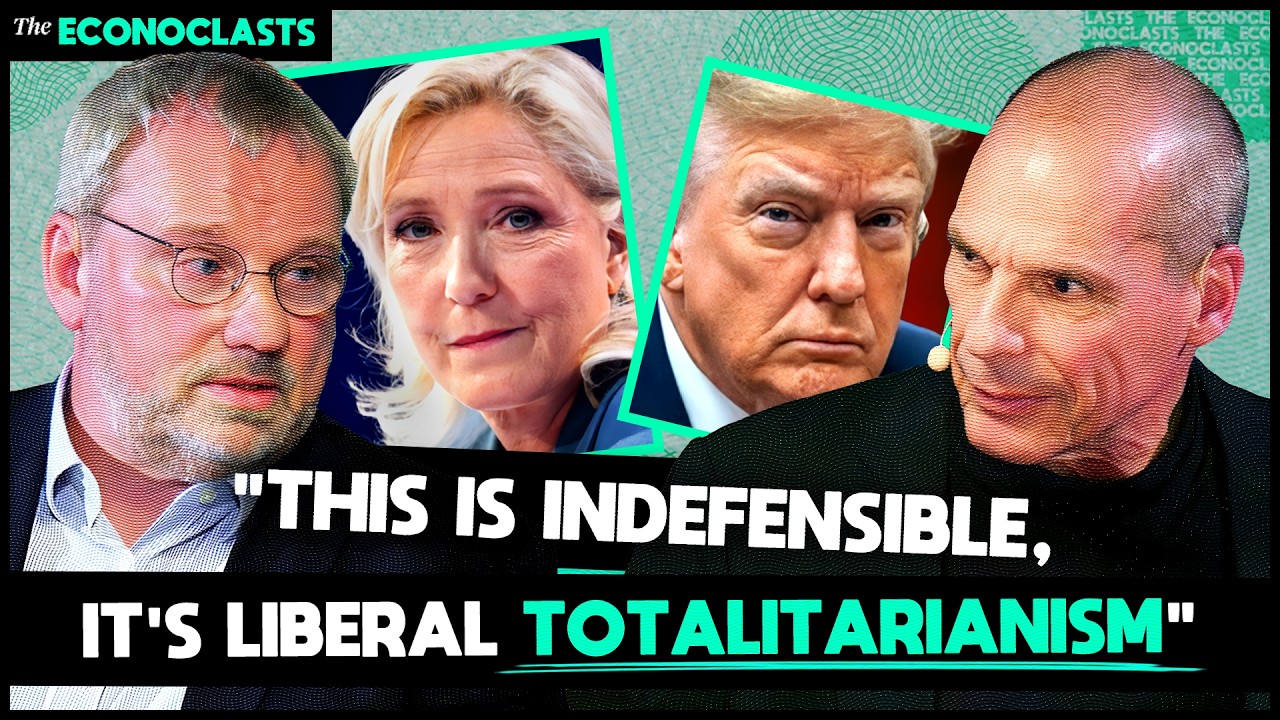
The global economic establishment is in a state of deep anxiety. This is not merely a feeling; it is a rational response to a world in which the central pillars of post-war economic policy—inflation targeting, central bank independence, and the assumption of stable growth—are crumbling. In a recent discussion, economist Yanis Varoufakis and journalist Wolfgang Munchau dissected this crisis, arguing that the system is not just facing a temporary shock but a fundamental breakdown of its operating logic.
The End of the "Goldilocks" Economy
For decades, central banks operated under a simple, successful model. They managed inflation by raising interest rates when the economy overheated and lowering them during downturns. This "Goldilocks" economy—not too hot, not too cold—created an era of relative stability. However, Varoufakis and Munchau argue that this model is now obsolete. The current crisis is not cyclical; it is structural.
The primary cause is the transformation of the global economy. We have moved from an industrial age, where inflation was driven by demand and wages, to a digital age dominated by monopolies, platform capitalism, and deflationary pressures. In this new environment, the old tools no longer work. Raising interest rates to curb inflation, for example, may simply crush investment and employment without addressing the root causes of rising prices, such as supply chain bottlenecks or corporate profiteering.
The Panic of the Establishment
The establishment, defined as the network of central bankers, finance ministers, and mainstream economists, is panicking because it has lost its narrative. It can no longer explain why the economy behaves as it does. The predictable relationship between unemployment and inflation (the Phillips Curve) has broken down. The assumption that free markets self-correct has been shattered by decades of quantitative easing and government bailouts.
This panic manifests in contradictory policy responses. Governments are simultaneously trying to fight inflation with tight monetary policy while maintaining social stability with massive fiscal spending. This creates a dangerous tension. The establishment knows that the current path is unsustainable, but it cannot agree on a new direction. The result is a series of ad-hoc, reactive measures that only postpone the inevitable reckoning.
The Rise of "Techno-Feudalism"
Varoufakis offers a specific diagnosis: the economy is evolving into a form of "techno-feudalism." In this system, giant digital platforms (like Google, Amazon, and Meta) do not simply own capital; they own the digital space in which all economic activity takes place. They extract rent—a form of tribute—from every transaction, much like feudal lords extracted rent from their land.
This changes the nature of power. In capitalism, profit comes from exploiting labor. In techno-feudalism, profit comes from controlling the platform. This makes traditional labor movements less effective and renders many economic models irrelevant. The establishment, trained in 20th-century capitalism, has no framework to understand or regulate this new reality.
The Political Consequences
The collapse of the old economic consensus has profound political consequences. As the establishment fails to deliver stability and prosperity, voters turn to populist and nationalist movements. These movements, while often offering simplistic solutions, at least acknowledge that the current system is broken.
Munchau warns that this creates a dangerous feedback loop. Populist leaders, once in power, often implement policies that further destabilize the economy, leading to more panic within the establishment and more public disillusionment. The result is a crisis of legitimacy for democratic institutions themselves.
What Comes Next?
The conversation between Varoufakis and Munchau does not offer easy solutions, but it provides a critical framework for understanding the current moment. The establishment is panicking because it has run out of ideas. The old rules no longer apply, and a new economic paradigm has not yet emerged.
The path forward requires a radical rethinking of economic governance. This includes breaking up monopolies, rethinking the role of central banks, and creating new forms of democratic control over digital infrastructure. Until such a new consensus is built, the world will remain in a state of chronic instability—a crisis of confidence that no amount of interest rate adjustments can fix.
Related Coverage
Fuel, Fear, and the Fading Line Between State and Profit: How Converging Crises Are Reshaping Global Politics
A wave of interlocking emergencies—war, energy shocks, climate disasters, and the tightening grip of corporate and state power—is squeezing ordinary households while a narrow set of interests reaps record rewards, testing the global order as never before.
Oil at $84, Lines at 18 Hours: How a Cascade of Wars and a Climate Emergency Are Crushing the Global Economy
A fragile global order is fracturing under the weight of collapsing ceasefires, escalating wars, and a deepening climate emergency, pushing energy markets into chaos and leaving millions of ordinary people—especially the world’s poorest—to bear the costs of a system that prioritizes military spending over human welfare.
Ceasefires Crumble, Wars Escalate: How a Broken Global Economy Fuels a World on Fire
A fragile global order is fracturing as a cascade of collapsing ceasefires, escalating wars, and a deepening climate emergency converge, pushing energy markets into chaos and leaving millions of ordinary people to bear the costs of a system that prioritizes military spending and corporate profit over human welfare.
# War, Oil, and a World on Fire: How Collapsing Ceasefires and a Broken System Are Crushing the Global Economy
A cascade of collapsing peace deals, escalating wars, and a deepening climate emergency is converging to reshape the global order, pushing energy markets into chaos and leaving millions of ordinary people to bear the costs of a system that prioritizes military spending and corporate profit over human welfare.
Oil at $95 and Rising: How War, Blockades, and a System Built on Profit Are Crushing the Global Economy
A cascade of collapsing ceasefires, escalating military conflicts, and a rapidly accelerating climate emergency is shattering the global economic order, pushing energy markets into chaos and leaving millions of ordinary people—especially the world’s poorest—to bear the costs of a system that prioritizes military spending and corporate profit over human welfare.
Oil Shocks, Chokepoint Wars, and a Divided BRICS: The Crises Reshaping the Global Economy
A wave of attacks on oil routes and shipping lanes has pushed crude above $100 a barrel, reigniting inflation and forcing central banks to tighten — all while deepening inequality and exposing how fragile the global economic order has become.
Related Editorials
Why Neoliberals Are Terrified of Being Proved Wrong
For decades, neoliberalism has been the dominant economic philosophy guiding Western policy. But a growing body of evidence suggests its core promises have failed.
The Global Cash Crunch: Why the World Is Feeling the Pinch (and China Isn't)
Across the developed world, a pervasive sense of financial dread has taken hold. From the suburbs of the United States to the high streets of Europe, households are reporting a collective tightening of belts, a phenomenon that has sparked a wave of economic anxiety.
Why We Need to Rewrite the Economic Rules
For decades, the foundational assumptions of modern economics have guided government policy, corporate strategy, and personal finance. These rules—which prize efficiency, endless growth, and shareholder value above all else—have delivered undeniable material progress.
The Coming Energy Market Meltdown: Why Experts Are Sounding the Alarm
Global energy markets are approaching a critical inflection point. While the transition to renewable sources dominates headlines, a less visible but equally dangerous crisis is brewing beneath the surface—one that could destabilize power grids, spike electricity prices, and trigger widespread econo
Germany Has Just Hit the Point of No Return
In a stark and urgent analysis, economist Yanis Varoufakis and journalist Wolfgang Münchau argue that Germany’s economic model has reached a critical juncture—a “point of no return. ” The conversation, hosted on *The Econoclasts*, dissects the structural collapse of the German economy, moving beyond
The World After Capitalism: Economists Debate What Comes Next
A live panel of leading thinkers explores whether capitalism can survive its own contradictions—and what might replace it. --- The global financial system is showing unprecedented strain.