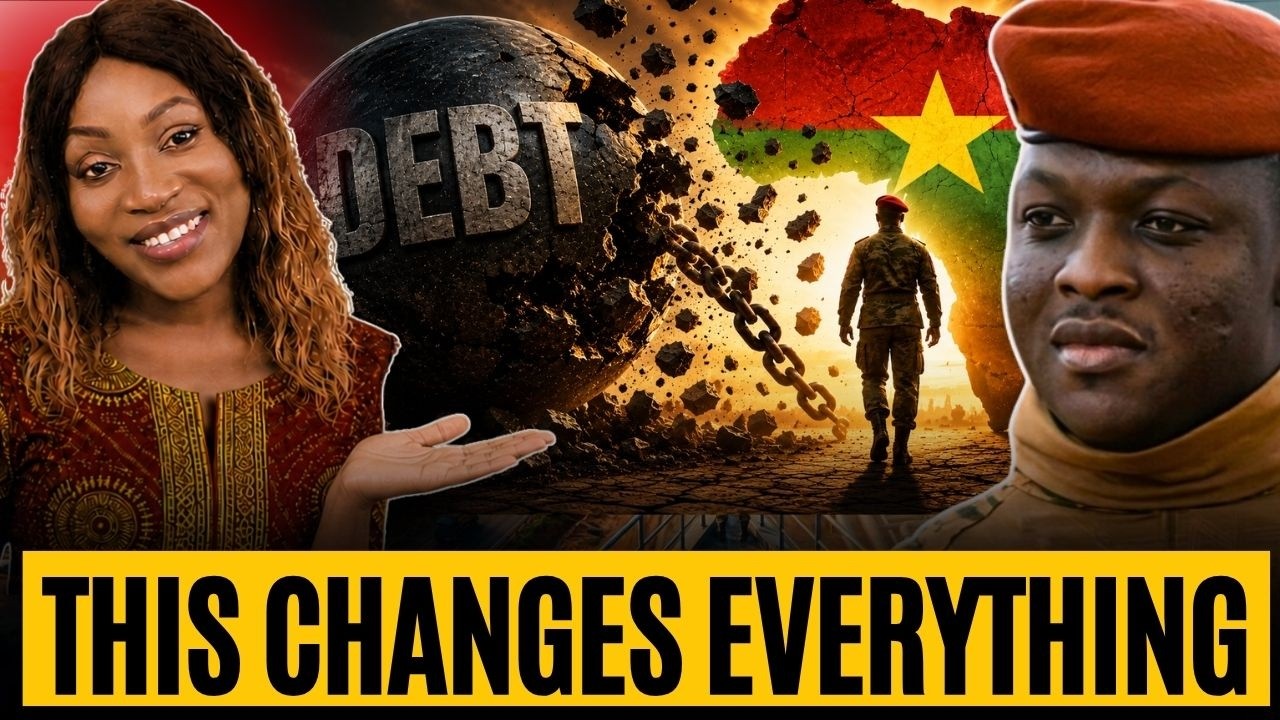
Mali’s Bold Move: How Assimi Goïta’s Crackdown on Gold Mining Is Reshaping Africa’s Wealth Equation
For decades, a familiar narrative has plagued the African continent: vast mineral wealth extracted by foreign corporations, with local populations seeing little of the profit. Mali, one of Africa’s largest gold producers, has long been a textbook example of this dynamic.
For decades, a familiar narrative has plagued the African continent: vast mineral wealth extracted by foreign corporations, with local populations seeing little of the profit. Mali, one of Africa’s largest gold producers, has long been a textbook example of this dynamic. But a seismic shift is underway. Under the leadership of interim President Assimi Goïta, Bamako has issued a decisive ultimatum to foreign mining giants—a move that could fundamentally alter how the continent manages its resources. This is not merely a policy change; it is a declaration of economic sovereignty.
The End of an Era
The business model in question is straightforward: international companies secure licenses to extract gold, ship the raw ore abroad for processing, and repatriate the profits. In return, the host country receives a modest royalty fee and promises of local employment. Critics have long argued that this arrangement is a form of neo-colonial extraction, leaving African nations with depleted resources and underdeveloped infrastructure.
Goïta’s government has effectively ended this arrangement. The recent directive requires mining operators to process ore within Mali’s borders, mandates a significant increase in state ownership stakes, and demands that a larger share of revenue be held in local banks. The ultimatum is simple: comply with the new terms or forfeit the license.
Why This Matters
The implications extend far beyond Mali’s borders. Gold is a strategic asset, and Africa accounts for nearly a quarter of global supply. By forcing value addition—smelting and refining—inside the country, Mali is attempting to capture a portion of the downstream value chain that has historically been the preserve of Swiss and European refineries.
Economically, the logic is sound. Exporting raw gold is akin to exporting jobs and industrial capacity. By requiring local processing, the state aims to create a domestic industrial ecosystem, generate skilled employment, and increase the tax base. The move also addresses a chronic issue: the "resource curse," where mineral wealth correlates with poverty due to corruption and poor governance. By demanding transparency and local revenue retention, the administration is attempting to sever the link between extraction and impoverishment.
The Reaction from the Industry
Unsurprisingly, the international mining sector has reacted with alarm. Major operators, including Canadian and Australian firms, have warned that the new terms are unworkable. They cite logistical hurdles—such as the lack of domestic smelting infrastructure—and argue that the increased tax burden makes their operations unprofitable.
However, the Malian government has remained resolute. Officials argue that the industry has had decades to build infrastructure but chose to prioritize shareholder dividends over host-country development. The state’s position is that if foreign capital cannot operate under fair terms, alternative partners—including Russian and Chinese firms—are willing to step in.
A Broader Continental Shift
This confrontation is not isolated. Burkina Faso, Niger, and Guinea have all signaled interest in renegotiating mining contracts. The narrative is shifting from "attracting foreign direct investment at any cost" to "demanding equitable partnership."
The key difference in Mali’s approach is the speed and finality of the decree. There is no negotiation phase; there is a deadline. This hardline stance has made Goïta a controversial figure—celebrated by pan-Africanists as a liberator, and criticized by Western financiers as a populist disrupting global supply chains.
The Risks Ahead
The strategy is not without significant risk. Expelling established operators could lead to a short-term collapse in production, a spike in unemployment, and a loss of fiscal revenue. Furthermore, the lack of immediate local expertise in advanced metallurgy could bottleneck output.
Yet, the government appears willing to accept short-term pain for long-term gain. The bet is that by controlling the entire value chain, Mali will achieve a level of economic self-determination that has eluded it since independence in 1960.
Conclusion
Whether this gambit succeeds or fails, the precedent has been set. The era of the "grab-and-run" mining contract is being challenged. Goïta’s ultimatum is a stark message to the global economy: Africa is no longer willing to be the mine for the world’s wealth unless it is also the beneficiary. The coming months will reveal whether this is the dawn of a new economic order or a costly standoff. For the rest of the continent, the outcome will serve as a blueprint for the future of resource nationalism.
Related Coverage
Foreign Trawlers Are Stealing 3 Million Tons of Fish From West Africa While Local Families Go Hungry
Foreign-flagged fishing fleets are emptying West African waters of seafood that millions of people depend on for survival, while a similar maritime dispute in the South China Sea shows how geopolitics is crushing small-scale fishermen's incomes.
From Ceasefire to Catastrophe: How a Militarized Global Economy Fuels War, Displacement, and Climate Crisis
A fragile global order is fracturing under the weight of collapsing peace deals, escalating wars, and a worsening climate emergency, while a financial system that prioritizes military spending and corporate profit leaves millions of ordinary people to bear the heaviest costs, from the Middle East to Ukraine and across Africa.
Green Energy’s Dirty Secret: How DRC’s Cobalt Mines Are Killing Its Own People
A new report reveals that the Democratic Republic of Congo’s (DRC) push to become a global leader in green energy is poisoning its citizens. Intensive mining for copper and cobalt—minerals essential for electric vehicle batteries—is contaminating local water and soil, leading to severe illness and death in the southern province of Lualaba.
Half a Billion Herders Hold the Key to Surviving a Hotter, Drier World
A new divide is emerging in the global water crisis: while some of the world’s largest lakes are vanishing at alarming rates, a surprising recovery is underway in others. At the same time, more than 500 million pastoralists are proving that ancient, mobile grazing methods offer a practical model for adapting to climate change, even as modern agriculture becomes riskier.
When Power Trumps People: How War, Climate Chaos, and an AI Debt Bubble Are Reshaping Global Politics
The global order is buckling under the weight of interconnected crises, where the pursuit of geopolitical power and corporate profit is colliding with fundamental human needs, leaving the world’s most vulnerable populations to bear the heaviest burden of inflation, displacement, and violence. From the closed oil routes of the Strait of Hormuz and the escalating aerial war in Ukraine to drought-parched rivers across Europe and famine-stricken regions of Africa, a cascade of emergencies is diverting public resources away from social welfare and toward conflict [15614][15642]. At the center of this turmoil lies a massive arms trade and militarization drive that escalates global insecurity for the benefit of a few, while the financial system itself teeters on an artificial intelligence debt bubble that central banks and sovereign wealth funds warn is overheating [15672].
15 African Nations Ink Deal to Stop Illegal Fishing — But Who’s Really Cashing In?
15 African nations have signed a new agreement to crack down on illegal fishing, a practice that drains local economies and fuels human trafficking.
Related Editorials
The Coup That Exposed the West's Hidden Hand in Africa's Resource Wars
Burkina Faso's young leader Ibrahim Traoré has done what few African presidents dare: he named the foreign powers quietly profiting from the continent's instability. His evidence is forcing a global reckoning.
Namibia’s Rare Earth Gambit: How a Tiny African Nation Is Rewiring the Global Tech Supply Chain
For decades, the narrative of China–Africa relations has followed a predictable script: Beijing finances massive infrastructure projects in exchange for raw commodities, leaving African nations as passive suppliers in a global system they do not control. Namibia, a sparsely populated country in sou
Mali’s Bold Pivot: How a Surprise Alliance Is Redrawing West Africa’s Geopolitical Map
In a region already defined by coups, sanctions, and shifting loyalties, one man’s unexpected diplomatic gambit is sending shockwaves through West Africa. Colonel Assimi Goïta’s Mali has long been a flashpoint for international tension, but the latest development—a deepening military and political
The Sahel’s Hidden War: Why Mali’s Conflict Is Far Larger Than Reported
For years, the war in Mali has been framed as a remote insurgency—a localized struggle between government forces and Tuareg rebels in the country’s vast northern desert. But new evidence suggests that this framing is dangerously incomplete.
From Trash to Treasure: How Africa’s Waste Could Solve Its Poverty Crisis
In many parts of Africa, the sight of overflowing landfills and plastic-choked waterways is all too familiar. But what if that same trash—the discarded bottles, bags, and packaging—could become a source of income, innovation, and economic empowerment?
The Sahel’s Quiet Revolution: Why Mali, Burkina Faso, and Niger Turned Their Backs on the West
In a move that has reshaped the geopolitical map of West Africa, three nations—Mali, Burkina Faso, and Niger—have collectively severed ties with their traditional Western allies. This is not a sudden coup or a fleeting protest; it is a calculated, strategic pivot that signals a new era of self-dete