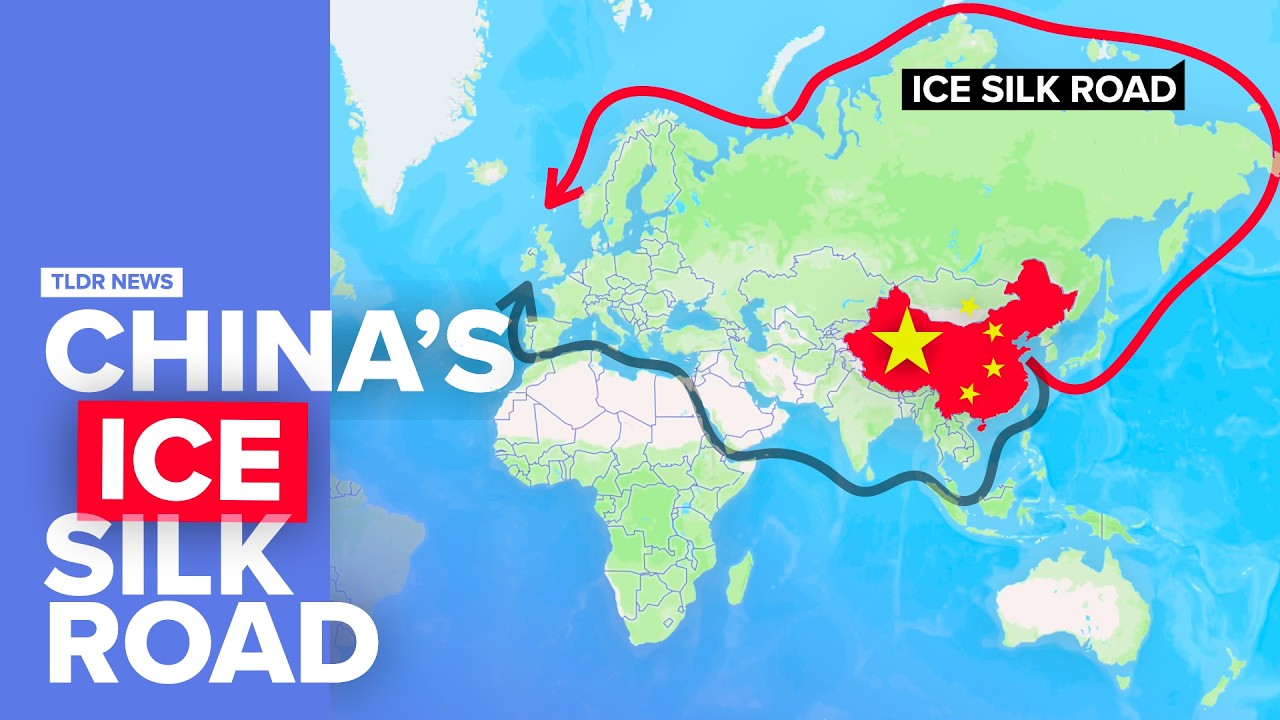
China’s Arctic Silk Road: The Race for the Frozen North
For centuries, the Arctic was a realm of ice, isolation, and a handful of intrepid explorers. Today, it is the stage for one of the most ambitious geopolitical and economic projects of the 21st century: China’s "Polar Silk Road.
For centuries, the Arctic was a realm of ice, isolation, and a handful of intrepid explorers. Today, it is the stage for one of the most ambitious geopolitical and economic projects of the 21st century: China’s "Polar Silk Road." While the name evokes images of ancient camel caravans, this modern initiative is a high-stakes play for shipping lanes, natural resources, and strategic influence in a region rapidly being reshaped by climate change.
At its core, the Arctic Silk Road is a maritime extension of China’s broader Belt and Road Initiative (BRI). The concept is straightforward: as global temperatures rise, the Arctic Ocean’s ice cover is receding, opening up new shipping routes that could drastically cut travel time between Asia and Europe. The most significant of these is the Northern Sea Route, which runs along the Russian coast. By utilizing this passage, a vessel traveling from Shanghai to Rotterdam could shave off roughly 20% of the distance compared to the traditional route through the Suez Canal. For a nation like China, which relies heavily on maritime trade, the potential cost savings and logistical advantages are immense.
However, Beijing’s ambitions extend far beyond logistics. The Arctic is estimated to hold vast untapped reserves of oil, natural gas, and rare earth minerals—resources critical to China’s manufacturing sector and energy security. While the harsh environment makes extraction difficult, the melting ice makes it increasingly viable. China has already positioned itself as a major investor in Russian liquefied natural gas (LNG) projects on the Yamal Peninsula, demonstrating a willingness to commit capital to high-risk, high-reward ventures in the far north.
To legitimize its presence and claims, China has adopted the self-designation of a "near-Arctic state." This clever framing allows Beijing to assert a stake in Arctic governance without the legal standing of the eight countries with actual territorial claims. In 2018, China released its official Arctic Policy white paper, which outlined its intentions to build a "Polar Silk Road" and emphasized the importance of scientific research, environmental protection, and international cooperation. This diplomatic approach has allowed China to secure observer status in the Arctic Council, granting it a seat at the table for discussions on regional governance.
Yet, this expansion is not without friction. The Arctic is a geopolitically sensitive area, and China’s growing footprint has raised eyebrows in Washington, Ottawa, and Oslo. The United States has repeatedly expressed concerns about the dual-use nature of Chinese infrastructure projects—meaning they could serve both civilian and military purposes. The presence of Chinese research vessels and icebreakers, while framed as scientific, also serves as a demonstration of naval capability. Furthermore, the region is becoming a new arena for great-power competition, with Russia fortifying its military bases along the Northern Sea Route and NATO increasing its vigilance.
The economics of the route also present a sobering counterpoint to the hype. Despite the retreat of summer ice, the Northern Sea Route remains treacherous and unpredictable. It requires specialized ice-class vessels, expensive icebreaker escorts, and faces a narrow seasonal window of just a few months per year. For many shipping companies, the cost and risk still outweigh the savings, meaning the Polar Silk Road remains more of a strategic long-term bet than an immediate commercial revolution.
As the ice continues to melt, the Arctic is transforming from a scientific frontier into a geopolitical chessboard. China’s Polar Silk Road is a calculated move to ensure it is not left out of the game. Whether it becomes a bustling maritime highway or remains a symbolic assertion of power, the initiative signals a clear message: the race for the Arctic has begun, and Beijing intends to have a leading role in defining its future.
Related Coverage
Global Economy on a Knife’s Edge: War, Sanctions, and Energy Chaos Reshape Markets
A world economy built on the promise of open trade and cheap energy is now buckling under the weight of geopolitical conflict, strategic blockades, and a technological gold rush that is straining the very limits of infrastructure. From the closed oil lifeline of the Strait of Hormuz to the drone-struck refineries of Russia and the record-breaking rallies in tech stocks, the global financial system is being pulled in opposing directions. While investors chase artificial intelligence (AI) profits and safe-haven assets like gold, millions of ordinary citizens are facing the harsh realities of inflation, fuel shortages, and a widening gap between the wealthy and the rest.
The Price of Power: How Sanctions, War, and Climate Chaos Are Reshaping the Global Economy
A global economy built on the promise of open trade and cheap energy is now buckling under the weight of geopolitical conflict, strategic blockades, and a technological gold rush that is straining the very limits of infrastructure. From the closed oil lifeline of the Strait of Hormuz to the drone-struck refineries of Russia and the record-breaking rallies in tech stocks, the global financial system is being pulled in opposing directions. While investors chase artificial intelligence (AI) profits and safe-haven assets like gold, millions of ordinary citizens are facing the harsh realities of inflation, fuel shortages, and a widening gap between the wealthy and the rest [15239].
US and China Race to Claim the Moon as a New Lunar Land Grab Heats Up
The United States and China are racing to establish permanent bases on the moon, sparking fears of a "lunar land grab" as both nations compete for access to water ice and rare minerals [197142].
Oil, War, and a World on Edge: A Fragile Peace Holds the Global Economy Hostage
The global economy is caught in a brutal contradiction: a historic diplomatic breakthrough that could unlock the world’s most vital oil route is being torn apart by the very conflicts it was meant to end, leaving markets, consumers, and the world’s most vulnerable populations trapped between the hope of relief and the reality of relentless war and a worsening climate crisis.
Strait of Hormuz, Drought, and Debt: The Global Economy Strains Under War and Climate Chaos
A global economy built on the promise of open trade and cheap energy is buckling under the weight of geopolitical conflict, strategic blockades, and a technological gold rush that is straining the very limits of infrastructure, leaving ordinary citizens to bear the brunt of inflation, fuel shortages, and a widening gap between the wealthy and the rest [15239].
We’ve Got 30-50 Years to Get Ready for Antarctica’s Sea Level Rise – And the Ocean Currents Are Already Giving Us Warnings
A new study warns that humanity has a limited window—roughly 30 to 50 years—to plan for rising sea levels caused by melting ice in Antarctica, while a separate study shows the Atlantic Ocean’s circulation is already weakening, sending a clear signal that climate change is accelerating.
Related Editorials
Namibia’s Rare Earth Gambit: How a Tiny African Nation Is Rewiring the Global Tech Supply Chain
For decades, the narrative of China–Africa relations has followed a predictable script: Beijing finances massive infrastructure projects in exchange for raw commodities, leaving African nations as passive suppliers in a global system they do not control. Namibia, a sparsely populated country in sou
The Sahara Just Became the World’s Most Expensive Warzone
For decades, the Sahara Desert has been a harsh, sparsely populated expanse—a natural barrier for trade, migration, and conflict. That reality has changed.
Africa’s Silent Giant: The $5 Billion Megaproject Reshaping the World’s Economy
While global attention fixates on trade wars and energy crises, a quiet revolution is underway in North Africa. Morocco has just completed a project that analysts are calling the most consequential infrastructure development for the continent in decades—yet it has barely made headlines.
China’s $10 Billion Bet on Africa’s Most Volatile Frontier
In the arid, resource-rich expanse of the eastern Sahel, China is executing one of its most audacious and high-stakes foreign investments to date: a massive oil pipeline stretching through the heart of Niger. This project, often overshadowed by Beijing’s larger Belt and Road infrastructure deals, r
The Silent Race for the World’s Most Valuable Prize: Two Nations, One Goal, No Clear Winner
A quiet, high-stakes competition is unfolding between two nations. Neither has declared war, but both are racing toward the same elusive prize—a prize that could reshape global power, technology, and economics for decades.
The End of Contentment: Why Global Stability Is Fracturing
For decades, a fragile global equilibrium held: cheap energy from Russia, ultra-efficient manufacturing from China, and a security umbrella provided by the United States. This arrangement delivered unprecedented prosperity to the developed world.