Title: Japan’s Debt Time Bomb: Is the World’s Largest Fiscal Experiment Finally Failing?
Introduction For decades, Japan has defied economic gravity. While economists warned that its national debt—the highest in the developed world at over 260 percent of GDP—would trigger a catastrophic collapse, the country continued to borrow cheaply, pay its bills, and keep its markets stable.
Introduction
For decades, Japan has defied economic gravity. While economists warned that its national debt—the highest in the developed world at over 260 percent of GDP—would trigger a catastrophic collapse, the country continued to borrow cheaply, pay its bills, and keep its markets stable. Today, however, the warning signs are no longer theoretical. Rising interest rates, a shrinking population, and a weakening yen are testing the limits of a system that many believed was unbreakable. The question is no longer if Japan’s debt crisis will arrive, but whether it has already begun.
The Mechanics of the “Miracle”
To understand the current danger, one must first understand how Japan avoided disaster for so long. The key was simple: nearly all of Japan’s government debt was held domestically. Japanese households, banks, and pension funds bought government bonds, creating a closed loop. The Bank of Japan (BOJ) kept interest rates near zero, meaning the government could refinance its debt at virtually no cost. As long as savers trusted the system, the debt was sustainable.
This arrangement worked because Japan had a massive pool of domestic savings. But that pool is now drying up. The population is aging rapidly, and the workforce is shrinking. Retirees are drawing down their savings rather than buying more bonds. Meanwhile, younger generations have less disposable income to invest.
The Turning Point: Rising Rates
In 2022 and 2023, global inflation forced the BOJ to abandon its ultra-loose monetary policy. The central bank began to allow long-term interest rates to rise, moving away from its strict yield curve control policy. This was a seismic shift.
Higher interest rates mean the government must pay more to service its debt. Japan’s interest payments are already the largest single item in the national budget, surpassing defense and education spending. As rates climb, the cost of servicing the debt will explode, crowding out spending on social services, infrastructure, and innovation.
The Yen’s Collapse
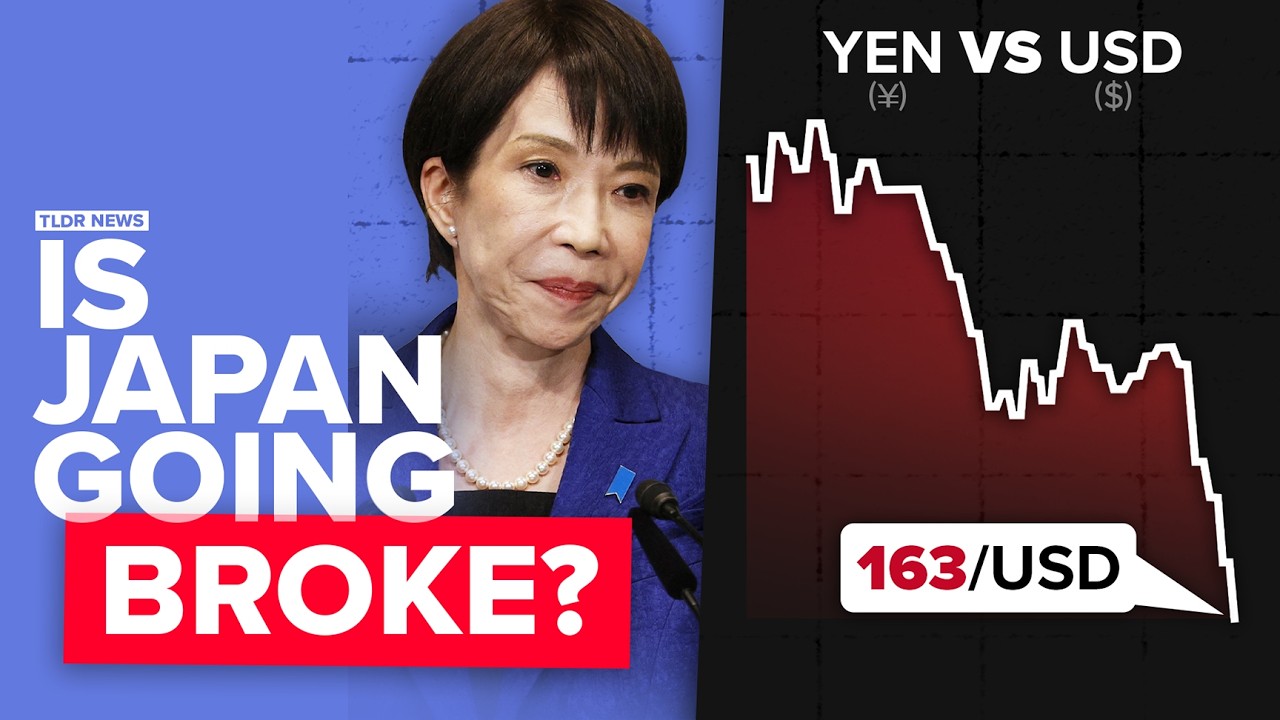
Compounding the problem is the yen’s dramatic depreciation. In 2024, the yen hit a 34-year low against the U.S. dollar. A weaker yen makes imports—especially energy and food—more expensive for Japanese consumers. This drives inflation, which in turn pressures the BOJ to raise rates further. It is a vicious cycle.
For a nation that imports nearly all of its energy and a significant portion of its food, a weak currency is a direct tax on living standards. Households are feeling the pinch, and consumer confidence is eroding.
Is a Crisis Imminent?
The word “crisis” must be used with precision. Japan is not facing an immediate default. The government can still print yen to pay its bills, and the BOJ can continue to buy bonds to keep yields manageable. However, the cost of doing so is rising.
The real danger is a slow-motion crisis: a gradual loss of confidence. If Japanese savers begin to fear that the government will inflate away their wealth, they will stop buying bonds. If foreign investors, who now hold a record share of Japanese debt, decide to sell, the BOJ would be forced to absorb the supply, monetizing the debt and fueling hyperinflation.
The Demographic Anchor
No analysis of Japan’s debt is complete without acknowledging its demographic reality. The country’s population is declining by roughly 500,000 people per year. Fewer workers mean a smaller tax base. More retirees mean higher social security costs. This structural deficit is the root cause of the debt accumulation.
Even if Japan balances its budget tomorrow, the debt-to-GDP ratio would remain dangerously high because the economy is shrinking. Growth is the only way out, but Japan has struggled with low productivity and stagnant wages for three decades.
What Comes Next?
Japan’s situation is not unique. Many developed nations, including the United States and much of Europe, face similar demographic and fiscal challenges. Japan is simply the canary in the coal mine—the first major economy to confront the limits of debt-financed governance in an aging society.
The most likely outcome is not a sudden default but a prolonged period of managed decline. The BOJ will continue to walk a tightrope, raising rates just enough to control inflation but not so much that it triggers a bond market rout. The government will raise taxes and cut spending, but only in small, politically palatable increments.
For the rest of the world, Japan serves as a warning. If the third-largest economy can struggle under the weight of its debt, no nation is immune. The era of cheap money is over, and the bill is finally coming due.
Related Coverage
Yen Crash Warning: Your U.S. Stocks Are One Bad CPI Report Away From a Bloodbath
A perfect storm of currency collapse, record bearish bets, and a looming inflation report is putting global markets on edge. The Japanese yen is near a 30-year low, traders are piling on record short positions, and Bank of America warns that today’s U.S. inflation data could trigger a sudden, violent reversal—forcing investors to dump stocks and bonds in a fire sale.
Interest Rates Are Crushing Stocks and Bonds Worldwide: Nikkei Drops 2.2%, UK Costs Hit 2008 High
Global markets are reeling as central banks signal they will keep interest rates high for longer, sending stocks tumbling and government borrowing costs soaring to levels not seen in decades.
Iran War 2.0: Asia Braces for $20 Trillion Shock as Oil Prices Explode
The collapse of the US-Iran ceasefire is set to unleash a second wave of economic chaos across Asia, with analysts warning the next global financial crisis could be four times worse than the dot-com crash, wiping out up to $20 trillion in market value.
Strait of Hormuz, Drought, and Debt: The Global Economy Strains Under War and Climate Chaos
A global economy built on the promise of open trade and cheap energy is buckling under the weight of geopolitical conflict, strategic blockades, and a technological gold rush that is straining the very limits of infrastructure, leaving ordinary citizens to bear the brunt of inflation, fuel shortages, and a widening gap between the wealthy and the rest [15239].
Bond Market’s New Power: Japan’s Budget No Longer Capped by Law, But by Investors
Japan’s government has lost its main fiscal guardrail, and now global bond investors hold the real power over Tokyo’s spending decisions.
Global Economy Reels as Energy Wars, Climate Collapse, and a Debt-Fueled AI Boom Crush the World's Most Vulnerable
The global economic order is buckling under the weight of converging crises, where the pursuit of geopolitical power and corporate profit is colliding with fundamental human needs. From the closed oil routes of the Strait of Hormuz and the escalating aerial war in Ukraine to melting glaciers in the Himalayas and a debt-fueled artificial intelligence boom, a cascade of interconnected emergencies is straining nations to their breaking point [1][2]. As the United Nations formally acknowledges that the 1.5°C warming target is "unavoidably" out of reach, the costs of inaction are being paid in lives, livelihoods, and the health of the planet itself [3].
Related Editorials
Title: America’s Debt Bomb: Is the Fiscal Reckoning Finally Here?
The United States has long operated on a fiscal knife’s edge, borrowing trillions to fund its ambitions. For decades, economists have warned that the bill would come due, only to see the day of reckoning perpetually postponed.
Title: The $3.5 Trillion Shadow: Why the Global Debt Time Bomb Is Still Ticking
Introduction A financial crisis is unfolding in plain sight, yet it remains largely absent from mainstream headlines. It is not a bank run, a stock market crash, or a sudden currency devaluation.
The UK’s Economic Stagnation: A Global Warning
The United Kingdom is currently serving as a cautionary tale for developed economies worldwide. After decades of policy missteps, structural stagnation, and a loss of strategic direction, the nation finds itself trapped in a cycle of low growth, declining living standards, and political instability
Why Neoliberals Are Terrified of Being Proved Wrong
For decades, neoliberalism has been the dominant economic philosophy guiding Western policy. But a growing body of evidence suggests its core promises have failed.
Title: The Yen’s Plunge: Why Tokyo’s Intervention Is Losing the Battle
Introduction In the high-stakes arena of global currency markets, the Japanese yen’s recent collapse has triggered alarm bells in Tokyo. Faced with a currency trading at multi-decade lows, Japanese authorities stepped in to support it.
Title: The Great Contradiction: How Neoliberal Austerity Made Britain’s Debt Explode
Introduction In the aftermath of the 2008 financial crisis, a political consensus emerged across much of the Western world: governments had spent too much, and the only path to prosperity was deep, immediate spending cuts. Nowhere was this experiment pursued with more ideological fervour than i